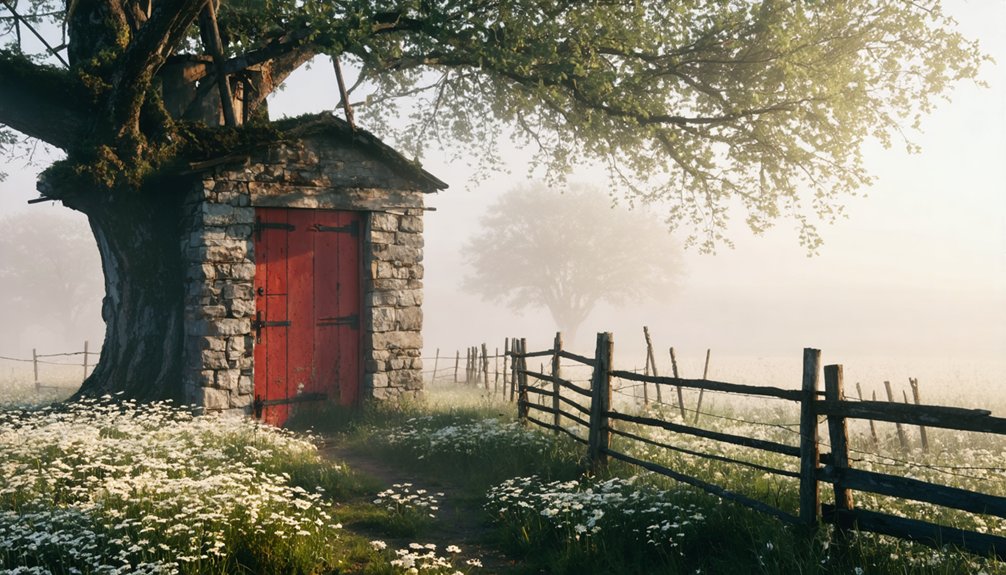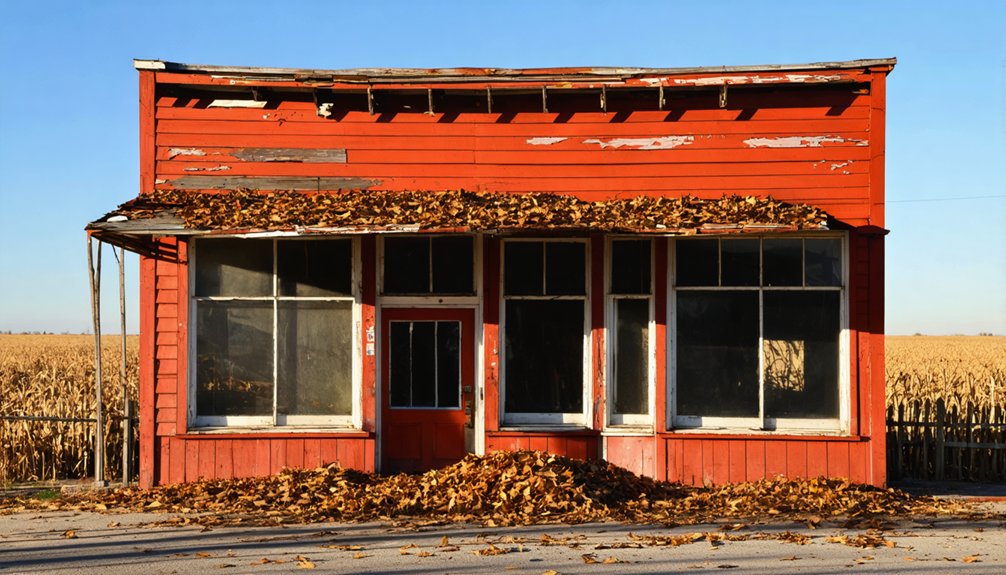
You’ll find the best times to explore Iowa’s ghost towns are during spring and fall when temperatures remain moderate and visibility is ideal. Spring offers longer daylight hours and reduced vegetation for better structural access, while fall delivers stunning foliage backdrops for photography. Both seasons provide comfortable conditions between 10 AM and 4 PM for investigating historical sites like Buckhorn’s church and Buxton’s mining remnants. Careful planning and seasonal considerations will enhance your journey into Iowa’s forgotten past.
Key Takeaways
- Spring offers ideal exploration conditions with mild temperatures, reduced vegetation, and longer daylight hours for better visibility of structures.
- Fall provides stunning photo opportunities with colorful foliage, comfortable temperatures between 10 AM and 4 PM, and clear visibility.
- Summer ensures dry conditions and maximum daylight hours, though temperatures can reach 90°F during peak afternoon hours.
- Winter creates atmospheric scenes with snow, but hazardous conditions like ice and reduced visibility make exploration more challenging.
- Avoid spring rain periods when mud can make roads impassable and seasonal flooding may restrict access to certain locations.
Historical Significance of Iowa Ghost Towns
While many of Iowa’s ghost towns have faded into obscurity, these abandoned settlements offer invaluable insights into the state’s economic and social development during the 19th and early 20th centuries.
You’ll discover that ghost town history reveals diverse economic foundations, from Buckhorn’s thriving dairy industry to Buxton’s groundbreaking coal mining operations. Each site tells a unique story of cultural heritage, like Buxton’s remarkable racial equality or Marietta’s fierce county seat rivalry with Marshalltown. Some settlements were established by distinct religious groups, as seen in Fredonia’s Dunkers community.
These settlements showcase how industries shaped communities – whether through Buckhorn’s cooperative creamery that produced millions of pounds of butter, or Buxton’s distinction as the largest coal-mining city west of the Mississippi. In 1836, Shadrach Burleson established the foundation for Buckhorn by building a cabin and contributing land for essential community structures.
Today, you’ll find remnants of this rich history in places like Buckhorn’s surviving church, creamery, and cemetery, preserving tangible connections to Iowa’s pioneering spirit.
Weather and Climate Considerations
You’ll encounter significant temperature fluctuations at Iowa’s ghost towns, with summer highs reaching 90°F and winter lows dipping below 0°F, making spring and fall the most comfortable seasons for exploration.
As seen in places like Lesley, Texas, abandoned towns often feature deteriorating structures that require extra caution when exploring in any weather conditions.
Road conditions vary dramatically by season, as spring rains create muddy access routes while winter snow can make remote sites completely inaccessible.
Morning fog in autumn can limit visibility at many locations, so you’ll want to plan your visits between 10 AM and 4 PM when skies are typically clearest and temperatures are most favorable.
Several historic ghost towns now rest beneath the waters of Lake Red Rock, making them accessible only through historical documentation rather than physical visits.
Seasonal Temperature Fluctuations
Since Iowa’s ghost towns endure dramatic temperature swings throughout the year, understanding the seasonal climate patterns becomes essential for planning your explorations.
You’ll encounter winter lows plummeting below 0°F with biting wind chills reaching -20°F, while summer brings oppressive humidity and highs exceeding 90°F.
Spring temperatures fluctuate wildly, with daily variations of 20-30°F making ghost town exploration unpredictable. The flooding that led to the creation of Lake Red Rock significantly altered the accessibility of several historic sites. The Gitchie Manitou Preserve stands as a haunting reminder of Iowa’s tragic past.
Fall emerges as the sweet spot, offering stable temperatures between 50-65°F and reduced precipitation.
Summer’s dense vegetation and insects can obstruct your access to sites, while winter’s snow and ice create treacherous conditions.
Consider these seasonal activities: document ice-glazed structures in winter, photograph spring wildflowers, avoid peak summer heat, and maximize fall’s comfortable conditions for extended exploration sessions.
Road Conditions By Season
Road conditions across Iowa’s network of rural byways present five distinct classifications during winter months, greatly impacting access to ghost town sites.
You’ll need to monitor road hazards closely, as conditions range from seasonal (generally clear) to completely ice-covered surfaces that considerably reduce traction.
When planning your ghost town explorations, consider that Iowa DOT’s 850 plow drivers focus solely on major highways, leaving county roads and rural access points with less maintenance. Plow routes average about 29 miles each, meaning longer response times for remote locations.
During October through April, you’ll find real-time updates every 10 minutes via Iowa 511, essential for tracking seasonal impacts near destinations like those off IA 26. The real-time information provided helps drivers assess weather-related road impacts across the state.
Be especially vigilant during spring thaws when partially covered surfaces can create deceptively hazardous conditions on secondary routes, where blowing snow and ice patches frequently occur.
Visibility During Peak Hours
Weather patterns substantially influence visibility conditions across Iowa’s ghost town sites throughout the year, with each season presenting distinct atmospheric characteristics that affect exploration quality.
You’ll find prime morning visibility during fall months, when clear skies prevail 80% of the time and crisp temperatures minimize atmospheric distortion. Sites like Edinburgh Manor have reported their clearest paranormal activity during these optimal conditions.
Spring and summer offer extended daylight hours, though afternoon clarity can deteriorate due to increased humidity and thunderstorm risks, particularly between 2-5 PM. The historic remains of stone grist mill at Rockville are best photographed during these seasons.
Winter presents unique challenges with shorter days and snow-induced glare, yet provides striking contrast for photography during clear post-snowfall periods.
For peak viewing conditions, plan your visits during fall’s golden hours (7-9 AM) when low humidity and moderate temperatures create perfect atmospheric clarity for exploring abandoned structures and capturing their historical essence.
Road Access and Travel Planning
You’ll need to carefully plan your ghost town visits around seasonal road conditions, as many remote sites become difficult to access during Iowa’s wet seasons and winter months.
When finding your way to these historic locations, you’ll find that combining modern GPS technology with historical plat maps provides the most reliable route planning, especially for reaching remote cemeteries and railroad town sites that require travel on unpaved roads.
Local county historical societies can provide updated information about road conditions and recommend the most suitable vehicle types for accessing specific ghost town locations throughout the year.
Seasonal Road Conditions
Planning a successful ghost town visit in Iowa requires careful attention to seasonal road conditions, as many abandoned settlements are accessible only via remote county roads and unmarked rural intersections.
From October through April, winter roadways can become treacherous with ice, snow, and reduced visibility. While the Iowa DOT maintains state highways, you’ll find local roads to ghost towns often go unplowed at night, making travel particularly hazardous.
Spring brings its own challenges, as flood risks threaten low-lying ghost towns, especially near river confluences. Sites like Elkport demonstrate how devastating floods can isolate or destroy these historic locations.
You’ll need to monitor both DOT road condition updates and local weather forecasts, paying special attention to ice warnings and flood alerts. Remember that gravel back roads deteriorate quickly during spring thaws or heavy precipitation.
Successfully traversing Iowa’s ghost towns requires thorough route planning and reliable navigation tools year-round.
You’ll need to adapt your ghost town navigation strategy seasonally, particularly when accessing remote sites like Buckhorn’s abandoned church or Motor Mill’s historic grounds. Use Google Maps to plot your course through eastern Iowa’s 4-hour 55-minute tour route, but don’t rely solely on GPS – carry detailed county maps marking critical junctions like Dexfield Road’s shift to Maple Street.
Make seasonal adjustments when exploring sites like Paradise or Johnsonville by noting specific township coordinates and watching for landmarks near railroad grades.
Check with local historical societies before departing, as they’ll have updated information about road conditions and site accessibility, especially for remote locations like Crawford County’s forgotten settlements.
Local Transportation Resources
Iowa’s extensive transportation network offers multiple routes to reach its historic ghost towns, with primary access available through well-maintained county roads and state highways.
You’ll find former Milwaukee Railroad and Chicago, Rock Island, and Pacific Railroad corridors serving as valuable reference points for navigation.
For efficient exploration, you can rely on Google Maps and interactive ghost town directories to plan your routes.
When visiting multiple sites, you’ll benefit from focusing on regional clusters.
Eastern Iowa’s ghost towns, including Elkport and Kinross, can be toured within a five-hour loop.
Crawford County’s forgotten communities are concentrated near Denison, making them ideal for single-day exploration.
For detailed directions, consult local historical societies and Rootsweb databases, which provide precise coordinates and township designations for these historic locations.
Spring Exploration Opportunities
As winter’s grip loosens across the Midwest, spring presents ideal conditions for exploring Iowa’s abandoned settlements and submerged towns.
Spring awakens Iowa’s forgotten places, inviting explorers to discover abandoned towns emerging from winter’s slumber.
You’ll find spring wildlife like seagulls marking shallow areas where hidden treasures emerge from receding waters at sites like Elkport and Lake Red Rock. The mild 50-60°F temperatures create perfect conditions for extended hikes through these historic locations.
You’ll encounter less vegetation obscuring important structures during spring, with clearer access to sites like Terra Haute schoolhouse and Buckhorn church. The reduced foliage reveals foundations, corn cribs, and other architectural remnants that typically remain hidden.
Spring’s longer daylight hours and minimal mud conditions make ghost town exploration safer and more accessible, particularly along the eastern Iowa loop where you can visit multiple sites in a single day.
Summer Discovery Season
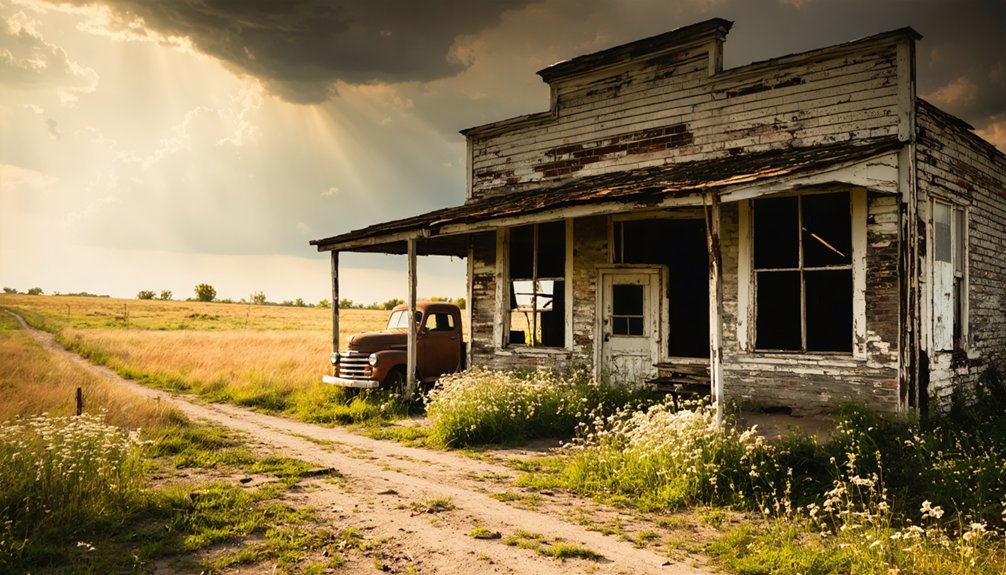
Summer’s long daylight hours and dry conditions make ghost town exploration in eastern Iowa exceptionally rewarding.
You’ll find ideal conditions for investigating abandoned structures across Cedar and Jackson Counties, where temperatures averaging 80°F and minimal rainfall create perfect circumstances for summer adventures.
The extended daylight from 5 AM to 9 PM allows thorough exploration of sites like Buckhorn’s historic creamery and Sunbury’s 1901 bank.
- Combine your ghost town visits with Field of Dreams Ghost Players events in nearby Dyersville
- Navigate the 71-mile route from Cedar Rapids to Elkport during peak visibility hours
- Document your discoveries through the popular ‘bando’ trend on Forgotten Iowa pages
- Explore the Driftless Area’s attractions, including the aptly named Spook Cave near McGregor
Fall Photography and Atmosphere
When fall foliage peaks between mid-September and mid-October, ghost town photographers discover their most enchanting shooting conditions across eastern Iowa’s abandoned settlements.
You’ll find the ghostly ambiance intensified at sites like Elkport’s riverside ruins, where autumn colors frame the remnants of its 2004 flood relocation. The crisp temperatures and low-angle light create ideal conditions for capturing textural details on deteriorating structures.
At Buckhorn’s church and cemetery, the Halloween season amplifies the haunting atmosphere, while Sunbury’s 1901 bank exterior glows beneath the fall canopy.
Weathered gravestones and Gothic spires cast long shadows at Buckhorn, as autumn leaves dance around the century-old stones.
You’ll benefit from minimal crowds and improved dirt road access during this season, allowing unobstructed shots of historical markers against vibrant backdrops. The shortened daylight hours and moody overcast skies contribute to an immersive documentary experience.
Winter Ghost Town Adventures
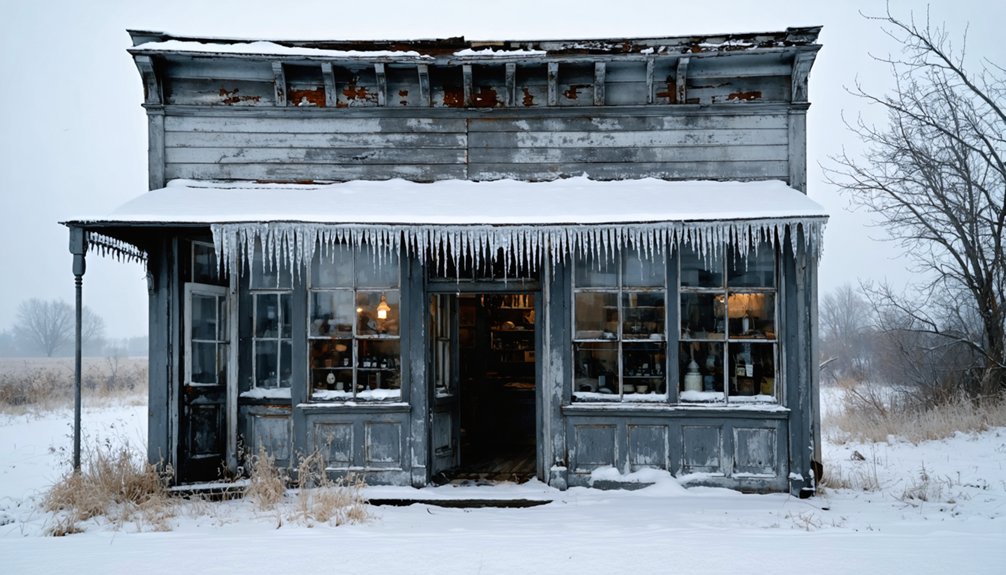
Winter accessibility to Iowa’s ghost towns offers a uniquely haunting experience for the intrepid explorer.
You’ll find intensified paranormal activity reports during these quieter months, when snow-blanketed landscapes create an ethereal backdrop for investigation. The stark winter atmosphere amplifies the isolation of abandoned structures, while reduced visitor traffic allows for more intimate exploration of accessible sites.
- Tours at Villisca Axe Murder House and Edinburgh Manor continue through winter, with enhanced cold spot activity and apparition sightings.
- Snow-covered paths to Buckhorn’s church and creamery remain visible, though road access becomes limited.
- Frozen riverbanks at Rockville’s mill site create dramatic photographic opportunities.
- Overnight paranormal investigations can be booked at multiple locations, with heightened EVP activity reported during winter’s silence.
These preserved historical sites demand respect and careful navigation during winter months, but reward visitors with unparalleled atmospheric conditions.
Safety and Preparation Guidelines
Before commencing ghost town explorations in Iowa, thorough safety protocols and detailed preparation become the foundation of successful visits.
Thorough planning and safety measures are essential prerequisites for any successful ghost town expedition across Iowa’s abandoned landscapes.
You’ll need to prioritize structural safety precautions by conducting visual assessments from a safe distance before approaching any buildings. Always wear protective gear, including sturdy boots, gloves, and a hard hat.
Don’t overlook essential legal considerations – verify property ownership and obtain necessary permissions to avoid trespassing violations.
You’ll want to research local ordinances and historical preservation guidelines that may affect your visit. Remember to bring communication devices and inform others of your plans.
Pack emergency supplies, including first aid kits, and monitor weather conditions carefully. When exploring with a partner, you’ll minimize risks while ensuring help is available if needed.
Frequently Asked Questions
Are Ghost Towns in Iowa Legally Accessible to the Public?
Like traversing the Wild West, you’ll find ghost town laws vary widely. Most Iowa ghost towns are on private property, requiring permission, though some cemeteries and exterior areas offer limited public access.
Can I Take Artifacts or Souvenirs From Iowa Ghost Towns?
No, you can’t legally remove artifacts. Preservation laws protect these historical sites, and ethical considerations require leaving items undisturbed. You’ll face legal consequences for taking anything from private or public properties.
Do Any Iowa Ghost Towns Still Have Living Residents?
You’ll find that several Iowa ghost towns still maintain current residents, particularly in places like Marietta and Donnan, where people preserve the historical significance despite the communities’ official disincorporation.
Are Metal Detectors Allowed at Iowa Ghost Town Sites?
You’ll need written landowner permission for metal detecting at ghost town sites on private property, and you must follow state metal detecting regulations and historical preservation policies where applicable.
Which Iowa Ghost Towns Have Documented Paranormal Activity or Hauntings?
You’ll find documented paranormal legends at Villisca, home of the infamous axe murders, and Terra Haute’s abandoned schoolhouse. Malvern Manor’s haunted corridors also offer compelling evidence of unexplained paranormal activity.
References
- https://kids.kiddle.co/List_of_ghost_towns_in_Iowa
- https://www.ghosttowns.com/states/ia/ia.html
- https://www.onlyinyourstate.com/experiences/iowa/ia-ghost-town
- https://freepages.history.rootsweb.com/~gtusa/usa/ia.htm
- https://www.discoverguthriecounty.org/ghosttowns
- https://pubs.lib.uiowa.edu/annals-of-iowa/article/id/6960/download/pdf/
- https://www.youtube.com/watch?v=L883pwCPOwE
- http://genealogytrails.com/iowa/abandoned_towns.htm
- https://khak.com/abandoned-attraction-ghost-town-buckhorn-iowa/
- https://www.timesrepublican.com/news/todays-news/2023/08/historian-brings-marshall-countys-ghost-towns-to-life/