You’ll find Maine’s ghost towns most accessible during the summer months of June through August, when dry conditions and extended daylight hours provide ideal exploration conditions. The warm weather enables boat access to coastal ruins and submerged settlements, while inland trails remain clear and navigable. Early summer, particularly mid-June to early July, offers less crowded conditions at historical sites. Maine’s seasonal patterns and preservation efforts reveal additional layers of discovery across different weather conditions.
Key Takeaways
- Summer (June-early July) offers optimal ghost town exploration with dry trails, road access, and boat/kayak opportunities to coastal sites.
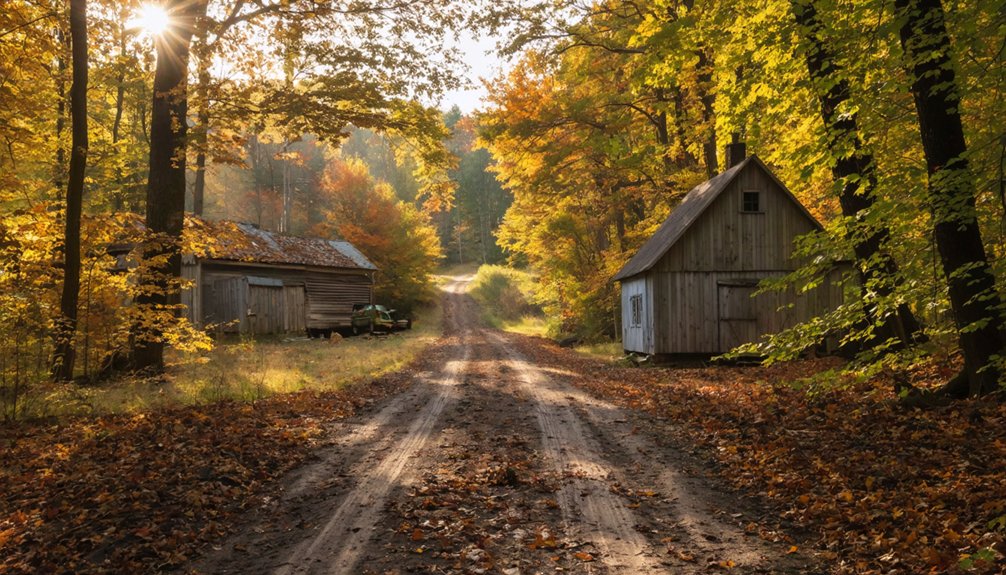
- Early fall provides vibrant foliage backgrounds for ghost town visits, though watch for shortened daylight and slippery paths.
- October is prime for paranormal tourism with increased reported sightings and special events like “Fright at the Fort.”
- Winter severely restricts access due to snow-blocked roads, though some sites are reachable via snowmobile trails.
- Spring low tides reveal submerged foundations and artifacts, but muddy conditions and flooding can limit accessibility.
Seasonal Weather Patterns Affecting Ghost Town Access
While Maine’s ghost towns offer fascinating glimpses into the state’s past, seasonal weather patterns greatly influence when you can safely access these abandoned settlements. Each season presents distinct challenges for ghost town exploration, with weather impacts varying dramatically throughout the year.
In winter, heavy snow accumulation renders roads impassable, particularly for inland sites like Riceville. Scientists have observed that the rising ocean temperatures are affecting weather patterns even in inland areas.
Spring thaws transform these paths into muddy obstacles, while coastal locations face tidal flooding.
Springtime’s melting snow creates treacherous mud-filled paths, and rising tides threaten access to Maine’s coastal ghost town sites.
Summer brings dense vegetation that can quickly overtake trails and cellar holes, requiring persistent clearing efforts. The harsh northern climate causes abandoned structures to deteriorate and vanish much faster than those in the American West.
Fall’s combination of shortened daylight and slippery conditions from leaf fall creates additional hazards.
You’ll also need to take into account recent climate change effects, as marine heat waves increasingly influence both coastal and inland weather patterns, potentially altering traditional seasonal access windows.
Peak Exploration Months for Coastal Ghost Towns
Given the limited factual data available about Maine’s coastal ghost towns, you’ll need to carefully plan your explorations around seasonal conditions that affect site access.
Low spring tides can temporarily expose submerged foundations and artifacts along the shoreline, while summer’s calmer waters enable boat transportation to remote abandoned settlements. Most seasonal businesses and tour operations are open until mid-October, making this window ideal for guided ghost town visits.
As autumn arrives, you’ll find the coastal ruins dramatically framed by New England’s signature fall foliage, though you should research specific locations and tide tables before attempting any visits. The best time to witness this stunning contrast is during mid to late October when coastal areas reach their peak autumn colors.
Spring Tides Reveal Remnants
Because spring tides coincide with full and new moons, they create ideal conditions for exploring Maine’s coastal ghost towns. During these peak tidal cycles, you’ll witness the most dramatic high and low water levels, revealing remnants typically hidden beneath the waves. The gravitational alignment exposes root systems of ghost forests, historic foundations, and structural remains along the shoreline.
These powerful tides, combined with coastal erosion that’s accelerated over the past century, uncover artifacts and structures that tell stories of Maine’s maritime past. Similar to the villages of Flagstaff Lake, some coastal settlements were deliberately flooded to create reservoirs. Recent flood closures of popular overlooks have made some viewing areas temporarily inaccessible.
When nor’easters coincide with spring tides, you’ll find scattered granite blocks, damaged lighthouses, and exposed foundations that document the region’s battle with rising seas. At Wells Reserve, you can observe how saltwater intrusion creates modern ghost forests, offering a glimpse into both historical remains and ongoing coastal transformation.
Summer Accessibility Via Boats
The warm months of summer transform Maine’s coastal ghost towns into prime destinations for boat-based exploration.
You’ll find ideal conditions for accessing these historical sites through kayak tours and boat rentals, when calmer seas and clear visibility create perfect circumstances for maritime adventures.
- Fort Gorges becomes readily accessible via Portland-based kayak tours, offering you a 2.5-mile journey across Casco Bay’s bustling channels. Life vests must be worn due to unpredictable tides on all water excursions. The town that now rests beneath Flagstaff Lake was completely cleared in the 1950s for the dam project.
- Flagstaff Lake’s submerged township reveals its secrets beneath crystal-clear summer waters, with structural remnants visible from watercraft.
- Perkins Township’s abandoned island community welcomes visitors via regular ferry service from Richmond, while Boothbay Harbor’s maritime heritage comes alive through lighthouse tours and guided harbor cruises.
These water-bound historical sites demand respect for tidal conditions, but summer’s gentler weather provides your safest passage to Maine’s forgotten coastal communities.
Fall Colors Along Coast
While Maine’s coastal ghost towns captivate visitors year-round, mid-to-late October presents an unmatched spectacle as autumn’s palette transforms these abandoned settlements.
You’ll discover peak foliage between October 15-25 in coastal zones, where ocean temperatures create a uniquely delayed progression of color. This timing aligns perfectly with reduced crowds at locations like Bar Harbor and Camden, enhancing your autumn photography opportunities. With temperatures ranging from 47 to 57 degrees, conditions remain comfortable for extended outdoor exploration.
For prime coastal hikes, venture 13-50 miles inland from the shore between October 14-22, where you’ll find the most vibrant displays. The Hulls Cove center offers detailed maps to help navigate the region’s hidden historical sites.
Consider pairing your ghost town explorations with visits to atmospheric locations like Fort William Henry, where candlelit evening tours coincide with peak fall colors. The combination of crisp air, foggy mornings, and fiery foliage creates ideal conditions for exploring these historic ruins.
Planning Your Visit to Inland Abandoned Sites
Planning an inland ghost town expedition in Maine requires careful consideration of access routes, weather conditions, and terrain challenges. For ideal inland exploration and historical preservation access, you’ll find summer offers the most reliable conditions with dry trails and clear visibility of structural remains.
When venturing to these remote sites, consider these essential factors:
- Bushwhacking through dense forest is often necessary to reach places like Askwith and Davidson, where abandoned lumber machinery still rests.
- Steep terrain demands careful navigation, especially around cellar holes in the Frye Mountain area.
- Spring flooding can make lowland sites like Riceville inaccessible, while winter snow blocks paths to Freeman and Madrid.
You’ll discover the most visible foundations and historical features during fall when foliage changes enhance site visibility through thinning canopy coverage.
Paranormal Tourism and Event Timing
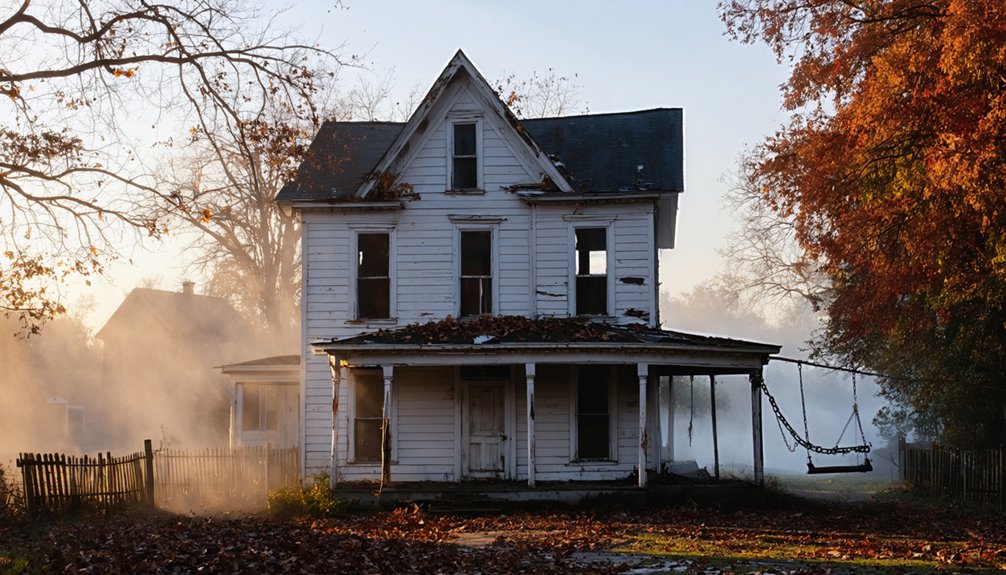
Paranormal enthusiasts flock to Maine’s ghost towns throughout the year, drawn by the state’s distinction as America’s most haunted region with 58.03 reported sightings per 100,000 residents.
While ghost hunting opportunities exist year-round, you’ll find October particularly rich in paranormal experiences, with events like “Fright at the Fort” at Fort Knox leading the seasonal programming.
October brings Maine’s richest supernatural encounters, highlighted by Fort Knox’s spine-tingling Fright at the Fort experience.
Winter offers unique investigation conditions, especially at historical sites like Fort William Henry and the Maine State Prison, where documented supernatural activity intensifies during darker hours.
You’ll discover that coastal locations, including Wood Island Lighthouse and Portland Head Light, provide year-round haunting experiences, though weather conditions may affect accessibility.
For ideal ghost hunting conditions, consider visiting during October’s organized events or winter’s longer nights when paranormal activity reportedly peaks.
Wildlife Area Ghost Towns and Viewing Opportunities
Maine’s abandoned settlements offer more than just paranormal intrigue – they serve as prime wildlife observation points throughout the state’s diverse ecosystems.
You’ll find ideal moose viewing opportunities in ghost towns near the Western Lakes and Mountains region, particularly during fall months when bulls display their impressive antlers.
For the most rewarding wildlife encounters:
- Visit from late September through early November when cooler temperatures increase moose activity near abandoned settlements.
- Plan your ghost town exploration during dawn or dusk hours when moose are most active in clearings and along old roadways.
- Focus on locations near water sources in spring and summer, then shift to clear-cut areas during autumn months.
These historic sites provide unique vantage points for observing Maine’s largest land mammals in their natural habitat.
Transportation and Trail Conditions by Season
While winter access to Maine’s ghost towns becomes limited by December’s snow accumulation and seasonal trail closures, you’ll find microspikes more useful than snowshoes due to mixed ground conditions and ice flows.
Spring’s persistent snow and mud season typically restricts trail access until after May 15th, with some locations remaining inaccessible through Memorial Day.
Your best transportation options emerge in summer when dry trails and road access provide ideal ghost town exploration conditions, though you should plan for quieter visits during midweek periods in June and early July.
Winter Access And Closures
As winter descends upon Maine’s ghost towns, severe weather conditions dramatically alter accessibility to these historic sites.
You’ll find winter access severely restricted from November onward, with average temperatures ranging from 38°F during day to 25°F at night, while northern regions experience even harsher conditions.
Key winter closures you’ll encounter include:
- Snow-blocked coastal routes to abandoned beachfront structures and maritime remnants
- Ice-covered park roads near ghost town locations, particularly in Acadia after November
- Frozen waterways preventing boat access to submerged sites like Flagstaff Lake’s hidden foundations
While some locations become inaccessible, winter sports enthusiasts can reach certain ghost towns via snowmobile trails, particularly through the ITS66 network near Moosehead Lake’s abandoned settlements.
The Saddleback and Sugarloaf areas offer unique winter access to high-elevation ghost town sites.
Spring Trail Conditions
Spring trail conditions in Maine’s ghost towns present three distinct challenges for explorers: variable accessibility, seasonal flooding, and dense vegetation growth.
You’ll need to carefully plan your route as water levels around sites like Flagstaff Lake fluctuate markedly, affecting both visibility and access to historical foundations. Trail maintenance efforts intensify during this season, particularly along established paths like the Narrow Gauge Pathway, though recent storm damage may still impact certain areas.
Dense vegetation management becomes vital as spring moisture accelerates growth, with vines and undergrowth reaching heights of 200-300 feet in canyon areas.
You’ll find creek-based trails require thorough route-finding skills, as spring flooding patterns can obscure pathways. While cellar holes and stone walls become more visible after winter, they’re quickly covered by emerging vegetation.
Summer Transportation Options
Summer exploration of Maine’s ghost towns requires three primary modes of transportation: watercraft, hiking boots, and occasionally motorized vehicles.
You’ll need to secure boat rentals to access several significant sites, particularly during peak summer tours season.
Here’s how to navigate Maine’s ghost town locations:
- Access Flagstaff Lake’s underwater town and Swan Island’s abandoned settlement via watercraft during calm summer days when visibility is ideal.
- Trek Acadia’s forgotten paths and Saddleback’s Grey Ghost Trail exclusively by foot, as motorized vehicles aren’t permitted on these historic routes.
- Utilize the guest moorings in Casco Bay to explore Eagle and Jewell Islands, where you’ll discover military ruins and museums preserved from earlier eras.
These transportation options maximize your ability to explore Maine’s hidden historical sites while respecting preservation guidelines.
Frequently Asked Questions
Are Permits Required to Explore Ghost Towns on Private Property?
Time is of the essence – you’ll need written permission from property owners to explore ghost towns on private land. Local regulations and property ownership rules strictly require landowner consent before entry.
What Safety Equipment Should I Bring for Exploring Abandoned Mines?
You’ll need essential safety gear for mine exploration: hard hat, cap lamp, backup flashlights, respirator, protective eyewear, work gloves, GPS device, gas detector, first aid kit, and emergency blanket.
Can Metal Detectors Be Used at These Ghost Town Sites?
Like a flower pressed in time, ghost towns must stay undisturbed. You can’t use metal detectors at these sites – Maine’s metal detecting regulations strictly prohibit treasure hunting at historical locations to preserve archaeological integrity.
Do Any Ghost Towns Offer Guided Historical Tours?
You’ll find guided tours focusing on ghost town history in several Maine locations, including Fort William Henry in Bristol, where expert guides lead you through colonial ruins and share settlement stories.
Which Ghost Towns Are Wheelchair Accessible or Suitable for Limited Mobility?
Like stepping back in time without barriers, you’ll find Swan Island and Fort William Henry offer excellent wheelchair accessibility. Both provide smooth paths, ramps, and mobility options for exploring Maine’s historic settlements.
References
- https://www.mooseriverlookout.com/post/ghost-towns-in-maine-9-fascinating-places-that-rose-fell
- https://www.hotels.com/go/usa/ghost-towns-maine
- http://strangemaine.blogspot.com/2012/02/ghost-towns-of-maine.html
- https://b985.fm/6-maine-ghost-towns-you-never-knew-existed/
- https://www.geotab.com/ghost-towns/
- https://wcyy.com/6-maine-ghost-towns-you-never-knew-existed/
- https://www.youtube.com/watch?v=iX5zjixvUTo
- https://kids.kiddle.co/List_of_ghost_towns_in_Maine
- https://strangenewengland.com/podcast/the-lost-village-of-riceville-maine/
- https://www.cbsnews.com/boston/news/sea-change-gulf-of-maine/