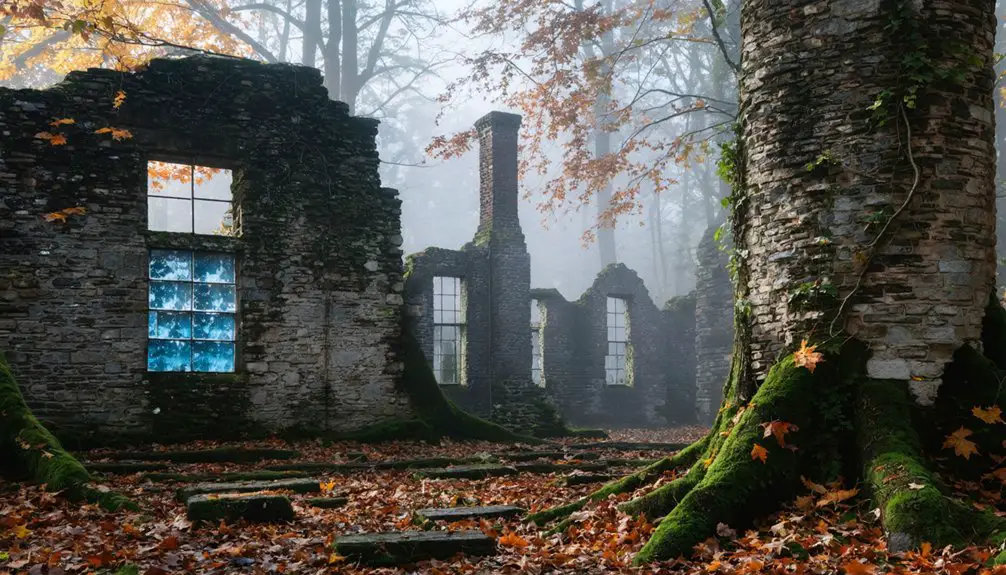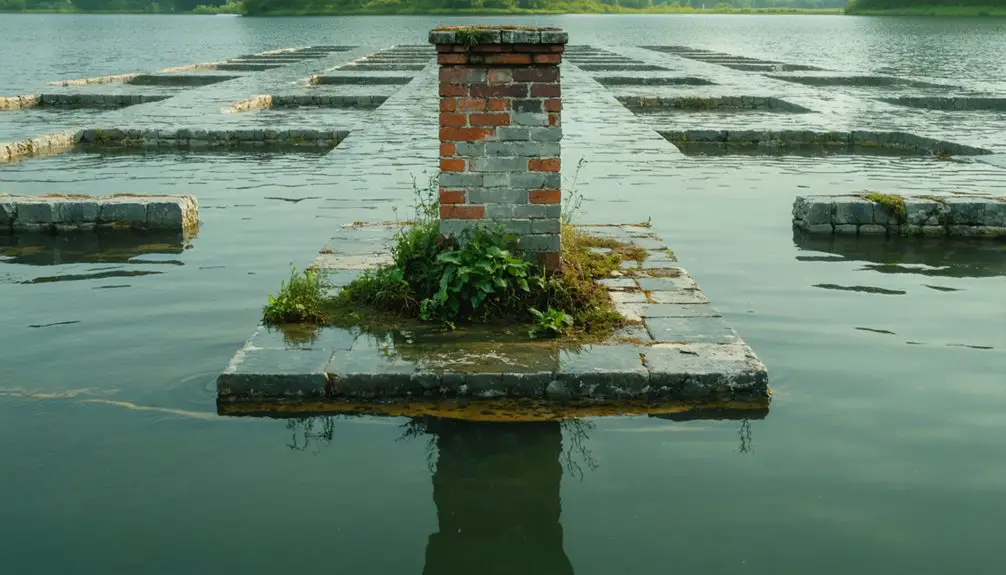
You’ll find the best ghost town exploring in Massachusetts during September, when temperatures are moderate and crowds are lighter than October’s peak season. Spring and summer offer ideal conditions for photographing ruins at sites like Dogtown and the Quabbin Reservoir region, while winter reveals hidden industrial remnants at Haywardville through bare trees. Each ghost town holds unique seasonal characteristics that shape your exploration experience, from weather patterns to historical significance.
Key Takeaways
- September offers ideal conditions with lighter crowds than October while maintaining a haunted atmosphere and comfortable temperatures for exploration.
- Spring provides clear visibility of Dogtown’s stone ruins and cellar holes with minimal vegetation obstruction and moderate weather.
- Early morning summer visits allow photography at Quabbin Reservoir sites before tourist groups arrive and heat becomes intense.
- Winter reveals hidden industrial remnants at Haywardville through bare trees, though snow depths can reach dangerous levels.
- Avoid peak Halloween season in October, particularly around Salem, when tourist traffic causes hour-long delays and crowded sites.
Spring Exploration of Dogtown’s Stone Ruins
Wandering through the rolling hills of Cape Ann, you’ll discover Dogtown’s haunting stone ruins spread across five square miles of wooded terrain between Gloucester and Rockport.
Spring’s mild weather provides perfect conditions to explore the numbered cellar holes and ancient Indigenous ceremonial landscapes that date back thousands of years. You’ll find prime stone preservation during this season, before summer crowds arrive.
Spring unveils ancient stories carved in stone, as warming days invite discovery of millennia-old ceremonial grounds and colonial ruins.
Follow dirt paths winding through forested hills to discover over 40 original home sites, marked by Babson’s numbered boulders. The area was once home to affluent colonial families, with settlement reaching its peak in the 1750s.
The woodland shelter allows clear viewing of historical remnants, including a dam, miller’s house foundation, and carved message stones. The area includes the protected Goose Cove Reservoir, where development has been prohibited to preserve the watershed.
As spring wildlife emerges, you can trace the story of this abandoned settlement while exploring glacial formations and archaeological sites that reveal both colonial and Indigenous heritage.
Summer Adventures in the Quabbin Reservoir Region
The Quabbin Reservoir‘s summer season opens up unique opportunities to explore the remnants of four historic Massachusetts towns while enjoying regulated recreational activities.
You’ll find designated areas for fishing and hiking along the shoreline, though swimming and boating remain restricted to protect the drinking water supply that serves Boston and surrounding communities.
Through guided nature walks offered by the Visitor Center, you can learn about the valley’s transformation from rural townships to New England’s largest inland body of water while photographing preserved foundations and other historical markers.
Displaced workers known as “woodpeckers” helped clear the valley during the Great Depression, earning just over 60 cents per hour for their efforts.
The Supreme Judicial Court was unable to stop the disincorporation of the towns despite legal resistance from residents.
Reservoir Swimming and Boating
Summer visitors to the Quabbin Reservoir should note strict regulations governing water activities, as this essential drinking water source prohibits full-body contact recreation including swimming.
The visitor center is open year-round to help guests understand and follow all water regulations.
You’ll find that reservoir regulations prohibit wading except when launching or removing boats, and boots are mandatory during these activities.
If you’re interested in boating, you can access the reservoir through three designated launch areas, but only motorized boats for fishing are permitted.
You’ll need to obtain a Quabbin Boat Seal and either a Massachusetts fishing license or a one-day five-dollar Quabbin license.
For non-motorized options, you can rent canoes, kayaks, or jon boats from the Department of Conservation and Resources at Areas 2 and 3, though availability is limited and operates on a first-come, first-served basis.
These strict regulations help maintain the 412 billion gallons of pristine water that supplies drinking water to the Boston area.
Historical Site Photography Spots
Photographers seeking to document Massachusetts ghost towns will find rich opportunities throughout the Quabbin Reservoir region‘s historical sites.
The 1.8-mile walk from Gate 40 provides steady hiking access to key photography locations.
You’ll discover ideal lighting conditions during autumn and spring at the Quabbin Cemetery, where over 6,600 grave markers tell stories of displaced communities from Dana, Enfield, Greenwich, and Prescott.
For capturing foundation remnants, plan your visit during summer when vegetation thins, revealing stone-lined cellar holes across Dana Common and Prescott’s former farmlands.
Early morning and golden hour provide the best contrast for photographing vintage signage and historical markers.
Winter offers unobstructed views of the extensive stone wall networks that once divided agricultural lands.
Don’t miss the museum’s collection of archival photographs, which you can match against today’s landscape for compelling then-and-now comparisons.
The Swift River Valley museum showcases a 1927 Dana Ford Model A fire truck that serves as an excellent photography subject.
Guided Educational Nature Walks
While exploring Massachusetts ghost towns during summer months, you’ll find expert-led nature walks that seamlessly blend ecological education with fascinating historical insights at the Quabbin Reservoir region.
Professional guides offer two-hour nature interpretation sessions where you’ll learn to read the landscape and uncover the area’s hidden past.
You can join year-round interpretive programs that accommodate various fitness levels along the two-mile Visitor Center Loop Trail.
Photographers will find sunrise and sunset views particularly rewarding for capturing the reservoir’s pristine beauty.
The Student Conservation Association maintains well-marked paths with yellow blazes, including universally accessible sections with terraced slopes. For added security and safety, the trail system employs user verification checks at key entry points.
As you traverse fourteen miles of trails, you’ll encounter diverse wildlife habitats featuring moose, bears, and bobcats, especially near Prescott Peninsula.
The experience delivers both structured learning and genuine wilderness exploration, with convenient dawn-to-dusk access and no admission fees.
Fall Colors at Catamount State Forest
As autumn descends on western Massachusetts, Catamount State Forest transforms into a spectacular canvas of fall foliage.
You’ll find prime leaf peeping opportunities in this hidden gem south of Shelburne Falls, where valley walls burst with vibrant maples and other deciduous trees.
Fall photography enthusiasts can capture nature’s display from early October through Halloween.
For the best experience at Catamount State Forest:
- Time your visit for the second week of October when colors typically peak
- Access the forest through scenic back roads near the historic Mohawk Trail
- Combine your trip with stops at nearby viewing spots like Whitcomb Summit and the Bridge of Flowers
You’re perfectly positioned to explore the broader region’s foliage, with the Berkshires and Mount Greylock just a short drive away.
Winter Walks Through Haywardville’s Industrial Past

Deep within the Middlesex Fells Reservation, the forgotten industrial village of Haywardville beckons winter explorers along the trails of Virginia Wood.
You’ll discover the remnants of a once-thriving rubber manufacturing hub, where Nathaniel Hayward and Charles Goodyear pioneered vulcanization in the early 1800s.
Winter exploration of this industrial heritage site offers unique advantages. The bare trees reveal hidden mill foundations, and you can easily trace the path of Spot Pond Brook, which once powered up to four mills simultaneously.
Winter’s naked branches unveil Haywardville’s industrial bones, where Spot Pond Brook once churned four mills in its pioneering heyday.
You’ll find trail maps at the Botume House to guide your journey through the Spot Pond Archaeological District. The quiet, low-traffic paths let you connect with three centuries of New England’s industrial evolution, from early gristmills to the rubber factories that made Haywardville a manufacturing powerhouse.
Seasonal Weather Patterns and Ghost Town Access
Weather patterns in colonial Massachusetts shaped the accessibility and preservation of its ghost towns far differently than the arid West. You’ll need careful weather preparedness when exploring these sites, as New England’s climate poses unique challenges throughout the year.
- Summer visits offer the best seasonal accessibility, though you’ll want to start early to avoid intense heat that can reach 99°F, especially in areas where deforestation has reduced natural shade.
- Winter exploration becomes treacherous with snow depths reaching 3.5 feet and below-freezing temperatures lasting into spring.
- Coastal ghost towns are particularly vulnerable during storm seasons, while reservoir sites like Quabbin’s submerged towns are best accessed during stable weather periods.
Watch for rapid weather shifts year-round, as these same conditions that created ghost towns continue to impact their remains today.
Peak Tourist Seasons and Crowd Management

While Salem’s Halloween celebrations draw over a million visitors annually, you’ll find markedly lighter crowds by visiting Massachusetts ghost towns in September rather than October.
You can still experience the haunted ambiance and historical sites during early autumn without battling the shoulder-to-shoulder crowds that plague Essex Street during peak season.
If you’re planning ghost tours or haunted house visits in Springfield, which boasts 13.8 haunted attractions per 100,000 households, scheduling your trip during off-peak times will help you avoid the hour-long traffic delays that typically affect North of Boston commutes during Halloween week.
Popular Months Vs Offseason
When planning your visit to Massachusetts ghost towns, timing can make or break your experience, especially in popular destinations like Salem.
Peak season crowd dynamics during September and October can transform quiet historic streets into tourist-packed zones, with Salem alone drawing over 1 million visitors annually.
To maximize your ghost town exploration, consider these timing strategies:
- Visit during off-peak months to avoid the shoulder-to-shoulder tourist behavior on Essex Street.
- Skip Halloween week when Salem’s population nearly doubles with 87,000 visitors in one day.
- Plan early morning visits before tour groups arrive, even during peak foliage season.
The offseason offers distinct advantages, including easier site access, quieter exploration opportunities, and potentially lower costs.
You’ll enjoy a more authentic experience without battling the intense autumn crowds that overwhelm local communities.
Managing Peak Crowd Flow
Throughout Massachusetts’ ghost towns, managing peak tourist seasons requires strategic planning, especially as visitor numbers approach pre-pandemic levels with 28.3 million annual tourists.
You’ll find the heaviest crowds during September and October, when fall foliage attracts both domestic and international visitors.
For the best visitor experience, avoid Salem during Halloween when 87,000 people pack the streets – nearly double the city’s population. Instead, plan your ghost town visits during off-peak hours or weekdays.
Early mornings offer fewer crowds and better photo opportunities. Consider that popular destinations like Salem see shoulder-to-shoulder crowds on Essex Street during October, turning typical 20-minute commutes into hour-long delays.
Effective crowd control means scheduling your visit during quieter periods, particularly if you’re seeking authentic historical experiences without the tourist chaos.
Historical Significance of Each Season
Since Massachusetts ghost towns hold distinct historical significance in each season, understanding their seasonal patterns reveals crucial moments in their development and decline.
Spring folklore tells of Dogtown’s strategic settlement in 1646, while summer exploration reveals Norton Furnace’s industrial peak with 25 houses by 1850.
Consider these pivotal seasonal events:
- Winter marked Dogtown’s final chapter when Cornelious Finson left in February 1839.
- Summer saw the Old Colony Railroad’s expansion to Norton Furnace in 1871.
- Fall witnessed Enfield’s emotional farewell ball in April 1938 before Quabbin’s flooding.
You’ll find each season shaped these abandoned communities differently, from spring’s defensive settlements against pirates to winter’s harsh reality of displacement, creating the ghostly landscapes you can explore today.
Frequently Asked Questions
Are Any of These Ghost Towns Still Inhabited by Private Residents?
No, you won’t find privately inhabited structures in these Massachusetts ghost towns today, though local legends persist. They’re fully abandoned, with only occasional caretakers or park staff maintaining historical sites.
What Paranormal Investigation Equipment Is Allowed at These Abandoned Sites?
Like a cautious explorer mapping uncharted territory, you’ll need to check local regulations before bringing paranormal gear. Most sites allow EMF meters, cameras, and audio recorders, but spirit boxes require special permission.
Do Any Local Museums Display Artifacts Recovered From These Ghost Towns?
You’ll find ghost town artifacts displayed at the Winchendon History Center, where local history preservation efforts showcase regional relics, plus some smaller museums maintain collections from abandoned Massachusetts settlements.
Which Ghost Towns Require Special Permits or Guided Tours to Visit?
Like following ghostly footprints in fresh snow, you’ll need guidance to explore these sites. Currently, Massachusetts doesn’t have specific permit requirements or mandatory guided tours for visiting abandoned settlements within the state.
Are Metal Detectors Permitted at Any of These Abandoned Settlement Sites?
You’ll need written permission for metal detecting at ghost towns due to state historical preservation laws. Most sites like Dungeon Rock and Belchertown require official consent and follow strict artifact regulations.
References
- https://bostonuncovered.com/ghost-towns-massachusetts/
- https://en.wikipedia.org/wiki/List_of_ghost_towns_in_Massachusetts
- https://www.tripadvisor.com/Attractions-g28942-Activities-c47-t14-Massachusetts.html
- https://historyofmassachusetts.org/ghost-towns-massachusetts/
- https://www.geotab.com/ghost-towns/
- https://wnaw.com/ma-ghost-towns-hiking/
- https://www.youtube.com/watch?v=NnWdey6OaHM
- https://babsonassoc.org/indegeneous-presence-dogtown/
- https://historicipswich.net/2021/01/23/dogtown-its-history-and-legends/
- https://www.wbur.org/news/2016/11/09/dogtown-boulders-gloucester