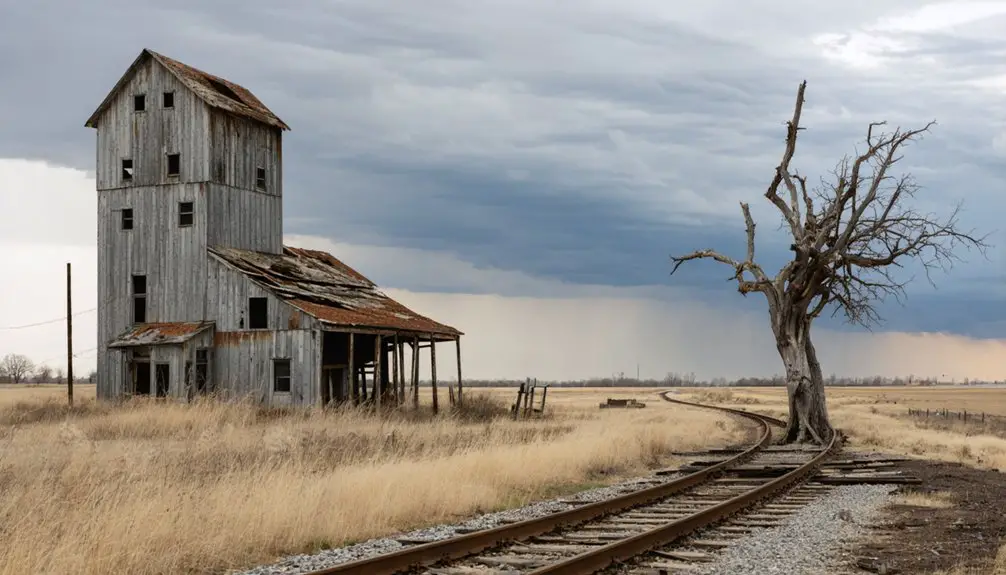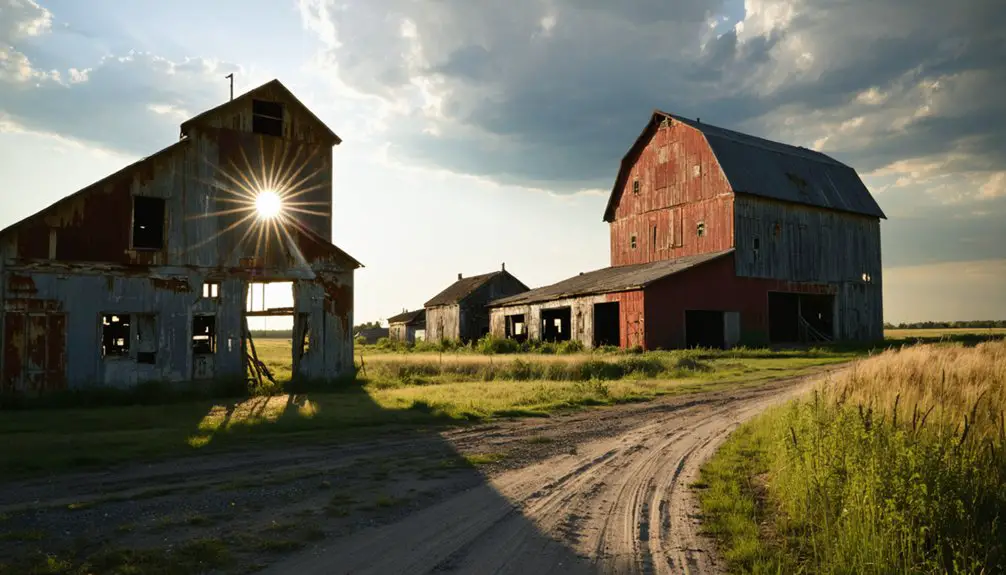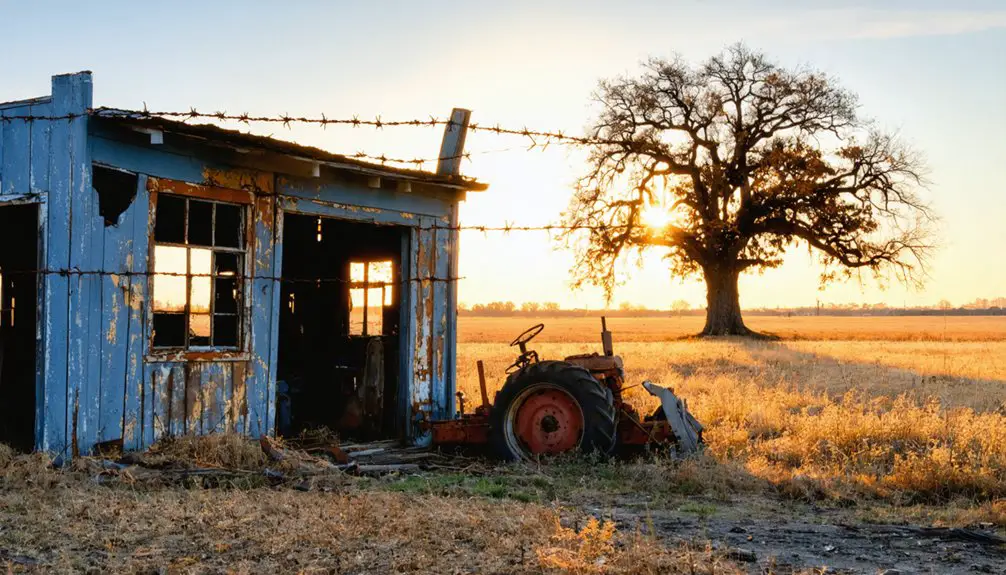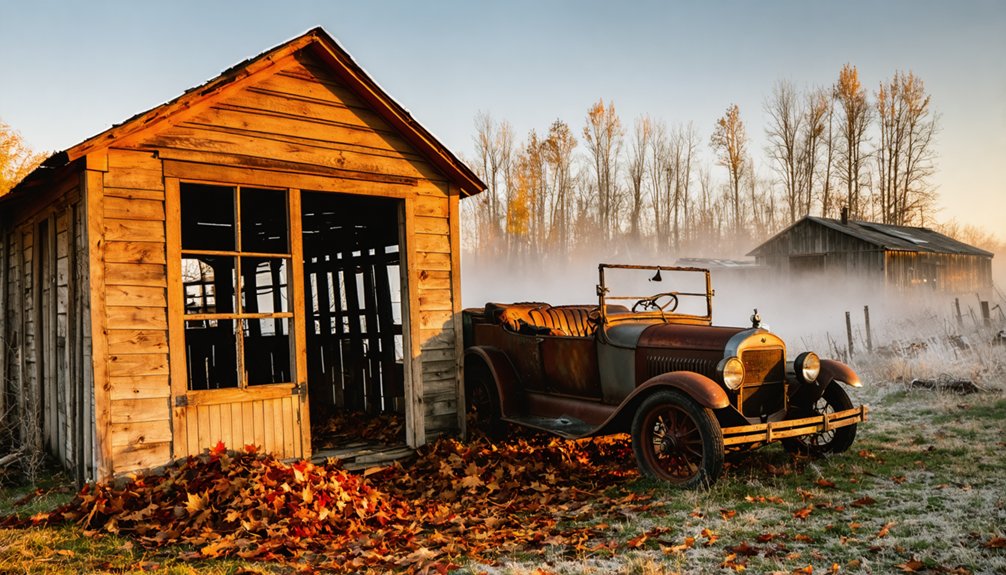
You’ll find Minnesota’s ghost towns most accessible from Memorial Day through October, when mild temperatures align with peak programming at preserved sites like Forestville. Spring wildflowers create unique photo opportunities among weathered foundations, while fall’s vibrant foliage adds dramatic backdrops to abandoned structures, especially in the northeast. For the best experience, plan your visit during summer’s reliable weather and organized tours – though each season offers its own fascinating glimpse into Minnesota’s forgotten past.
Key Takeaways
- Memorial Day through October is the prime visiting season, offering reliable access and guided tours at major ghost town sites.
- Fall months (September-October) provide the most photogenic conditions with vibrant foliage backdrops and comfortable exploring temperatures.
- Spring offers unique wildflower viewing opportunities among ruins, though some sites may be muddy from melting snow.
- Summer attracts larger crowds but ensures full accessibility, especially for southern Minnesota locations within 100 miles of Rochester.
- Winter visits should be avoided due to dangerous conditions, unplowed roads, and extremely cold temperatures inside abandoned structures.
Seasonal Access and Weather Considerations
While Minnesota’s ghost towns can be explored throughout the year, the prime visiting season runs from Memorial Day through October, when most sites offer excellent access and weather conditions.
You’ll find the most thorough experiences at managed locations like Forestville, where guided tours and building access coincide with mild southern Minnesota temperatures.
Site manager Matt Eidem maintains the town’s historic buildings throughout the visiting season.
Northern sites face more significant weather impacts, particularly along Lake Superior where conditions can be unpredictable even during summer months.
Many sites reflect economic and social changes that shaped Minnesota’s development through different eras.
Plan your visits to places like Taconite Harbor during non-winter periods to avoid harsh conditions.
Most preserved ghost towns implement seasonal closures outside the May-October window, primarily for preservation purposes and visitor safety.
Visit Minnesota’s preserved ghost towns during peak season from May through October, when sites are open and conditions support safe exploration.
The state park system’s integration of several ghost towns has helped establish reliable seasonal operating schedules that align with ideal weather patterns.
Popular Summer Destinations and Events
You’ll find Minnesota’s ghost towns especially vibrant during summer when Forestville’s educational tours showcase 170 years of preserved history through hands-on activities and interpretive programs.
The Root River State Trail offers exceptional biking opportunities through Whalan, where you can time your visit to catch the unique Stand Still Parade.
State parks like Itasca transform into outdoor classrooms during summer months, featuring guided tours that explore abandoned logging settlements and pioneer life.
The town’s preserved general store interior remains exactly as it was in the 1800s, offering visitors an authentic glimpse into frontier commerce.
Local historical societies offer guided tour insights that provide fascinating details about the rich history and cultural significance of each ghost town.
Summer State Park Activities
Minnesota’s state parks burst into vibrant activity during summer months, offering an impressive array of outdoor programs and adventures for visitors of all skill levels.
You’ll find beginner-friendly I Can! programs that introduce camping activities and outdoor skills, perfect for families wanting to explore nature together. These programs include overnight camping experiences for families new to outdoor recreation. Download GeoPDF maps to navigate extensive hiking trails without cell service, leading you to hidden waterfalls and fire towers with panoramic views.
Take advantage of free loaner gear while trying your hand at fishing, paddling, or mountain biking. The parks’ swimming beaches provide invigorating breaks from summer heat, while scenic canoe routes offer peaceful exploration. High-energy activities like whitewater rafting and rock climbing provide thrilling challenges for adventure seekers.
For young adventurers, the Junior Ranger program combines education with outdoor fun, and nighttime programs reveal the parks’ nocturnal wonders.
Festival Season at Forestville
During summer 2025, Historic Forestville transforms into a vibrant festival destination, anchored by its signature Bat Festival held across two July weekends.
You’ll discover this preserved 19th-century ghost town coming alive with educational programs and hands-on activities celebrating these mysterious nocturnal creatures.
- Join citizen scientists for evening bat counts, contributing to essential conservation data while watching these fascinating mammals emerge at dusk.
- Explore the restored village, crossing the Root River to uncover the general store, homestead, and former mill sites.
- Venture through forest trails leading to historic graveyards and hidden cemetery paths. The park’s extensive network of 20 miles of trails provides multiple routes to these historic locations.
- Immerse yourself in the parallel worlds of bat ecology and 1800s Minnesota life, with expert-led programs from the Department of Natural Resources.
Visit Mystery Cave, Minnesota’s longest cave system, to witness stunning formations of stalactites and stalagmites while exploring underground passages.
Don’t miss August’s Ghost Towns tour and Charlie Parr’s evening performance to round out your summer adventure.
Spring Exploration Opportunities
With spring’s arrival, you’ll find most ghost town trails become accessible as winter’s grip loosens and snow melts away.
While mild temperatures make for comfortable exploring conditions, some ruins and foundations appear less dramatic without winter’s stark contrast or summer’s lush backdrop.
Like the town of Forest Center that supported 250 peak residents, these abandoned communities tell stories of bustling life and industry. You can compensate by timing your visit to catch native wildflowers blooming among the weathered stone foundations, creating uniquely beautiful photo opportunities of nature reclaiming these historic sites. These settlements once supported thriving communities with post offices and hotels before their eventual decline.
Thawing Trails Access Opens
As spring thaw transforms Minnesota’s landscape, ghost town explorers can access an extensive network of trails beginning in mid-March.
Trail accessibility varies by region, with Soo Line South Trail in Aitkin County leading the seasonal openings, while northern routes like Hibbing to Alborn Trail extend into fall.
You’ll find thawing conditions create unique opportunities to explore historic sites throughout the state.
- Access Forestville’s preserved 1890s general store via Root River State Trail once frost leaves the ground.
- Discover Whalan’s historic depot and abandoned buildings along thawed biking paths.
- Explore Banning State Park’s ghost town ruins after mid-spring surface stabilization.
- Navigate to Grey Cloud Island’s lime kiln sites when river routes clear for boat access.
Mild Weather Ruins Viewing
Mild spring temperatures in Minnesota offer a deceiving window for ghost town exploration. You’ll find that sudden cold snaps following these mild periods can quickly derail your plans, especially at sites near Minneapolis where shifting weather patterns clear out foot traffic abruptly.
Your biggest mild weather challenges emerge on unpaved roads leading to remote locations like Mineral Center and Chippewa City. Even during comfortable conditions, these routes become treacherous with spring mud.
While ghost town visibility improves at quarry sites like Banning State Park and Blue Earth County’s rural ruins, the pleasant weather draws larger crowds, diminishing the authentic experience. Southern Minnesota locations within 100 miles of Rochester become particularly busy during these deceptive mild spells, as their proximity to the Mississippi River makes them easily accessible.
Spring Wildflowers Near Foundations
Nature transforms Minnesota’s ghost town landscapes during spring, when delicate wildflowers emerge through the remnants of abandoned foundations and historic settlements.
You’ll discover peak bloom timing from March through May, as Virginia Bluebells carpet Carley State Park’s trails near former mining areas, while wild ginger and toothwort line the historic foundations at Whitewater State Park.
- Track early-season skunk cabbage in February, bursting through thawed soil near abandoned settlements.
- Witness spring ephemerals like White Trout Lilies before tree canopy closes in mid-May.
- Explore Nerstrand-Big Woods’ dense woodland displays featuring may apple and trillium.
- Follow the Devil’s Track Wildflower Sanctuary trail to identify native species amid crumbling foundations.
The richest wildflower identification opportunities align with ghost town ruins in Minnesota’s river valleys and bluff country.
Fall Colors and Photography Tips
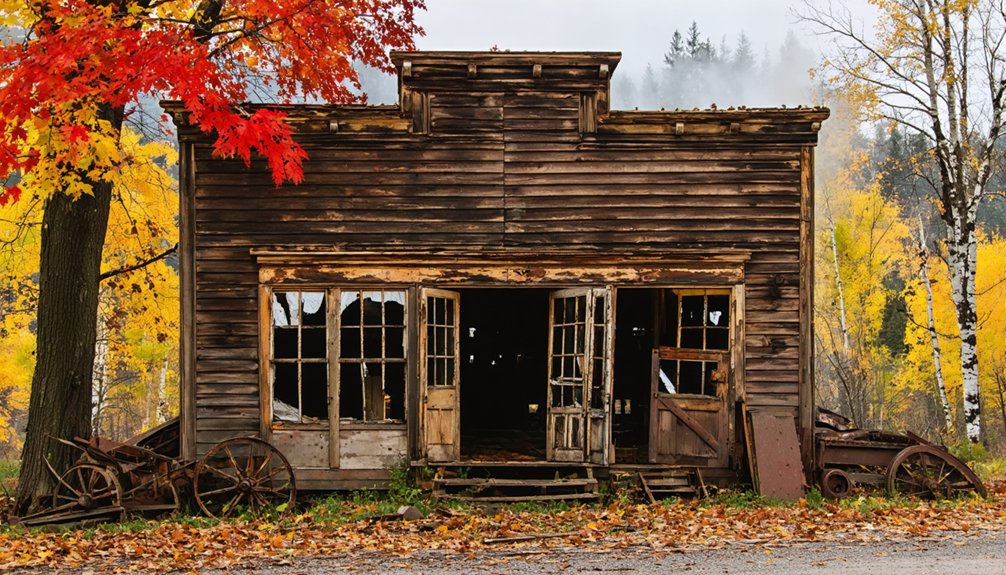
When Minnesota’s autumn arrives, the state’s ghost towns transform into spectacular photography destinations, particularly during the peak fall colors of September and October.
Minnesota’s forgotten towns awaken each fall, offering photographers a canvas of abandoned beauty amid September’s vibrant autumn display.
You’ll find the most dramatic displays in the Northeast, where abandoned structures frame stunning compositions against golden maples and deep reds.
For the best fall photography results, plan your ghost town visits during sunrise or sunset when the light enhances color intensity.
You’ll want to explore inland locations near Ely or along the Gun Flint Trail, where you’ll encounter fewer photographers than at popular North Shore spots.
Focus your color strategies on clear mornings when autumn skies create striking contrasts with warm-toned foliage.
Consider including Lake Superior reflections in your shots, as water features can amplify the saturation of surrounding fall colors.
Winter Challenges and Safety Precautions
Minnesota’s harsh winter months demand serious preparation for ghost town exploration, as temperatures plummet and accessibility becomes severely limited.
Winter hazards intensify in these remote locations, where cell service drops and roads become treacherous. You’ll need proper safety gear to navigate the challenges of these historically rich sites.
- Wind chills near zero can make abandoned tunnels and structures 15 degrees colder inside, requiring heavy layering and emergency supplies.
- Unplowed backroads to places like Sawbill Landing become nearly impossible to traverse without proper vehicle preparation.
- Crumbling walls and icy surfaces create dangerous conditions in deserted towns, especially during overcast conditions.
- Remote locations like Mineral Center demand group travel and early departures to avoid peak storm conditions and potential stranding.
Planning Your Ghost Town Adventure

Plotting your Minnesota ghost town expedition requires careful research and detailed planning across the state’s diverse regions. Start by accessing county-specific resources – you’ll find detailed GIS maps from Goodhue County, thorough guides from Hennepin County, and ghost town location maps from Carver County’s historical society.
Before heading out, gather essential visitor preparation materials since many sites sit on remote backroads with limited cell service. Download interactive maps and historical photographs to help identify locations, as most ghost towns won’t match the stereotypical abandoned building scenes you might expect.
Check historical timelines from local museums to understand each site’s ghost town history – whether it’s Forestville’s railroad bypass story, Elcor’s mining heritage, or Tazaska’s brief existence during the Panic of 1857.
Frequently Asked Questions
Are Any Ghost Towns in Minnesota Legally Off-Limits to Visitors?
Look before you leap – you’ll find legal restrictions on privately owned ghost towns requiring access permissions, while others on public land welcome exploration. Some mining company sites remain strictly off-limits.
Which Ghost Towns Have the Most Original Structures Still Standing?
You’ll find Forestville has the most intact historic preservation, with its Meighen Store and family buildings showcasing significant 1890s architecture. Old Crow Wing’s Beaulieu Mansion adds rare architectural significance from 1849.
Do Any Minnesota Ghost Towns Have Reported Paranormal Activity?
Like whispers from the past, you’ll find haunted legends at Elcor, where shadowy figures lurk near beds, and Milford Mine, where supernatural sightings of lost miners still echo through abandoned tunnels.
Can Metal Detectors Be Used at Minnesota Ghost Town Sites?
You’ll need special permits for metal detecting at ghost town sites in Minnesota. Historical artifacts over 100 years old are protected, and you must follow state regulations or risk hefty fines.
Are Guided Tours Available for Exploring Minnesota’s Remote Ghost Towns?
Like hidden treasures waiting to be discovered, you’ll find guided exploration options through Iron Range trolley tours, while historical societies offer specialized tours highlighting the historical significance of Minnesota’s remote ghost towns.
References
- https://www.ghosttowns.com/states/mn/mn.html
- https://kroc.com/9-strange-ghost-towns-within-100-miles-of-rochester-minnesota/
- https://thievesriver.com/blogs/articles/ghost-towns-in-minnesota
- https://quickcountry.com/minnesotas-abandoned-ghost-towns/
- https://www.youtube.com/watch?v=5bCG6B2rzZY
- https://www.geotab.com/ghost-towns/
- http://www.onlyinyourstate.com/experiences/minnesota/ghost-towns-mn
- https://www.cbsnews.com/minnesota/news/forestville-southern-minnesota-ghost-town-still-attracting-summer-visitors/
- https://www.startribune.com/ghost-towns-minnesota-nininger-forestville-old-crow-wing/601169483
- https://www.youtube.com/watch?v=Tp1sKG_5yZc