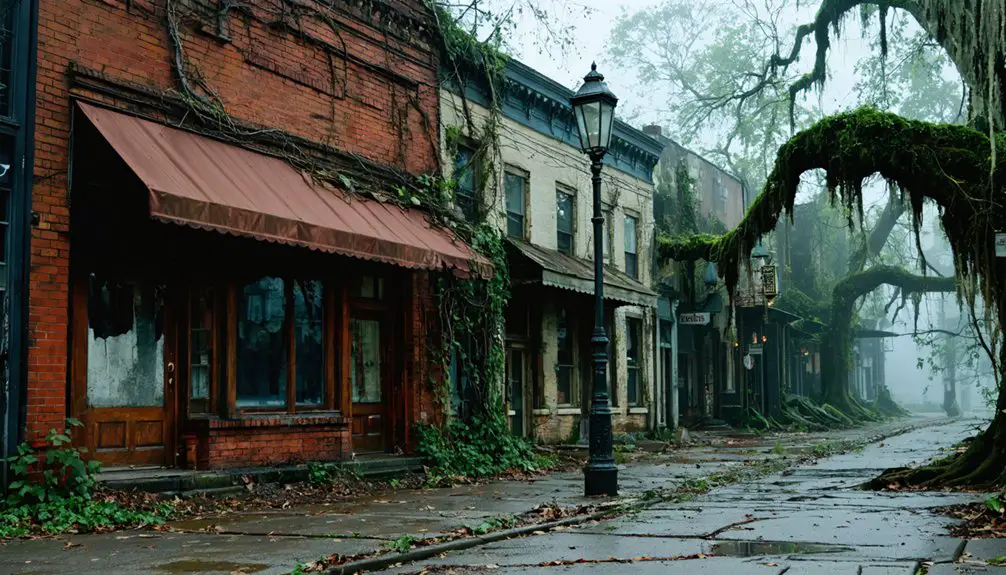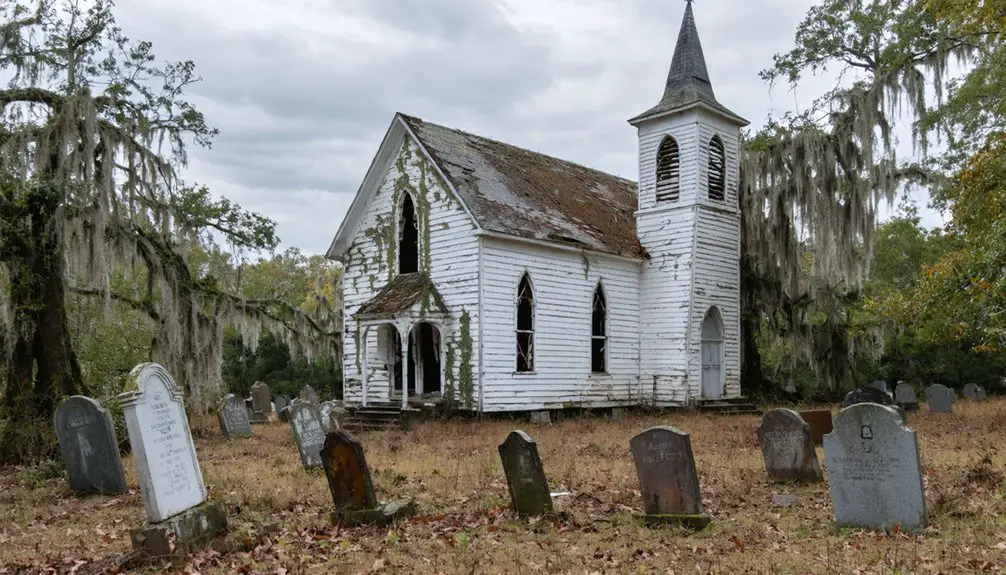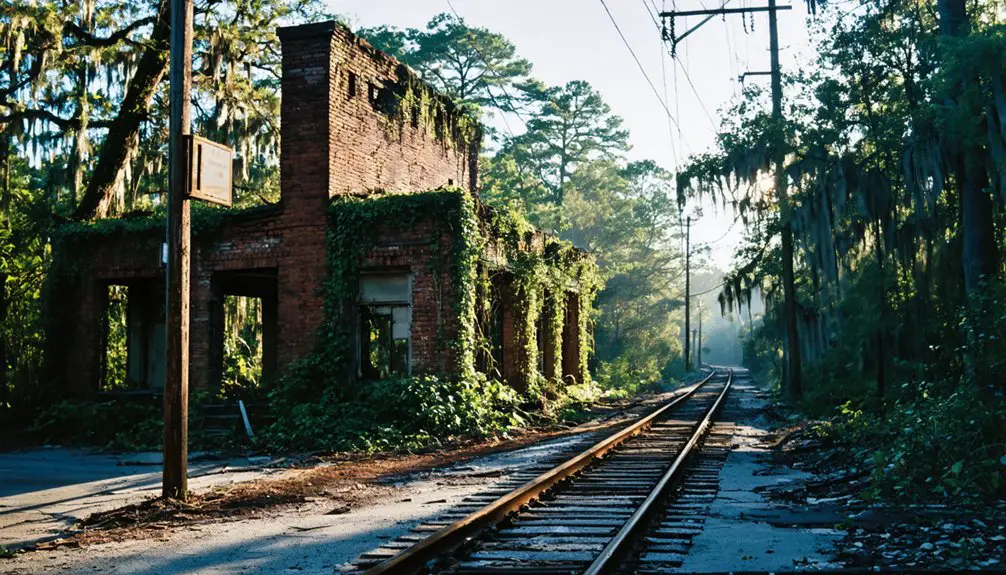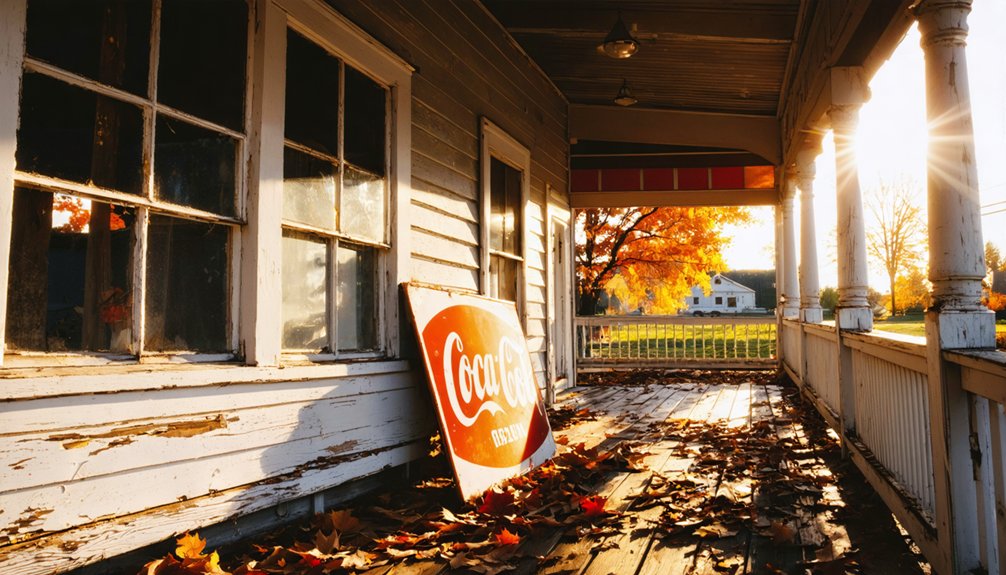
You’ll find the best ghost town exploring in South Carolina during spring and fall, when mild temps and lower humidity make for perfect conditions. Spring offers clearer visibility through the ruins, while fall’s dramatic lighting creates stunning photo opportunities of weathered structures. Watch out for summer’s thick haze and winter’s flooded access roads. For the safest, most rewarding experience, plan your visits during early morning or late afternoon when the shadows tell their own stories.
Key Takeaways
- Fall offers the best combination of mild weather, dramatic lighting for photography, and clear visibility of architectural details.
- Spring provides comfortable temperatures and good site access, but requires bug spray and proper gear for mosquito protection.
- Summer mornings are suitable for exploration, but afternoon thunderstorms and thick haze can limit visibility and create safety hazards.
- Winter allows better structural visibility through bare trees, though some sites become submerged and require watercraft access.
- Shoulder seasons (spring and fall) typically have fewer tourists and optimal weather conditions for ghost town exploration.
Seasonal Weather Patterns for Ghost Town Exploration
Although exploring South Carolina’s ghost towns can be rewarding year-round, you’ll want to plan your visits around the state’s distinct seasonal patterns. Unfortunately, detailed weather data specific to ghost town exploration isn’t readily available, making it challenging to provide precise guidance on temperature averages and precipitation patterns throughout the year.
Before planning your adventure, y’all should contact local historical societies and experienced ghost town explorers who know these abandoned places firsthand. They can share valuable insights about road conditions, seasonal accessibility, and weather-related challenges that might affect your visit. Some historic sites, like the town of Ferguson, are now completely submerged under Lake Marion, making exploration possible only through specialized water activities.
Keep in mind that many of these historic sites are vulnerable to weather damage, so it’s essential to time your exploration thoughtfully to both preserve these treasures and guarantee a safe experience. Rising sea levels and frequent storms have created ghost forests along coastal areas, making some locations increasingly difficult to access. Watch local forecasts carefully and consider how recent weather events might impact these fragile locations.
Spring Safety Tips and Access Considerations
Spring beckons ghost town adventurers with its mild temperatures, but y’all need to take proper precautions before setting foot in these historic treasures.
For safe spring exploration, secure your site permissions from Union County Museum and Historical Society before heading out. You’ll want to pack essential gear like flashlights, first aid supplies, and sturdy boots for tackling those uneven paths and weathered structures. Similar to Bodie State Historic Park, items are often left exactly as they were found, making safety protocols especially important.
Don’t forget your bug spray – our Carolina spring brings out dozens of mosquito species, especially during dawn and dusk. Wear long sleeves and pants when exploring shady areas.
Many sites like textile mill towns have experienced rapid deterioration since their industries departed, making structural safety a top priority.
Check road conditions and gate access beforehand, particularly for remote locations requiring dirt road travel or boat access. Plan your visits during daylight hours to avoid structural hazards and guarantee clear visibility of potential dangers.
Summer Storm Watch and Visibility Factors
You’ll need to keep a close watch on those summer thunderstorms rollin’ through South Carolina’s abandoned settlements, as flash floods can quickly make dirt access roads impassable.
Lightning activity typically peaks between 2-6 PM during the humid months, so y’all should plan your ghost town visits for the clearer morning hours.
The thick summer haze tends to settle in by mid-afternoon across the lowlands, which can limit your visibility of these historic sites and make photography a real challenge.
When visiting historic Ferguson, remember that boat access only is required since the town remains partially submerged beneath Lake Marion’s waters.
Local tales about Clementia being a ghost town are based on historical misinterpretations since it was primarily a business venture rather than an actual settlement.
Storm Impact on Access
Since summer storms routinely sweep across Lake Marion’s ghost towns, you’ll need to carefully time your visits to these historic sites.
Storm preparedness becomes critical as afternoon thunderstorms can quickly turn a peaceful exploration into a risky situation. You’ll find access routes like Ferguson Landing Way particularly treacherous during sudden downpours, and high winds create dangerous whitecaps across the two-mile open water crossing to Ferguson Island.
Don’t count on walking paths staying accessible – summer storms flood previously exposed ruins, leaving boat access as your only option. The Chicago lumber company originally established Ferguson before it was submerged under Lake Marion’s waters.
Even then, choppy waters and reduced visibility from heavy rain can make navigation challenging. Y’all should keep an eye on local weather patterns and have backup routes planned, especially when thunderheads start building over the cypress trees. The town of Peak has faced similar challenges, having been nearly destroyed multiple times by flooding from the Broad River.
Peak Lightning Hours
Lightning activity across South Carolina ghost towns reaches its peak intensity around 5 p.m. You’ll want to plan your explorations with lightning safety in mind, as summer thunderstorms can release bolts packing up to 1 billion volts of raw power.
These afternoon storms heat the air to a scorching 60,000 degrees Fahrenheit. For the best storm preparedness, wrap up your ghost town visits before the late afternoon peak hits. Recent records show Duke Energy crews worked through the night restoring power to over 400,000 customers after severe storms. Visitors can find detailed information about storm patterns in the Aviation category of our blog.
While daylight visibility’s better at 5 p.m. than after dark, those heavy downpours can still catch you off guard. Y’all don’t want to be caught in the open when those diurnal storms roll through, especially near Lowcountry and Midlands sites where 50-mph gusts ain’t uncommon.
Trust a local – timing’s everything when preserving both history and yourself.
Seasonal Visibility Changes
While South Carolina’s ghost towns offer year-round intrigue, summer months bring distinct visibility challenges that savvy explorers need to watch for.
Due to limited available research on seasonal visibility patterns at South Carolina’s ghost towns like Ellenton, Andersonville, and Chappells, y’all should prepare for varying conditions that might affect your ghost town photography and seasonal accessibility.
Before planning your visit, it’s best to check local weather patterns and consult preservation societies about current site conditions.
These historic locations, each with their own tragic stories of floods and forced relocations, deserve careful timing for ideal exploration.
While we can’t point to specific ideal seasons for visibility, staying flexible with your schedule and having backup dates will help guarantee you can fully experience these remarkable pieces of Carolina history when conditions are favorable.
Fall Photography and Historical Documentation
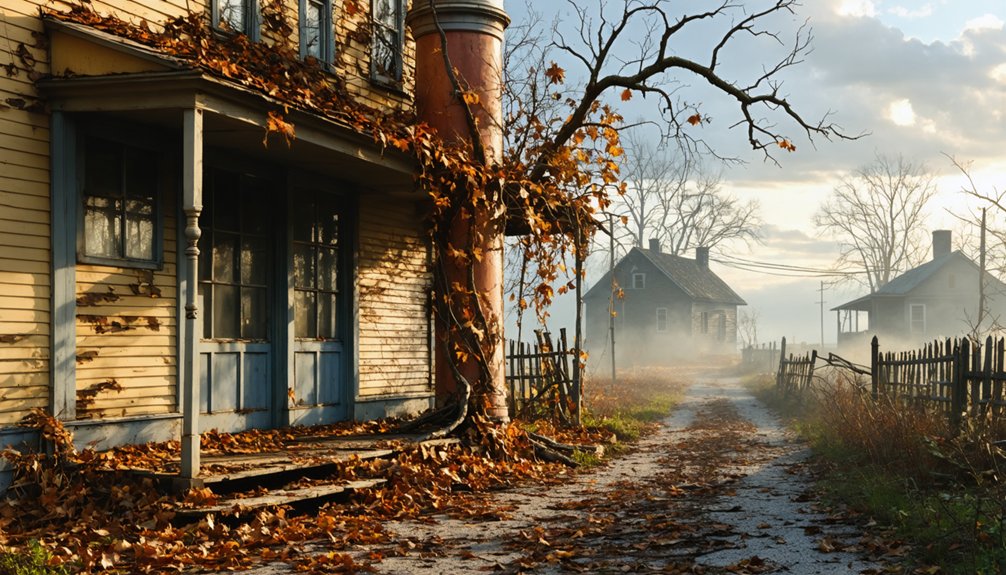
You’ll find fall’s low-angled sunlight creates dramatic shadows across the weathered facades of South Carolina’s ghost towns, making it prime time for capturing architectural details.
The season’s softer illumination brings out the subtle textures in historic structures, from the tabby ruins at Dorchester to the dental molding in Maysville’s abandoned storefronts.
Y’all can document these precious remnants of our past while the autumn light reveals hidden features that summer’s harsh glare often washes out.
Autumn Light and Shadows
When autumn’s golden hours descend on South Carolina’s ghost towns, photographers and history buffs discover ideal conditions for capturing these haunting remnants of the past.
While specific research on fall lighting patterns in these locations remains limited, y’all should plan your documentation visits during early morning or late afternoon when autumn shadows create dramatic contrasts against weathered structures.
Professional photography techniques for ghost town documentation during fall aren’t well-established for our region’s abandoned sites like Chappells.
We recommend bringing your own lighting equipment and reference markers to compensate for variable conditions. The changing autumn foliage and atmospheric conditions can affect visibility at these historical locations, so it’s best to scout your shooting locations ahead of time and be prepared to adapt your approach based on the day’s natural lighting situation.
Historic Architecture Documentation
As ghost town structures fade with each passing season, proper documentation of South Carolina’s historic architecture becomes increasingly crucial for preservation efforts.
You’ll find that pioneering surveys like the 1939 Waterman Report captured essential details of buildings before they vanished beneath Lake Marion’s waters. The architectural significance of sites like Colonial Dorchester’s tabby structures and Clementia’s brick-veneer cabins tells a rich story of evolving construction techniques.
When you’re exploring these sites, note how preservation techniques have evolved since the 1940s photography of St. John’s Parish plantations.
Today’s documentation combines archaeological surveys with detailed architectural inventories, as seen in the 1992 Charleston County effort that brought together local knowledge and professional expertise to record vanishing structures on Edisto and Wadmalaw Islands.
Since South Carolina’s ghost towns often lurk beneath winter waters, exploring these historical sites demands serious preparation and specialized gear.
Beneath South Carolina’s winter waters lie submerged ghost towns, waiting for well-equipped adventurers to uncover their forgotten stories.
You’ll need a sturdy kayak or canoe to reach places like Andersonville and Ferguson, where winter paddling means braving Lake Marion’s two-mile open water crossings and Lake Hartwell’s chilly depths.
Don’t let cold exposure catch you off guard – pack your dry suit and life jacket for December swims near Kingsbury’s old ferry site.
Winter’s bare trees offer clearer views of ruins, but you’re facing mud-slick access roads and remote locations. Y’all will want sturdy boots for those unmarked paths, plus navigation aids to spot Church Island through the winter swells.
Peak Tourist Months vs. Quiet Exploration Periods
While South Carolina’s ghost towns beckon year-round, you’ll find a stark contrast between the tourist-heavy summer months and the quieter off-season periods.
Summer brings crowds to accessible sites like Pinckneyville and Glenn Springs, offering guided tours and safety in numbers, but limiting your freedom to explore.
Y’all might prefer the solitude of winter months, when crowd dynamics shift dramatically. During December through February, you’ll have abandoned Main Streets all to yourself, perfect for unhurried photography and personal research.
Early mornings or late afternoons provide similar exploration benefits year-round. For the best of both worlds, consider spring and fall shoulder seasons – you’ll enjoy mild weather and scheduled events while avoiding peak summer crowds.
Just remember, some locations like Ellenton remain permanently off-limits regardless of season.
Weather-Related Site Restrictions and Alternatives
Before y’all set out to explore South Carolina’s ghost towns, you’ll need to navigate a maze of weather-related restrictions that can change faster than coastal winds.
During hurricane season, especially June through November, many coastal sites become off-limits when storm surge threatens. You’ll want to check SCEMD’s Know Your Zone system before heading to places like Portsmouth Island.
Some locations, like Ferguson beneath Lake Marion, stay permanently submerged, while others face temporary closures during extreme weather.
Your best bet for site access is checking local authorities’ alerts and having backup plans ready.
Frequently Asked Questions
Are Any Ghost Towns Wheelchair Accessible or Suitable for Visitors With Mobility Issues?
You’ll find Colonial Dorchester’s your best bet with wheelchair accessibility on paved paths and boardwalks, though y’all should know some dirt areas need assistance for mobility challenges.
What Photography Permits or Permissions Are Required for Documenting Ghost Town Sites?
Y’all need to check photography regulations for each site – some ghost towns’re on private land requiring owner permission, while public spots might need commercial use permits through local authorities.
Which Ghost Towns Have Paranormal Investigation Teams Conducted Official Research Studies?
Y’all can find documented paranormal activity at Old City Jail, where Ghost Adventures crews used investigation techniques extensively. Belmont Inn and Newberry College have also hosted official ghost hunting teams in recent years.
Do Any Local Guides Offer Specialized Ghost Town Tours With Historical Reenactments?
Like an untold chapter, y’all won’t find specialized reenactment tours right now. Local history walks and guided tours stick to haunted jails and cemeteries, though you’re free to explore ghost towns independently.
Where Can Visitors Find Authentic Artifacts or Memorabilia From These Ghost Towns?
Y’all can hunt down ghost town relics at the South Carolina State Museum in Columbia, plus check out local historical societies and antique shops for authentic historical memorabilia from these old settlements.
References
- http://www.onlyinyourstate.com/trip-ideas/south-carolina/haunted-road-trip-sc-ghost-towns
- https://kids.kiddle.co/List_of_ghost_towns_in_South_Carolina
- https://www.randomconnections.com/ghost-towns-of-the-pee-dee-part-1-ellas-grove-and-palmer/
- https://www.randomconnections.com/ghost-towns-of-south-carolina/
- https://sctravelguide.com/2018/06/11/south-carolina-ghost-towns/
- https://wnok.iheart.com/content/2023-10-11-abandoned-south-carolina-town-named-the-creepiest-ghost-town-in-the-state/
- https://www.youtube.com/watch?v=-kK74wq5NUQ
- https://www.randomconnections.com/the-ghost-towns-of-lake-marion/
- https://dogwoodalliance.org/2021/10/ghost-forests-a-tangible-sign-of-the-climate-crisis/
- https://www.youtube.com/watch?v=KQOA3Q1z0Nc