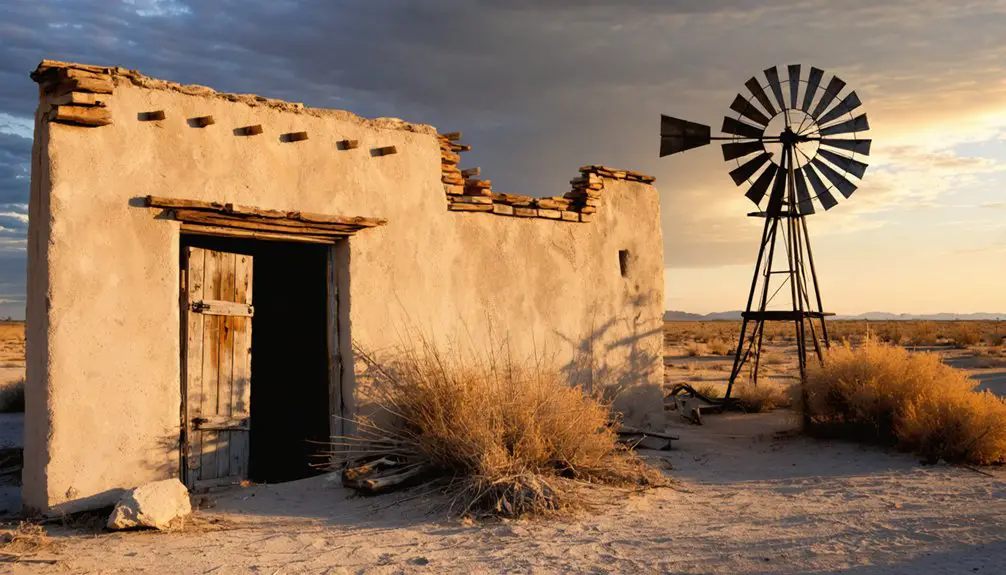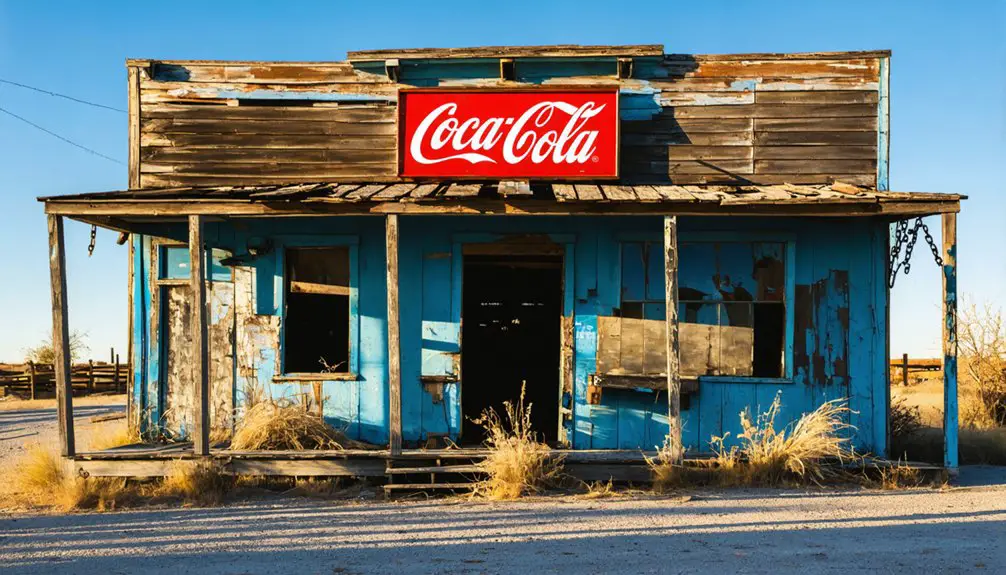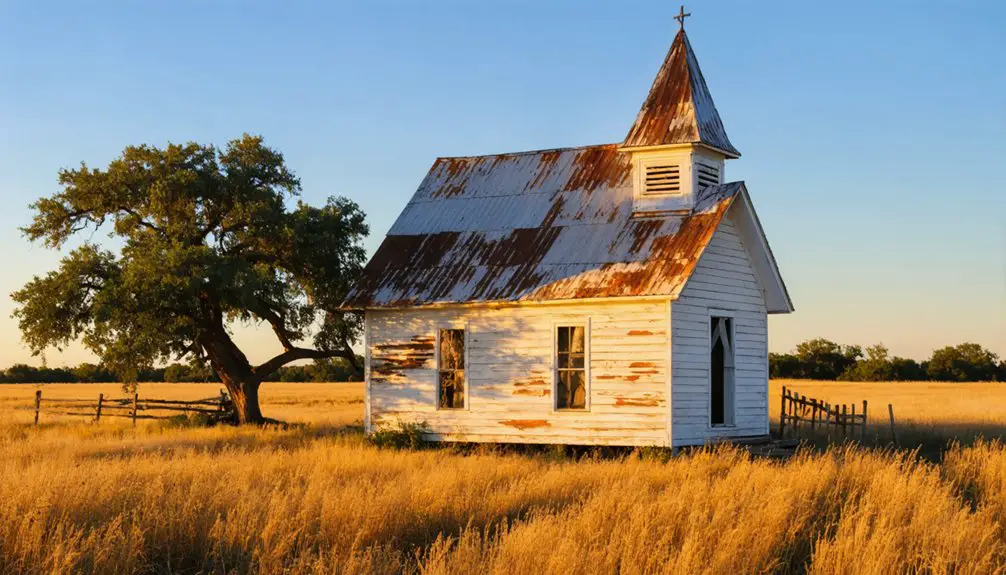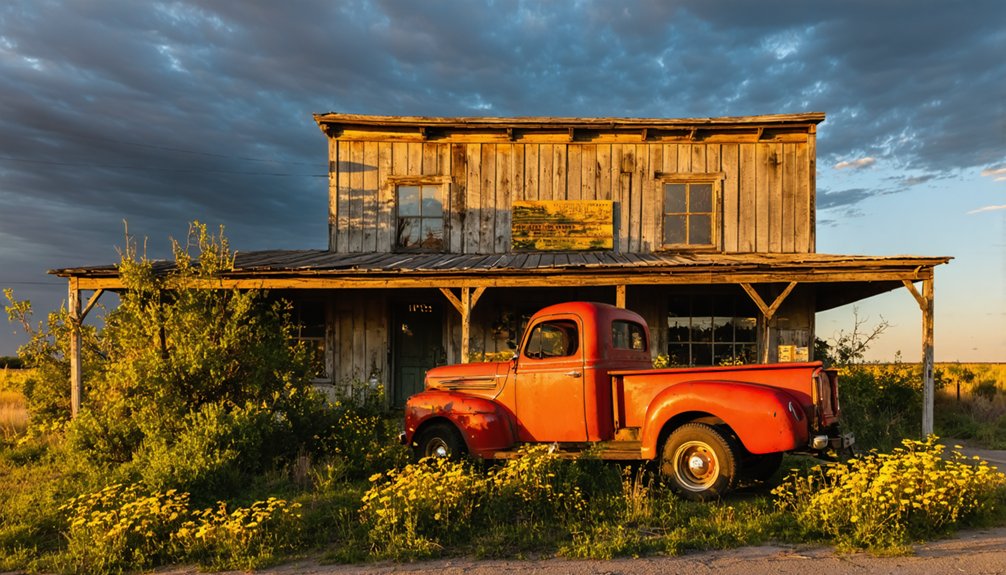
You’ll find fall, particularly October and November, to be the ideal time for exploring Texas ghost towns. The comfortable temperatures of 50-75°F combine with minimal rain and excellent road conditions, while seasonal events like haunted tours and the Terlingua Chili Cook-off add cultural depth to your adventure. Early mornings and late afternoons offer the best photography lighting, with atmospheric fog and golden hours enhancing the historic ruins. The autumn season‘s unique blend of weather and festivities creates an authentically eerie Texas experience.
Key Takeaways
- Fall (September-November) offers ideal 50-75°F temperatures, minimal rain, and peak haunted experiences at Texas ghost towns.
- October is the ultimate month for ghost town visits, featuring special events, haunted tours, and Halloween festivities.
- Spring provides comfortable 60-80°F temperatures and wildflower blooms but carries risks of rain making trails slippery.
- Winter offers solitary experiences with better visibility, though blizzards and freezing temperatures can affect northern locations.
- Avoid summer visits due to extreme temperatures above 90°F, increased risk of wildfires, and dusty conditions.
Seasonal Weather Patterns for Ghost Town Exploration
While Texas ghost towns beckon explorers year-round, each season presents distinct weather patterns that can make or break your adventure.
Spring exploration offers ideal conditions with temperatures ranging from 60-80°F and lower humidity, while wildflowers paint abandoned settlements in vibrant colors. You’ll find stable road conditions and minimal flash flood risks during March through May.
Spring brings a perfect window for ghost town explorers – mild weather, blooming wildflowers, and dependable road conditions invite discovery.
Summer risks become significant as temperatures soar above 90°F, especially in West and South Texas ghost towns. You’ll encounter intense droughts that expose submerged ruins in places like Belton Lake, but dust storms and wildfires can limit accessibility. Historical artifacts from pre-1950s farming communities frequently emerge during these dry periods. Towns like Ayr experienced devastating effects when severe droughts struck, leading to their eventual abandonment.
Fall brings relief with comfortable 50-75°F temperatures, though coastal sites face hurricane threats.
Winter delivers challenging conditions, particularly in the Panhandle, where blizzards and freezing temperatures can impact northern ghost town access.
Peak Events and Cultural Celebrations
Throughout the year, Texas ghost towns transform into vibrant cultural hubs hosting signature events that blend history with haunted entertainment.
You’ll find peak haunted experiences from September through November, when Fort Worth’s Wild West spirits emerge and San Antonio’s Six Flags Fright Fest reveals 13 terrifying attractions. Dark Hour Haunted House in Plano delivers intense live-actor performances throughout the season.
Don’t miss Terlingua Ghost Town’s legendary chili cook-off in November, where cultural heritage comes alive with live music and southwestern traditions. At El Paso’s original brothel, visitors can take ghost tour guides through historic haunted corridors.
October stands out as the ultimate month for ghost town visits, with Denton celebrating its status as Texas’ Halloween Capital.
You can explore Granbury’s haunted square, join El Paso’s historic brothel tours, or venture through the 1880s Concordia Cemetery.
These autumn festivities combine paranormal intrigue with authentic Texas culture, offering you the perfect mix of thrills and history.
Optimal Photography and Lighting Conditions
Capturing the perfect ghost town photograph requires strategic timing and an understanding of Texas’ unique lighting conditions.
Mastering ghost town photography means aligning your lens with Texas’ distinct light patterns and carefully choosing your moment to shoot.
You’ll find the most atmospheric shots during the golden hours – those precious moments around sunrise and sunset when low-angle sunlight dramatically highlights abandoned structures.
For early lighting enthusiasts, arrive by 5 a.m. to witness the sun gradually transform empty rooms, especially during foggy winter mornings in the Panhandle. The 2020 archival footage from Toya demonstrates how proper morning lighting reveals intricate architectural details.
If you’re drawn to night techniques, try light painting with long exposures to create ethereal glows in derelict buildings, illuminating vacant windows in vibrant reds and blues. Dallas-based photographer Noel Kerns has mastered this “light painting” technique since 2007.
Avoid harsh midday sun, which washes out textures and details.
Instead, embrace atmospheric elements like the mysterious Marfa lights or Bragg Road’s ghost lights to enhance your nighttime compositions.
The eerie silence and wind-blown gravel will add authenticity to your shots.
Regional Temperature Variations Across Texas
Since Texas sprawls across multiple climate zones, you’ll need to plan your ghost town visits according to the region’s distinct temperature patterns.
You’ll encounter significant temperature fluctuations, from the humid eastern regions to the arid west. In summer, Fort Worth can scorch at 97°F, while coastal Galveston stays cooler at 89°F.
The climate impact varies dramatically across seasons, with winter bringing mild 50°F lows to Galveston but dropping to 23°F in Amarillo. Analyzing fifty years of data has shown consistent warming trends across the state.
For reference, Texas has recorded extremes from 120°F in Seymour and Monahans to -23°F in Seminole. Modern climate normals data from 1981-2010 helps travelers understand these temperature patterns.
When exploring ghost towns, factor in your region’s climate zone – subtropical humid in the east, subhumid in central Texas, and more extreme conditions in the western areas.
Crowd Levels and Tourist Traffic Through the Year
While Texas boasts over 500 ghost towns scattered across its vast landscape, you’ll find the visitor traffic remains surprisingly manageable throughout the year.
Tourist behavior follows predictable patterns, with crowd dynamics shifting seasonally across these historic sites.
- Spring brings moderate crowds to heritage sites, with Jefferson’s ghost walks and tours drawing steady numbers without feeling overcrowded. The Texas Hill Country attracts nature enthusiasts during wildflower season.
- Summer sees a natural dip in visitors due to intense heat, though Terlingua maintains activity near Big Bend. Historic communities like Gomez in Terry County now stand empty, offering haunting glimpses into Texas’ past.
- Fall emerges as the busiest season, especially during October when Jefferson’s haunted tours peak and Terlingua hosts its famous chili cook-off.
- Winter offers the most solitary experience, with minimal crowds at most locations except for Jefferson, which maintains year-round appeal for paranormal enthusiasts.
Natural Landscape and Scenic Viewing Times
The diverse Texas landscape transforms ghost town visits into rich visual experiences across five distinct natural regions.
You’ll discover the most striking natural beauty during fall months in Terlingua, when desert rock formations glow at sunset and Halloween events bring the ghost town’s ruins to life.
Spring brings wildflowers to the grasslands near Medicine Mound, while the rolling plains offer scenic drives past historic settlements like Independence.
For coastal ghost towns like Indianola, winter provides the calmest weather between hurricane seasons.
During severe droughts, you can explore the normally submerged ruins of Bluffton on Lake Buchanan’s exposed peninsula.
The Chihuahuan Desert surrounding Lobo offers year-round opportunities to witness nature slowly reclaiming abandoned structures against a backdrop of stark desert vistas.
Trail and Road Access by Season
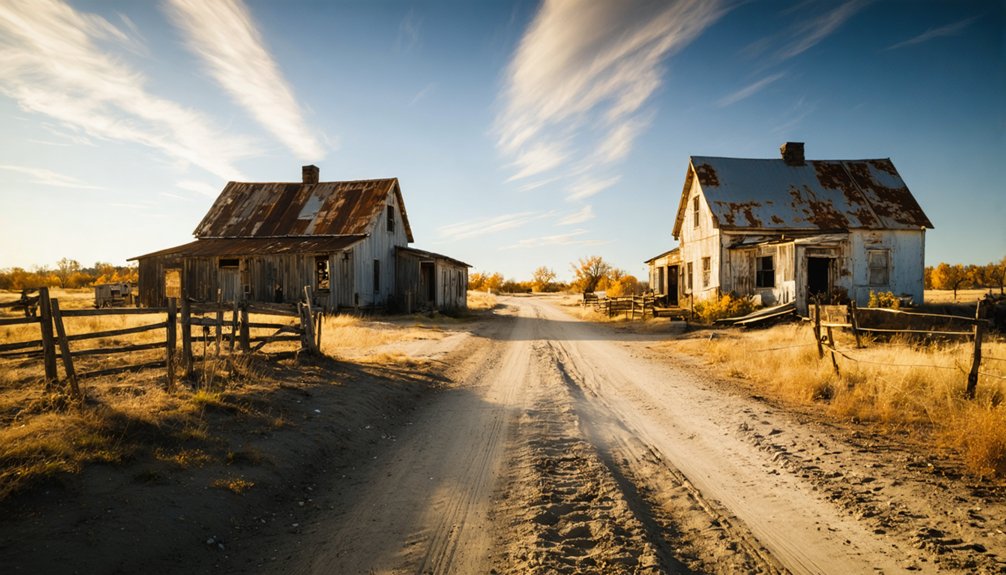
Planning your ghost town visit requires careful consideration of Texas’s seasonal road conditions, which vary dramatically throughout the year.
Trail maintenance and accessibility fluctuate with weather patterns, particularly affecting remote locations like Terlingua and Route 66 segments.
- Fall offers ideal road conditions with cooler temperatures and minimal rain disruption, making it perfect for exploring backroads to sites near Austin and seasonal ghost walks in Lockhart.
- Winter keeps most roads passable, especially along I-35 corridors, though you’ll want to limit extended nighttime exploration in remote areas.
- Spring brings rain risks, making unpaved trails slippery and requiring careful monitoring of water levels for places like Bluffton.
- Summer’s extreme heat impacts unmaintained routes, particularly in West Texas, where you’ll need reliable transportation and offline maps for safety.
Frequently Asked Questions
Are Pets Allowed in Texas Ghost Towns?
You can bring pets to Texas ghost towns, but you’ll need to follow specific pet policies. At Terlingua, you’re limited to two vaccinated dogs on 6-foot leashes during ghost town activities.
What Emergency Services Are Available Near Remote Ghost Town Locations?
You’ll need to contact local hospitals and save emergency contacts before visiting remote ghost towns, as rural EMS response times are considerably longer and service may be limited.
Do Any Ghost Towns Require Special Permits or Advance Reservations?
You’ll need special permits for excavation or study of landmark ghost towns under Texas Antiquities Code. Most accessible towns don’t require advance reservations, but some private properties may need owner permission.
Which Ghost Towns Are Wheelchair Accessible and ADA Compliant?
You’ll find most Texas ghost towns aren’t wheelchair accessible or ADA compliant, but you can enjoy Terlingua’s views from paved areas and join wheelchair-friendly ghost tours in San Antonio and Galveston instead.
Can Visitors Take Artifacts or Souvenirs From Ghost Town Sites?
You can’t legally take artifacts or souvenirs from Texas ghost towns. It’s against state and federal laws, violates artifact preservation ethics, and can result in fines or criminal charges.
References
- https://mix941kmxj.com/texas-ghost-town-visit/
- https://hawkvans.com/top-5-texas-ghost-towns-to-explore-on-your-next-road-trip/
- https://www.tripadvisor.com/Attractions-g28964-Activities-c47-t14-Texas.html
- https://www.hipcamp.com/journal/camping/texas-ghost-towns/
- https://www.amysatticss.com/ghost-towns/
- https://livefromthesouthside.com/10-texas-ghost-towns-to-visit/
- https://texashighways.com/travel/the-quest-to-resurrect-a-ghost-town/
- https://www.mysanantonio.com/lifestyle/travel-outdoors/article/6-ghost-towns-worth-visiting-in-Texas-12728963.php
- https://www.chron.com/life/wildlife/article/texas-drought-ghost-town-18348665.php
- https://mix941kmxj.com/see-how-two-texas-ghost-towns-battled-for-the-county-and-lost/