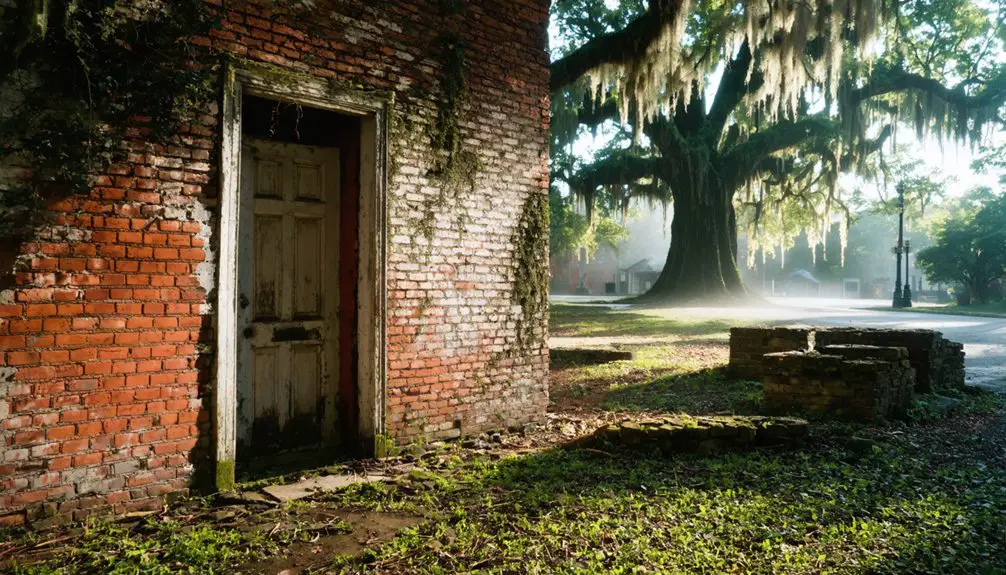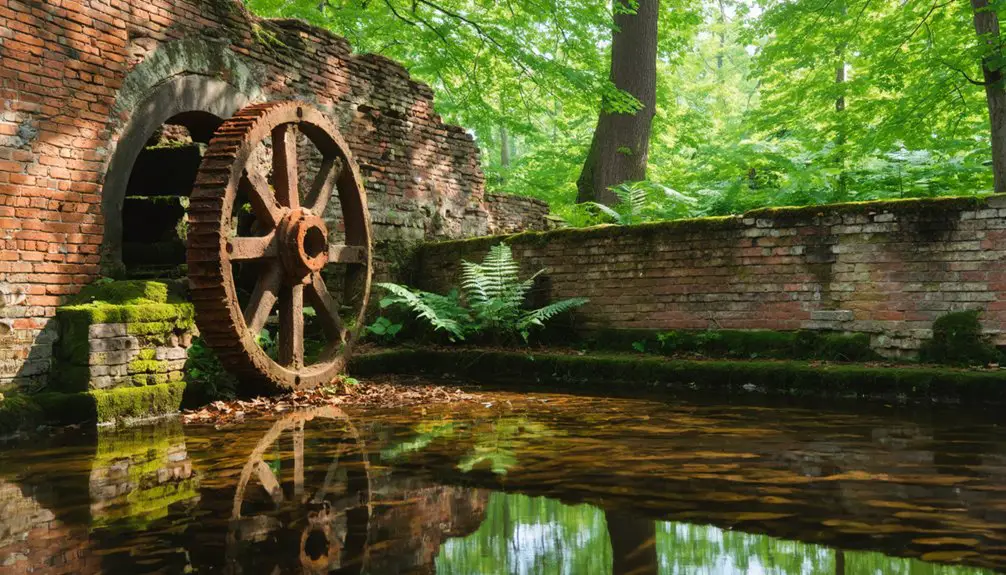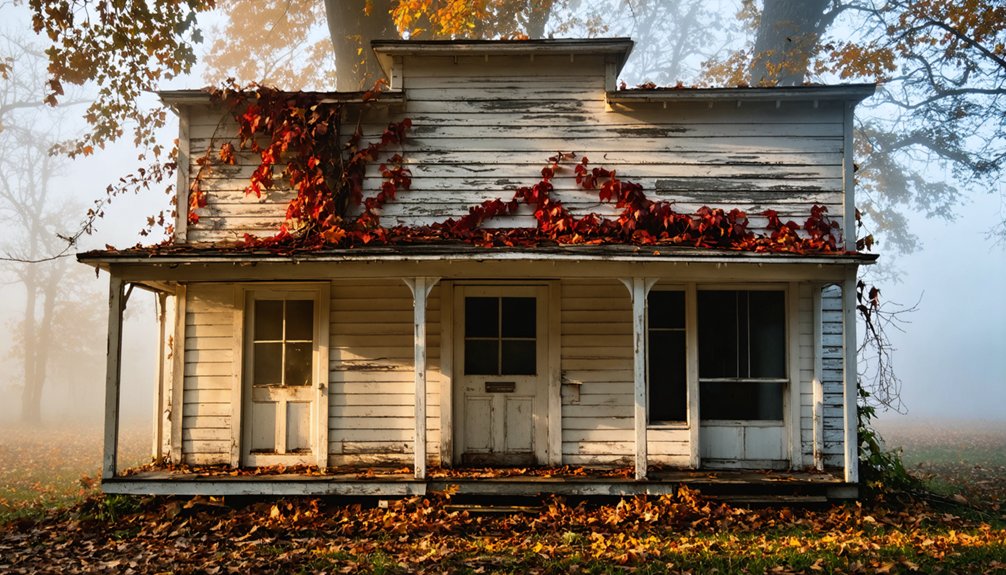
You’ll find Virginia’s ghost towns most rewarding to explore during autumn, specifically from early to mid-October. During this prime window, daytime temperatures hover in the comfortable 60s while vibrant fall foliage creates stunning backdrops for photography. Morning mists add atmospheric depth to historic structures, and reduced crowds allow for peaceful exploration of abandoned sites. The seasonal combination of crisp weather, golden light, and colorful landscapes sets the stage for an unforgettable ghost town adventure.
Key Takeaways
- Fall (October-early November) offers peak foliage, comfortable temperatures in the 60s, and fewer crowds at remote ghost town locations.
- Spring provides ideal 50-70°F temperatures, blooming wildflowers, and minimal rainfall for comfortable exploration of historical structures.
- Winter creates unique photography opportunities with snow-dusted streets, while maintaining good accessibility on repaved roads.
- Central Virginia ghost towns are best visited October 10-20, particularly around Bear Creek Lake and High Bridge Trail.
- Avoid summer visits due to high temperatures, frequent thunderstorms, increased wildlife risks, and heavy tourist traffic.
Why Spring Offers Prime Ghost Town Adventures
While Virginia’s ghost towns beckon visitors year-round, spring emerges as the perfect season for exploring these abandoned settlements.
Venture into Virginia’s forgotten places during spring, when abandoned towns reveal their secrets amid perfect exploring conditions.
You’ll discover excellent conditions with temperatures ranging from 50-70°F, providing comfortable exploration of historic ruins without summer’s oppressive heat or winter’s harsh chill. The spring flora creates stunning natural frames around weathered structures, as wildflowers and emerging foliage enhance each site’s historical significance. Visitors can explore remnants of coal mining operations that once produced over a million tons annually.
Recent storms can create challenges with muddy road conditions, so checking weather reports before departing is essential.
You’ll benefit from reduced rainfall and minimal crowds during this shoulder season, allowing for uninterrupted photography and contemplation of 19th-century facades.
Morning mist in Appalachian valleys adds atmospheric depth to your adventures, while maintained trails and gravel roads offer reliable access to remote locations. The season’s extended daylight hours and clear visibility guarantee you’ll capture every architectural detail of these preserved time capsules.
Summer Weather Challenges at Abandoned Sites
Although Virginia’s ghost towns offer fascinating historical encounters, summer conditions present significant challenges for visitors exploring these abandoned sites.
At Rosewell Plantation ruins, visitors find touring particularly strenuous during peak summer months.
You’ll face peak temperatures and oppressive humidity effects that make physical exertion more demanding, especially when maneuvering through deteriorating structures.
Summer exploration challenges include frequent thunderstorms that create hazardous conditions on unpaved paths and compromise already-weakened buildings. The season’s increased visitor traffic strains facility resources and accelerates wear on fragile historic structures.
The National Park Service works diligently to preserve historic structures while maintaining safe public access.
You’ll also need to contend with heightened wildlife risks, as summer activates mosquitoes, snakes, and ticks throughout overgrown areas.
The heat intensifies structural decay through thermal stress on remaining materials, while aggressive vegetation growth further destabilizes foundations.
Fall’s Perfect Ghost Town Exploration Window
Fall emerges as the prime season for exploring Virginia’s historic ghost towns, offering visitors an unmatched blend of natural splendor and ideal conditions.
As autumn colors peak from early October through early November, you’ll find perfect opportunities to capture the essence of these abandoned places. The stunning backdrop of the Blue Ridge Parkway provides exceptional access to remote ghost town locations. Like the town of Thurmond, these locations offer a uniquely haunting atmosphere along their historic streets.
- Mid-October delivers peak foliage in the Shenandoah Valley, creating striking backdrops for photography techniques involving long shadows and golden hour lighting.
- Temperatures cool to the upper 60s during day and upper 30s at night, ideal for comfortable exploration.
- You’ll encounter fewer crowds at remote locations like Pamplin and Elko Tract.
- Morning and sunset drives reveal vibrant displays of gold, orange, and crimson, while beech trees provide bright yellow accents against weathered structures.
Winter Access and Photography Tips
Despite winter’s chill, Virginia’s ghost towns remain accessible and offer unique photographic opportunities you won’t find in warmer months. Snow-dusted streets and historic buildings in places like Pamplin create timeless scenes perfect for winter photography, while crisp mountain air and moody skies enhance the haunting beauty of these abandoned settlements. Though roads can be challenging, single-lane bridges require extra caution when navigating to historic sites.
You’ll find ghost town accessibility remains steady year-round, with sites like Union Level and Pamplin featuring re-paved roads and gravel shoulders. Along the way, you can explore the Blue Ridge Parkway, which offers scenic access to many historical sites. High Bridge Trail stays open through winter, though you’ll want to exercise caution on narrow, winding access routes.
While exploring, you can warm up at MiPa’s Table in Pamplin, open Wednesday through Saturday. For the best shots, focus on capturing 19th-century architecture against winter backdrops and converted warehouses in atmospheric wharf districts.
Must-Visit Ghost Towns By Season
While each season presents distinct opportunities to explore Virginia’s ghost towns, strategic timing can dramatically enhance your experience at these historic sites. History enthusiasts can experience year-round tours in haunted Harpers Ferry, excluding Wednesdays and Sundays.
The seasonal highlights and ghost town events offer unique perspectives throughout the year, letting you customize your adventure based on your interests. Visitors can explore the fascinating Comstock Lode sites while learning about Nevada’s rich silver mining history.
- Spring delivers ideal conditions for exploring Virginia City’s historic buildings and Garnet ghost town, with mild temperatures and clear access roads.
- Summer brings Gold Rush Days celebrations with live entertainment and interpretive programs at various ghost towns.
- Fall showcases paranormal tours at Mackay Mansion and peak foliage viewing across Virginia’s historic settlements.
- Winter transforms locations like Virginia City into festive destinations with Christmas on the Comstock and the Candy Cane Express, though some remote sites become inaccessible.
Essential Planning and Safety By Weather
You’ll maximize your ghost town explorations by targeting Virginia’s peak visitation windows from mid-September through early November when fall colors enhance visibility and temperatures remain moderate at 50-70°F.
Before setting out, you should study detailed weather risk assessment maps that highlight seasonal hazards like summer heat zones above 85°F and winter snow accumulation areas below 32°F.
Your safety plan must include clearly marked emergency exit routes that account for seasonal road conditions, particularly during spring’s muddy periods and winter’s icy spells when many dirt access roads become impassable.
Peak Season Visitation Windows
As autumn’s vibrant display sweeps across Virginia’s diverse regions, peak visitation windows follow a predictable geographic pattern from early October through early November.
When planning your ghost town explorations, timing your visit with fall foliage peaks will maximize your experience and photo opportunities.
- Mountain ghost towns are best visited in early October, particularly along the Blue Ridge Parkway and Appalachian Trail where colors emerge first.
- Central Virginia locations offer prime viewing from October 10-20, with peak vibrancy in places like Bear Creek Lake and High Bridge Trail.
- Coastal ghost town sites provide extended viewing opportunities through late October.
- You’ll find heaviest crowds in Shenandoah areas mid-October, so consider exploring lesser-known ghost towns during this window for a more solitary experience.
Weather Risk Assessment Maps
To guarantee a safe ghost town expedition in Virginia, understanding regional weather risks through detailed mapping tools is essential.
You’ll want to consult the Virginia Flood Risk Information System (VFRIS), which integrates data from multiple authoritative sources for maximum map accuracy. Pay special attention to Special Flood Hazard Areas marked as Zones A through VE, particularly during late winter snowmelt and hurricane season.
For thorough planning, cross-reference PlanRVA’s Flood Risk Mapper with AdaptVA Viewer to assess both riverine and tidal flood risks.
Virginia’s highest risks occur during three peak periods: late winter snowmelt, early spring rains, and late summer hurricanes. The Eastern Shore faces additional coastal flooding concerns, while inland areas experience localized riverine flooding that could affect ghost town accessibility.
Emergency Exit Routes Identified
While exploring Virginia’s ghost towns demands careful planning, understanding emergency exit routes is paramount for visitor safety.
You’ll find well-maintained evacuation routes that provide quick access to and from these historical sites, particularly in coastal and rural areas.
- Primary evacuation routes connect major highways, with VDOT’s mapping system guaranteeing efficient ghost town accessibility during emergencies.
- The Know Your Zone system covers 1.25 million residents, using color-coded maps to direct evacuations based on your specific location.
- Route 58 and Route 16 intersect near Mouth of Wilson, providing dual-direction escape options without urban congestion.
- Ghost towns like Union Level feature strategic crossroads with maintained infrastructure, including parking areas and clear street access.
Weather conditions trigger route activation through local emergency managers, who coordinate with engineering data to guarantee safe passage.
Frequently Asked Questions
Are Ghost Hunting or Paranormal Investigations Allowed at Any Virginia Ghost Towns?
With fines up to $2,500, you can’t legally conduct ghost hunting or paranormal investigations in Virginia’s ghost towns without permits and property owner consent due to trespass laws and antiquities regulations.
Which Ghost Towns Have Wheelchair-Accessible Paths or Facilities?
Historic Jamestowne offers you the most wheelchair accessibility near ghost town sites, with stable pathways and paved Island Drive. Other Virginia ghost towns don’t maintain accessible facilities due to historic preservation concerns.
Do Any Virginia Ghost Towns Offer Camping or Overnight Accommodations Nearby?
Looking to explore Virginia’s haunting past? You’ll find diverse camping options near ghost towns, from James River State Park’s primitive waterfront sites to Natural Bridge KOA’s deluxe cabins and nearby lodging facilities.
Are Metal Detecting or Artifact Collecting Permitted at Abandoned Town Sites?
You’ll need written landowner permission for metal detecting at abandoned sites per Virginia regulations. Don’t remove artifacts from archaeological locations, as they’re protected under preservation guidelines and federal laws.
Which Ghost Towns Have Guided Tours or Regular Educational Programs Available?
While you’d expect ghost towns to be abandoned, Colonial Williamsburg, Alexandria, and Yorktown offer extensive guided tours and educational programs through their preserved historic districts, complete with costumed interpreters and paranormal storytelling.
References
- https://en.wikipedia.org/wiki/List_of_ghost_towns_in_Virginia
- https://kids.kiddle.co/List_of_ghost_towns_in_Virginia
- https://everafterinthewoods.com/deserted-ghost-towns-in-virginia-that-history-buffs-cant-resist-exploring/
- https://theforgottensouth.com/union-level-virginia-ghost-town-history/
- https://www.blueridgeoutdoors.com/go-outside/southern-ghost-towns/
- https://nvtami.com/2025/01/22/virginia-citys-forgotten-ghost-towns/
- https://www.youtube.com/watch?v=22gcF8bX2k0
- https://www.youtube.com/watch?v=3heKteaCSXc
- https://minskysabandoned.com/2015/07/30/west-virginia-ghost-towns-part-1-nuttallburg/
- https://abcnews4.com/amazing-america/discover-pamplin-virginia-a-nearly-forgotten-ghost-town-with-stories-still-standing