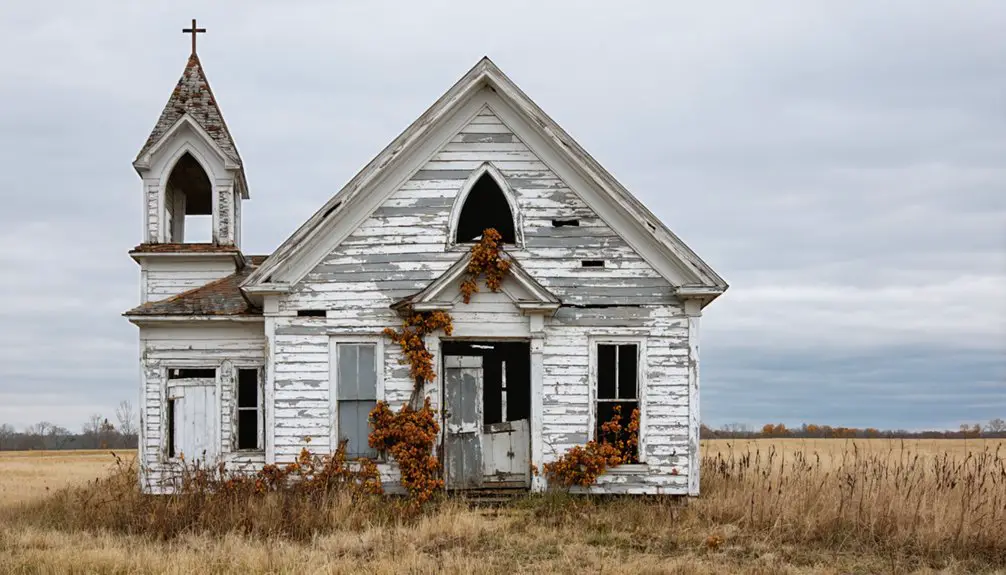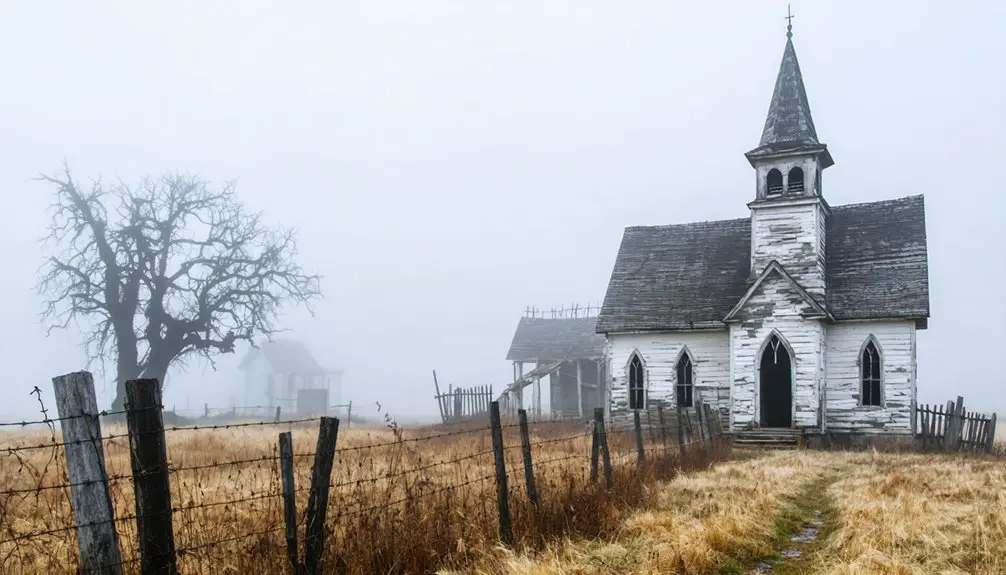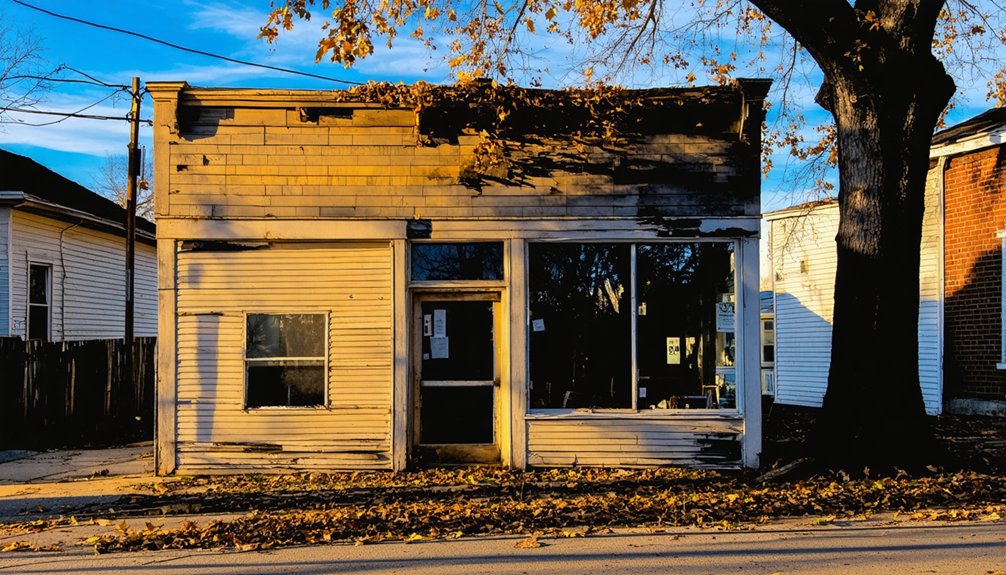
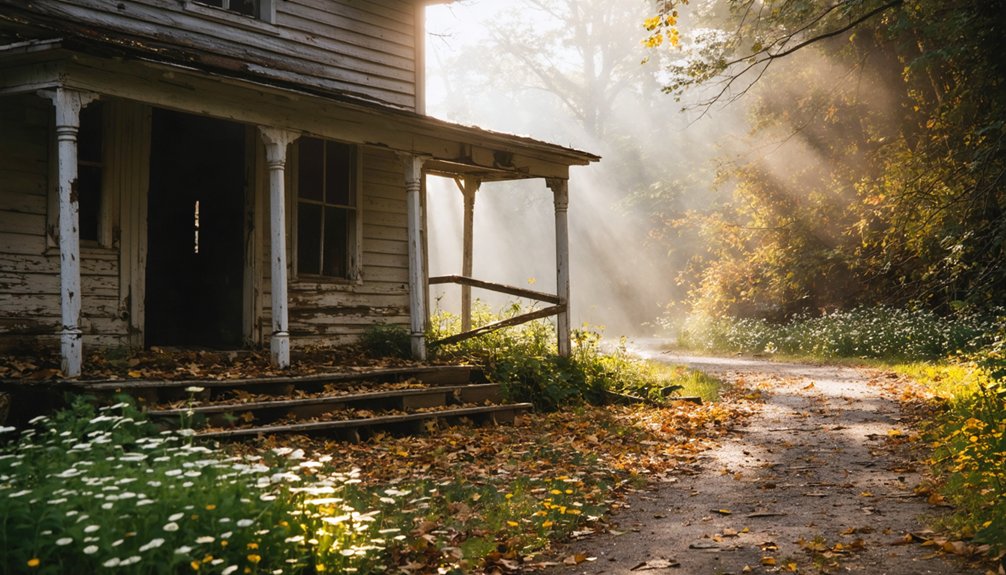
You’ll find Missouri’s ghost towns most accessible and atmospheric during fall, from late September through October. The moderate temperatures and reduced vegetation make exploring abandoned settlements easier, while spectacular autumn colors create perfect backdrops for photography. Spring offers similar advantages with mild weather and visible foundations, but fall’s crisp air and golden light make the ruins particularly striking. The season’s quieter trails and fascinating historical landmarks hold countless secrets waiting to be discovered.
Key Takeaways
- Fall (late September to October) offers ideal conditions with cooler temperatures, fewer tourists, and stunning autumn foliage around historic structures.
- Spring provides mild temperatures perfect for hiking and exploring multiple ghost towns, with reduced foliage revealing hidden foundations.
- Summer visits require early morning or late afternoon timing to avoid extreme heat and dense vegetation.
- Winter should be avoided due to hazardous conditions, limited daylight hours, and restricted access to remote locations.
- Late October to early November presents peak fall colors for photography, particularly at sites like Ha Ha Tonka’s castle ruins.
Historical Context of Missouri Ghost Towns
While Missouri’s ghost towns emerged from various historical forces, the state’s rich mining heritage played a pivotal role in their creation and eventual abandonment.
You’ll find stark evidence of this mining history in places like Mindamines, where coal operations established by Captain J.R. Tucker in 1883 drew nearly 1,000 residents by 1920.
Empire City’s rapid rise to 3,000 residents exemplifies the boom-and-bust cycle of mining towns.
The fierce rivalry between Empire City and Galina resulted in the construction of a wooden stockade until court action finally resolved their differences.
The Civil War left its mark too, with General Order Number 11 leading to the burning of towns south of Jackson County.
Towns like Dallas and Watt’s Mill that were once thriving communities have been fully absorbed by Kansas City’s expansion.
Later, World War II transformed communities like Hamburg and Howell, which were absorbed into the Weldon Spring Ordnance Works.
Environmental challenges dealt the final blow to some towns, including Times Beach, where dioxin contamination forced evacuation in 1985.
Weather Patterns and Seasonal Considerations
Understanding Missouri’s weather patterns proves essential for exploring its ghost towns safely and comfortably. Fall emerges as your best option, offering cooler temperatures and fewer tourists at sites like Hannibal and Halltown. You’ll find breezy Ozark conditions perfect for exploration during this season. Antique enthusiasts particularly enjoy visiting Halltown during autumn when its old buildings showcase vintage collectibles.
Summer brings extreme crowds and uncomfortable heat, particularly around popular attractions near ghost towns. You’ll want to avoid spring’s heavy rains, which can trigger flooding near riverine locations like Times Beach – a town historically devastated by floods. Former residents recall how the December 5 floods in 1982 submerged the entire town, forcing permanent evacuation.
Winter presents its own challenges with unpredictable weather, cold temperatures, and potential snow limiting access to remote sites like Windyville. These seasonal considerations directly impact your ability to explore Missouri’s abandoned communities effectively and safely.
Spring Exploration Benefits
You’ll find Missouri’s ghost towns most accessible during spring’s mild temperatures, when comfortable hiking conditions let you explore multiple sites in a single day.
Vibrant wildflowers create stunning backdrops for photography at historic locations like Melva and Franklin, while spring-fed streams reach peak flow rates at sites like Greer Spring and Alley Spring. The season’s light rains often unearth fragments of interrupted lives at Melva. Places like Lock Springs once drew visitors to experience healing mineral waters.
The season’s reduced foliage and minimal undergrowth reveal hidden foundations, scattered timbers, and rusted equipment that summer’s dense vegetation typically conceals.
Mild Weather Enhances Hiking
When spring arrives in Missouri, the mild temperatures of 60-70°F create perfect conditions for exploring the state’s historic ghost towns on foot.
You’ll find the low humidity levels ideal for spring hiking, allowing you to venture deeper into abandoned settlements without the discomfort of summer’s muggy heat.
The weather stays consistently moderate during both spring and fall exploration seasons, letting you maximize your time on trails like the Weldon Spring Clark loop.
Old structures like the stone hospital ruins at Welch Spring are easier to explore in spring’s clear weather conditions.
The marked trail system helps guide visitors safely through the historic sites and scenic overlooks.
You’ll benefit from firm trail conditions and safer creek crossings, while the clear skies enhance visibility of historic ruins.
The comfortable temperatures mean you can tackle 5-8 mile routes with plenty of energy to investigate overlooks and structures.
Without summer’s bugs or winter’s short days limiting you, you’re free to fully immerse yourself in Missouri’s ghost town adventures.
Spring Flowers Add Beauty
Missouri’s ghost towns burst into vibrant life each spring as native wildflowers carpet the abandoned streets and building foundations.
You’ll discover remarkable wildflower diversity, from delicate white trillium and Dutchman’s breeches nestled among crumbling stone walls to vibrant Virginia bluebells reaching toward broken windows.
Early spring ephemerals emerge first, followed by waves of seasonal blooms that transform these forgotten places into natural gardens. Conservation areas and state park trails offer some of the best opportunities to view these wildflowers in their natural habitat.
The native plants help improve soil nutrient cycling and stabilize the ground around deteriorating structures.
Don’t miss the pink-veined spring beauties and scarlet Cardinal flowers that now thrive where settlers once walked.
These blooms attract hummingbirds, butterflies, and bees, adding movement and life to these historic sites.
For the best wildflower viewing, plan your ghost town visits during April and early May when Missouri’s spring display reaches its magnificent peak.
Less Brush Blocks Views
Spring reveals three major advantages for ghost town exploration when it comes to visibility through vegetation.
You’ll find leafless trees exposing hidden structures in places like Lock Springs, where summer foliage typically conceals over 300 former residents’ homes. The pre-May period offers unobstructed views of crumbling buildings and barn quilts near Bacon.
Early spring’s minimal brush growth means you won’t struggle with dense undergrowth while accessing historic sites.
Winter’s natural clearing leaves the ground open, especially in Ozark karst areas where rock formations and ruins become clearly visible.
You’ll appreciate the improved sightlines to historic markers and building interiors, particularly along 1-2 mile trails leading to ghost town overlooks.
The March-April window provides ideal brush visibility for exploring and photographing these abandoned places.
Summer Ghost Town Adventures
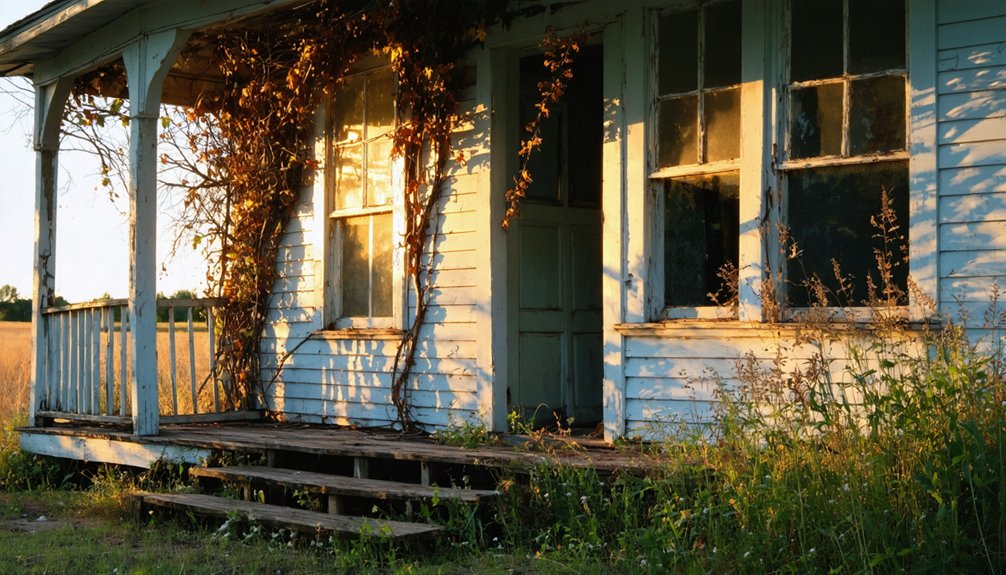
When photographing Missouri ghost towns in summer, you’ll want to take advantage of the dramatic shadows cast by remaining structures during early morning or late afternoon golden hours.
You’ll need to pack plenty of water, sun protection, and lightweight moisture-wicking clothing since temperatures can soar above 90°F at exposed sites like Possum Trot and Times Beach.
A wide-brimmed hat and sturdy walking shoes are essential for exploring foundation ruins and overgrown pathways while capturing the haunting beauty of these abandoned places.
Scenic Photography Tips
Capturing the haunting beauty of ghost towns requires specialized photography techniques and careful timing during summer adventures.
You’ll get the best results using a mirrorless camera or DSLR paired with wide-angle lenses for sweeping town views and prime lenses for intricate details. During golden hour, position yourself at high vantage points to capture dramatic shadows cast by historic structures.
For compelling night shots, use your tripod for long exposures of star trails or try light painting abandoned buildings with colored gels on your flashlight.
Frame your compositions through weathered windows and doorways, and don’t forget to document telling details like rusted signs and old machinery.
Remember to arrive before sunrise to catch the ethereal morning light that transforms these forgotten places into photographic gold.
Packing for Hot Weather
Missouri’s scorching summer temperatures demand careful preparation for ghost town exploration. When planning your hot weather adventure, you’ll want to focus on safety and comfort since temperatures can soar above 100 degrees during peak season.
Ghost town essentials should prioritize protection from intense heat and sun exposure while maintaining mobility through abandoned structures and overgrown paths. Your hot weather preparation needs to account for Missouri’s challenging summer climate, where high temperatures combine with significant humidity.
While specific packing requirements may vary by location, the fundamentals remain consistent: bring plenty of water, wear lightweight moisture-wicking clothing, and carry basic safety gear.
Remember that many ghost towns offer little to no shelter from the elements, making proper preparation vital for an enjoyable exploration experience.
Fall Colors and Photography Opportunities
The stunning transformation of Missouri’s ghost towns into vibrant autumn landscapes peaks from late October through early November, creating ideal conditions for photographers and history enthusiasts.
You’ll find the most dramatic fall photography opportunities at Ha Ha Tonka’s castle ruins, where golden hour lighting illuminates the weathered stone against a backdrop of vibrant foliage. For best shots, use polarizing filters to enhance the rich colors while capturing reflections in the park’s water features.
Head to Rockbridge and Topaz Mills in Mark Twain National Forest, where historic structures frame nature’s display.
Time your visit using the Missouri Department of Conservation’s weekly reports or ExploreFall.com’s interactive maps. When shooting, experiment with low angles and backlighting to showcase the glowing edges of leaves against the rustic architecture.
Winter Discovery Challenges

While winter brings haunting ambiance to Missouri’s ghost towns, it also presents serious challenges for explorers braving the harsh conditions.
The eerie beauty of Missouri’s winter ghost towns comes with grave risks for those daring enough to venture within.
You’ll face increased exploration risks from icy roads, flooding near river sites like Times Beach, and reduced winter visibility that limits safe discovery time. Watch for guard figures in zero-population areas like Corning, where recent reports confirm patrols actively chase visitors away.
- Unmapped cave systems become more treacherous with winter dampness and hidden passages
- Private property boundaries and toxic site restrictions require careful navigation
- Weather-related disorientation increases near historic mounds and field areas
The season’s shorter daylight hours compound these challenges, while mysterious sightings of unexplained lights and figures tend to cluster during the coldest months – adding both intrigue and uncertainty to winter explorations.
Planning Your Ghost Town Visit
Planning a successful ghost town expedition across Missouri requires careful attention to seasonal timing and tour availability.
You’ll find the richest experiences during fall months when guided tours merge local legends with historic sites. Book Haunted Hannibal’s evening driving tours in advance to explore Millionaires’ Row mansions and explore into ghost town myths at the Old Baptist Cemetery with dowsing rods.
For Route 66 adventures, base yourself in historic towns like Carthage or Cuba while exploring abandoned sites like Arlington and Times Beach.
You can investigate prehistoric stone cairns near Sugar Tree Camp or trace Jesse James’ footsteps at Meramec Caverns. For ideal exploration, schedule your visits between late September and October when atmospheric conditions enhance the eerie ambiance of these forgotten places.
Safety and Accessibility Tips
Successful exploration of Missouri’s ghost towns demands vigilant attention to safety protocols and accessibility considerations.
Safety and accessibility must be top priorities when venturing into Missouri’s ghost towns to ensure responsible exploration.
When you’re planning your visit, take essential safety precautions by traveling with companions and staying alert to your surroundings. You’ll want to check weather forecasts and road conditions, as many sites present accessibility challenges during wet seasons. Remember to secure proper permissions before entering private properties.
- Always park your vehicle in well-lit areas and keep valuables out of sight, especially near remote locations like North City.
- Inspect structures for hazards like unstable floors or toxic materials before entering, and never force your way into blocked areas.
- Carry a basic emergency kit and keep your phone charged – cell service can be spotty in abandoned rural areas.
Must-See Missouri Ghost Town Destinations
Whether you’re drawn to Route 66 nostalgia or fascinated by tales of environmental disaster, Missouri’s ghost towns offer compelling windows into the state’s past.
For authentic Route 66 exploration, head to Arlington, where you’ll find exceptional ghost town preservation along the historic highway‘s remnants.
Times Beach presents a unique glimpse into environmental history, now transformed into Route 66 State Park.
Mining enthusiasts won’t want to miss Phenix’s abandoned structures, which tell the story of Missouri’s rich mining heritage.
Hamburg offers a powerful reminder of WWII’s impact on local communities, while Avilla stands as a monument to Route 66’s golden age.
Each location provides distinct opportunities for abandoned structure exploration, from mining ruins to vintage roadside attractions.
Frequently Asked Questions
Are There Guided Ghost Tours Available in Missouri’s Abandoned Towns?
You’ll find guided ghost tour options across Missouri’s ghost towns, with haunted investigations focusing on historical significance in places like Hannibal, Jefferson City, St. Louis, and Springfield’s Pythian Castle.
Can Metal Detectors Be Used at Missouri Ghost Town Sites?
You’d love to swing that detector at ghost towns, wouldn’t you? But it’s illegal – these are protected historical sites. Metal detector regulations forbid searching for historical artifacts at registered locations.
Which Ghost Towns Have Paranormal Activity Reports or Supernatural Legends?
You’ll find haunted history at Missouri ghost towns like Rush, Times Beach, and Cairo, where urban legends tell of shadowy figures, mysterious lights, and unexplained sounds echoing through abandoned buildings.
Are Camping and Overnight Stays Permitted in Ghost Town Areas?
You’ll need to check specific camping regulations for each ghost town location, as they’re often on private or protected land. Most require permits for overnight accommodations or don’t allow camping at all.
Do Any Missouri Ghost Towns Still Have Living Residents?
You’ll find several Missouri ghost towns still have residents who maintain historic preservation efforts and share local folklore, including Avilla, which is considered a “living ghost town” with active community members.
References
- https://kids.kiddle.co/List_of_ghost_towns_in_Missouri
- https://en.wikipedia.org/wiki/List_of_ghost_towns_in_Missouri
- https://www.legendsofamerica.com/mo-ghosttowns/
- https://www.youtube.com/watch?v=OPNh93z9dNE
- https://www.ghosttowns.com/states/mo/mo.html
- https://www.geotab.com/ghost-towns/
- https://www.youtube.com/playlist?list=PL4jqwLUrhjNScUWj03mXzSKyBNMNqZHGw
- https://sites.rootsweb.com/~motttp/history/ghost_towns/index.htm
- https://www.youtube.com/watch?v=alC1wDdSVvg
- https://metrovoicenews.com/ghost-towns-of-kansas-city/