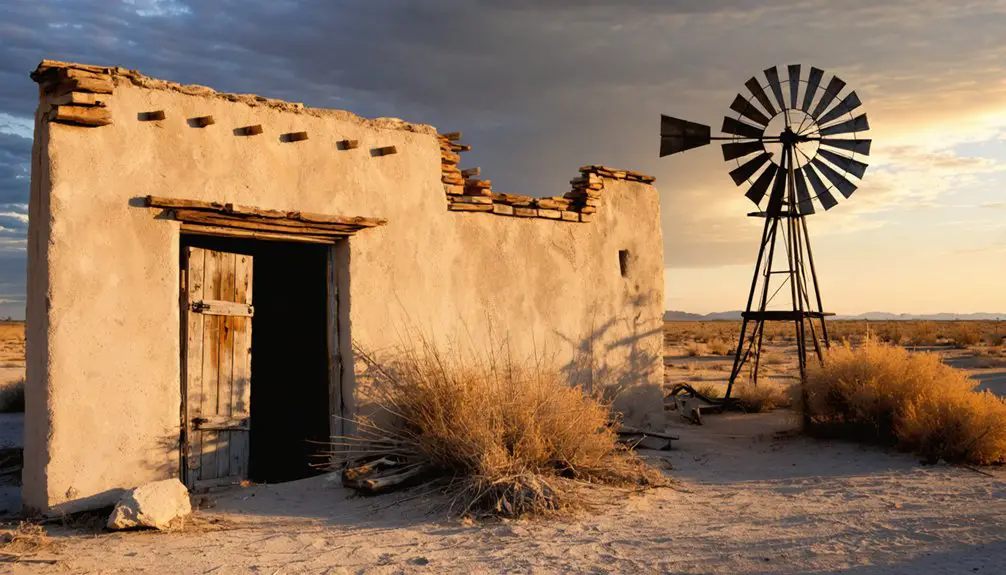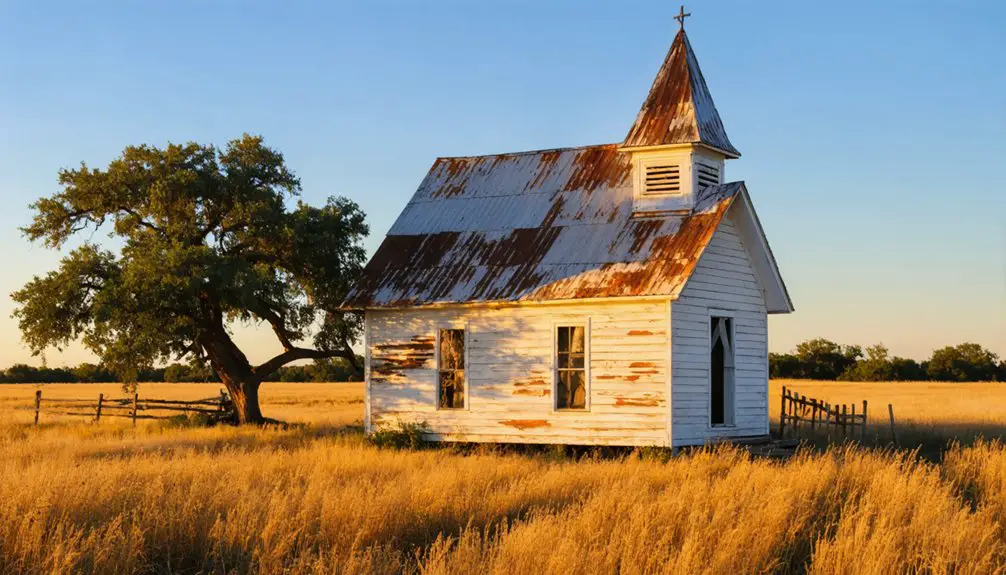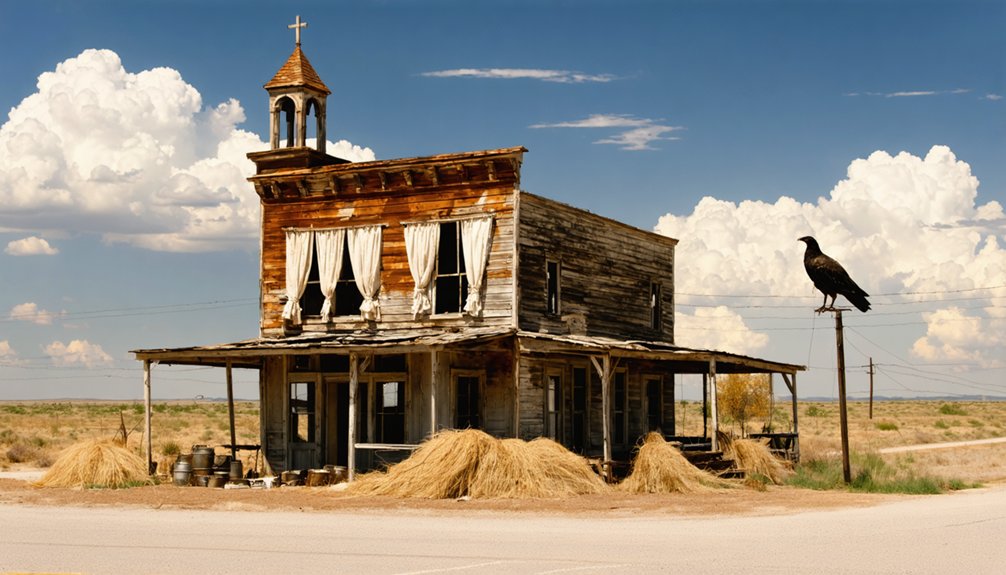
You’ll find over 500 ghost towns scattered across Texas, each telling a unique frontier story. These Wild West relics range from mercury mining hubs like Terlingua to agricultural settlements abandoned during devastating droughts. Many towns collapsed when railroads rerouted commerce or natural resources depleted. While some sites have transformed into tourist destinations, others remain hidden in remote terrain, accessible only to determined explorers. Their weathered ruins offer compelling insights into boom-and-bust cycles that shaped the Lone Star State.
Key Takeaways
- Terlingua transformed from a Mexican settlement into a mining boomtown before declining post-WWII and later reviving through tourism.
- Railroads determined Texas ghost towns’ fates by bypassing established communities, causing mass relocations to new railway-adjacent settlements.
- Water mismanagement and severe droughts devastated agricultural settlements, depleting aquifers and forcing abandonment of towns like Lobo.
- Texas contains 511 ghost towns—the most in any state—with many featuring preserved ruins, cemeteries, and historic structures.
- Mining communities like Terlingua experienced mass exodus when resources became unprofitable, leaving behind structures now attracting heritage tourism.
The Rise and Fall of Terlingua: Texas’ Famed Quicksilver Ghost Town
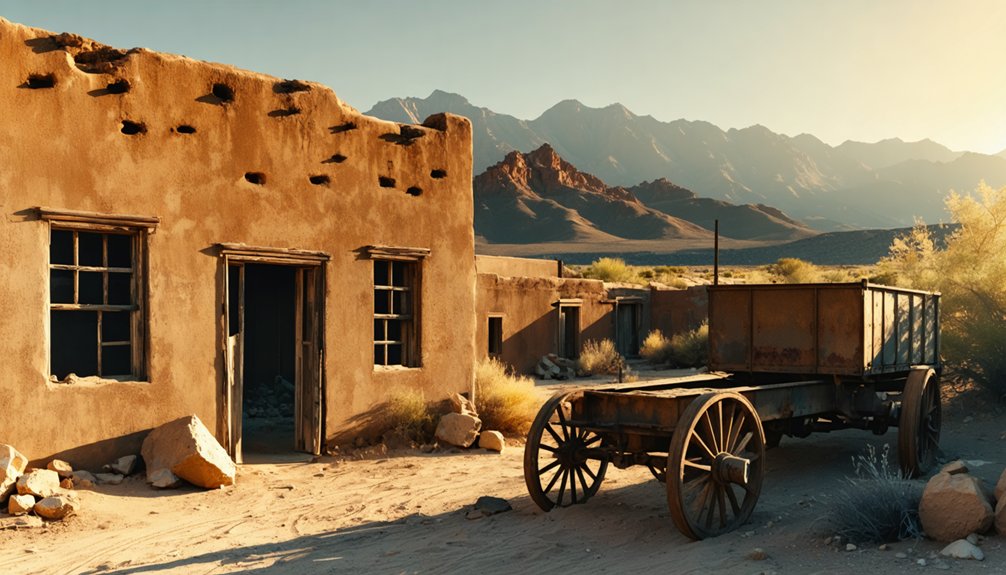
While the verdant banks of Terlingua Creek once hosted a modest Mexican settlement, it was the discovery of cinnabar in the mid-1880s that catalyzed this region’s transformation into a thriving mining district.
Native Apache tribes had long utilized this quicksilver ore for pigment before prospectors recognized its commercial value.
Under Howard Perry’s Chisos Mining Company, Terlingua’s population swelled beyond 1,000 residents by the early 1900s.
The community established churches, schools, and infrastructure that sustained this remote outpost until mercury’s declining value after World War II decimated operations.
The exodus that followed transformed Terlingua into a genuine ghost town, with abandoned structures standing as monuments to boom-and-bust economics.
Yet, the 1960s witnessed a remarkable Terlingua revival, spurred by tourism and the now-famous chili cook-off that continues to draw thousands annually to this resilient cinnabar mining community.
Today, visitors can explore the historic Terlingua Cemetery which contains graves of early miners and is listed on the National Register of Historic Places.
The town’s name derives from the Spanish words “tres lenguas,” reflecting the three tongues of land that characterize the area’s distinctive geography.
Abandoned Dreams: How Drought and Railroad Routes Shaped Texas Ghost Towns
You’ll find that Texas’ ghost towns often emerged from the harsh intersection of environmental realities and business decisions, with severe droughts from 1891-1894 devastating agricultural settlements across the Panhandle region. These abandoned towns in Texas Panhandle now serve as poignant reminders of the past, drawing curious visitors interested in their stories. Many hope to uncover the remnants of once-thriving communities, now swallowed by the sands of time. As nature reclaims these areas, the haunting beauty of decay captivates the imagination.
Railroad companies wielded extraordinary power in determining which communities would thrive, deliberately bypassing established towns like Helena in favor of creating new settlements where they could profit from land speculation and development. These corporate land schemes typically involved railroad subsidiaries selling plots in newly established towns along the tracks.
These economic redirections created dramatic population shifts as businesses and residents abandoned bypassed locations, relocating to railroad-connected towns where commerce could flourish, regardless of a community’s previous political status or historical significance. Helena’s decline exemplifies this pattern, as the town lost its prominence when the railroad created The Big Curve to bypass it completely.
Waterless Farming Failures
How could vast stretches of West Texas transform from promising agricultural frontiers into desolate ghost towns? The answer lies in catastrophic water mismanagement.
When you examine places like Lobo, you’ll find the remnants of agricultural hubris. Farmers drilled approximately 60 wells to irrigate 7,000 acres, depleting aquifers by 70-90 feet.
Without implementing water conservation strategies, these communities were doomed. The cotton gins fell silent as wells dried up. The cotton gin closure in Lobo during the 1960s signaled the beginning of the town’s rapid decline.
Similar tragedies unfolded near El Paso Valley, where settlers carved irrigation canals from the Rio Grande. Despite initial success with Mexican Acala cotton, these communities couldn’t sustain themselves. W.T. Young’s establishment of a cotton gin facility in the 1920s briefly brought prosperity to Acala before its eventual decline.
Drought accelerated their demise.
The lack of sustainable agriculture practices ultimately sealed their fate. Towns like Barstow withered as farmland became unproductive, leaving only crumbling infrastructure as evidence to ambition unsupported by nature’s limits.
Bypassed by Steel Rails
When railroads carved their steel paths across Texas in the late 19th century, they functioned as economic lifelines that determined which settlements would flourish and which would fade into obscurity.
You’ll find railroad impact particularly dramatic in cases like Belle Plain, which withered after Texas and Pacific established Baird six miles north, triggering mass relocation and eventual abandonment.
Similarly, St. Mary’s suffered terminal town decline when the San Antonio and Aransas Pass Railway rerouted to Rockport instead.
Communities faced impossible choices: provide substantial financial incentives to railroad companies or watch as competing settlements emerged along the coveted steel corridors. Towns like South Bend initially flourished through oil exports before transitioning to become spa destinations. Texas now has 511 ghost towns, the most of any state in the U.S., many abandoned due to these transportation shifts.
Towns like Glenrio initially thrived as railroad hubs until consolidation eliminated service.
When transportation networks vanished—often alongside resource depletion and climate disasters—once-vibrant communities collapsed, leaving only ghostly reminders on outdated railroad maps.
Shifting Economic Winds
While railroad infrastructure determined initial settlement patterns across Texas, devastating cycles of drought and flooding ultimately sealed the fate of many frontier communities.
You’re witnessing the aftermath of economic shifts that began with water scarcity and culminated in mass exodus.
The 2025 climate catastrophe exemplifies this pattern—Edwards Aquifer dropping below critical thresholds followed by a 1-in-1000-year flood event that decimated struggling settlements.
This weather whiplash accelerated agricultural decline, forcing ranchers to liquidate herds and farmers to abandon generations-old homesteads.
Towns originally established around 1850s water access became unsustainable when faced with prolonged drought conditions.
Similar to Gomez’s decline after the railway favored Brownfield, many communities became ghost towns when critical transportation routes bypassed them.
Historical settlements like Sparta, Bland, Tennessee Valley, and Old Aiken thrived in the early 1900s before dwindling by the late 1940s due to recurring flooding problems.
The 35% population drop in rural areas tells a stark story of economic displacement, as communities once thriving with agricultural commerce transformed into silent monuments to climate vulnerability and changing economic realities.
Beyond Tourism: The Historical Significance of Texas’ Deserted Settlements
Although Texas ghost towns often evoke images of tourist attractions with weathered saloons and tumbleweeds, their historical significance extends far beyond their entertainment value.
The history of wild cat bluff illustrates the rich tapestry of life in these regions, revealing stories of resilience and adaptation. From early settlers to the impact of the cattle industry, each chapter adds depth to the narrative of the land. Understanding this history allows us to appreciate the cultural heritage that shaped these ghost towns and their surrounding landscapes.
These settlements represent essential chapters in Texas’ development, documenting patterns of migration, cultural erosion, and the dissolution of critical community networks.
You’ll find that abandoned towns like Lemonville preserve stories of African American community-building efforts that were disrupted by economic shifts.
San Marcos de Neve reveals how security challenges forced residents to return to Mexico, while archaeological investigations uncover details about daily frontier life.
Settlements founded during mining and railroad booms demonstrate the vulnerability of monocrop economies and the impact of environmental challenges like water scarcity.
Through cemeteries, ruins, and historical markers, these places continue to speak of broader demographic changes that shaped modern Texas.
Hidden Gems: Lesser-Known Ghost Towns Worth Exploring in the Lone Star State
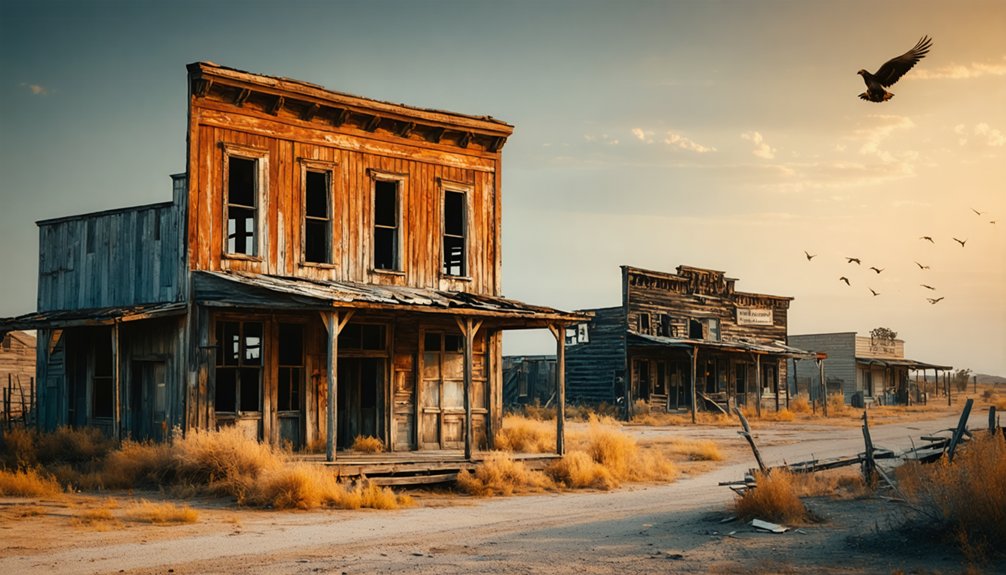
Beyond the well-trodden paths of Terlingua and Thurber lie dozens of forgotten settlements that offer equally compelling glimpses into Texas’ frontier past.
You’ll find these hidden treasures scattered throughout East and West Texas, each telling unique stories of boom-and-bust economies.
In East Texas, New Birmingham’s scattered ruins and cemetery lie nestled in dense woods, requiring determined exploration to uncover the remnants of its failed iron industry.
Meanwhile, Aldridge’s stone walls stand as silent sentinels to the once-thriving logging community.
Many of these sites promise ghostly encounters amid crumbling structures and abandoned mines.
When planning your visit, prepare for challenging terrain—some locations demand four-wheel-drive vehicles or hiking through wilderness.
Pack essentials and research thoroughly, as these remote locations often lack cellular service and modern amenities.
Preservation Efforts and Modern Uses of Texas’ Wild West Relics
Despite decades of abandonment, Texas’ ghost towns have found new life through concerted preservation efforts that balance historical authenticity with modern utility.
You’ll find over 200 county historical commissions working alongside local societies to maintain these cultural landmarks. Community preservation thrives through grassroots initiatives—residents in Helena saved abandoned courthouses, while in Sherwood, a single proprietor restored multiple historic buildings.
Grassroots passion breathes life into Texas’ forgotten past, one restored courthouse and historic building at a time.
These preservation efforts have catalyzed heritage tourism, transforming forgotten settlements into economic engines. Towns like Terlingua now draw hundreds of thousands of visitors annually.
Historic structures serve contemporary purposes as museums, event venues, and community centers, though challenges persist: limited funding, weather damage, and lack of infrastructure complicate preservation work.
Nevertheless, through county support, fundraising events, and volunteer labor, these Wild West relics continue to tell Texas’ distinctive frontier story.
From Boom to Bust: Environmental and Economic Factors Behind Texas Town Abandonment
You’ll find that water scarcity devastated many Texas frontier settlements, transforming once-thriving agricultural communities into abandoned shells when prolonged droughts made farming untenable.
The depletion of valuable minerals and resources, particularly evident in quicksilver mining towns like Terlingua, triggered mass exoduses once extraction became unprofitable.
Towns that initially flourished due to their strategic railway positions often faced rapid decline when new rail routes redirected commerce elsewhere, leaving these communities economically isolated and ultimately abandoned.
Water Scarcity Crisis
The collapse of once-thriving Texas frontier towns often traces back to a single, devastating factor: water scarcity.
You’ll find this dramatically illustrated in Lobo, West Texas, where aggressive groundwater pumping depleted the Ogallala Aquifer by 70-90 feet, forcing complete abandonment by the 1980s. Water rights became contested territory as agricultural demands clashed with dwindling supplies.
- Historical drought patterns reveal recurring crises dating to 1756, when settlements collapsed as rivers ran dry.
- The Ogallala’s rapid depletion represents a modern repetition of this existential threat.
- Agricultural communities face economic extinction when sustainable practices aren’t implemented.
- Climate change accelerates water table decline, compounding challenges for regions already struggling.
This environmental collapse demonstrates how fundamental water resources remain to community survival—a lesson as relevant to your freedom today as it was for frontier settlements.
Mining Resources Depleted
When mineral veins ran dry beneath Texas soil, entire communities vanished along with their exhausted resources.
You’ll find Terlingua’s mercury boom collapsed after the 1940s market crash, while Shafter’s silver-based economy crumbled when extraction became unprofitable in 1942. These towns exemplify the fragility of single-resource economies vulnerable to global market fluctuations.
The mining legacies left behind reveal shortsighted resource management practices.
Environmental degradation compounded economic challenges—Barstow’s crops poisoned by mineral-heavy water after dam failure, while toxic byproducts contaminated soil elsewhere.
Without viable alternatives, essential services shuttered as populations fled.
What remains today are skeletal structures standing as stark reminders that prosperity built on finite resources inevitably faces reckoning when extraction becomes untenable or deposits vanish completely.
Rail Routes Redirected
Railroad network transformations across Texas represent one of the most significant catalysts for ghost town proliferation throughout the state.
You’ll find that railway redirection fundamentally altered economic prospects for numerous communities, particularly when the Southern Pacific and Missouri Pacific abandoned over 6,000 miles—35% of peak trackage.
The Wallaceville line’s abandonment following resource depletion exemplifies how extraction-dependent communities collapsed when rails were pulled.
- Rock Island’s “Choctaw Route” liquidation devastated Northern Panhandle communities reliant on this singular transportation lifeline.
- Branch lines serving agricultural towns became economically unviable as farming practices evolved.
- Natural disasters, particularly the 1935 Nueces River flood, permanently severed critical transportation corridors.
- East Texas chemical industries initially flourished along rail corridors but couldn’t sustain secondary lines once extraction industries declined.
Frequently Asked Questions
Are Ghost Towns in Texas Legally Accessible for Public Exploration?
Ghost towns are shockingly restricted by complex ownership regulations! You’ll need to verify public access rights through property records, as many sites remain private despite abandonment, requiring permission before exploration’s legally permitted.
What Paranormal Activity Has Been Reported in Texas Ghost Towns?
You’ll encounter reports of ghostly encounters in Texas ghost towns including shadow figures, unexplained sounds, moving objects, cold spots, and spectral apparitions—all connected to the region’s violent and traumatic haunted history.
Throughout the state, you can find abandoned buildings in Tuff, Texas, where the echoes of the past linger in the air. These derelict structures often serve as a canvas for urban explorers and photographers drawn to their haunting beauty. Each crumbling wall tells a story, inviting curious minds to uncover the mysteries that have long been hidden away.
How Do Seasonal Weather Patterns Affect Visits to Deserted Towns?
With visitor numbers plummeting 70% during extreme conditions, you’ll find seasonal patterns dictate access. Summer heat deters exploration, while winter storms render roads impassable, creating cyclical visitation patterns contingent upon Texas’s variable climate.
Can You Purchase Property or Buildings in Texas Ghost Towns?
You can purchase ghost town real estate through conventional acquisition, tax sales, or adverse possession. These investment opportunities require diligent legal research, documentation, and patience to navigate Texas’s complex property laws.
What Wildlife Has Reclaimed These Abandoned Texas Settlements?
Like silent sentinels of time, you’ll observe remarkable wildlife sightings throughout these settlements. Coyotes, javelinas, rattlesnakes, and horned lizards exemplify the ecological restoration process, with owls claiming abandoned structures as their domain.
References
- https://929thelake.com/texas-ghost-towns/
- https://dfwurbanwildlife.com/2011/05/29/chris-jacksons-dfw-urban-wildlife/march-28-2005-ghost-towns-in-north-texas/
- https://sportsplanningguide.com/the-old-west-lives-on-in-texas/
- https://texashighways.com/travel-news/four-texas-ghost-towns/
- https://www.hipcamp.com/journal/camping/texas-ghost-towns/
- https://www.youtube.com/watch?v=6u47HvHWZXM
- https://www.texasescapes.com/TOWNS/Texas-Ghost-Towns-4-West-Texas.htm
- https://www.legendsofamerica.com/tx-terlingua/
- https://www.dallasites101.com/blog/post/terlingua-texas-ghost-town-guide/
- https://www.youtube.com/watch?v=UniG4FbRwaw