You’ll find Alaska’s ghost towns offer incredible adventures with your canine companion, from Kennicott’s striking red mining buildings where leashed dogs can explore preserved 1900s copper operations, to Dyea’s historic Chilkoot Trail that welcomes six-foot-leashed pets on gold rush paths. Remote locations like Chena near Fairbanks provide wooded trails through forgotten settlements, while coastal Katalla offers off-leash wilderness freedom among oil discovery ruins. Each site requires careful planning for supplies and wildlife safety, but rewards you with unique historical exploration opportunities that await your discovery.
Key Takeaways
- Kennicott requires leashed dogs due to National Park Service regulations and features historic red mining buildings with safety hazards.
- Iditarod connects to sled dog heritage as a famous checkpoint town along historic trails used during gold rush era.
- Dyea’s Chilkoot Trail welcomes leashed dogs on a six-foot leash for four miles of accessible historic gold rush hiking.
- Chena near Fairbanks offers informal wooded trails and gravel roads with state-run picnic facilities requiring leashed dogs.
- Katalla’s remote coastal location allows off-leash wilderness adventures due to zero permanent residents and complete isolation.
Kennicott: A Pet-Friendly Mining Camp Turned Historic Landmark
Deep in Alaska’s remote wilderness, where the Kennicott Glacier carves through towering peaks, you’ll discover one of America’s most remarkably preserved ghost towns—and it welcomes your four-legged companion.
Deep in Alaska’s wilderness lies America’s most preserved ghost town—welcoming both adventurers and their faithful four-legged companions.
This National Historic Landmark District showcases early 20th-century copper-mining architecture frozen in time since the last train departed in 1938.
You’ll need to plan carefully for this adventure. The rough McCarthy Road and remote location within Wrangell–St. Elias National Park require you to pack all pet supplies—food, water, and emergency kit.
Kennecott history comes alive as you explore company buildings that once housed 600 workers, but pet safety demands constant vigilance around glacier hazards and swift rivers. The mine produced an estimated $200 to 300 million worth of copper before closing, making it one of the most profitable operations in Alaska’s mining history.
Keep your dog leashed per National Park Service regulations while experiencing this extraordinary piece of mining heritage. The original Copper River Railway required 6,200 men and $23 million to construct this vital 196-mile transportation link to the remote copper deposits.
Exploring Kennicott’s Red Buildings With Your Canine Companion
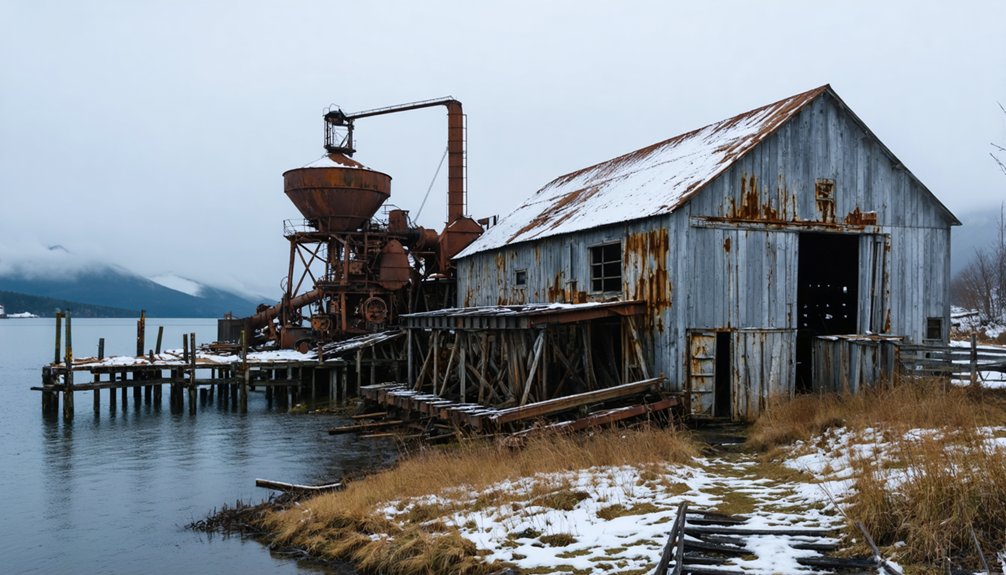
As you approach Kennicott’s striking red buildings with your dog, the fourteen-story concentration mill towers above you like a wooden cathedral against the Alaskan wilderness.
These barn-red structures, painted uniformly between 1907 and 1925, create an otherworldly landscape that’ll captivate both you and your leashed companion.
While exploring this National Historic Landmark‘s historic architecture, prioritize canine safety by keeping your dog away from deteriorating wooden floors and exposed nails in unrestored buildings.
The mill’s original machinery remains frozen in time since 1938, but resist letting your curious pup investigate interiors where structural hazards lurk.
Stay vigilant for bears and moose while photographing the iconic red-and-white buildings.
Pack bear spray, monitor your dog’s condition in this high-elevation environment, and prevent them from licking contaminated mining surfaces.
The mines here produced copper ore of exceptional quality, with an 80% purity that far exceeded what most operations could achieve.
This remote mining camp operated until 1938, when the last train departed carrying the final residents away from what had been a thriving copper-producing community.
Iditarod: Where Sled Dogs and History Meet
You’ll discover a ghost town where your dog’s ancestors once carried gold through frozen wilderness, as Iditarod stands as Alaska’s most famous checkpoint along the historic trail that connected remote mining camps.
Walking these weathered paths with your canine companion creates an almost mystical connection to the thousands of sled dogs who hauled supplies and precious metals across 938 miles of unforgiving terrain during the early 1900s gold rush. Entrepreneurs strategically placed roadhouses and dog barns approximately every 20 miles along the trail to provide essential shelter and food for weary mushers and their teams.
The town’s crumbling buildings whisper stories of the legendary race that immortalized this remote settlement, transforming it from a bustling supply hub into a celebrated symbol of mushing heritage. This same trail system served as the foundation for The Last Great Race that continues to honor the endurance and spirit of sled dog culture every March.
Historic Trail Checkpoint Town
You’ll find remnants of foundations and artifact scatters near the riverbank, though permafrost and erosion threaten what remains.
The checkpoint preservation efforts maintain this National Historic Trail site, where roadhouses once stood twenty miles apart—perfect for a day’s dog-team travel.
Today’s race infrastructure adapts to the limited historic footprint, honoring both Indigenous travel routes and frontier commerce that shaped Alaska’s wilderness highways. The town once boasted over 10,000 residents during its peak gold rush years before becoming the ghost town that exists today.
Sled dog teams provided superior winter transportation, minimizing snow disruption while horses and mules struggled in the harsh conditions.
Sled Dog Race Legacy
When Dorothy G. Page sparked the Iditarod concept during Wasilla’s centennial celebrations in the 1960s, she couldn’t have imagined how profoundly it’d shape Alaska’s identity.
You’re witnessing living Iditarod history when you visit ghost towns along this legendary trail—places where sled dog culture thrives against all odds.
These remote checkpoints preserve the spirit of the 1925 Nome serum run, honoring heroes like Leonhard Seppala and his remarkable dogs Balto and Togo.
You’ll discover how Joe Redington Sr.’s vision transformed a commemorative race into the ultimate test of endurance, keeping mushing traditions alive when mechanization threatened their extinction. The modern race spans 1,049 miles from Anchorage to Nome, following the historical trail that connected remote Alaskan villages.
Each ghost town checkpoint tells stories of freight haulers, mail carriers, and the working huskies who connected isolated communities before planes conquered Alaska’s wilderness. Today’s champions complete this grueling journey in just 8½ days, a testament to advances in dog training and equipment.
Trail Adventures in Alaska’s Former Gold Rush Capital
As you lace up your hiking boots in Skagway, Alaska’s most famous Gold Rush boomtown, you’re stepping into a living museum where thousands of fortune-seekers once crowded the muddy streets in pursuit of Klondike gold.
Your four-legged companion will love exploring Skagway trails like Lower Dewey Lake, where preserved Victorian architecture tells tales of the 10,000 prospectors who once called this place home.
Venture beyond to Grand Forks adventures in Yukon Territory, where dredge paths wind through ruins of what housed 10,000 residents in 1902.
You’ll discover abandoned equipment scattered along creek valleys, while historical markers reveal how corporate mining replaced individual claims.
These ghost town trails offer you and your dog unlimited exploration through Alaska’s wild gold rush heritage.
Dyea: Gateway to the Klondike With Your Four-Legged Friend
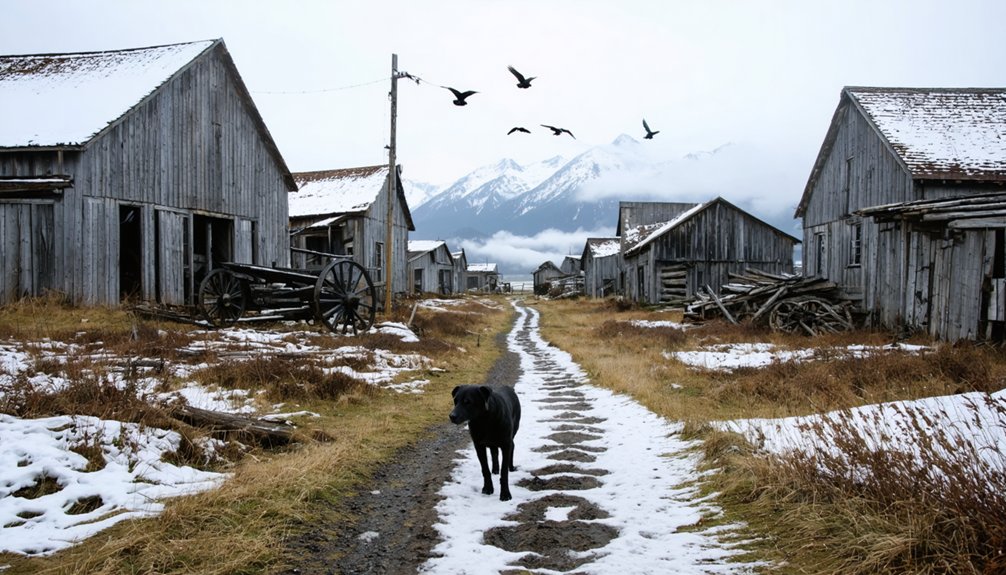
You’ll find Dyea’s historic Chilkoot Trail offers an incredible opportunity to walk the same path gold seekers took with their pack animals over a century ago, and your leashed dog can join this legendary adventure.
The six-foot leash requirement throughout the area guarantees you’ll both stay safe while exploring the remnants of this once-thriving gateway town scattered along the dramatic coastline.
Pack plenty of water and plan your timing carefully, as the trail’s challenging terrain and unpredictable weather demand preparation for both you and your four-legged hiking companion.
Historic Chilkoot Trail Access
Deep in Alaska’s Inside Passage, where the Chilkat Tlingit once established seasonal fishing camps and controlled the ancient trade routes through Chilkoot Pass, you’ll discover Dyea—a ghost town that serves as your gateway to one of North America’s most legendary trails.
Your dog can accompany you on this 33-mile journey to Lake Bennett, British Columbia, following the same path thousands of stampeders traveled during the 1897-1898 Klondike Gold Rush.
The Chilkoot Trail history unfolds beneath your boots as you traverse terrain where aerial tramways once carried supplies over treacherous mountain passes.
Today, this Dyea ghost town provides unrestricted access to wilderness adventure, where you and your canine companion can experience the freedom that drew fortune-seekers north over a century ago.
Dog-Friendly Exploration Tips
Before you and your four-legged companion tackle the legendary Chilkoot Trail, understand that success depends on meticulous preparation and realistic expectations about your dog’s capabilities.
Pack essential gear including paw booties for rocky terrain, a portable water dish for hard-to-reach sources, and a thorough first aid kit.
Dog safety requires staying within the six-foot leash requirement—rangers enforce this zero-tolerance rule strictly.
Assess your companion’s comfort level with swaying suspension bridges before committing to the challenging Golden Stairs section.
Proper trail etiquette means controlling your dog around other hikers and wildlife, especially in bear-warning areas near Dyea.
Solo hiking isn’t recommended since emergency helicopter evacuations prohibit dogs, potentially complicating rescue situations in this remote wilderness.
Chilkoot Trail Access and Dog-Friendly Exploration Tips
While the historic Chilkoot Trail once carried thousands of gold-seeking prospectors from Dyea to Canada’s Bennett Lake, today’s dog owners face significant limitations due to 2022 flood damage that destroyed bridges and washed out essential trail sections.
You’re currently restricted to roughly four miles of day-use hiking on the U.S. side—no overnight camping permitted while repairs proceed.
If you venture onto accessible portions with your canine companion, prepare for serious challenges. The trail’s rocky terrain, suspension bridges, and steep Golden Stairs scree field demand exceptional dog safety precautions.
Your dog must remain leashed at all times, and rangers enforce this zero-tolerance policy strictly. Pack paw protection, first-aid supplies, and bear-proof food storage.
Check current NPS trail status before departing—conditions change rapidly in this unforgiving wilderness.
Chena: Hidden Ghost Town Near Fairbanks for Dog Owners
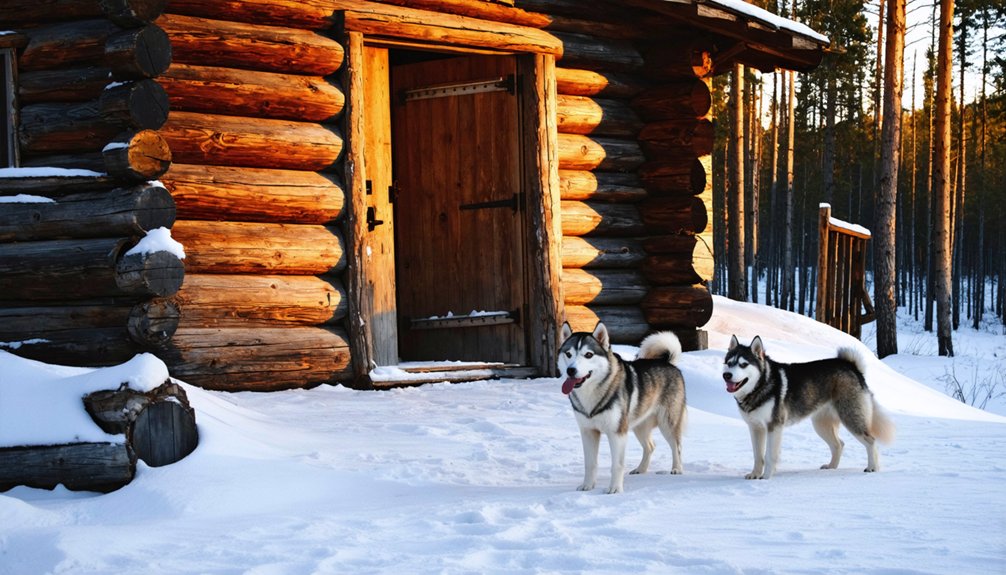
You’ll discover Chena’s fascinating gold rush history just outside Fairbanks, where remnants of this 1900s river port town lie hidden beneath birch and aspen forests along the Tanana River.
Your dog can safely explore the informal wooded trails and gravel roads that wind through this undeveloped archaeological site, though you’ll need to keep them leashed due to moose and other wildlife in the area.
The accessible terrain makes it perfect for adventurous dog owners seeking to uncover Alaska’s mining heritage while enjoying a peaceful forest walk with their four-legged companions.
Historical Gold Rush Remnants
Though Chena’s bustling streets vanished beneath decades of Alaskan wilderness, this forgotten gold rush town offers you and your dog an extraordinary glimpse into the Tanana Valley’s mining heritage.
You’ll discover remnants of Felix Pedro’s 1902 gold discovery that sparked this boomtown’s creation along the Tanana River’s north bank.
Walk where over 1,000 miners once sought fortune, exploring archaeological sites where University of Alaska researchers have uncovered log cabin foundations and century-old artifacts.
Your canine companion can roam freely through wooded areas hiding traces of dozen streets, docks, and warehouses that served Fairbanks Gold Rush operations.
This Chena history connects you directly to Alaska’s mining past, where gold rush dreams flourished before World War I and declining prospects transformed prosperity into wilderness solitude.
Accessible Dog-Friendly Exploration
Located just minutes from Fairbanks via Chena Pump Road, this hidden archaeological site transforms into an ideal destination where you and your dog can explore Alaska’s buried mining history together.
You’ll discover a wooded riverside terrain where century-old foundations emerge from beneath layers of Tanana River silt, creating natural pathways perfect for leashed walks.
This state-run picnic park offers dog friendly access without commercial restrictions or crowds. Your canine companion can safely explore alongside ongoing University of Alaska archaeological exploration while you uncover remnants of this vanished railroad town.
- Natural trails wind through excavation areas where students actively unearth historic artifacts
- Riverside boat launch provides open space for dogs to stretch and exercise freely
- Wooded setting offers shade and protection from Alaska’s intense seasonal weather
Interior Alaska’s Lesser-Known Ruins Perfect for Pet Adventures
Deep within Alaska’s vast interior, forgotten mining settlements offer you and your four-legged companion a chance to explore authentic remnants of the state’s gold rush era without the crowds that flock to more famous destinations.
Forty Mile along the Yukon River presents weathered log buildings and an interpretive cemetery where your dog can roam on-leash while you discover late-19th-century trading post history.
Access via canoe or gravel roads from Top of the World Highway creates adventure without restrictions.
These abandoned structures demand attention to pet safety—reports of loose guard dogs near private cabins require strong recall training and deterrents.
Primitive camping facilities provide fire pits and outhouses, but you’ll need to pack water and emergency gear for your dog during Alaska’s unpredictable weather swings.
Coastal Ghost Towns: Katalla’s Remote Wilderness Experience
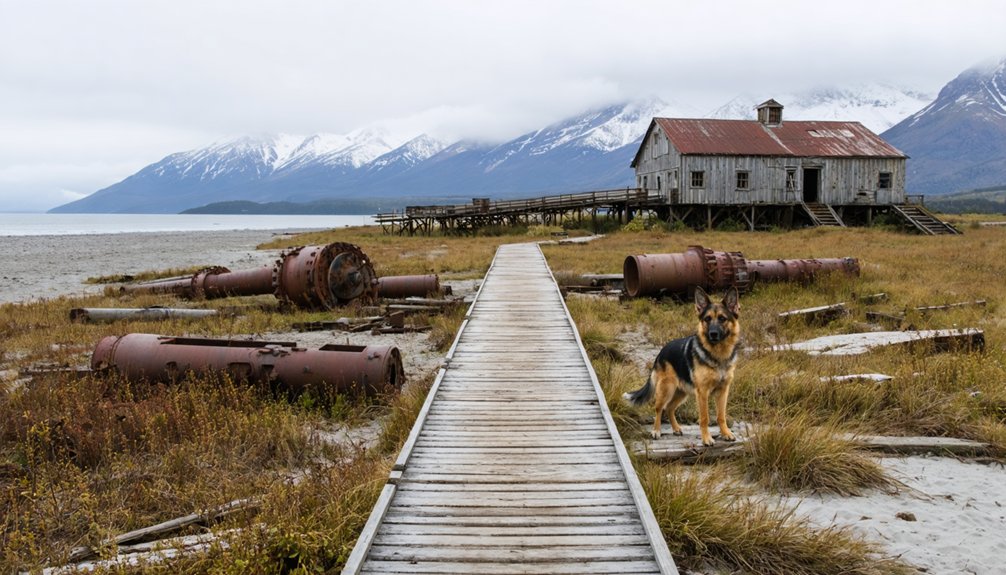
While Alaska’s interior ruins draw most ghost town enthusiasts, Katalla’s windswept coastline offers you and your canine companion a truly isolated adventure where oil derricks once promised fortune along Controller Bay.
Alaska’s forgotten oil boom town beckons adventurous explorers and their four-legged companions to discover windswept ruins along Controller Bay’s isolated shores.
You’ll discover Alaska’s first commercial oil discovery site, where 5,000-10,000 residents chased black gold dreams before nature reclaimed everything. The 1964 earthquake raised the land eight feet, submerging the waterfront and erasing most traces of civilization.
Your dog will love exploring the remote terrain where the notorious “Katalla Madhouse” saloon once stood.
- Katalla History: First Alaskan oil boom (1902-1933) proves petroleum’s early promise
- Coastal Fishing: Summer access provides excellent fishing opportunities alongside historical exploration
- Wilderness Freedom: Zero permanent residents mean unlimited off-leash adventures
Access requires favorable weather and water transport, making this coastal fishing destination perfect for adventurous souls seeking complete isolation.
Three Saints Bay: Discovering Russian Alaska With Dogs
Moving from Alaska’s oil boom remnants to its earliest European foothold, Three Saints Bay on Kodiak Island presents you and your dog with America’s first Russian settlement ruins amid some of Alaska’s most dramatic coastal scenery.
You’ll trek through this National Historic Landmark where Grigory Shelikhov established his 1784 fortress, discovering archaeological remnants along thirty meters of artifact-rich shoreline.
The steep mountains rising directly from the harbor create breathtaking backdrops for scenic exploration with your canine companion. Your dog can roam freely through this remote wilderness while you examine the Russian settlement foundations that sparked America’s eventual Alaska purchase.
The deep harbor basin offers protected camping, though you’ll need boat access from Kodiak, sixty-three miles northeast, making this adventure perfect for those seeking true isolation.
Frequently Asked Questions
Are Dogs Required to Be Leashed in Alaska’s Ghost Towns?
You’ll find no specific leash laws governing Alaska’s abandoned ghost towns, but practicing respectful ghost town etiquette means keeping your dog controlled to protect fragile historic structures and wildlife habitats.
When planning outings, consider exploring dogfriendly places in Indiana where your furry friend can enjoy spacious parks and scenic trails. Many of these locations provide a welcoming atmosphere for pets, ensuring that both you and your dog have a memorable experience together. Be sure to check for specific amenities such as dog parks or off-leash areas to enhance your adventure.
What Vaccinations Do Dogs Need Before Visiting Remote Alaskan Locations?
Alaska requires rabies vaccination for dogs over four months. You’ll need essential vaccinations including distemper, adenovirus, and parvovirus for thorough travel health protection when exploring remote wilderness areas.
How Cold Is Too Cold for Dogs in Alaska’s Ghost Towns?
Below 20°F becomes dangerous for most dogs exploring Alaska’s abandoned settlements. You’ll need proper dog winter gear and must respect your companion’s canine cold tolerance—watch for shivering and paw-lifting as warning signs.
Are There Veterinary Services Near These Remote Ghost Town Locations?
You won’t find veterinary clinics in Alaska’s ghost towns. Emergency services require expensive flights to regional hubs like Anchorage or Fairbanks, sometimes hundreds of miles away. Pack thorough first-aid supplies for your dog.
What Dog Supplies Should I Pack for Multi-Day Ghost Town Explorations?
Like a compass pointing toward adventure, you’ll need essential dog gear: waterproof booties, insulated jacket, collapsible bowls, high-calorie food, first-aid kit, and hiking essentials for Alaska’s unforgiving wilderness freedom.
References
- https://www.gopetfriendly.com/blog/explore-pet-friendly-ghost-towns-with-your-furry-travel-buddy/
- https://www.thealaskalife.com/blogs/news/alaska-ghost-towns-youve-probably-never-heard-of
- https://www.alaska.org/detail/kennicott-mine-ghost-town-walking-tour
- https://www.gi.alaska.edu/alaska-science-forum/iditarod-one-last-gold-rush-towns
- https://www.youtube.com/watch?v=P1ZqxD5x478
- https://www.ktoo.org/2018/04/02/ak-historic-iditarod-an-alaska-ghost-town/
- https://www.bringfido.com/blog/best-of-alaska/
- https://www.legendsofamerica.com/kennecott-alaska/
- https://www.youtube.com/watch?v=U0bmQR7kak8
- https://en.wikipedia.org/wiki/Kennecott