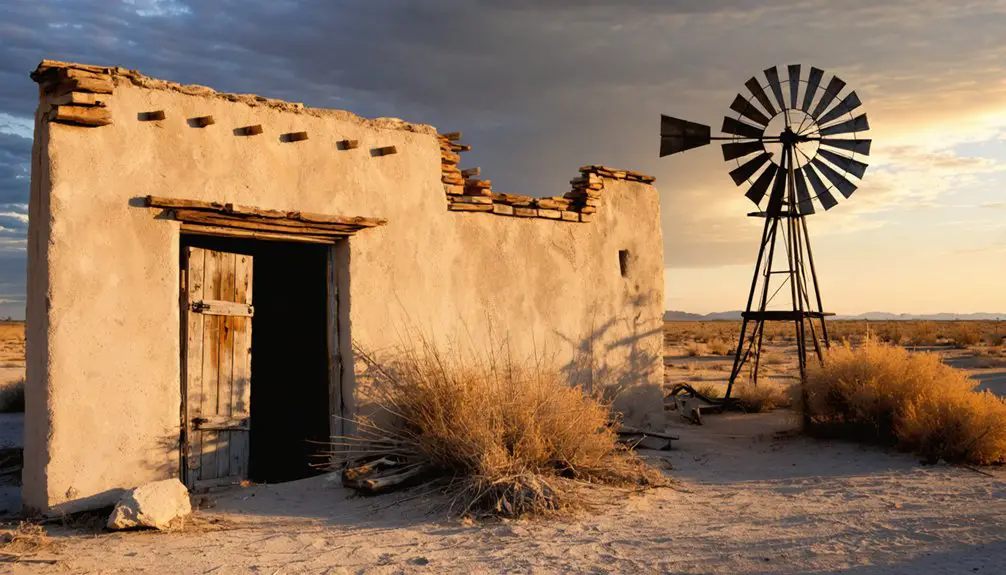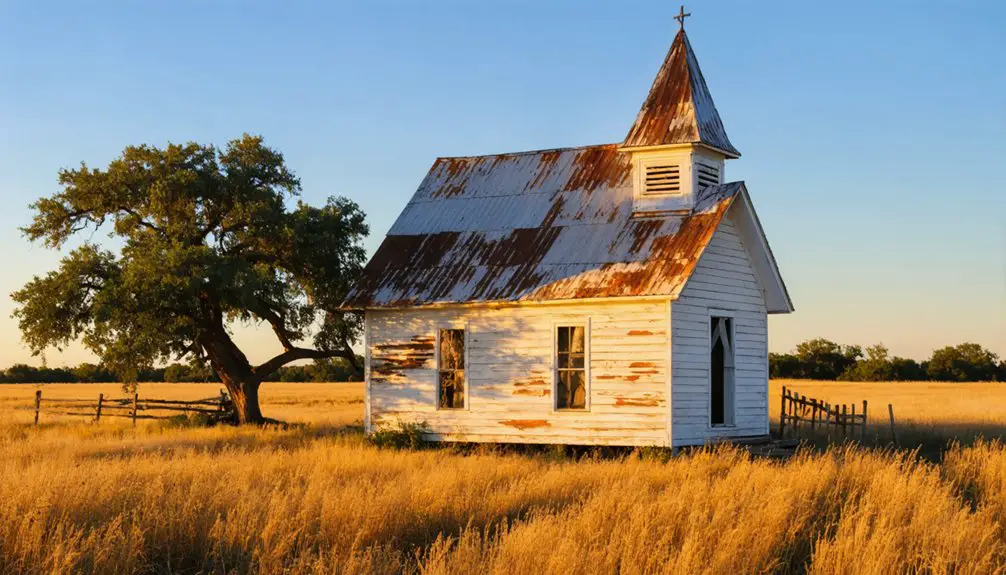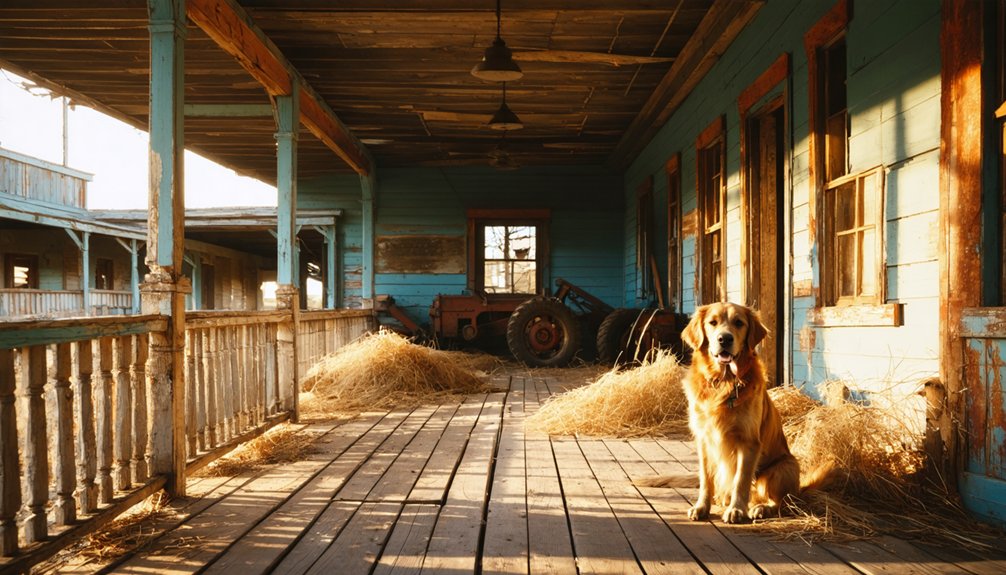
You’ll find Texas ghost towns like Terlingua in Big Bend offer incredible adventures with your dog, where crumbling adobe ruins and starlit desert skies create unforgettable memories. Gruene’s restored Victorian district provides shaded walkways perfect for leashed exploration, while Jefferson’s canopied brick streets transport you both back to the 1870s. Coastal Indianola presents storm-swept ruins and pet-friendly trails connecting archaeological sites. These haunting destinations welcome four-legged companions to explore authentic Western history together.
Key Takeaways
- Terlingua offers complete freedom for leashed dogs to explore adobe ruins, cemetery paths, and historic buildings without entry fees or time restrictions.
- Gruene’s fifteen-acre restored Victorian district provides shaded walkways, pet-friendly patios, and access to Texas’s oldest dance hall from 1878.
- Jefferson features tree-lined brick streets, Victorian mansions, and the dog-welcoming Jefferson Hotel for exploring this preserved 1870s river port.
- Indianola’s Gulf Coast ruins include pet-friendly trails connecting archaeological sites, historic cemeteries, and remnants of devastating 19th-century storms.
- Urban ghost tours in Texas cities typically restrict pets to service animals only, unlike the unrestricted access at actual ghost towns.
Terlingua: Big Bend’s Most Accessible Ghost Town Adventure
Where else can you and your four-legged companion wander through crumbling adobe ruins while gazing at the same starlit desert sky that once watched over a thousand mercury miners?
Terlingua delivers raw adventure without the crowds.
Your leashed dog can explore weathered miners’ homes and company buildings that tell tales of boom-and-bust Terlingua history.
The cemetery paths offer peaceful walks among graves dating to the early 1900s, while decaying structures create perfect photo opportunities with your adventure buddy. Historic St. Agnes Church ruins from 1913 once served as the community’s central gathering spot.
Terlingua attractions include the converted Starlight Theatre restaurant and Trading Company gift shop, both welcoming to well-behaved pets.
The open desert setting means endless space for exploration, and Big Bend’s proximity adds hiking opportunities. The town’s name derives from the Spanish words meaning “three tongues”, reflecting its multicultural heritage that shaped this unique mining community.
No entry fees or restricted hours—just pure ghost town freedom.
Gruene: A Restored Historic District Perfect for Leashed Walks
Unlike the remote desert solitude of Terlingua, Gruene offers you and your dog a completely different ghost town experience—one where Victorian charm meets vibrant restoration along the tree-lined banks of the Guadalupe River.
Where Victorian elegance meets modern restoration, Gruene transforms the traditional ghost town into a charming riverside destination for you and your canine companion.
You’ll discover authentic historic preservation at its finest while strolling the walkable fifteen-acre district with your leashed companion. The 1878 Gruene Hall, Texas’s oldest dance hall, anchors this National Historic District where adaptive reuse transformed cotton-era buildings into pet friendly attractions including outdoor dining patios and riverside green spaces.
Your dog will love the shaded walkways connecting the restored mercantile storefronts, cotton gin, and Victorian mansion-turned-inn. Established by German settlers in 1845, this historic community was originally built around the cotton trade that defined early Texas commerce. The town faced economic decline in the 1920s following Henry D. Gruene’s death and subsequent disasters before its eventual restoration.
Visit during weekdays to avoid weekend crowds, and you’ll find multiple outdoor venues welcoming four-legged explorers seeking authentic Texas history without sacrificing modern comfort.
Jefferson and East Texas: Tree-Lined Streets and Preserved History
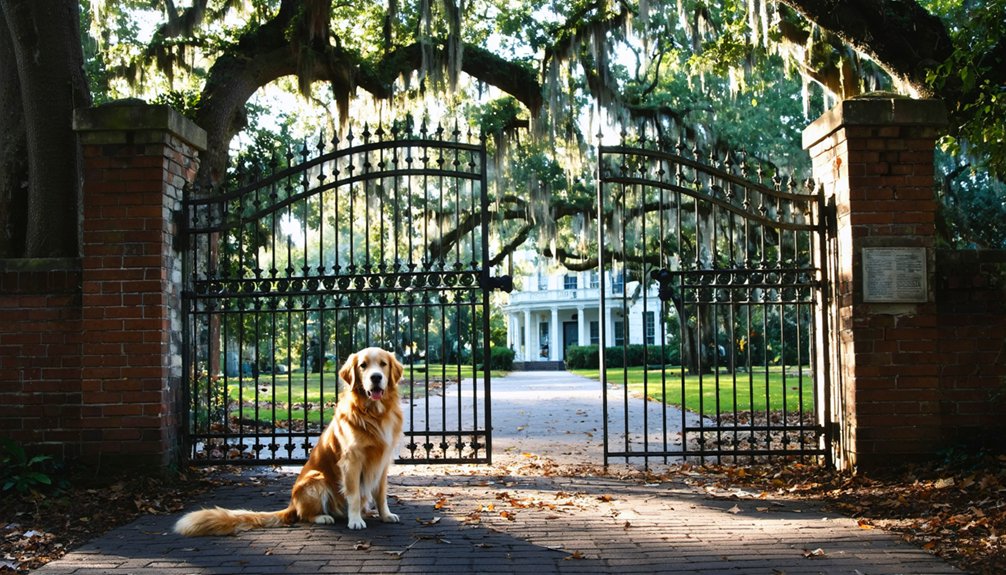
Deep in the Piney Woods of East Texas, Jefferson’s canopied brick streets transport you and your leashed dog back to the 1870s, when this thriving river port bustled with steamboats carrying cotton to New Orleans.
Your four-legged companion will love sniffing around the compact downtown where Victorian mansions like The Grove stand sentinel over tree-shaded sidewalks.
While ghost tour operators navigate preservation challenges with privately-owned buildings, you’re free to explore the haunted history at your own pace using self-guided maps or golf cart rentals. For those seeking a more immersive experience, historian Jodi Breckenridge leads ninety-minute lantern-lit tours through the town’s dark alleyways and courtyards.
The Jefferson Hotel, built from an 1851 cotton warehouse, welcomes well-behaved dogs, and the walkable historic district means everything’s within easy reach for tired paws. This remarkable preservation exists because the town’s economic collapse in the 1870s created an unintended time capsule, with buildings frozen in time until restoration efforts began in the 1960s.
Indianola: Gulf Coast Ruins and Coastal Exploration
Though hurricanes twice obliterated this once-thriving port town, Indianola’s haunting remains along Matagorda Bay offer you and your leashed dog a uniquely melancholic coastal adventure.
You’ll walk where Main Street once buzzed with immigrants and commerce, now marked only by historical plaques and underwater courthouse foundations visible beneath the surface. The port was once larger than Galveston, serving as a major gateway for commerce and immigration to Texas before nature claimed its dominance.
Your dog can explore the weathered paths through Evergreen Cemetery, where over 2,000 souls rest—many sharing death dates from the devastating 1875 and 1886 storms that sealed Indianola history.
Fewer than 50 headstones remain standing as silent witnesses to nature’s fury.
The coastal pet friendly trails wind past Lorenzo Dow Heaton House and connect to nearby archaeological sites. Historic Warehouse Row once served as the town’s economic heartbeat before the storms claimed this bustling commercial district.
This remote fishing village embraces wanderers seeking authentic ruins without crowds or restrictions.
Urban Ghost Tours: City-Based Alternatives for Evening Adventures
While remote ghost towns offer solitude and freedom for you and your four-legged companion, Texas cities provide structured evening adventures that blend historical intrigue with urban convenience.
Austin’s Victorian-era walks and San Antonio’s River Walk ghost tours create atmospheric urban exploration experiences, though most operators restrict pets while welcoming service animals under ADA guidelines.
Houston’s pub-crawl routes and Dallas’s haunted landmarks tours typically prohibit dogs due to indoor venue stops and liability concerns. However, you’ll find exceptions in smaller cities like Grapevine, where outdoor-only courthouse square walks occasionally accommodate leashed companions with advance notice.
Before booking, confirm pet policies directly with operators. Consider factors like hot pavement, crowd sizes, and route accessibility.
While these tours offer less freedom than abandoned settlements, they provide professional storytelling and safer nighttime environments for supernatural encounters. Small group sizes allow for more personalized experiences where tour guides can better accommodate special requests for pet-friendly alternatives. Many operators maintain 21+ age requirements due to the adult-oriented content and bar stops included in their evening itineraries.
Frequently Asked Questions
What Vaccinations Should My Dog Have Before Visiting Texas Ghost Towns?
Your dog needs rabies vaccination per Texas law, plus DHPP for disease prevention against distemper and parvo. Consider bordetella and leptospirosis too. These vaccination requirements protect your adventurous companion while exploring those hauntingly beautiful abandoned towns.
Are There Emergency Veterinary Clinics Near Remote Ghost Town Locations?
Emergency veterinary clinics are scarce near ghost towns, often 60-120 miles away. You’ll need emergency contacts and local veterinarians mapped out beforehand—freedom means self-reliance when adventure calls.
What’s the Best Time of Year to Visit Ghost Towns With Dogs?
Fall’s your golden window—crisp mornings, comfortable hiking temperatures, and reduced tick activity make exploring abandoned settlements perfect. You’ll avoid summer’s scorching surfaces that burn paws while enjoying stable weather for longer adventures.
Should I Bring Special Gear for My Dog in Desert Climates?
Yes, you’ll need essential desert gear. Pack collapsible hydration options and cooling vests for temperature control. Protective booties provide vital paw protection against scorching sand and sharp rocks. Don’t forget shade umbrellas and first-aid supplies.
How Do I Handle Aggressive Wildlife Encounters While Exploring With My Dog?
Stay calm and back away slowly while keeping your dog leashed close. Use bear spray as last resort, make loud noises to deter threats, and prioritize wildlife safety over exploration when aggressive animals appear.
References
- https://jamesbigleyranches.com/general/texas-ghost-towns/
- https://www.gopetfriendly.com/blog/pet-friendly-ghost-tours-howl-o-ween/
- https://www.bringfido.com/attraction/state/texas/
- https://thehomebodytourist.com/ultimate-dog-friendly-texas-road-trip/
- https://worldfootprints.com/compass/north-america/united-states/texas/ghost-towns-and-goblins-halloween-traditions-in-the-lone-star-state/
- https://www.tripadvisor.com/Attractions-g28964-Activities-c47-t14-Texas.html
- https://mix931fm.com/texas-ghost-towns-history/
- https://www.legendsofamerica.com/tx-terlingua/
- https://www.dallasites101.com/blog/post/terlingua-texas-ghost-town-guide/
- https://www.youtube.com/watch?v=fnk7SotJgq4