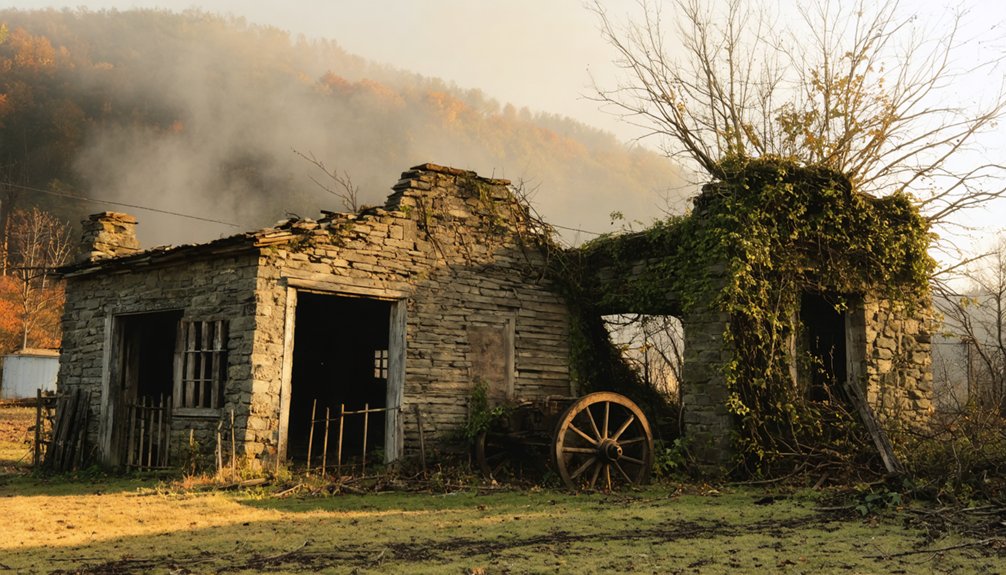
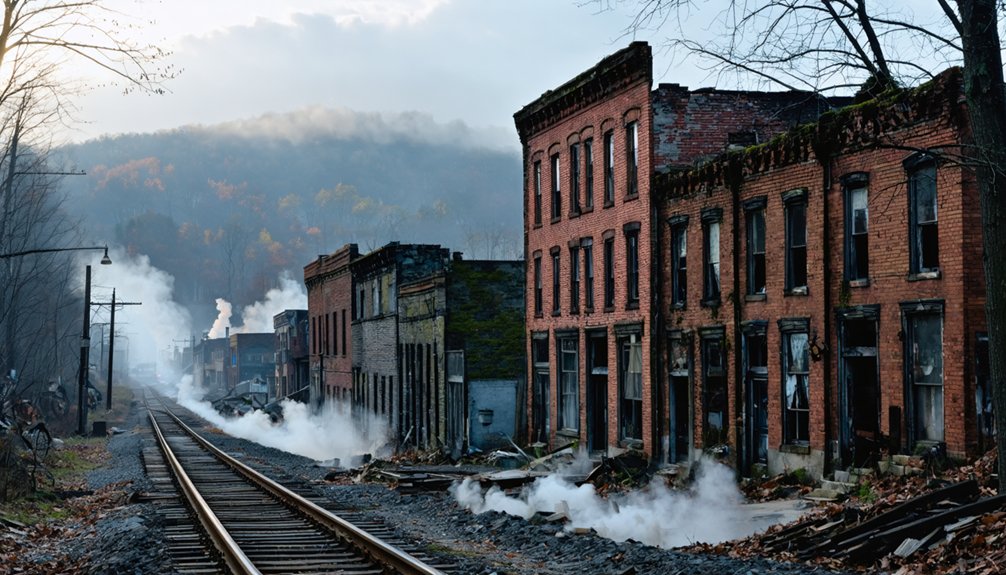
When exploring Civil War deserted settlements, start by examining cemetery records, as headstones from the 1860s reveal critical timelines when other traces have vanished. Next, utilize federal military archives, particularly Record Groups 393 and 94, which document command post operations and closures. Finally, look for physical abandonment evidence: collapsed structures, bullet-riddled walls, and soldier graffiti that confirm military conflict. These silent witnesses hold stories that await your careful interpretation.
Key Takeaways
- Cross-reference cemetery records with military archives to verify authentic Civil War settlement locations.
- Search for structural remnants like collapsed roofs, bullet holes, and displaced foundation stones.
- Examine headstones from the 1860s to establish timeline connections to Civil War movements.
- Look for military occupation evidence including soldier graffiti, makeshift bunks, and abandoned personal belongings.
- Consult Record Groups 393 and 94 in federal archives for detailed command post and troop movement documentation.
Identifying Forgotten Ghost Towns Through Cemetery Records
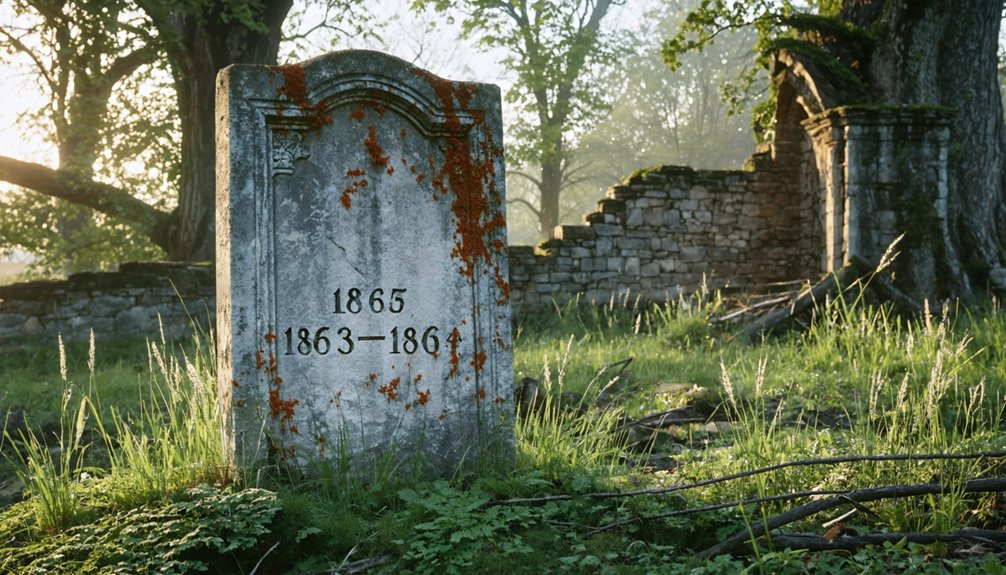
Why do graveyards often remain when all other traces of a settlement have vanished? Their enduring stone markers resist decay long after wooden structures have collapsed and disappeared. When searching for Civil War era ghost towns, these burial grounds become invaluable archaeological anchors.
Examine cemetery preservation status carefully—maintained sites often indicate ongoing local connections despite town abandonment. Headstones dating to the 1860s reveal critical settlement timelines, while epitaphs documenting occupations and origins reveal historical demographics of these vanished communities. Cross-reference names found in burial plots with historical registers to confirm site authenticity.
For thorough research, locate unmarked graves and pauper cemeteries outside main burial areas, as these reveal social stratification within forgotten settlements. Similar to how the Dawson Cemetery was expanded after 1923 due to the mining disasters, abandoned town graveyards often show physical evidence of community tragedies. Pioneer Cemetery in Carson City exemplifies how long-neglected sites can provide valuable historical insights despite urban development encroachment.
Exploring haunted locations in Appalachian mountains can also shed light on the region’s complex social history. Many of these sites have untold stories linked to tragic events, offering a glimpse into the lives of those who once resided there. By studying the folklore and history surrounding these eerie places, researchers can uncover the deep-rooted cultural narratives that have shaped the Appalachian community over generations.
GPS coordinates from cemetery sites help overlay historical maps onto modern terrain, pinpointing precisely where these lost towns once thrived.
Using Military Archives to Locate Abandoned Command Posts
Unlike forgotten settlements that leave only gravestones behind, abandoned Civil War command posts often exist extensively in federal military archives, providing researchers with detailed documentation of their operations and final disposition.
You’ll find valuable information in Record Group 393 (Army Continental Commands) and Record Group 94 (Adjutant General’s Office). Focus your archival research on monthly returns, which track units stationed at posts and include official communications about abandonment.
The Reservation File (1800-1916) specifically documents establishment and closure activities.
Examine post adjutants’ bound volumes for daily operations, and don’t overlook registers of interments, which can reveal personnel details.
For context about command post vulnerabilities, investigate Postmaster General reports documenting attacks on communications infrastructure during the period. These reports often include detailed records of raids on post offices and damage to telecommunication lines during 1922-1924.
When researching post abandonment, consider examining records related to desertion rates which often increased toward the end of a post’s operational life.
Recognizing the Physical Signs of War-Driven Abandonment

When exploring abandoned Civil War era settlements, identifying physical evidence of wartime displacement requires attention to distinct patterns of destruction and hasty evacuation.
Look for structural signs including collapsed roofs, scorched timbers, and partially standing chimneys—telltale indicators of artillery damage or deliberate burning. Displaced foundation stones and bullet-riddled walls further confirm military conflict.
Evidence of hasty departures manifests in abandoned personal belongings, scattered household items, and unfinished meals.
In the dust-covered corners of these silent homes, half-written letters and cold hearths whisper stories of lives suddenly interrupted.
Military occupation leaves its own signature: soldier graffiti, makeshift bunks, and uniform fragments. Some of these historical markings remained concealed beneath wallpaper for over a century before being discovered during preservation efforts.
The surrounding landscape tells a complementary story through overgrown fields, dismantled fences, and widened roads for troop movement. Yellow and black fallout shelter signs installed during the 1960s can sometimes be found in buildings that survived from the Civil War era and were later repurposed.
These physical remnants offer silent testimony to communities torn apart by war, preserving their stories in the artifacts and ruins they left behind.
Frequently Asked Questions
How Can Modern Technology Help Locate Underground Remains of Settlements?
You’ll locate underground settlement remains through geophysical surveys that analyze subsurface anomalies and remote sensing technologies like LiDAR and GPR that reveal hidden structures without disturbing the archaeological context.
What Protective Equipment Should Explorers Bring to Abandoned Civil War Sites?
Prioritize protective clothing: sturdy boots, long pants, and weather-appropriate layers. You’ll need safety gear including hard hat, work gloves, high-visibility vest, and headlamp when traversing potentially hazardous historical terrain.
Are Permits Required to Access These Historically Significant Abandoned Areas?
Yes, you’ll typically need permits to access these sites. Federal, state, and private land permit regulations vary considerably, all designed to balance historical preservation with responsible exploration of these significant locations.
How Reliable Are Local Oral Histories About Deserted Civil War Settlements?
Like flickering lanterns in fog, local oral histories provide valuable perspectives but face historical accuracy debates. You’ll need to cross-reference them with archival sources—oral tradition reliability varies considerably between communities.
What Are Common Misconceptions About Why Civil War Communities Were Abandoned?
You’ve misunderstood abandonment causes: disease wasn’t primary; battles weren’t sole triggers; Black settlements faced reversal not success; economic collapse and social upheaval were stronger factors than Homestead Act stability promises.
References
- https://en.wikipedia.org/wiki/Ghost_town
- https://www.witnessingyork.com/mapping-meaning/the-abandoned-african-american-colony-of-yellow-hill/
- https://www.youtube.com/watch?v=XbxVkC1yFOY
- https://encyclopediaofarkansas.net/entries/desertion-6399/
- https://encyclopediavirginia.org/entries/poverty-and-poor-relief-during-the-civil-war/
- https://teachinghistory.org/history-content/ask-a-historian/23934
- https://usghostadventures.com/haunted-places/dawson-ghost-town-and-cemetery/
- https://nvtami.com/2021/09/28/pioneer-cemetery-carson-city-nevada/
- https://cccourthouse.org/wp-content/uploads/2023/12/Ghost-towns-and-Cemeteries-of-Citrus-County.pdf
- https://www.youtube.com/watch?v=7HCxA37uVDg