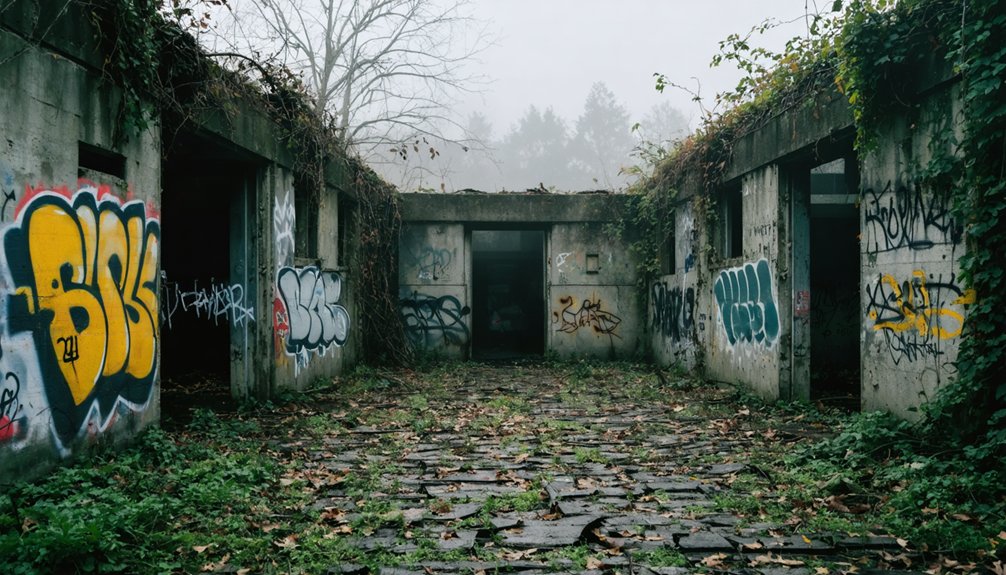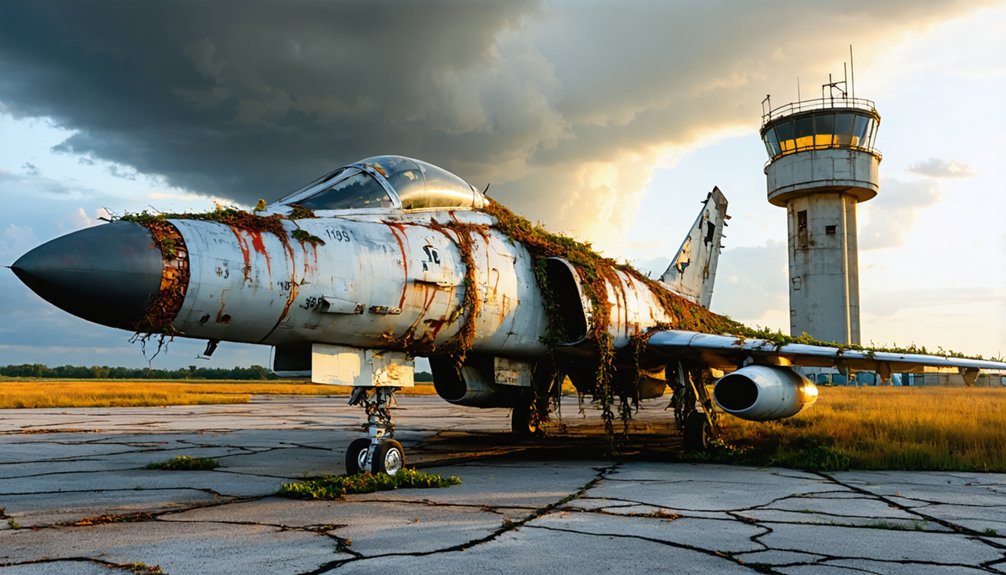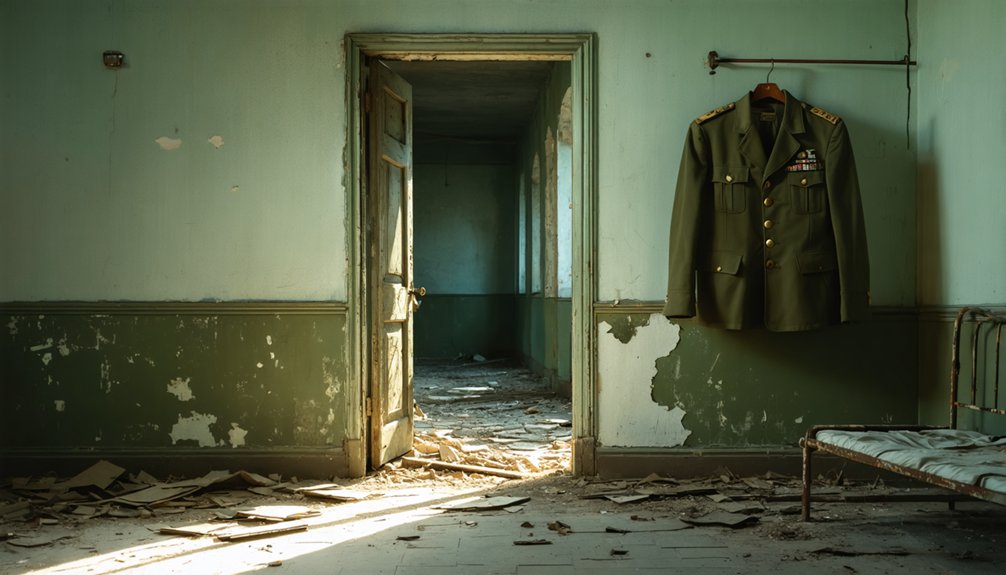
Abandoned military sites offer fascinating glimpses into America’s defense history, from North Dakota’s $6 billion Nekoma Missile Base to Fort Leavenworth’s 36 allegedly haunted buildings. When exploring, you’ll need proper safety gear and legal permissions, as trespassing carries serious consequences. Many former bases now function as museums or state parks with guided tours. The concrete bunkers and decaying barracks await those prepared to discover their secrets properly.
Key Takeaways
- Abandoned military facilities like Nekoma Missile Base and Fort Ord offer glimpses into the past through their decay and historical artifacts.
- Always secure permission or join sanctioned tours to avoid legal repercussions when exploring restricted military ghost towns.
- Bring essential safety gear including boots, helmets, and first aid supplies when venturing into potentially hazardous structures.
- Many former bases feature reportedly haunted buildings, with Fort Leavenworth containing 36 structures known for paranormal activity.
- Former Cold War installations with thick concrete walls and underground tunnels provide fascinating exploration opportunities for history enthusiasts.
The Hidden History of America’s Abandoned Military Complexes
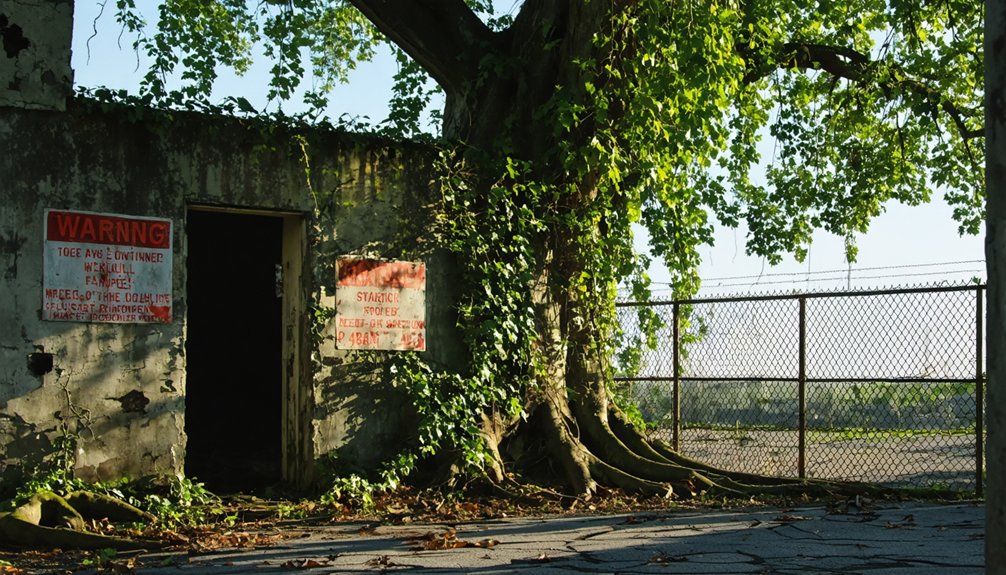
How quickly can a multi-billion-dollar military installation transform from a strategic asset to a forgotten relic? Nekoma Missile Base in North Dakota provides a stark answer—operational for merely three days despite a $6 billion investment before being abandoned to flooded tunnels and decay.
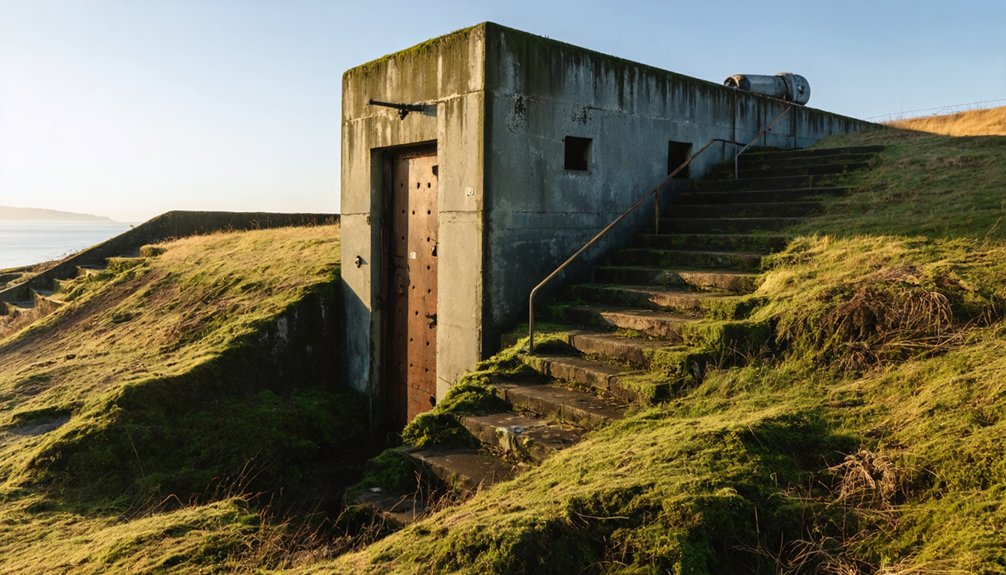
These forgotten stories populate America’s landscape: Fort Ord in Monterey served as the primary West Coast training facility through both World Wars before its 1994 closure. Fort Worden in Washington now stands as a state park, showcasing its moss-covered batteries and empty beaches as a reminder of America’s coastal defense history. The notorious Walker Air Force Base outside Roswell gained notoriety for alleged UFO sightings before being sold to fund Vietnam War efforts.
Meanwhile, nostalgic reflections of Bannerman Castle reveal how quickly isolation can destroy infrastructure—its ferry service halted in 1953, leaving the military surplus warehouse to vandalism and structural collapse.
The Department of Defense’s five BRAC rounds between 1988 and 2005 accelerated this phenomenon, closing hundreds of installations and withdrawing approximately 200,000 troops from Germany alone.
Top Haunting Military Ghost Towns Worth Visiting
While abandoned military facilities scatter America’s landscape, some installations have gained notoriety beyond their operational history—they’ve become havens for paranormal enthusiasts and history buffs alike.
Fort Leavenworth’s 36 haunted buildings feature General Custer’s apparition and the tragic Tower 8.
At Fort Mifflin, you’ll encounter the infamous “Faceless Man” and hear the bone-chilling wails of the “Screaming Woman.”
Kadena Air Base’s spectral sightings include a samurai warrior and a bloodied WWII soldier requesting a light at Gate 3.
Fort Monroe offers Jefferson Davis’s restless spirit and Lincoln’s ghostly presence, while Gettysburg National Military Park’s haunted history encompasses Confederate soldiers still patrolling the battlefield.
These locations provide unique windows into America’s military past—where historical trauma manifests through unexplained phenomena. The USS Hornet, recognized as the most haunted ship in the Navy with over 300 deaths during its service, now operates as a museum with regular paranormal tours. Many military bases offer seasonal ghost tours that are particularly popular during the fall months when paranormal activity is said to increase.
Underground Bunkers and Secret Facilities: What Remains Below
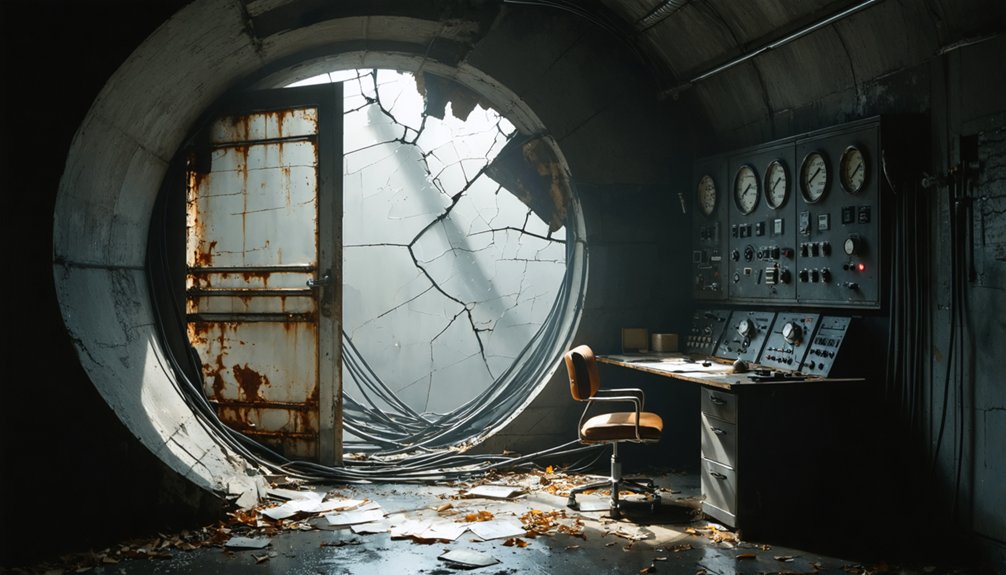
Beneath America’s vast landscapes lie silent sentinels of the Cold War era—abandoned underground military complexes that once stood ready for nuclear apocalypse.
You’ll find remarkable bunker architecture in facilities like the Fairdale, North Dakota silo with its 2-foot-thick walls, now succumbing to water damage. The Titan II silos in Arizona, camouflaged in desert terrain, represent engineering marvels that once housed America’s largest land missiles.
These Cold War remnants feature impressive defensive designs—reinforced concrete up to 14 feet thick, complex filtration systems, and hidden entrances protected by vault-like doors weighing approximately 7,000 pounds each. The Titan I Missile Complex in rural Eastern Washington descends 155 feet underground with uniquely arranged rooms designed for maximum protection.
Many interconnected through elaborate tunnel networks, these structures were self-contained worlds built to withstand nuclear strikes.
While some facilities like Croatia’s Zeljava Air Base now train for minefield operations, others remain forgotten time capsules, their abandoned equipment evidence of an apocalypse that never came.
Safety Tips and Legal Considerations for Military Base Exploration
Exploring abandoned military facilities presents a complex legal and safety landscape that requires careful navigation before you set foot on these historically significant sites.
Venturing into forgotten mining towns in Nevada can offer a glimpse into the past, where remnants of the once-thriving industry still linger among overgrown landscapes. However, it is crucial to remain aware of potential hazards and property rights when exploring these nostalgic relics of America’s mining history. Just like abandoned military facilities, these sites require thorough research and consideration of both legal and safety aspects to ensure a respectful and secure exploration experience.
Remember that trespassing laws strictly prohibit unauthorized access to military property, even when decommissioned. Always secure explicit permission or join sanctioned tours to avoid citations, fines, or arrest.
Entering military ruins without authorization remains illegal—obtain proper permissions or face legal consequences.
Prioritize your well-being by wearing appropriate safety gear including sturdy boots, gloves, and helmets when exploring structurally compromised areas.
Travel with companions and carry communication devices, first aid supplies, and detailed maps. Research potential environmental hazards like chemical contamination or unexploded ordnance before visiting.
Respect these historical sites by adhering to “Tread Lightly” principles—take only photographs, leave only footprints, and never remove artifacts regardless of their apparent insignificance.
When visiting sites like the Green River launch facility, be aware that some areas may have shifted from previous “No Trespassing” status to being wide open for public access as reported by recent visitors.
Consider exploring Finland Air Base in Minnesota, which remains a remarkable Cold War relic with abandoned personal belongings still visible throughout the facility.
From Cold War to Tourist Attraction: The Transformation of Military Ruins

After decades of secrecy and military vigilance, former Cold War installations have undergone remarkable transformations into popular tourist attractions, breathing new life into these once-restricted zones.
You’ll find underground bunkers, missile silos, and sprawling tunnel networks now open for exploration at sites like Arizona’s Titan Missile Museum, where you can view a disarmed missile in its original launch facility. The military tourism industry has repurposed these historical assets while preserving their authenticity.
Former bases like Fort Ord and RAF Upper Heyford showcase successful historical preservation efforts, balancing education with accessibility.
Beyond Cold War remnants, older military ruins at places like Fort Apache and Bannerman Castle offer immersive experiences through guided tours, museums, and even ghost tours—combining factual military history with the eerie atmosphere that naturally permeates these abandoned strongholds. The Pima Air & Space Museum features an impressive collection of nearly 400 aircraft and spacecraft, providing visitors with a comprehensive view of aviation history in a family-friendly environment. George Air Force Base in Victorville, California stands as another example with its abandoned hospital buildings that have attracted urban explorers despite environmental contamination concerns.
Frequently Asked Questions
Can Civilians Access Military Radar Systems in Abandoned Bases?
Like ghosts locked behind time’s bars, you’ll face ironclad civilian restrictions. You can’t access military radar technology in abandoned bases—they’re decommissioned, dismantled, and legally off-limits for your exploration.
How Long Do Radiation Hazards Persist in Former Nuclear Sites?
You’ll find radiation hazards persist for decades to millennia, depending on isotopes present. Short-lived radiation decays within weeks, while plutonium contamination lasts thousands of years despite nuclear cleanup efforts.
Are Ghost Soldiers Reportedly Seen at Specific Abandoned Bases?
Yes, you’ll find reports of ghost sightings at Fort Leavenworth, Fort Monroe, Fort Mifflin, and F.E. Warren AFB, where soldier apparitions often appear in period uniforms at specific historical buildings.
What Wildlife Has Reclaimed These Abandoned Military Installations?
With 500 seal pups born annually on Inchkeith Island, you’ll find remarkable wildlife diversity at abandoned bases. You’ll encounter ground-nesting birds, grey seals, terrestrial mammals, and urban wildlife thriving in these undisturbed sanctuaries.
Do Any Abandoned Bases Still Contain Classified Technology?
You’ll find classified artifacts in some abandoned bases, despite official protocols. Military hidden vaults likely exist underground where security remains active, especially in Cold War-era installations with incomplete decommissioning procedures.
References
- https://en.wikipedia.org/wiki/List_of_ghost_towns_by_country
- https://nvtami.com/top-10-ghost-towns-nevada-northwest/
- https://www.loveexploring.com/gallerylist/233478/americas-eeriest-abandoned-military-sites
- https://www.camp-california.com/california-ghost-towns/
- https://www.popularmechanics.com/technology/design/g1507/creepy-abandoned-military-sites-from-around-the-world/
- https://www.youtube.com/watch?v=MYe6MXx_3rE
- https://www.youtube.com/playlist?list=PLenYgd5YLQJ744EWXrjBFt-EtBj8FFdPo
- https://thedesigninspiration.com/news/facts/these-15-abandoned-military-bases-will-leave-you-speechless/
- https://en.wikipedia.org/wiki/List_of_former_United_States_Army_installations
- https://www.epa.gov/fedfacts/base-realignment-and-closure-act-sites