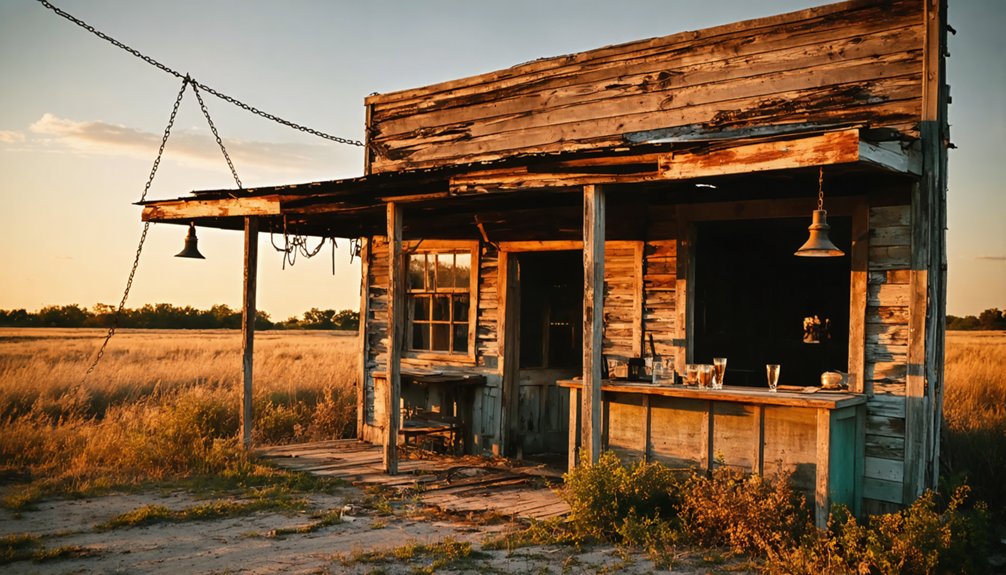
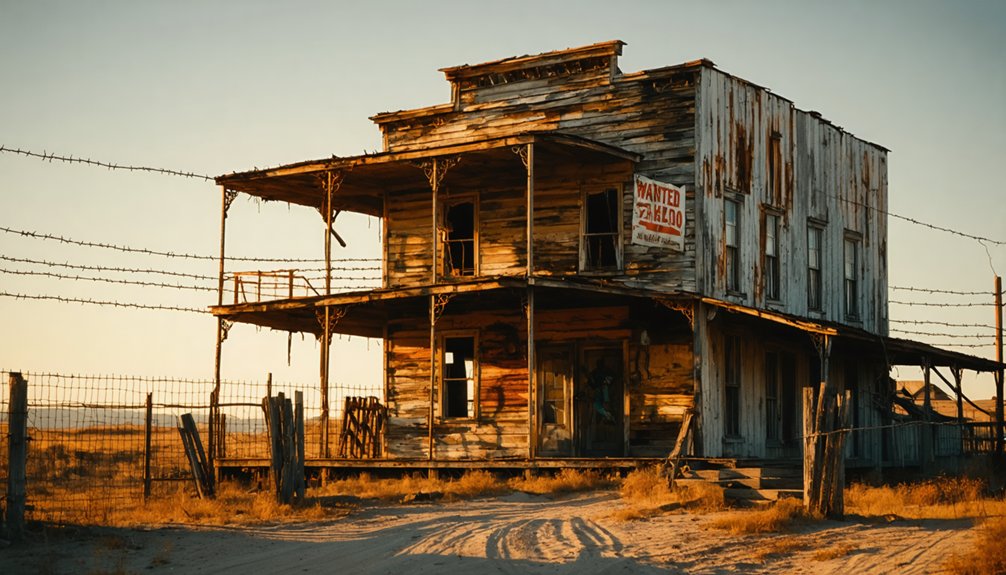
You’ll discover America’s frontier past in Gold Rush ghost towns like California’s Bodie with 110 buildings in “arrested decay” and Montana’s Virginia City with 150 original structures. These abandoned settlements showcase mining operations that once generated millions in gold and silver between 1850-1900. Each town—from Colorado’s high-altitude St. Elmo to Nevada’s architecturally unique Rhyolite—offers authentic glimpses into the boom-and-bust cycles that shaped western expansion. The stories behind these preserved ruins await.
Key Takeaways
- Bodie, California preserves 110 structures in “arrested decay,” showcasing authentic Gold Rush life without modern restoration.
- Virginia City evolved from a mining camp to a territorial capital with over 150 preserved 1860s frontier buildings.
- Ghost towns like Calico (California) and Rhyolite (Nevada) reflect America’s boom-and-bust cycles during westward expansion.
- St. Elmo, Colorado sits at 10,000 feet elevation and is protected on the National Register of Historic Places.
- Gold Rush ghost towns feature original artifacts, architecture, and evidence of once-thriving entertainment scenes with saloons and theaters.
The Historical Significance of American Ghost Towns
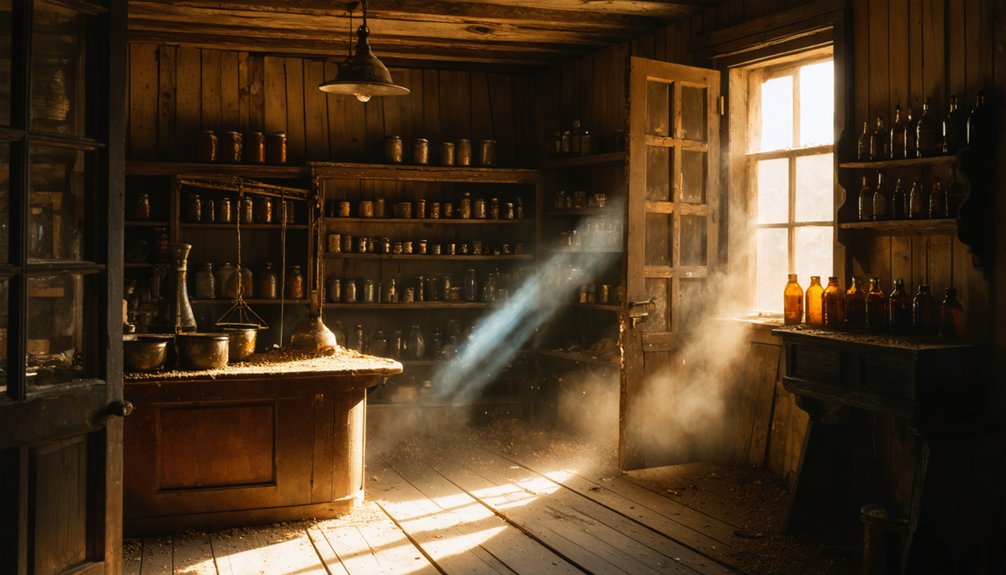
While examining the historical landscape of America’s westward expansion, ghost towns emerge as powerful physical reminders of our nation’s boom-and-bust development cycles.
From 1880-1940, these settlements flourished then faltered across the American frontier, with mining camps transforming into vibrant communities within months following gold and silver discoveries in the Rockies.
Like frontier comets, mining settlements blazed across America’s West, igniting then extinguishing with the fortunes they chased.
You’ll find this cultural heritage particularly concentrated in states like California with 346 ghost towns, where 1880s rail expansion fueled temporary prosperity.
Texas leads with 511 abandoned settlements, originally established during early to mid-1800s frontier development.
These silent monuments to economic decline tell a compelling story of American ambition and adaptation, especially evident in places like Virginia City, where preservation efforts maintain buildings that witnessed the dramatic rise and fall of resource-dependent communities. Many of these abandoned towns ultimately failed due to resource depletion that occurred once minerals were exhausted.
Towns like Bodie, California, established in 1859, showcase this history with approximately 110 structures still standing despite declining by the 1910s.
Bodie: California’s Best-Preserved Mining Settlement
When you visit Bodie today, you’ll encounter over 100 buildings preserved in “arrested decay,” with interiors still filled with everyday items left behind when residents abandoned the town.
You can glimpse the harsh realities of mining life through artifacts ranging from store merchandise to personal possessions frozen in time since the early 1900s. This well-preserved ghost town serves as a disambiguation resource for visitors seeking to understand the various historical contexts of mining settlements in the American West.
Once notorious for its lawlessness with 65 saloons, gambling halls, and a thriving red light district, Bodie earned its reputation as one of the wildest mining camps in the West before its eventual decline following the gold’s depletion. The mining operations in Bodie were extraordinarily lucrative, generating approximately $70 million between 1876 and 1941.
Eerie Frozen-in-Time Appeal
Among the numerous ghost towns dotting the American West, Bodie stands as California’s premier example of a perfectly preserved mining settlement frozen in time.
As you wander through its mysterious landscapes at 8,379 feet elevation, you’ll encounter buildings maintained in “arrested decay” – neither restored nor allowed to collapse. The ghost town’s population once peaked at nearly 10,000 residents in 1879, with the landscape dotted with over 2,000 buildings during its heyday.
Peer through windows into the past, where interiors remain exactly as they were left, complete with original furniture and goods. The haunting echoes of the 1800s surround you as you explore the Methodist church, jail, and abandoned homes.
Unlike reconstructed tourist attractions, Bodie offers an authentic glimpse into Gold Rush life, with dusty bottles still on store shelves and school books open on desks – creating an eerily authentic experience that connects you directly with California’s rugged mining heritage. During its prime from 1877 to 1882, the town produced an impressive over $38 million in gold and silver.
Daily Life Artifacts
The artifacts of daily life strewn throughout Bodie offer visitors an unparalleled window into authentic Gold Rush-era existence.
You’ll find poker cards frozen mid-game on saloon tables, schoolbooks left open on desks, and store shelves still stocked with 19th-century merchandise—all evidence of the town’s abrupt abandonment.
The artifact preservation here is extraordinary.
Household items remain exactly where residents left them over 150 years ago. Up to ten layers of wallpaper chronicle evolving interior design tastes while square nails and original wooden structures showcase period construction techniques. At its peak, the town boasted 65 saloons along its streets, reflecting the rowdy lifestyle of this mining community.
Scattered china shards, bottles, and mining tools document everyday activities from domestic life to industrial work.
This meticulous preservation presents daily life exactly as it existed, allowing you to experience genuine Gold Rush culture without modern restoration interference.
Notorious Badlands History
Known as one of California’s most notorious “bad towns,” Bodie earned a fearsome reputation that rivaled famous Western settlements like Tombstone and Deadwood during its 1877-1882 heyday.
The town’s explosive growth to nearly 10,000 residents created perfect conditions for lawlessness in this remote mining settlement.
Evidence of Bodie’s wild character includes:
- Up to 65 competing saloons operating simultaneously downtown
- Frequent shootouts and murders as frontier justice replaced formal law enforcement
- Gambling halls, opium dens, and brothels flourishing alongside legitimate businesses
- Notorious outlaws drawn to the town’s combination of wealth and minimal governance
This international boomtown’s dangerous reputation wasn’t exaggerated—with miners from every country arriving daily, Bodie represented the untamed freedom and peril of America’s Gold Rush frontier. The phrase “Badman from Bodie” emerged by 1880 as shorthand for the town’s violent reputation. A series of devastating fires, particularly those in 1892 and 1932, ultimately contributed to the downfall and abandonment of this once-thriving gold rush town.
Virginia City: Montana’s Territorial Capital Turned Time Capsule
When you stroll through Virginia City today, you’ll encounter one of the nation’s most extensive collections of preserved 1860s frontier architecture, with over 150 authentic buildings documenting the evolution from mining camp to territorial capital.
The town’s wooden boardwalks, false-front businesses, and Victorian structures reflect the rapid development that occurred when gold transformed this remote gulch into Montana’s first incorporated city.
Virginia City’s entertainment venues, including the restored Opera House and Bale of Hay Saloon, offer glimpses into the sophisticated cultural life that flourished in this once-booming Wild West boomtown. In its heyday, miners extracted approximately $30 million worth of gold during just the first three seasons of the 1860s gold rush.
Exploring these attractions reveals hidden gems in Nevada’s history that highlight the diverse experiences of those who lived through such transformative times. Each venue tells a story, from the lavish gatherings in the Opera House to the lively banter of the Bale of Hay Saloon, reflecting the unique character of the era. Visitors can truly appreciate the intersection of rugged frontier life and cultural sophistication that defined this fascinating period.
Preserved Frontier Architecture
Architectural time capsules, Virginia City’s preserved frontier buildings offer visitors an authentic glimpse into Montana’s territorial capital during its 1860s gold rush heyday.
The town’s frontier architecture evolved rapidly as gold wealth transformed a makeshift camp into a sophisticated settlement.
Today, you’ll find 237 major structures still standing from the territorial era, with 150 buildings certified authentic by the Montana Heritage Commission.
Ghost town preservation efforts began with Charles and Sue Bovey’s mid-20th century initiative to save these historical treasures.
Four key architectural developments in Virginia City:
- Evolution from temporary tents to substantial commercial buildings
- Peak construction reaching 1,200 buildings by 1868
- Inclusion of Montana’s first telegraph station in 1866
- National Historic Landmark designation in 1961 recognizing its significance
Wild West Entertainment Legacy
Beyond its political significance as Montana’s territorial capital, Virginia City emerged as a vibrant entertainment hub during the gold rush era, offering diversions for miners and settlers seeking respite from frontier hardships.
As Montana’s first social center during the mid-1860s, when the population swelled to 10,000, you’d find a thriving wild west entertainment scene with newspapers, schools, and social organizations catering to diverse residents.
The town’s entertainment history reflects both its pioneering families and rougher characters, creating a dynamic frontier culture.
After Helena’s rise following the Last Chance Gulch gold discovery in 1864, Virginia City’s entertainment prominence faded alongside its population decline.
Yet the vigilante justice era left an indelible mark on its character, contributing to its enduring wild west mystique that continues to captivate visitors today.
St. Elmo: Colorado’s Alpine Mining Legacy
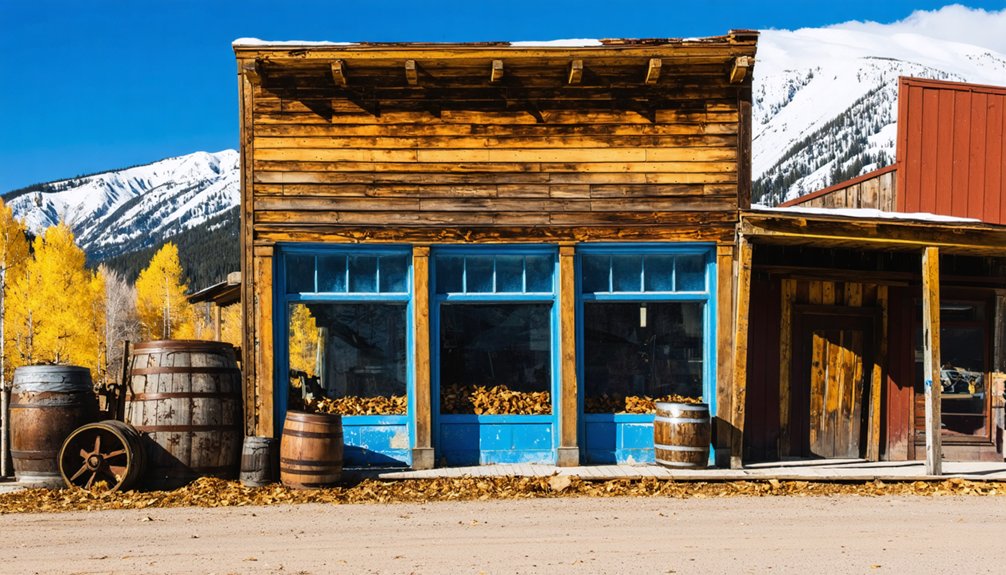
Perched at nearly 10,000 feet in Colorado’s Sawatch Mountain Range, St. Elmo stands as one of Colorado’s best-preserved ghost towns.
Originally named Forest City, this alpine settlement was renamed after an 1866 novel and quickly flourished during the mining boom. St. Elmo’s economy thrived on gold and silver extraction, with over 150 patented mine claims supporting nearly 2,000 residents at its peak.
The town’s decline occurred rapidly when:
- Mining resources dwindled in the early 1920s
- Railroad service ended in 1922, isolating the community
- Population dropped to just seven people by 1930
- Postal service ceased in 1952
Ghost town preservation efforts led to St. Elmo’s designation on the National Register of Historic Places in 1979, protecting its 43 original structures for future generations.
Calico: From Silver Boom to Desert Museum
While St. Elmo showcases Colorado’s mining heritage, California’s Calico reveals a spectacular silver rush legacy. Discovered in 1881, this boomtown quickly flourished, producing 70% of California’s silver by 1884.
At its peak, Calico bustled with 3,500 residents, over 500 mines, and dozens of businesses, generating an astounding $86 million in silver and $45 million in borax.
When silver markets collapsed in the 1890s, Calico rapidly emptied. Its resurrection began when Walter Knott purchased the ghost town in 1951, meticulously restoring buildings using historical photographs.
His Calico restoration preserved five original structures before donating the site to San Bernardino County in 1966. In 2005, Governor Schwarzenegger designated Calico as California’s Official State Silver Rush Ghost Town, cementing its place in mining legacy and western freedom lore.
Today, visitors can explore many historic ghost towns in California, each telling its own story of prosperity and decline. These towns, like Calico, offer a glimpse into the past and reflect the rich tapestry of California’s history, drawing tourists and history enthusiasts alike. From remnants of bustling mining operations to well-preserved facades, they stand as silent witnesses to an era filled with adventure and hardship.
Rhyolite: Nevada’s Rapidly Rising and Falling Frontier
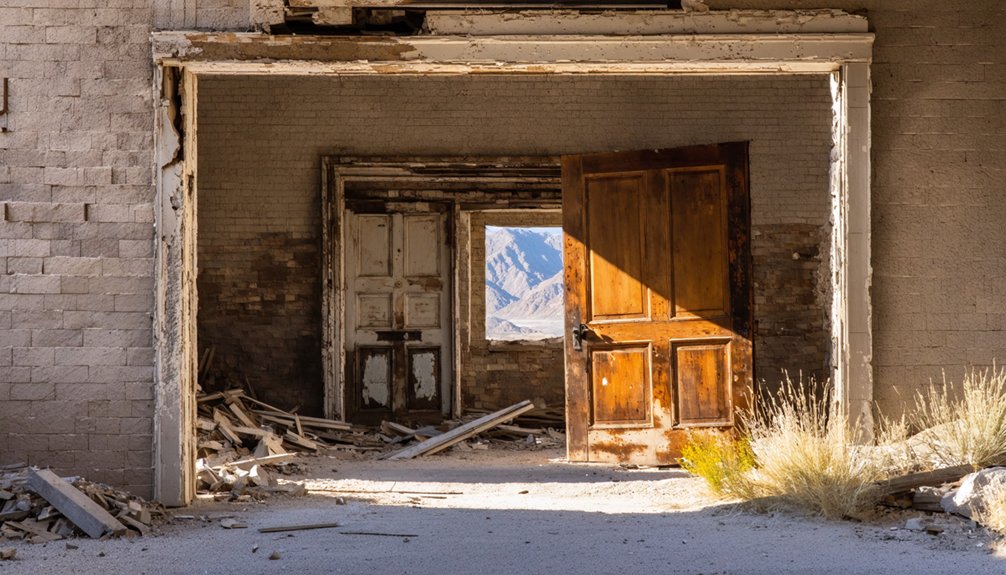
In the shadow of Nevada’s Bullfrog Hills, Rhyolite emerged as one of America’s most dramatic boom-and-bust stories following the 1904 gold discovery by prospectors Frank “Shorty” Harris and Ernest “Ed” Cross.
You’ll find this town extraordinary for its meteoric rise and equally rapid collapse.
What made Rhyolite exceptional:
- Stone and concrete Rhyolite architecture that surpassed typical wooden mining towns
- Advanced infrastructure with electricity and water systems by mid-1905
- Over 85 mining companies operating, with Montgomery-Shoshone mine leading Rhyolite mining operations
- Complete abandonment within a decade, with population plummeting from 10,000 to just 14 by 1920
The town’s remains stand as stark reminders of frontier ambition and the ephemeral nature of resource-driven prosperity, where fortunes vanished as quickly as they appeared.
Coloma: Birthplace of the California Gold Rush
When James W. Marshall discovered gold at Sutter’s Mill on January 24, 1848, he unwittingly sparked one of America’s greatest migrations. This momentous gold discovery transformed the sleepy valley the Nisenan called “Cullumah” into the epicenter of the California Gold Rush.
By 1849, Coloma had exploded into a boomtown of 10,000 miners, with 13 hotels, banks, and countless businesses catering to fortune-seekers.
The mining boom brought 300,000 people to California between 1848-1855, propelling the territory to statehood in just two years.
Though neither Marshall nor Sutter profited from their discovery, their legacy lives on at Marshall Gold Discovery State Historic Park, where you’ll find preserved buildings offering a glimpse into this pivotal chapter of American history.
Frequently Asked Questions
Are Ghost Towns Safe to Visit With Children?
Some ghost towns aren’t safe for children due to mine hazards and unstable structures. Choose child-friendly sites with proper safety precautions, marked trails, and secured mining features for your family’s protection.
Can You Legally Take Artifacts From Ghost Town Sites?
You mustn’t “liberate souvenirs” from ghost towns. Legal regulations strictly prohibit artifact removal from public lands, while private property requires owner permission. Artifact preservation guarantees historical context remains intact for future generations.
When Is the Best Time of Year to Visit These Towns?
You’ll find the best months are summer for Bodie and Garnet, winter for Calico. Plan around seasonal events like Garnet Day in June for an authentic experience with fewer restrictions.
Do Any Ghost Towns Offer Overnight Accommodations?
Step back in time as you slumber where miners once dreamed of riches. You’ll find ghost town lodging in Gold Point (historic cabins), St. Elmo (B&B), and Calico (bunkhouse), offering authentic historical accommodations.
Are There Guided Tours Available at These Historic Sites?
Yes, you’ll find diverse guided tour options highlighting historical significance, including small group tours, private experiences at Bodie State Park, and interactive mining demonstrations that reveal authentic gold rush heritage.
References
- https://www.loveexploring.com/gallerylist/67994/americas-eeriest-gold-rush-ghost-towns
- https://www.geotab.com/ghost-towns/
- https://www.parks.ca.gov/?page_id=1081
- https://en.wikipedia.org/wiki/California_gold_rush
- https://patch.com/california/banning-beaumont/13-ghost-towns-explore-california
- https://www.atlasobscura.com/lists/americas-best-preserved-ghost-towns
- https://www.idyllicpursuit.com/9-forgotten-gold-rush-towns-you-can-still-walk-through/
- https://www.itinerantjoy.com/gold-rush-and-mining-towns.html
- https://www.en-vols.com/en/getaways/travel/gold-rush-united-states/
- https://www.freakyfoottours.com/us/california/