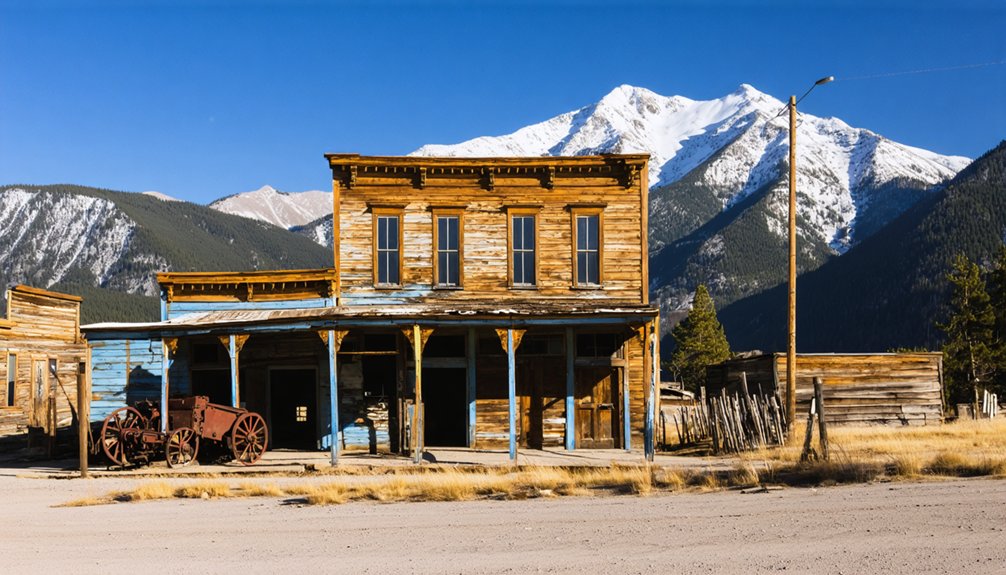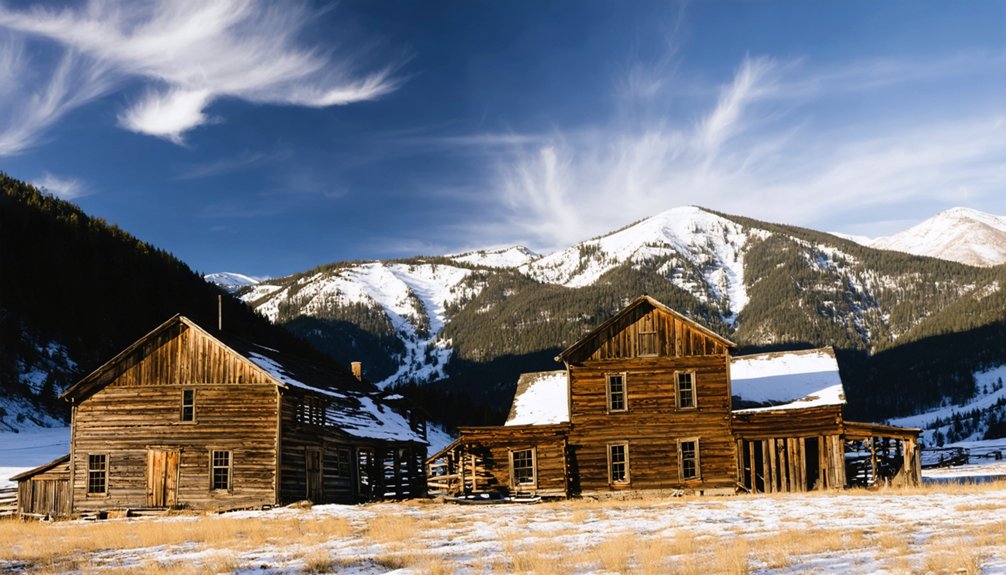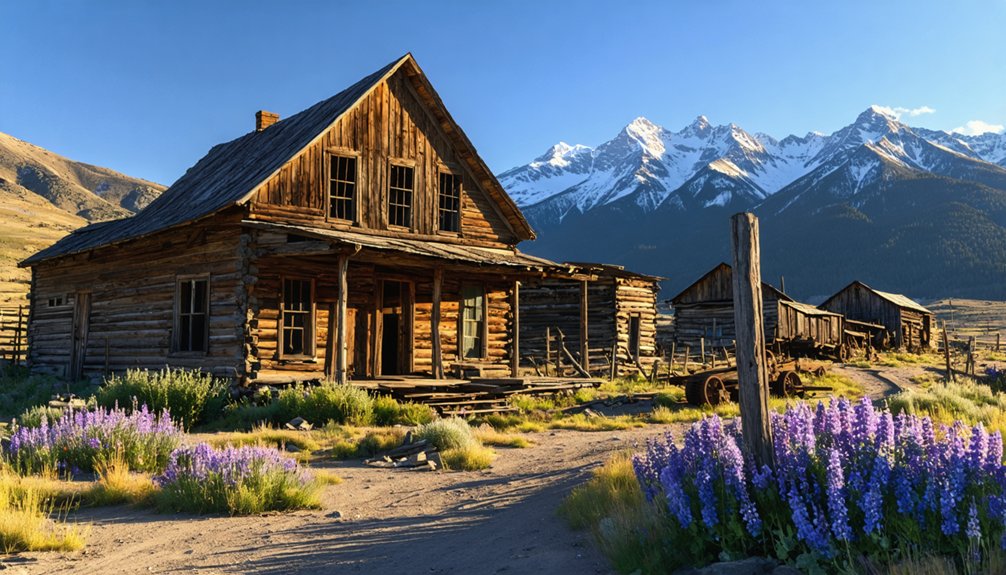
You’ll find Floresta’s crumbling stone foundations scattered across Ohio Pass at 10,033 feet, marking what was once Colorado’s highest coal mining operation. CF&I established this remote anthracite camp in 1894, where 100 miners earned $4.25 daily wages despite brutal eight-month winters and avalanche threats. The town thrived until 1952, connected by narrow gauge railroad to steel mills below. Today, visitors can spot railroad culverts, Baldwin’s cabins, and interpretive signs that reveal the remarkable story behind this mountain ghost town’s rise and fall.
Key Takeaways
- Floresta was Colorado’s highest mining operation by 1894, focusing on anthracite coal extraction for steel mills.
- The town operated from 1893 to 1952, housing 100 miners who earned $4.25 daily wages.
- High elevation created severe operational challenges including altitude fatigue, eight-month snow cover, and destructive avalanches.
- Economic collapse in the 1890s from federal monetary policy changes led to population exodus and abandonment.
- Today, visitors can see remnants at Ohio Pass including railroad fragments, stone culverts, and old cabins.
High Altitude Mining Operations in Gunnison County
Five distinct mining phases shaped Gunnison County’s high-altitude operations, each leaving ghost towns scattered across peaks that soar above 11,000 feet.
You’ll discover precious metals drew the first wave from 1870, creating boomtowns like Pitkin and Gothic before deposits proved shallow by 1883.
The Alpine Tunnel‘s ambitious 11,600-foot elevation pushed railroads to their limits, though harsh conditions forced abandonment in 1910.
High altitude mining operations in the Tomichi District generated $7,000,000 in lead and zinc, while Crested Butte’s fifteen silver camps eventually shifted focus.
Coal dominated for seventy-five years, supporting ore processing through railroad networks. Gunnison emerged as a processing hub with a population reaching 10,000 by 1880 as the Denver and South Park railroad improved access to surrounding mining operations. The region’s granite quarries provided stone for Colorado State Capitol and marble for the Tomb of the Unknown Soldier.
Later uranium discoveries near Cochetopa Canyon brought modern mining until environmental concerns ended the era.
From Coal Supplier to Railroad Hub: The Rise of Floresta
When the Colorado Fuel and Iron Company‘s executives surveyed Gunnison County’s coal prospects in 1893, they recognized Floresta’s anthracite deposits could fuel their Pueblo steel mills and satisfy the Denver & Rio Grande Railroad’s voracious appetite for hard coal.
You’ll find CF&I transformed this remote mountain settlement into Colorado’s highest mining operation by 1894, establishing infrastructure that’d support continuous production until 1952.
The economic impact proved immediate—100 miners earned competitive $4.25 daily wages while a narrow gauge railroad branch connected Floresta’s breaker directly to eastern markets. Located twelve miles west of Crested Butte, the mine produced 800,000 tons of anthracite coal between 1898 and 1918.
This transportation network elevated the camp from isolated supplier to regional hub. Community development followed rapidly: 250 residents established family cabins, and the post office anchored social life by 1900, creating Colorado’s most elevated coal mining community. The operation transported coal using mules to a balanced hoisting system for surface delivery to waiting railroad cars.
Production Challenges and Seasonal Limitations
Although Floresta’s coal deposits promised substantial profits, the mine’s extreme elevation created formidable operational obstacles that plagued CF&I’s ambitious venture from its earliest days.
You’d face crushing fatigue at nearly 10,000 feet, where thin air made every shovelful of coal feel like lifting mountains.
Winter brought devastating seasonal disruptions—snow buried the camp for eight months annually, with blizzards dumping 25 feet in just 23 days during 1884’s brutal season.
Avalanches destroyed buildings and severed supply lines, forcing families to evacuate to lower elevations.
Pack mules couldn’t navigate impassable mountain roads, creating severe shortages. Like other mining camps, Floresta faced the harsh reality that isolation and extreme conditions made basic necessities a constant struggle for survival.
The Colorado Fuel & Iron Company that operated Floresta would later become notorious for its treatment of miners, most infamously during the deadly labor conflicts that erupted at other company operations.
These economic inefficiencies—combining altitude sickness, equipment damage, and extended production halts—made year-round profitability impossible, ultimately dooming CF&I’s high-altitude experiment.
The Decline and Abandonment of Colorado’s Mountain Coal Town
By the 1890s, Floresta’s fate mirrored the catastrophic collapse sweeping across Colorado’s high-elevation mining communities, as federal monetary policy shifts devastated the economic foundation supporting these remote outposts.
Federal monetary policy changes in the 1890s triggered the devastating collapse of Colorado’s high-elevation mining communities like Floresta.
You’d witness the same pattern destroying mountain towns throughout the state:
- Silver prices plummeted after 1893’s federal abandonment of the silver standard, gutting mining revenues overnight.
- Railroad connections severed, with lines halting service to isolated districts like neighboring Ironton.
- Population exodus accelerated as communities that peaked at thousands emptied within decades.
- Infrastructure crumbled under winter isolation, with towns cut off October through May.
Georgetown’s population crashed from 5,000 in the 1880s, while Ironton’s 1,000 residents vanished almost entirely. Many abandoned settlements gained ghostly sightings of former residents, as reported in towns like St. Elmo where the former caretaker Annabelle was said to appear.
The coal industry’s vulnerability became evident when seismic events could render entire mining operations unsafe and force permanent closure. This ghost town represents Colorado’s broader mining heritage—a reflection of boom-and-bust cycles that defined the American West’s relentless pursuit of mineral wealth.
What Remains Today at Ohio Pass
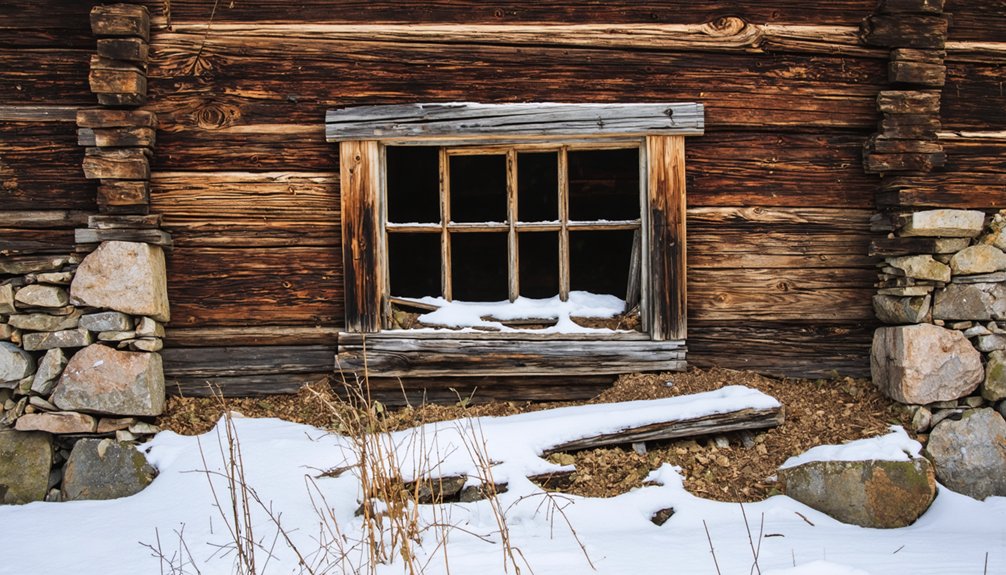
Today’s visitors to Ohio Pass encounter scattered fragments of Floresta’s ambitious coal empire, though reaching the actual townsite requires traversing private property restrictions that block public access to where Ruby-Anthracite once thrived.
You’ll discover the most compelling visible remains along FR 730’s graded gravel route. The unfinished Denver and South Park Railroad palisade cuts dramatically across the cliff face, representing 1881’s failed dreams of coal transportation.
Three stone culverts channel Ohio Creek’s tributary beneath the abandoned railbed—two completed, one half-finished, revealing construction methods frozen in time.
South of the pass, Baldwin’s old cabins mark where Mount Carbon’s miners once lived. The hilltop cemetery contains at least ten graves clustered in groups, their wooden fences long deteriorated. The area notably features large aspen groves that create spectacular displays of fall colors throughout the surrounding landscape. Like many Colorado mining camps, interpretive signs have been added to help visitors understand the historical significance of what they’re viewing.
These engineering remnants carry profound historical significance, documenting Colorado’s coal boom ambitions and the harsh realities that ended them.
Frequently Asked Questions
How Did Miners Survive the Harsh Winter Conditions at 9,879 Feet Elevation?
You’d evacuate completely during winter months, as archival records show the mine closed December through May. Mining techniques couldn’t overcome brutal conditions at this elevation, forcing seasonal abandonment rather than winter survival strategies.
What Specific Equipment Was Used to Transport Coal Down the Steep Terrain?
You’d find mule teams hauling twenty coal carts per trip down 15-26% grades, plus D&RG locomotives pulling standard-gauge rail cars over steep terrain when electric trams couldn’t handle gassy conditions.
Were There Any Notable Accidents or Disasters During Floresta’s Mining Operations?
You’d think mining companies kept meticulous disaster records, but Floresta’s specific mining accidents remain buried in forgotten archives. Without documented evidence, you can’t determine the true disaster impact on this remote operation.
How Many People Lived in Floresta at Its Peak Population?
You won’t find exact peak population figures in archival records for Floresta history, though mining towns typically housed several hundred residents before population decline forced abandonment when coal operations ceased.
Can Visitors Still Access the Original Mine Shafts and Tunnels Today?
You absolutely can’t access original mine shafts—they’re death traps with explosive dynamite remnants! Mine safety regulations and historical preservation efforts have sealed most tunnels, though you’ll find fascinating surface ruins throughout Colorado’s abandoned mining districts.
References
- https://en.wikipedia.org/wiki/List_of_ghost_towns_in_Colorado
- https://scalar.usc.edu/works/mines-of-the-colorado-fuel-and-iron-company/floresta-coal-mine-ruby
- https://www.ghosttowns.com/states/co/floresta.html
- https://www.gunnisoncounty.org/785/Historic-Sites
- https://freepages.history.rootsweb.com/~gtusa/usa/co.htm
- https://scalar.usc.edu/works/mines-of-the-colorado-fuel-and-iron-company/floresta-coal-mine-ruby.meta?versions=1
- https://www.coloradohistoricnewspapers.org/?a=d&d=CAP19030808-01.2.8
- https://www.youtube.com/watch?v=XR6QVGjTMS4
- http://www.mininghistoryassociation.org/Gunnison2025.htm
- https://gunnisoncrestedbutte.com/blog/hike-to-colorados-abandoned-mining-camps/