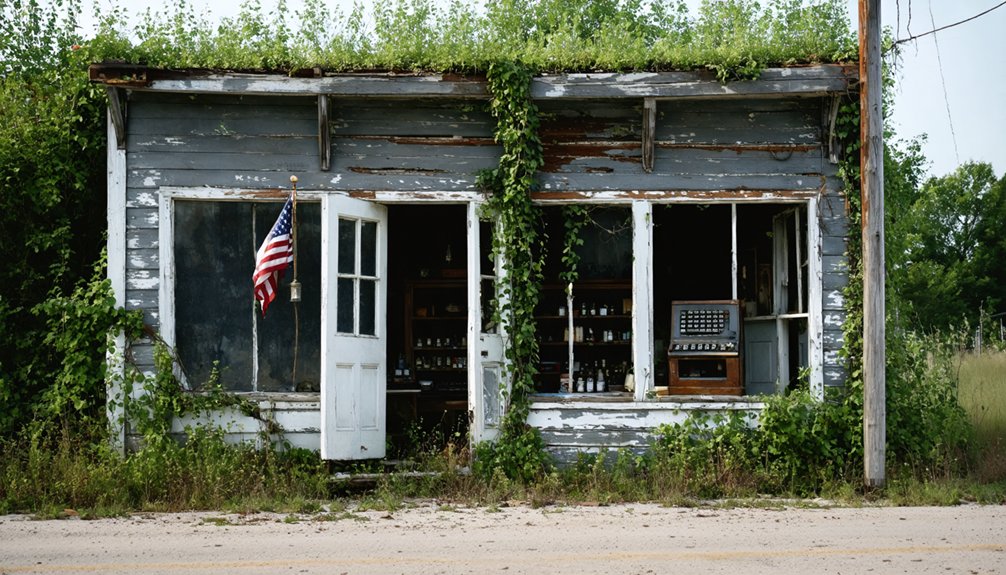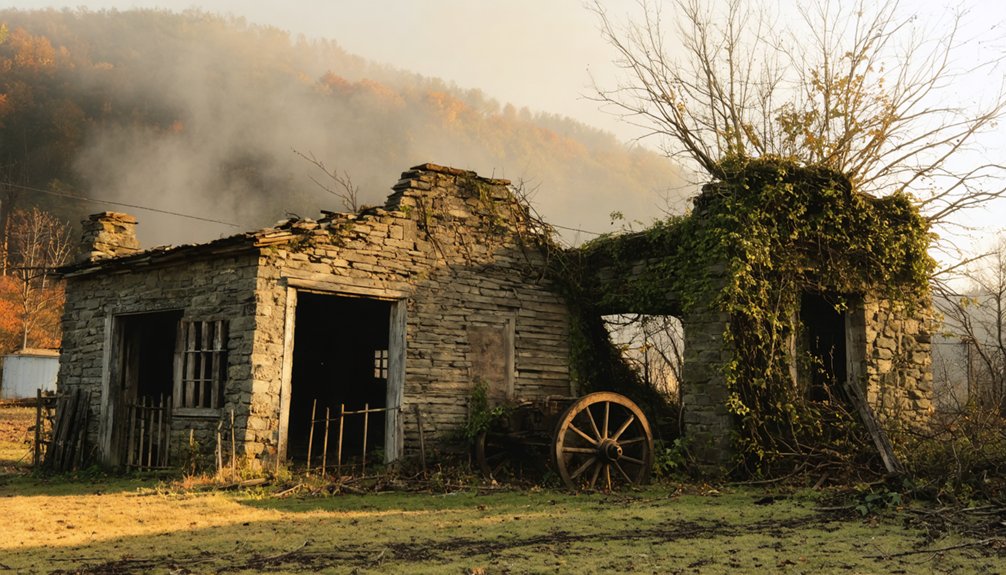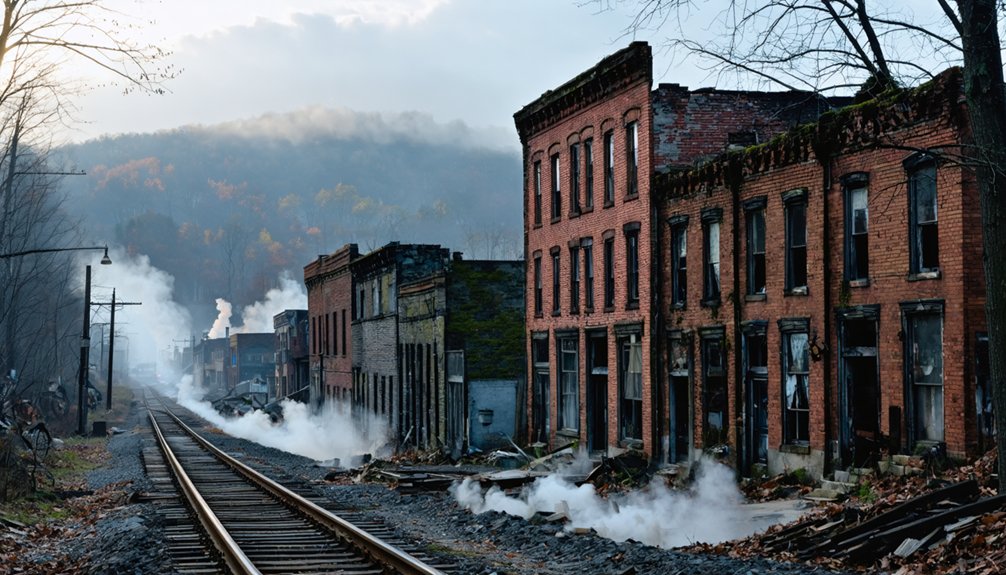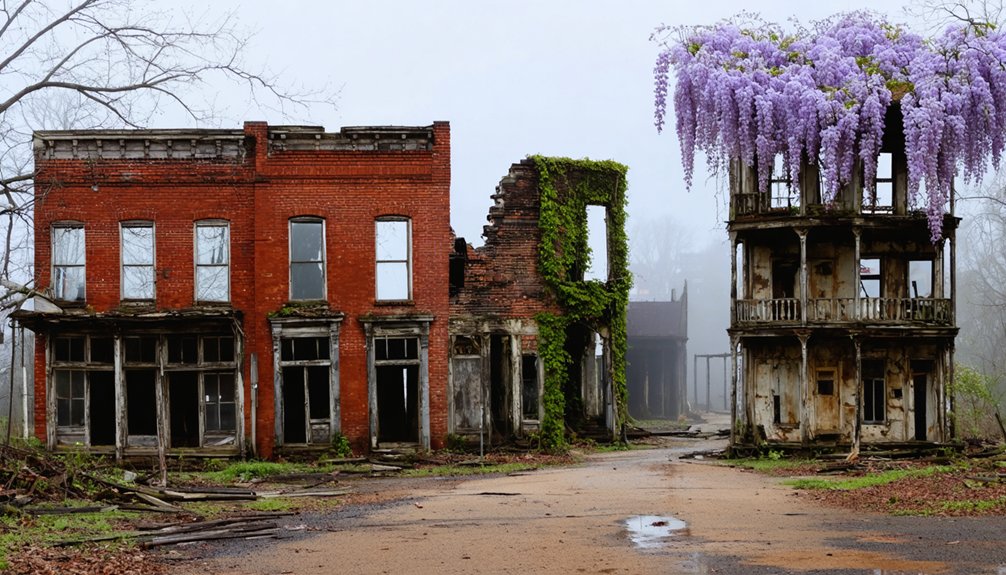
You’ll discover fascinating Civil War-era ghost towns across America, from Cahaba, Alabama’s flooded first capital to Lost Cove, North Carolina’s isolated mountain community. Harrisburg, Utah succumbed to drought and economic hardship, while Fort Jefferson, Florida transformed from fortress to prison. Each abandoned settlement offers unique glimpses into 19th-century life through preserved architecture and artifacts. These forgotten places reveal how quickly prosperity can vanish in the face of natural disasters and changing fortunes.
Key Takeaways
- Cahaba, Alabama, the state’s first capital, was abandoned after the Civil War and is now preserved as an archaeological park.
- Harrisburg, Utah struggled with floods, grasshopper plagues, and conflicts before becoming a ghost town by 1895.
- Lost Cove, North Carolina thrived as an isolated moonshining community until its final residents departed in 1958.
- Many Civil War-era ghost towns resulted from economic hardship, natural disasters, and shifting transportation routes.
- Ghost towns serve as cultural heritage sites, offering glimpses into Civil War-era architecture, lifestyle, and history.
Cahaba, Alabama: The Flooded First Capital
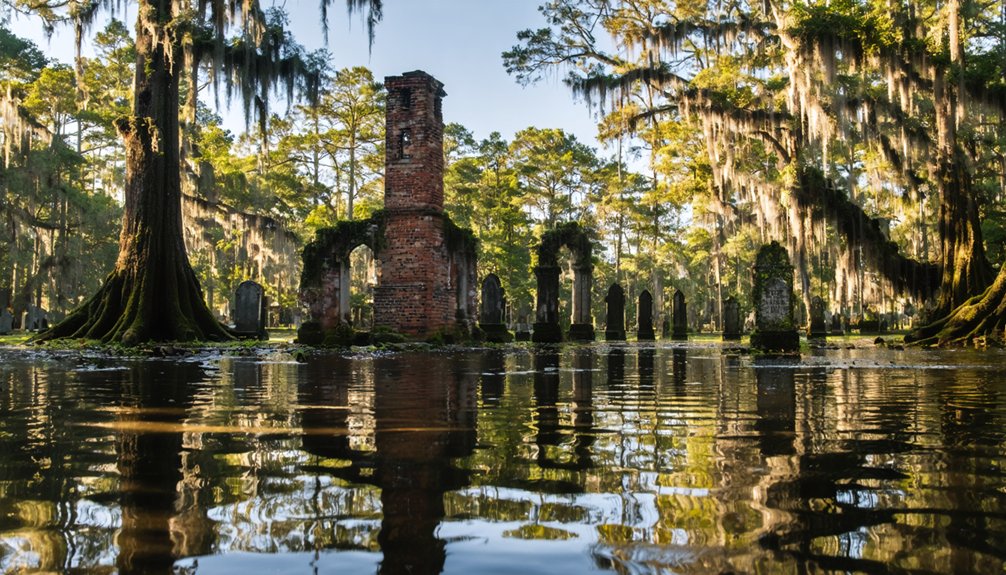
At the confluence of the Alabama and Cahaba rivers, Alabama’s first permanent state capital emerged from wilderness in 1819 through a calculated act of political creation.
Governor Bibb secured federal land, leveraging Broad River Group connections to establish this strategic site overnight.
Cahaba’s history was defined by its geography. Seasonal flooding and disease-carrying mosquitoes plagued residents, fueling relocation efforts by rival cities.
Though newspapers exaggerated the 1825 flood during a drought year, the capital moved to Tuscaloosa in 1826.
Ironically, Cahaba flourished afterward, growing to 3,000 residents by the Civil War’s eve.
The devastating February 1865 flood, coupled with the Confederate dismantling of railroad infrastructure, sealed its fate. The name Cahaba has since become a disambiguation term associated with various meanings beyond just this ghost town.
Within a decade, most buildings were dismantled, leaving only a ghost town. The site, once home to the wealthiest county in Alabama during the 1840s and 1850s, now operates as Old Cahawba Archaeological Park preserving this important historical location.
Centralia, Pennsylvania: A Town Consumed by Underground Fire
Unlike Cahaba’s slow decline, Centralia’s devastation came from below when an underground coal fire ignited in May 1962, likely from burning trash in an improperly maintained landfill.
While Cahaba faded gradually, Centralia met swift destruction from subterranean flames sparked by careless waste disposal in 1962.
The inferno still burns today, advancing 75 feet yearly through abandoned mine tunnels up to 300 feet deep.
You’ll find this ghost town sitting atop 3,700 acres of burning anthracite coal that could continue smoldering for another 250 years.
The Centralia fire ultimately forced mass evacuation when toxic gases, sinkholes, and ground instability threatened residents’ lives. Residents initially found the situation amusing until serious health risks emerged from the sulfurous fumes and carbon monoxide emissions.
Despite numerous remediation attempts, including projects to flush the mine with crushed rock and water, the fire continued to spread as funding ran out for these expensive interventions.
In 1992, the state condemned the entire town, and most infrastructure was abandoned.
Harrisburg, Utah: Lost to Drought and Economic Hardship
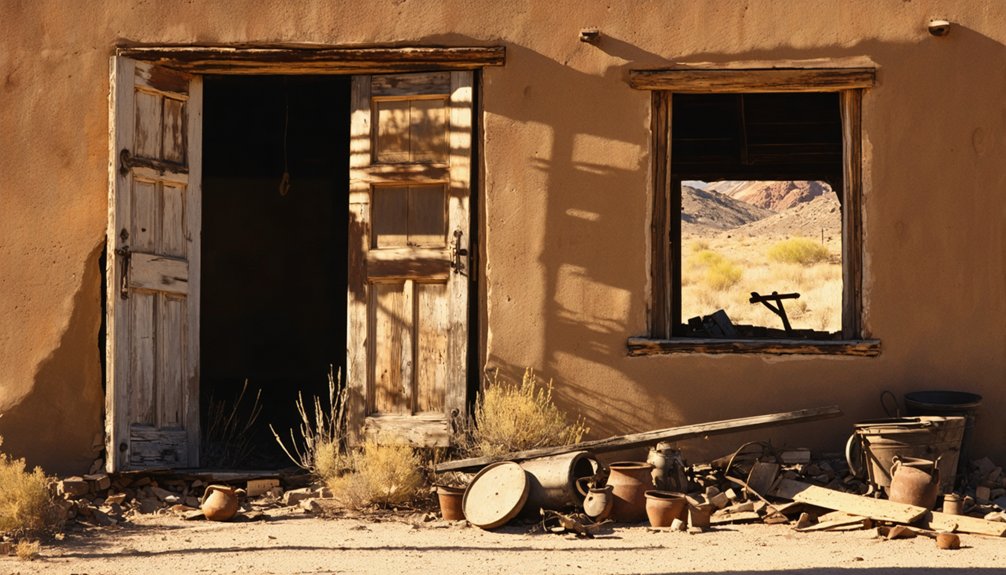
Tucked within Washington County, Utah, Harrisburg emerged in 1859 when Moses Harris and Mormon immigrants established a settlement at the confluence of the Virgin River with Quail and Cottonwood creeks.
The settlement struggles began almost immediately as pioneers confronted unfertile soil in this harsh landscape.
Environmental challenges proved overwhelming. The devastating 1862 Virgin River flood submerged the original town, forcing relocation to higher ground where they rebuilt and renamed it Harrisburg.
Residents constructed stone cottages and the Adams House between 1862-1865, but grasshopper plagues destroyed crops, and recurring floods battered their resolve.
By 1895, Harrisburg had officially become a ghost town, with all residents having abandoned their homes.
These hardships, combined with Native American conflicts over territorial rights, gradually drove settlers away. Unlike Pennsylvania’s state capital city, which persevered through similar challenges, Harrisburg, Utah could not sustain its population against the harsh desert conditions.
Fort Jefferson, Florida: The Abandoned Island Fortress
As you explore Fort Jefferson‘s 16-million-brick fortress, you’ll discover a structure that evolved from a military outpost to a notorious Civil War prison nicknamed “Devil’s Island.”
The massive, unfinished stronghold once housed over 1,000 occupants, including infamous prisoners like Dr. Samuel Mudd and other Lincoln assassination conspirators.
Your visit reveals how this once-strategic Gulf of Mexico defense post ultimately succumbed to obsolescence with the invention of rifled cannons, leading to its abandonment and eventual preservation as a bird sanctuary in 1908. Despite its significant historical importance, the fort faced numerous challenges during its operation, including devastating Yellow Fever epidemics that compromised its effectiveness. Located 68 miles west of Key West, this remote fortress is now accessible only by ferry or seaplane, making it one of America’s least-visited national parks.
Prison Island Legacy
Three decades of construction transformed Fort Jefferson into a colossal brick fortress occupying nearly 70% of Garden Key in the Dry Tortugas.
This 16-million-brick behemoth—the largest in the Western Hemisphere—became notorious during the Civil War as “Devil’s Island,” a military prison where deserters faced a brutal alternative to execution.
You’d find yourself among 2,500 prisoners enduring inhumane prison conditions: hard labor under scorching sun, chains restricting movement, mosquito swarms, and deadly yellow fever epidemics.
The most infamous inmates were Lincoln assassination conspirators, including Dr. Samuel Mudd, whose presence sparked enduring ghost stories. Dr. Mudd gained recognition during his imprisonment by treating patients during the devastating 1867 outbreak of yellow fever that claimed numerous lives at the fort.
The fort’s isolation created a perfect prison—a massive gun platform repurposed as a penal colony where freedom remained visible across endless water but impossibly out of reach for those condemned to this tropical hell. The six-sided fortress with its corner bastions provided strategic defensive capabilities while making escape virtually impossible.
Military Fortress Evolution
Beyond its notorious history as a prison, Fort Jefferson stands as a demonstration to America’s evolving military doctrine in the mid-19th century.
You’ll find this six-sided marvel of fortress architecture designed to mount 243 heavy guns in open casemates, representing the pinnacle of coastal defense technology before rifled cannons rendered it obsolete. Constructed over three decades (1846-1875), the 16-million-brick colossus protected essential Gulf shipping lanes and deterred enemies from establishing regional footholds.
Despite its impressive scale and strategic importance, Fort Jefferson faced insurmountable challenges. Its massive weight created structural cracks while hurricanes, yellow fever, and the corrosive tropical environment undermined maintenance efforts.
Though never attacked, the fortress served its purpose through presence alone, securing American maritime interests before environmental realities and evolving warfare technology ended its military relevance.
Lost Cove, North Carolina: An Isolated Appalachian Community
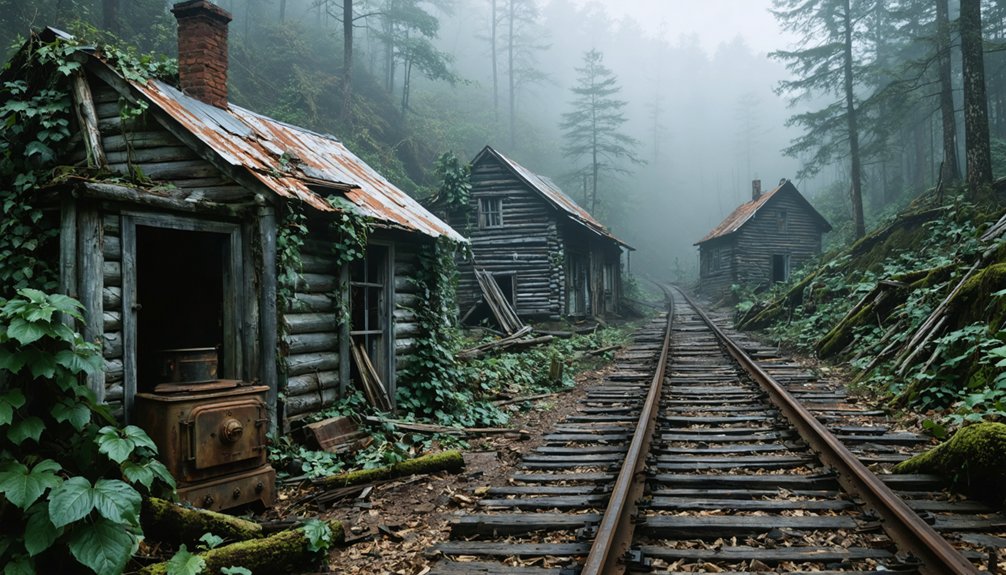
Nestled in a remote corner of the Appalachian Mountains, Lost Cove emerged during the Civil War era as an isolated community straddling the ambiguous border between North Carolina and Tennessee.
Morgan Bailey purchased the land from a Native American for just $10 and a shotgun. At its peak, this self-sufficient isolated community housed approximately 100 residents who practiced subsistence farming and moonshining.
The mountain enclave, born from a meager exchange, fostered a resilient community living by their own means and laws.
The arrival of the Carolina, Clinchfield, and Ohio Railroad in the 1890s briefly connected Lost Cove to civilization, spurring a timber boom that brought temporary prosperity.
However, economic decline followed as timber resources depleted by 1905. The last family departed on January 1, 1958, leaving behind foundations, stone walls, and a solitary chimney—remnants of a community that thrived in jurisdictional ambiguity for nearly a century.
Elko Tract, Virginia: The Vanished Decoy Airbase
You’ll find it jarring that Elko Tract, Virginia was never a Civil War ghost town but rather a WWII-era decoy airbase constructed in 1942 after the government seized 2,400 acres of farmland.
The elaborate deception included dummy runways, fake plywood aircraft, and canvas buildings designed to mimic Richmond Army Air Base and potentially draw enemy attacks away from the real facility.
Though never attacked and largely abandoned after the war, the site’s mysterious ruins continue to intrigue historians as roads lead nowhere, a water tower stands sentinel, and traces of fake runways remain visible from above.
From Farmland to Decoy
While many ghost towns emerged from abandoned mining operations or railroad stops, Elko Tract in Virginia represents a more unusual phenomenon—a deliberately constructed “phantom city” with military origins.
In 1942, the federal government seized approximately 2,200-2,400 acres from over 40 farming families in Henrico County, exemplifying wartime community displacement for national security purposes.
The military repurposed this farmland into an elaborate decoy designed to protect Richmond from potential Axis bombing raids. The 936th Camouflage Battalion and 1896th Engineer Aviation Battalion executed this military deception masterfully, constructing dummy runways, plywood buildings, paved streets, and even fire hydrants—creating a convincing replica of Richmond when viewed from above.
If enemy bombers approached, the real Richmond would go dark while this phantom city would light up as a decoy target.
Wartime Strategic Deception
The elaborate deception underlying Elko Tract’s construction reveals a sophisticated military strategy developed in response to legitimate threats facing the Eastern Seaboard.
You’d be intrigued to know that military planners carefully positioned the decoy just four miles from Richmond Army Air Base to deliberately mislead potential Luftwaffe bombers targeting strategic infrastructure in central Virginia.
The wartime deception involved remarkable coordination—when air raid warnings sounded, Richmond would go dark while the Elko Tract dummy airfield illuminated, creating a perfect bombing target that protected crucial military assets.
The 936th Camouflage Battalion meticulously crafted plywood aircraft and imitation runways that, from above, replicated the authentic military installation with stunning accuracy.
The Hampton Roads port’s vulnerability made this defensive strategy not merely theoretical but essential to wartime security throughout 1943-1945.
Modern Historical Mystery
Abandoned for nearly eight decades, Elko Tract represents one of America’s most enigmatic military ghost towns, its concrete remnants slowly dissolving into Virginia’s eastern woodlands.
You’ll find few physical traces of this elaborate 2,400-acre decoy architecture project, designed to protect Richmond from enemy bombers during WWII.
This masterpiece of wartime deception included plywood aircraft, fake runways, and infrastructure that perfectly mirrored the real Richmond Army Air Base.
Though never tested in actual combat, the site’s post-war history reveals another layer of historical significance—plans for a Black mental hospital abandoned due to racial opposition from white residents.
Today, as White Oak Technology Park occupies the former Elko Tract, you might never guess this land once housed one of America’s most sophisticated military illusions.
Preserving America’s Ghost Towns: Why They Matter Today
Preserving America’s ghost towns serves as an important link to our nation’s past, particularly the tumultuous Civil War era when economic shifts and westward expansion fundamentally altered the American landscape.
Exploring abandoned towns in the Appalachian Mountains reveals stories of resilience and adaptation as families once thrived in these communities. Over time, the remnants of their lives become silent teachers of history, showcasing the challenges faced during times of economic change. Each decaying structure stands as a testament to the spirit of those who once called these places home.
These abandoned settlements offer unparalleled cultural significance through their period-specific architecture and artifacts, providing direct windows into 19th-century American life.
Ghost towns capture America’s past through authentic structures and relics, offering invaluable glimpses into nineteenth-century daily existence.
You’ll find economic impact extends beyond historical value. Well-preserved sites attract heritage tourism, transforming ghost towns into living museums while supporting local economies through visitor spending.
The “arrested decay” preservation approach used in places like Bodie, California maintains authenticity while guaranteeing these sites remain accessible for future generations.
Despite preservation challenges including vandalism and natural deterioration, these efforts guarantee that vital pieces of American history don’t vanish into obscurity.
Frequently Asked Questions
How Dangerous Is It to Visit These Ghost Towns Today?
You’ll face significant dangers from structural collapses, environmental hazards, and wildlife. Take proper safety precautions and consider legal considerations, as many sites require permits or are on private property.
Were Any Paranormal Activities Ever Reported in These Abandoned Towns?
Shadowy figures drift through crumbling ruins where you’ll encounter documented ghost sightings. Cahaba, Centralia, and Batsto Village are known haunted locations with paranormal reports, while Elko Tract has minimal verified accounts.
What Artifacts Can Visitors Legally Collect From These Sites?
You can’t legally collect any artifacts from these sites. Artifact preservation laws on federal, state, and private lands prohibit removal without proper permits or written permission. Always follow legal guidelines when visiting.
How Did Residents Transport Their Belongings When Evacuating?
Imagine you’re a Cahawba family fleeing floods. You’d transport belongings via animal-drawn wagons, often requiring multiple trips. Rail transport remained limited by gauge differences and Union sabotage, creating significant evacuation challenges across disconnected infrastructure.
Are There Ongoing Archaeological Excavations at Any of These Locations?
Yes, archaeological excavations continue at Old Cahawba, Lost Cove, and Batsto Village. Modern archaeological methods uncover artifacts at these excavation sites, revealing Civil War-era community life and wartime adaptations.
References
- https://www.loveexploring.com/gallerylist/131658/abandoned-in-the-usa-92-places-left-to-rot
- https://www.blueridgeoutdoors.com/go-outside/southern-ghost-towns/
- https://www.christywanders.com/2024/08/top-ghost-towns-for-history-buffs.html
- https://www.visittheusa.com/experience/5-us-ghost-towns-you-must-see
- https://www.geotab.com/ghost-towns/
- https://www.smithsonianmag.com/history/underappreciated-forgotten-sites-civil-war-180954579/
- https://www.mythfolks.com/haunted-us-ghost-towns
- https://en.wikipedia.org/wiki/Lists_of_ghost_towns_in_the_United_States
- https://www.legendsofamerica.com/gt-hiddentales/
- https://encyclopediaofalabama.org/article/cahaba/