The American South conceals forgotten treasures like Old Cahawba, Alabama’s first capital with haunting ruins, and Terlingua, Texas, an abandoned quicksilver mining town. You’ll discover Evinston, Florida, where moss-draped oaks frame scenes unchanged since the 1880s, and Micanopy, the literal “Town that Time Forgot.” Wander through Auraria, Georgia, where miners once sought elusive fortunes, or explore Marfa’s desert isolation. These weathered communities hold stories that whisper through crumbling facades and ancient live oaks.
Key Takeaways
- Old Cahawba was Alabama’s first capital city but is now an abandoned ghost town with well-preserved historical ruins.
- Terlingua, Texas transformed from a thriving quicksilver mining town into a ghost town after bankruptcy and government removal.
- Evinston, Florida remains virtually unchanged since the 1880s with its moss-draped oaks and historic farmlands.
- Micanopy, Florida is known as the “Town that Time Forgot” featuring oak-lined streets and preserved historical character.
- Robbinsville, North Carolina maintains isolation with just 570 residents, accessible only via winding mountain roads.
Ghost Towns With Fascinating Historical Backstories
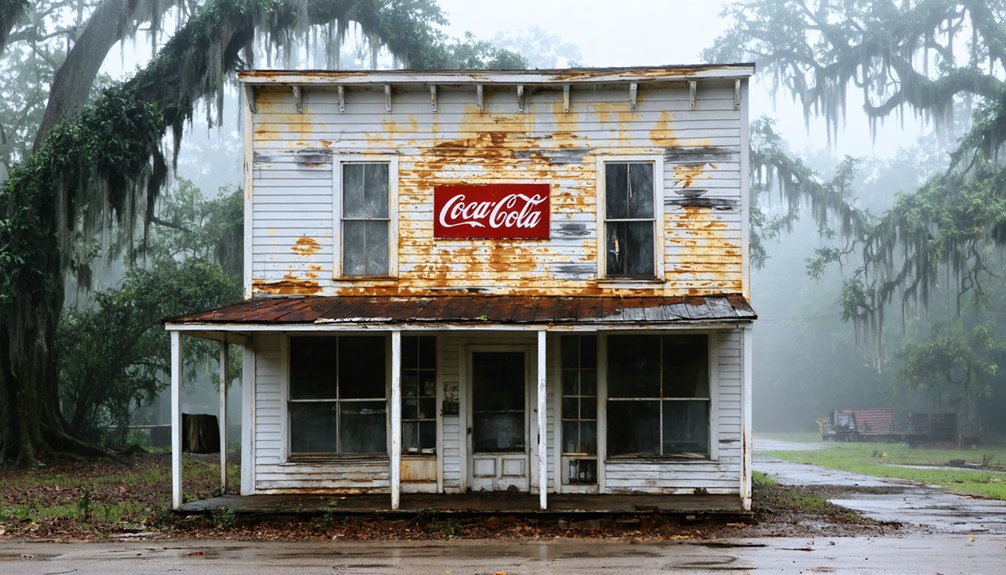
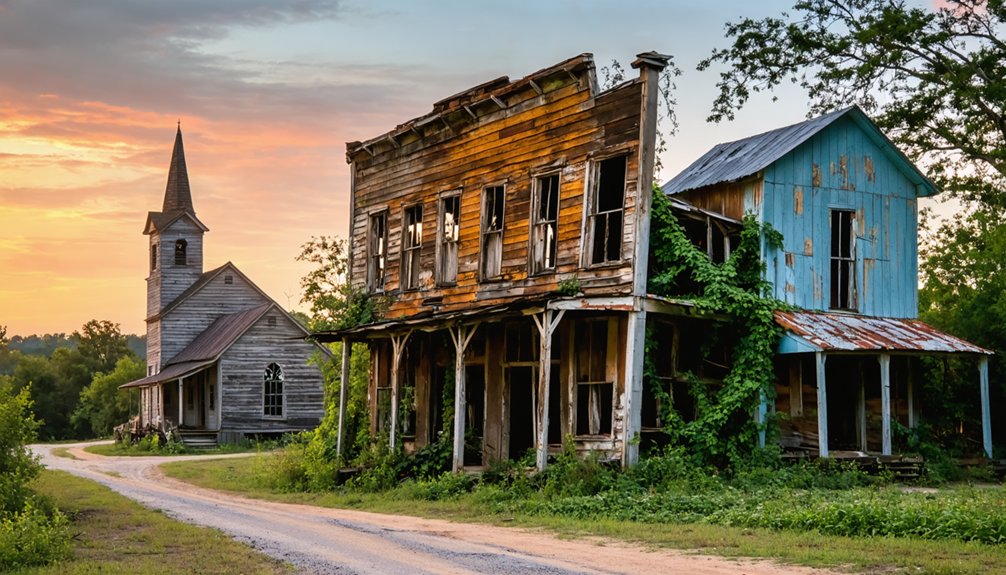
While modern highways bypass them and time slowly reclaims their structures, the ghost towns of the American South whisper tales of ambition, disaster, and resilience.
You’ll find Old Cahawba’s well-preserved ruins telling stories of Alabama’s first capital, with forgotten landmarks standing as silent witnesses to 19th-century life at the confluence of two mighty rivers.
Claiborne once bustled with 5,000 souls until yellow fever and cholera swept through, leaving only historical markers where prosperity once reigned.
At Old St. Stephens, archaeologists study 200-year-old remains undisturbed by modern development. This former Spanish Fort founded in 1789 served as the first territorial capital of Alabama before its decline.
Terlingua tells a different tale—a quicksilver mining powerhouse abandoned after bankruptcy, its residents later removed for a hydrogen bomb site.
Rodney, Mississippi stands frozen in time, with historic churches and buildings that once thrived until the Mississippi River changed course and left the town stranded from the vital waterway that had sustained it.
These towns don’t merely fade away; they transform, their stories waiting for curious travelers to discover them.
Towns That Time Forgot: Southern Communities Frozen in Time
Beyond the silent ruins of ghost towns lies another category of southern curiosities—communities that haven’t disappeared completely but remain suspended in time.
These communities often face a range of challenges contributing to the southern suburban population decline factors. Economic shifts, changing demographics, and a lack of investment can all play significant roles in these areas becoming less vibrant. As families relocate to more urbanized regions, the remnants of these towns reflect a yearning for a past that seems increasingly unattainable.
These places offer windows into the past, preserved by their isolation amid spectacular rural landscapes. In Evinston, Florida, moss-draped oaks frame farmlands that appear unchanged since the 1880s, while Lando, South Carolina’s 1905 schoolhouse stands as a symbol of America’s textile heritage. The historic John Oliver Cabin represents the earliest European American settlement in the Great Smoky Mountains region. Auraria, Georgia once thrived as miners searched for the City of Gold but was eventually abandoned when the promised riches never materialized.
Time stands still where moss-draped oaks guard the past and forgotten schoolhouses preserve America’s rural heritage.
- Micanopy, Florida—the “Town that Time Forgot”—where oak-lined streets whisper stories of another era
- St. Francisville, Louisiana, where timeless traditions blend with the haunting beauty of antebellum plantations
- Powelton, Georgia, a once-bustling crossroads now marked only by historic structures that defy modern intrusion
These living museums invite you to wander freely through America’s unvarnished history, experiencing moments untouched by progress.
Mining Boom and Bust: Abandoned Towns of the Southern Resource Rush
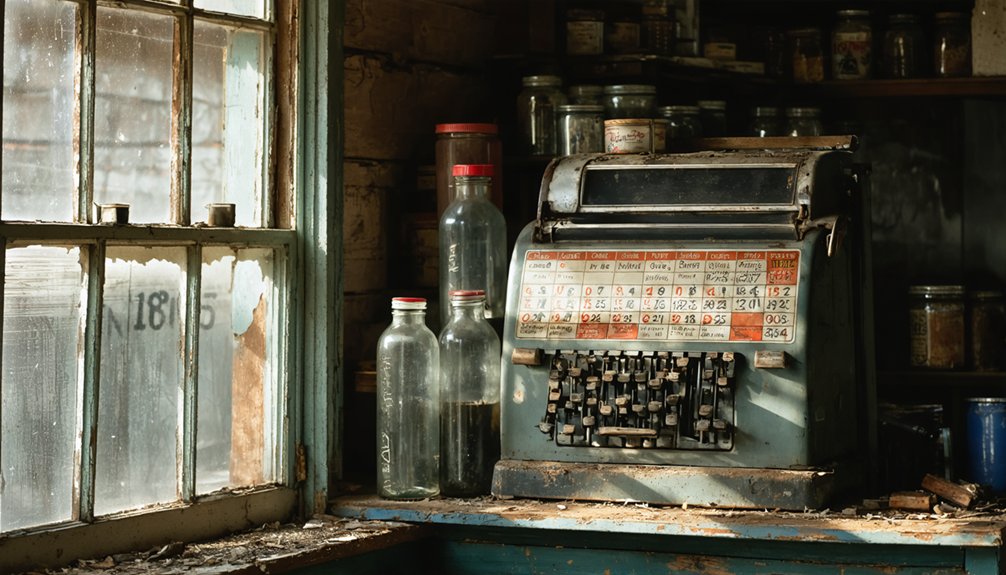
Scattered across the southern landscape like weathered monuments to human ambition, abandoned mining towns tell the dramatic story of America’s resource rush.
You’ll find Arizona’s Commonwealth Mine ruins in Pearce, where gold fever once gripped settlers, while Charleston’s adobe remnants whisper tales of Tombstone’s silver milling operations.
In Terlingua, Texas, the quicksilver boom‘s spectacular collapse left ghost settlements frozen in time.
Venture into Appalachia to discover Blue Heron’s coal legacy, now preserved within national parkland.
New Mexico’s Chloride and Hillsboro capture the drama of frontier silver strikes, complete with Apache raids and prospector dreams.
Even in South Dakota’s Black Hills, abandoned mines like those in Galena stand as monuments to fortune’s fickle nature—boom towns that flourished brilliantly before fading into historical footnotes.
Gleeson’s prosperity peaked with a population of 500 residents during its heyday as a mining center, leaving behind its historic jail and school as testaments to Arizona’s boom-and-bust cycle.
Many of these abandoned communities date back to the 1880-1940 period, representing an era of westward expansion and industrialization that fundamentally shaped the American landscape.
Haunted Histories: Small Southern Towns With Spectral Reputations
You’ll find the South’s spectral past waiting in forgotten towns where antebellum mansions harbor centuries-old spirits behind their crumbling facades.
As you wander through moss-draped cemeteries, the whispered tales of Civil War soldiers, yellow fever victims, and former slaves linger in the humid air. In towns like Weston, West Virginia, the imposing Trans-Allegheny Lunatic Asylum stands as a testament to the inhumane conditions that once plagued mental healthcare.
These small communities preserve their haunted histories through oral tradition and paranormal tourism, offering a chilling glimpse into a troubled past that refuses to rest. Towns like Natchez, Mississippi feature historic locations such as Kings Tavern where visitors report moving objects and encounters with restless spirits.
Ghostly Antebellum Mansions
Shrouded in mist and mystery, the antebellum mansions of the South harbor spectral residents who refuse to abandon their stately homes even centuries after their deaths.
You’ll encounter these ghosts at places like Myrtles Plantation in St. Francisville, where eerie architecture and Spanish moss create the perfect backdrop for supernatural encounters.
- LaLaurie Mansion in New Orleans’ French Quarter stands as a monument to dark history, where visitors report physical contact from unseen entities.
- Cahawba’s abandoned Barker house offers glimpses into Alabama’s haunted past, with orbs of energy spotted near the former enslaved quarters.
- The Civil War-era field hospital at haunted plantations like Myrtles became gateways between worlds, where the veil between life and death thinned.
The spectral figure of William Winter, who was murdered on the front porch in 1871, is said to still climb the seventeen steps before dying in his wife’s arms.
In some locations, such as an 1835 mansion once owned by a state governor, visitors describe it as one of the most haunted places in the state, with paranormal activity concentrated around the nearby family cemetery dating to the 1700s.
Moss-Covered Cemetery Tales
Beneath canopies of ancient live oaks draped in ghostly Spanish moss, the forgotten cemeteries of small Southern towns whisper tales of souls who’ve never found rest.
You’ll find these moss-covered legends scattered throughout Georgia, Alabama, and South Carolina, where history and the supernatural intertwine.
In Savannah’s Colonial Park Cemetery, dating back to 1750, spectral sightings of Rene Rondolier and eerie green mist await your discovery.
Venture to Cemetery Island on Lake Hartwell, where the spirit of Serril Broin haunts the only remaining piece of Harrisburg Plantation.
Brave the grounds of Georgiana Cemetery in Alabama, where apparitions move between tombstones, or listen for the phantom bride’s wails at Laurel Grove.
These above-ground burial sites, born of necessity from high water tables, have become eternal homes for restless spirits.
Historic Hauntings Preserved
While modern Southern towns bustle with activity, their historic counterparts stand frozen in time, preserving not just architecture but also the spectral residents who refuse to leave.
You’ll encounter haunted legends that breathe life into abandoned streets, from Cahawba’s orb-like Pegues ghost luring adventurers deeper into Alabama woods to the Bell Witch phenomena in Tennessee that physically assaulted its victims.
- The Myrtles Plantation in Louisiana offers glimpses of Chloe and William Winter’s spirits amid elegant antebellum architecture.
- Selma’s Sturdivant Hall whispers tales through its haunted mansion walls while moss-draped graves add to the atmosphere.
- Alton’s award-winning ghost tours reveal spectral encounters at locations like McPike Mansion, where Native American spirits linger.
These forgotten towns invite you to experience history through their supernatural imprints.
Hidden Architectural Treasures Among Southern Ruins
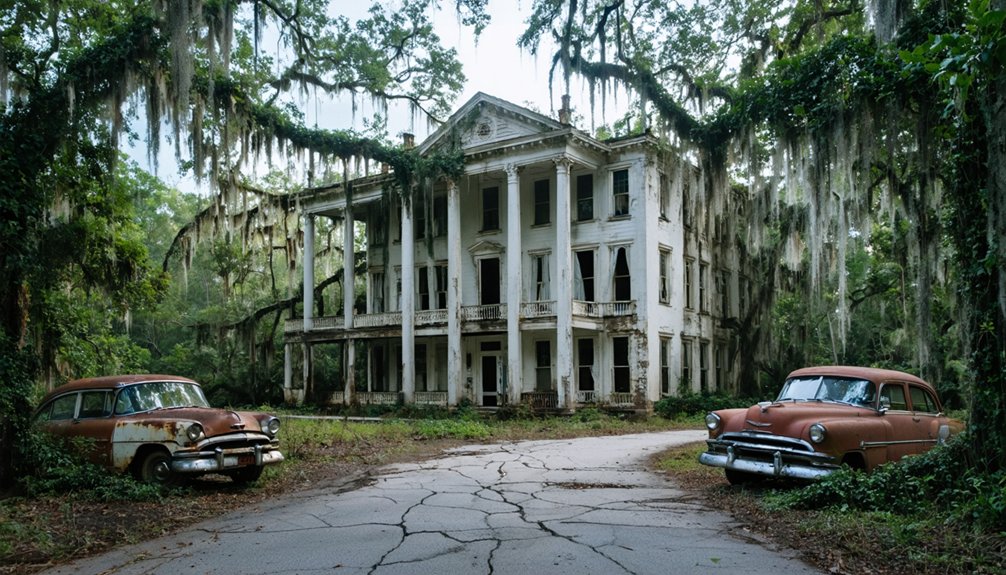
You’ll stumble upon magnificent crumbling mansions like Arlington Estate and the eccentric Tiki Palace that whisper stories of southern grandeur through their decaying neoclassical columns and peculiar Polynesian motifs.
Nature slowly reclaims once-sacred spaces at Old Sheldon Church and Snow Hill Institute, where vines twist through Greek Revival arches and sunlight filters through missing roofs of reconstruction-era classrooms.
The industrial skeletons of Henry River Mill Village and Terlingua’s stone mining structures stand as evidence to bygone economic booms, their weathered facades preserving architectural techniques rarely seen in modern construction.
Crumbling Mansions Tell Tales
Along the forgotten backroads of the American South, grand mansions stand in various states of decay, their weathered facades and crumbling porticos whispering stories of bygone prosperity.
These architectural whispers reveal the region’s complex history—Queen Anne masterpieces with stained-glass windows, Neo-Palladian estates with symmetrical grandeur, and plantation homes with sweeping verandas.
You’ll discover mansion mysteries in places like:
- Farmville, Virginia, where the 40-room Dunnington Mansion sits abandoned since 2004
- Birmingham’s Roebuck neighborhood, home to the eccentric Roebuck Castle
- Greensboro, Alabama, where Greenwood Plantation slowly surrenders to nature
Once symbols of wealth built by tobacco magnates and industrialists, these structures now document economic collapse following the Civil War and industrial decline.
Their peeling paint and exposed woodwork create a hauntingly beautiful representation of Southern transformation.
Churches Reclaimed By Nature
Beyond the grand mansions that dot the Southern landscape lies another type of architectural poetry—sacred spaces now embraced by the natural world.
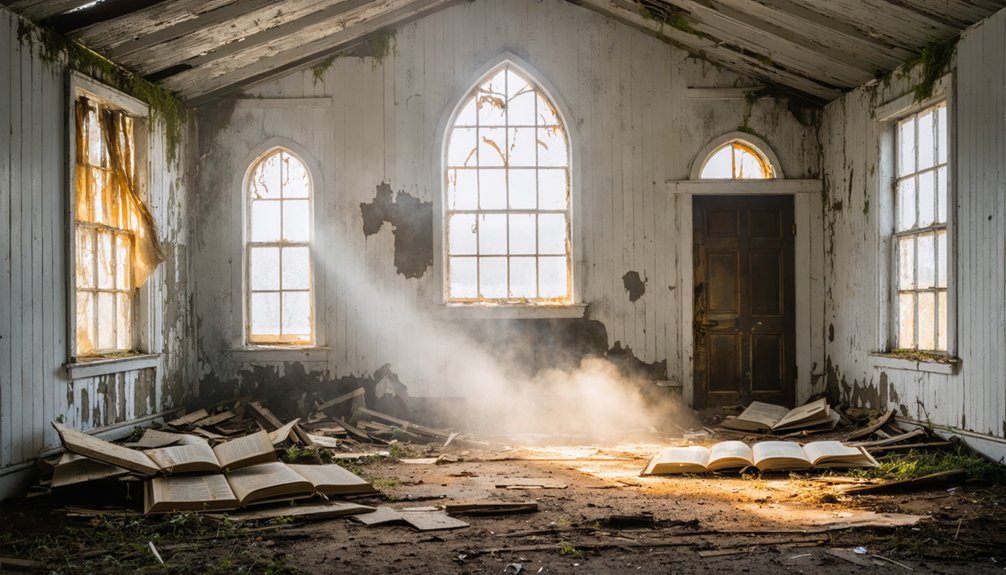
You’ll find these abandoned beauties tucked away in rural corners of Alabama, Georgia, and South Carolina—Gothic Revival and Carpenter Gothic churches slowly surrendering to nature’s embrace.
Venture into the Francis Marion National Forest to discover Halfway Creek Church, or seek out Young’s Chapel Methodist in Georgia, where tornado damage accelerated its architectural decay.
Ivy climbs wooden buttresses while sunlight streams through broken stained glass, illuminating weathered pews and forgotten altars.
These monuments to rural depopulation aren’t all lost causes. Community groups occasionally rally to preserve these treasures, documenting their histories and raising funds for restoration.
Until then, they stand as haunting reminders of communities that once gathered to worship.
Mining Structures Still Standing
In the shadowy valleys of Appalachia and beyond, architectural relics of America’s industrial past stand defiant against time and abandonment.
You’ll discover haunting beauty in these forgotten mining towns, where abandoned structures tell stories of boom-and-bust economies. Lynch’s company buildings, Blue Heron’s evocative “ghost structures,” and Middlesboro’s crater-nestled architecture offer glimpses into America’s industrial heritage.
- Explore Blue Heron’s outdoor museum where audio programs breathe life into Kentucky’s coal mining past
- Wander through Lynch’s preserved company store and mine office, evidence of U.S. Steel’s 1917 vision
- Discover Grundy’s repurposed mining-era buildings, including a former bank now serving as a local museum
These weathered monuments of mining heritage stand as silent witnesses to the communities that once thrived in their shadows.
Off the Beaten Path: Remote Southern Towns Worth Discovering
While major highways and interstates crisscross the South, the region’s most fascinating communities often hide in plain sight—tucked away in mountain hollows, nestled in remote valleys, or scattered across vast desert landscapes.
You’ll discover hidden gems like Robbinsville, NC (population 570), accessible only by winding mountain roads, or Marfa, Texas, surrounded by vast desert expanses. These towns preserve authentic cultural experiences through festivals, storytelling, and traditional crafts. Local legends thrive in places where cell signals fade and modern distractions disappear.
What these communities lack in convenience, they make up for in character. Though they face challenges—limited healthcare, aging populations, and economic struggles—their isolation has preserved unique cultural identities that can’t be replicated in more accessible locations.
Preservation Efforts: Saving the Stories of Forgotten Southern Communities
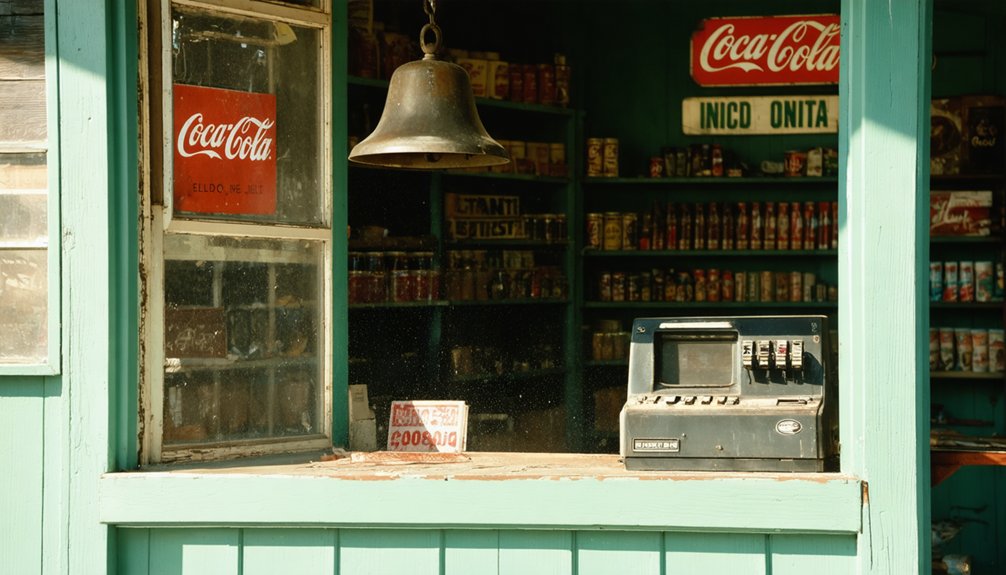
The forgotten towns of the South might fade into obscurity if not for the passionate preservationists who’ve dedicated themselves to rescuing these communities from the dustbin of history.
Through community engagement and heritage tourism, organizations like Eatonville’s P.E.C. and the Preservation Alliance of West Virginia breathe new life into endangered structures and cultural traditions.
You’ll discover revitalization efforts taking many forms across the region:
- Annual festivals and cultural events that transform historic districts into vibrant gathering spaces
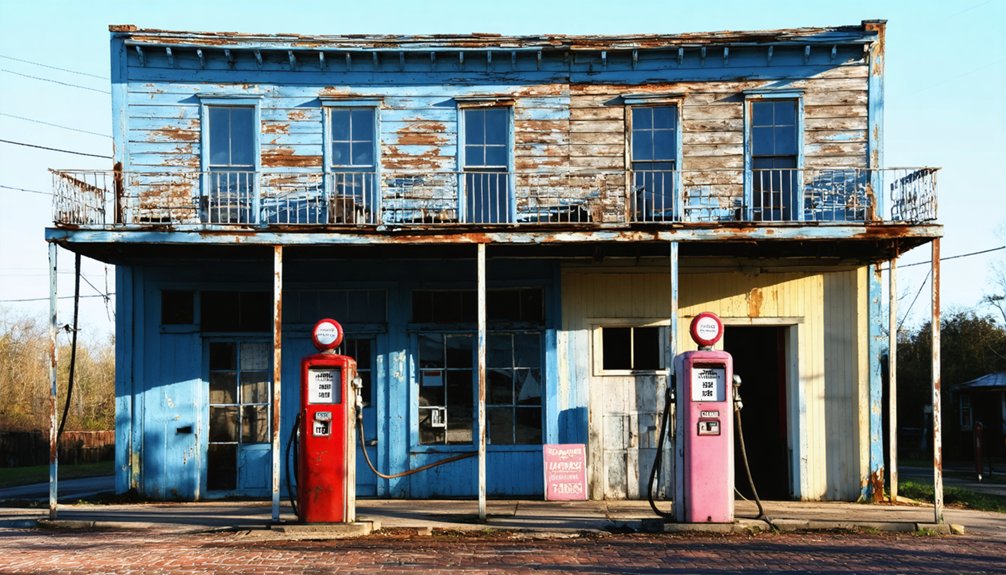
- Main Street programs converting abandoned storefronts into thriving local businesses
- Community-led tours showcasing architectural treasures, from antebellum homes to Victorian masterpieces
These preservation initiatives aren’t just about protecting buildings—they’re about reclaiming narratives, celebrating diverse histories, and creating economic opportunities in places once threatened by time and neglect.
Frequently Asked Questions
How Do Weather Patterns Affect Preservation of Southern Ghost Towns?
You’ll find climate impact visibly etched into these forgotten relics. Southern humidity rots timbers while torrential rains erode foundations, creating dramatic preservation challenges in nature’s reclamation of mankind’s abandoned outposts.
Can You Legally Purchase Property in These Forgotten Towns?
Yes, you can purchase property in these forgotten towns, but your journey requires traversing murky property rights and legal considerations like title searches, preservation restrictions, and infrastructure limitations. Freedom awaits the persistent.
What Indigenous Histories Exist in These Abandoned Southern Communities?
You’ll discover rich Indigenous heritage beneath abandoned Southern streets—Chickasaw, Choctaw, and Cherokee nations occupied these lands first. Their lost traditions echo through mounds, artifacts, and sacred sites awaiting your exploration.
Over 60% of Americans never visit historic ports. You’ll find coastal heritage in Portsmouth Island’s abandoned docks and St. Marks’ Civil War naval history—both offering freedom among weathered wharves and salty breezes.
Which Forgotten Southern Towns Have Inspired Literature or Music?
You’ll discover rich literary inspiration in Monroeville, Alabama, Oxford, Mississippi, and Salinas, Georgia. Towns like Muscle Shoals and Macon offer musical heritage that still echoes through their forgotten streets.
References
- https://www.loveexploring.com/gallerylist/131658/abandoned-in-the-usa-92-places-left-to-rot
- https://www.blueridgeoutdoors.com/go-outside/southern-ghost-towns/
- https://quirkytravelguy.com/ghost-towns-of-the-deep-south/
- https://www.geotab.com/ghost-towns/
- https://www.homestratosphere.com/best-small-towns-in-the-southeast-usa-for-ghost-tours-and-haunted-places/
- https://www.worldatlas.com/cities/7-fairy-tale-small-towns-in-the-southern-united-states.html
- https://en.wikipedia.org/wiki/Lists_of_ghost_towns_in_the_United_States
- https://pulloverandletmeout.com/favorite-attractions/small-towns-in-the-south/
- https://www.youtube.com/watch?v=EKRcWNvFFxg
- https://deepsouthurbex.com/2020/01/02/6-south-alabama-ghost-towns/