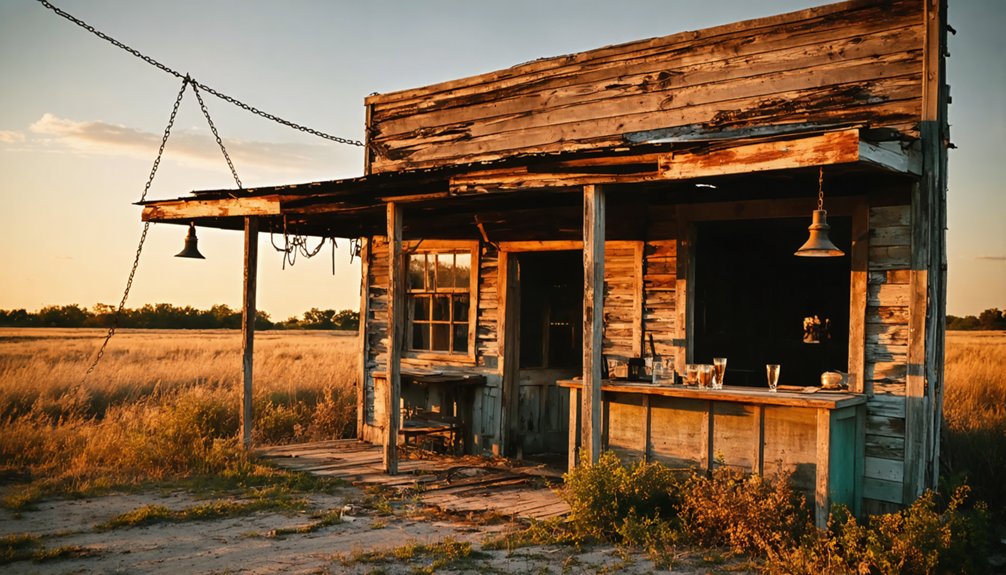
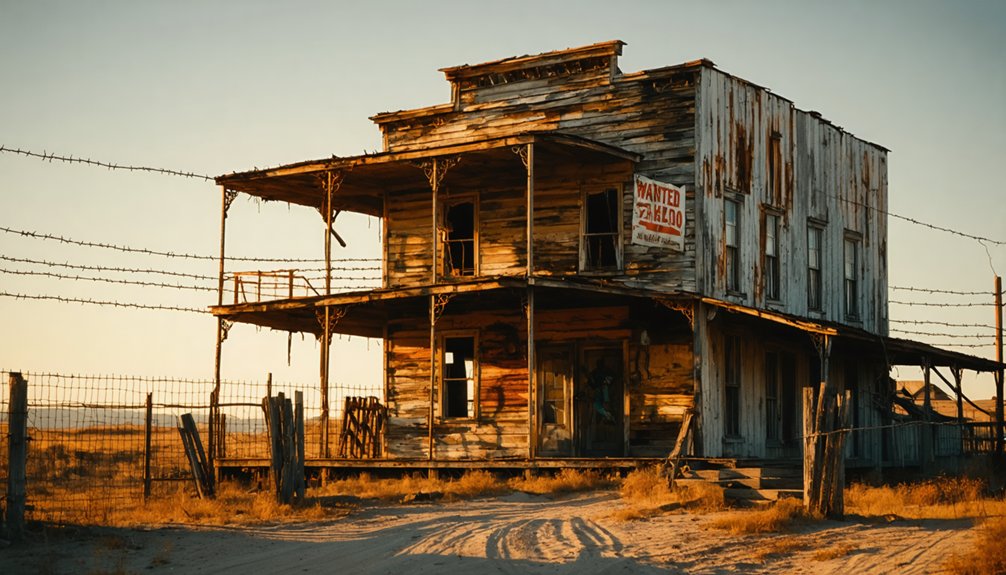
Texas ghost towns contain a wealth of physical artifacts that tell stories of bygone communities. You’ll find abandoned architectural ruins, mining equipment, cemetery markers, and commercial structures that document economic shifts. Stone cottages in Terlingua, silver processing facilities in Shafter, and the Terlingua Cemetery with its 400 graves all provide tangible evidence of boom-bust cycles. These silent witnesses reveal how transportation changes ultimately determined which towns would survive or vanish.
Key Takeaways
- Terlingua features collapsed stone cottages and rusted quicksilver mining machinery illustrating early 1900s construction techniques and industrial heritage.
- Abandoned mercantile buildings and electrified infrastructure in towns like Thurber and Lone Star reveal Texas’s commercial development patterns.
- Mining artifacts include ore transportation systems, processing equipment, and extraction tools from silver and mercury operations.
- Cemetery markers display cultural diversity through folk art memorials, with Terlingua Cemetery containing approximately 400 burials since 1902.
- Transportation infrastructure remnants document how railroad and highway changes directly influenced town abandonment patterns across Texas.
Architectural Ruins: What Remains of Texas Ghost Towns

What silent testimony do abandoned structures offer to Texas’s forgotten communities? The skeletal remains of once-thriving settlements now stand as defiant monuments against time.
These silent sentinels of our past whisper stories of hope, ambition, and ultimate surrender to the relentless march of progress.
You’ll find collapsed stone cottages scattered across Terlingua’s desert landscape, their residential foundations revealing early 1900s construction techniques. In Aldridge, towering concrete structures resemble ancient temples as they’re slowly consumed by the surrounding forest. Civic buildings—like Sherwood’s 1900 courthouse ruins and jail foundations on private properties—document the administrative framework of these lost societies.
The Wood Mansion at St. Mary’s of Aransas (1875) represents preserved coastal architecture, while Belle Plain College ruins illustrate 19th-century educational design.
Throughout these sites, stone chimneys rise from deteriorating frameworks like exclamation points on the landscape, marking where families once gathered, businesses operated, and communities flourished before their inevitable abandonment. In Hagerman, low water periods occasionally reveal submerged structures when Lake Texoma’s levels drop, offering rare glimpses of the town that flooding claimed in 1943.
Mining Relics and Industrial Artifacts
Throughout the rugged terrain of Texas ghost towns, industrial remnants provide tangible connections to the state’s mining heritage. At Shafter, you’ll find evidence of the operation that produced 90% of Texas’s silver output—nearly 31 million ounces extracted from 100 miles of tunnels.
Meanwhile, Terlingua’s landscape remains dotted with rusted machinery from its quicksilver mining heyday, when it supplied 40% of America’s mercury during World War I. These ghost towns offer historical testimonies of the economic fluctuations that shaped Texas during the 19th and early 20th centuries.
- Abandoned ore transportation systems, including the 1913 tramway that replaced mule-drawn wagons at Shafter
- Mining relics scattered among decaying structures, representing different extraction methods for silver and mercury
- Industrial artifacts from on-site processing facilities, such as Presidio Mining Company’s silver reduction mill
These silent witnesses to boom-and-bust cycles stand as representations of Texas’s industrial past and the economic forces that ultimately created today’s ghost towns. Visitors to Shafter can still observe remnants of the once-thriving community that housed a peak population of 4,000 residents during its most productive mining years.
Graveyards and Cemetery Records: Silent Historical Witnesses

Beneath the arid soil of Texas ghost towns lie some of the state’s most poignant historical archives—their cemeteries.
In addition to these haunting reminders of the past, visitors can explore various historic sites in Texas ghost towns that capture the essence of a bygone era. Abandoned buildings and remnants of old storefronts evoke stories of the communities that once thrived there. Each site offers a glimpse into the daily lives and struggles of those who called these towns home.
Forgotten communities speak through their headstones—silent chronicles of lives history books rarely remember.
Terlingua Cemetery exemplifies this silent testimony, containing approximately 400 burials across its 4-acre expanse. Established circa 1902 during the mercury mining boom, it continues to serve the region despite the town’s 1940s abandonment.
The cemetery’s grave markers reveal a cultural tapestry—folk art memorials ranging from whimsical T-Rex sculptures to Hobbit holes stand alongside weather-worn crosses. The annual Dia de los Muertos celebrations honor these departed souls with vibrant community gatherings.
These memorial art pieces, often handcrafted, tell stories that official records cannot.
Documentation efforts have preserved some history, with students and historians recording graves since 1986.
During your exploration, you’ll discover that 90% of interments are of Hispanic heritage, reflecting the demographic reality of frontier mining communities that official histories often overlook. The nearby Lajitas Cemetery, established between the late 1800s and early 1900s, features a distinctive lynchgate entrance traditionally used for burial ceremonies.
Commercial Structures and Former Port Facilities
Texas ghost towns reveal their economic history through the remnants of commercial structures and port facilities that once served as essential hubs of frontier activity.
You’ll discover mercantile evolution from simple general stores to specialized businesses like millinery shops and saloons, illustrating the economic sophistication that briefly flourished before decline.
Examining port infrastructure at St. Mary’s of Aransas reveals how maritime commerce transformed coastal communities until environmental limitations triggered port decline.
- Lone Star’s business district showcases the boom-bust cycle with three mercantile stores established by 1890, most destroyed in the 1893 fire.
- Thurber’s industrial facilities, including ice plants and mining operations, demonstrate the technical capabilities of frontier communities.
- St. Mary’s port remnants illustrate how transportation shifts rendered once-vital infrastructure obsolete when reef wrecks terminated steamship service.
After the catastrophic 1893 fire, Lone Star demonstrated remarkable resilience by rebuilding quickly and reaching a population of 300 by the mid-1890s, though this revival proved temporary.
Thurber’s electric infrastructure reveals how the town achieved prominence as the first Texas town with complete electric services before its eventual decline when railways switched from coal to oil.
Transportation Infrastructure: How Railway and Highway Changes Shaped Abandonment
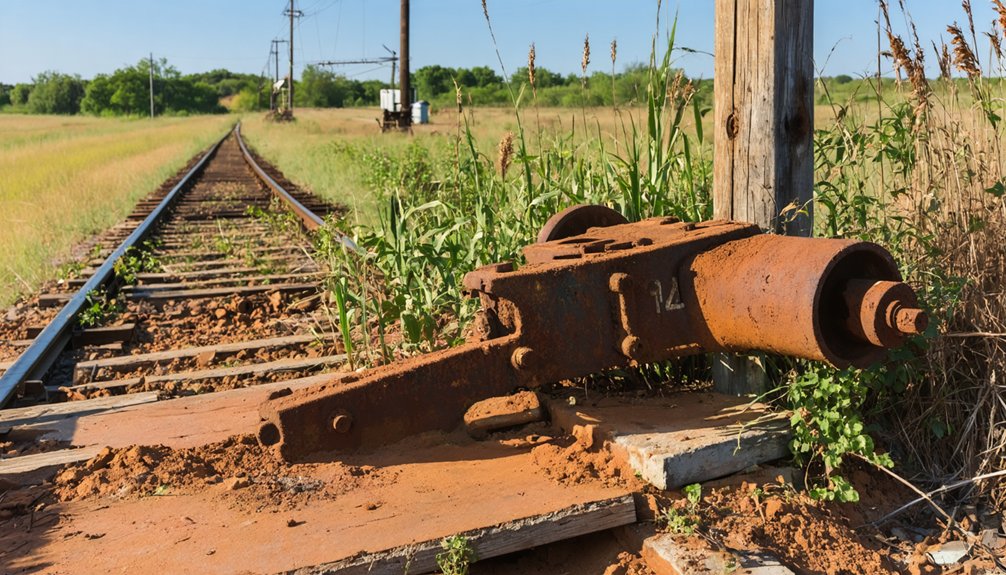
Transportation infrastructure alterations throughout the late 19th and early 20th centuries served as the primary catalyst for numerous Texas ghost towns, permanently altering settlement patterns and economic viability.
Railroad impacts devastated towns like Helena when “The Big Curve” redirected tracks to Karnes City, while Belle Plain lost prominence when Texas and Pacific Railway established Baird merely six miles north.
Highway bypasses later sealed the fate of struggling communities.
Glenrio exemplifies this pattern, thriving along Route 66 until Interstate 40 diverted traffic elsewhere.
Similarly, when railroads shifted from coal to oil locomotives, mining towns like Thurber collapsed.
The disconnection from critical transportation routes led to the decline of once-thriving towns that previously served as key stopping points between major cities and trading posts.
Toyah provides a telling example, as its economic prosperity directly aligned with the Texas & Pacific Railroad arrival in 1880, which initially boosted both its population and commerce.
You’ll notice these transportation changes often triggered cascading failures—communities losing county seat status following railroad rerouting, then experiencing institutional infrastructure exodus and commercial abandonment.
Transportation decisions, both rail and highway, ultimately determined which Texas towns would prosper or perish.
Frequently Asked Questions
Are Any Ghost Towns Successfully Revitalized as Tourist Destinations?
Yes, you’ll find ghost town revitalization success stories in Terlingua, Marfa, Glenrio, and Bluffton. Each demonstrates unique tourism potential through preserved architecture, cultural development, historical significance, and seasonal accessibility respectively.
Who Maintains Ghost Town Structures After Communities Are Abandoned?
You’ll find County Historical Commissions, state agencies, local nonprofits, and volunteer groups maintaining abandoned structures through coordinated preservation efforts. Community involvement typically drives fundraising, restoration projects, and ongoing site management decisions.
What Artifacts Have Been Removed to Museums From Ghost Towns?
While you might think they’re just old junk, you’ll find post office artifacts, historical documents, domestic furnishings, and tools have been relocated to museums due to their cultural significance and preservation challenges.
Can Visitors Legally Explore or Metal Detect in Ghost Towns?
You can legally explore ghost towns with proper permission. Metal detecting regulations prohibit unauthorized searching on private or protected lands. Ghost town preservation efforts require you respect property rights and obtain permits where needed.
Do Any Former Residents Still Return for Reunions or Commemorations?
Yes, you’ll discover former residents regularly converge for ghost town reunions at Red Rock, Terlingua’s chili festival, Cheapside’s community center gatherings, and Helena’s preservation events—each systematically maintaining historical connections through deliberate commemorative practices.
References
- https://en.wikipedia.org/wiki/List_of_ghost_towns_in_Texas
- https://texashighways.com/travel-news/four-texas-ghost-towns/
- https://www.hipcamp.com/journal/camping/texas-ghost-towns/
- https://www.county.org/county-magazine-articles/summer-2025/ghost-towns
- https://www.youtube.com/watch?v=Zd8-gKw-5Hc
- https://www.texasescapes.com/TOWNS/Texas_ghost_towns.htm
- https://mix931fm.com/texas-ghost-towns-history/
- https://tpwmagazine.com/archive/2018/jan/wanderlist_ghosttowns/
- https://www.desertedtexas.org
- https://everafterinthewoods.com/texas-ghost-towns-that-became-ruins-that-locals-turned-into-quirky-getaways/