Planning a ghost town road trip to Ainsworth, Washington is easier than you’d think. You’ll find this historic yet overlooked site just north of Sacajawea State Park in Pasco, reachable in under 15 minutes from the Tri-Cities. Once a booming railroad hub supporting nearly 8,000 workers, Ainsworth vanished almost overnight after 1884. Today, scattered concrete foundations and a rugged shoreline are all that remain. Stick around to uncover everything you need to know before you go.
Key Takeaways
- Ainsworth was a railroad boomtown established in 1879, abandoned by 1885, making it the Tri-Cities region’s first ghost town.
- Access the site via gravel roads from Sacajawea State Park’s north side; standard 2WD vehicles work fine for the short drive.
- Visible remains include scattered concrete slabs and partially submerged foundations along the Snake River shoreline.
- Visit in spring or fall for comfortable temperatures; summer offers longer daylight, while winter brings light, manageable snowfall.
- Combine your visit with nearby Sacajawea State Park, Confluence Story Circles, and regional railroad museums for a fuller experience.
What Was Ainsworth, Washington?
Before the Tri-Cities metro area ever took shape, Ainsworth, Washington was already booming. The Northern Pacific Railroad platted this town on October 2, 1879, naming it after Oregon Steam Navigation Company president John C. Ainsworth. Its historical significance runs deep — it was the first established town in what’s now the entire Tri-Cities region.
You’d have found a rough, energetic railroad supply hub here, supporting nearly 8,000 laborers at its peak. Once the Snake River railroad bridge was completed in 1884, the town emptied fast and was absorbed into Pasco by 1885.
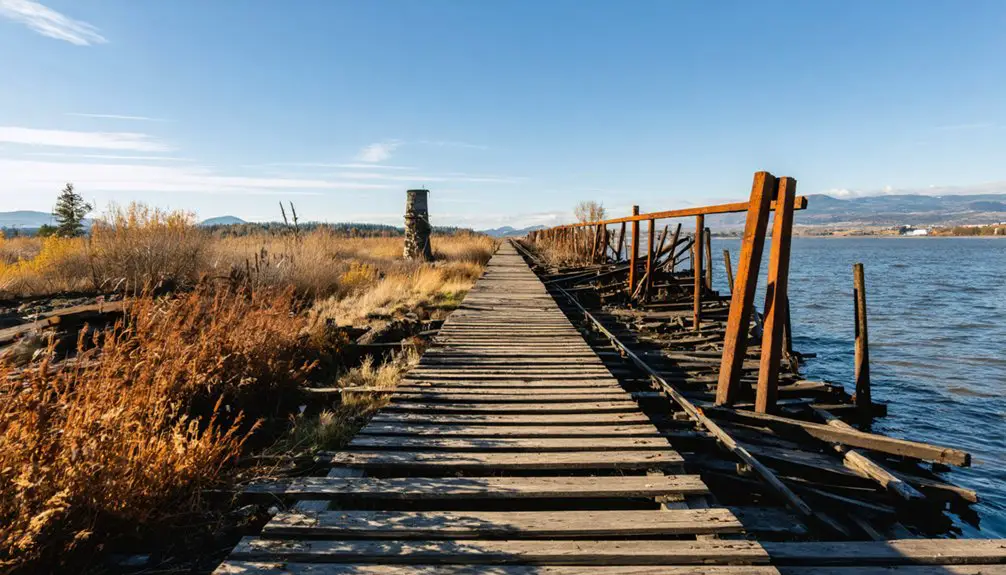
Today, you won’t find much standing. Dam construction submerged most of the original townsite, leaving only scattered archaeological remnants — broken concrete and foundations visible just offshore in the Snake River.
Where Is the Ainsworth Ghost Town Site?
You’ll find the Ainsworth ghost town site at coordinates 46°13′01″N, 119°01′37″W. It is tucked along the northern bank of the Snake River near its confluence with the Columbia, just north of Sacajawea State Park in Franklin County, Washington.
If you need a familiar landmark, the site sits directly above the Confluence Story Circles area on a knoll overlooking the river.
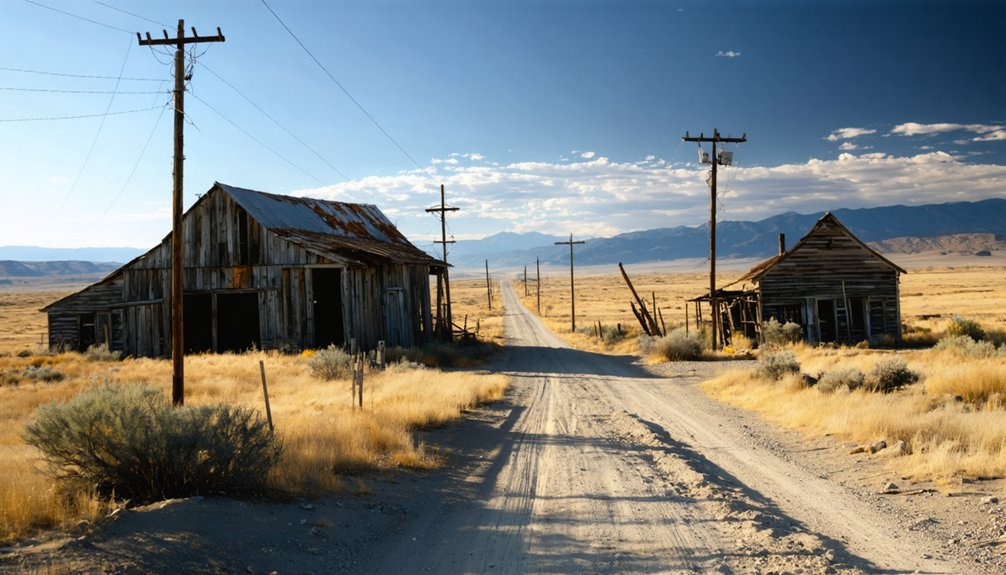
To get there, take the gravel and dirt roads on the north side of the park — a standard 2WD vehicle handles the terrain just fine.
General Location And Coordinates
Nestled on the northern bank of the Snake River’s mouth in Franklin County, Washington, the Ainsworth ghost town site sits at coordinates 46°13′01″N, 119°01′37″W.
Just north of Sacajawea State Park, near the confluence of the Snake and Columbia Rivers. You’ll find the site positioned on a knoll overlooking the Confluence Story Circles area, accessible via gravel and dirt roads on the park’s north side.
Historical preservation efforts here are minimal, leaving local legends and scattered concrete foundations to tell the story.
Dam construction submerged much of the original townsite beneath the Snake River, so what you’re seeing today represents only fragments of a once-thriving railroad hub.
That raw, unfiltered access to history is exactly what makes exploring Ainsworth feel genuinely adventurous rather than curated.
Nearby Landmarks For Reference
Sacajawea State Park serves as your most reliable anchor point when steering to the Ainsworth ghost town site — the ruins sit just north of the park, near the dramatic confluence where the Snake and Columbia Rivers meet.
From the park, you’ll find gravel and dirt roads leading toward the Confluence Story Circles area, where a brushy riverbank conceals what little remains. Concrete slabs and foundations peek through the Snake River’s shoreline, offering tangible historical artifacts from a town that thrived and vanished within five years.
Local legends paint Ainsworth as a rough, lawless railroad hub — and standing at that remote bank, you’ll feel the weight of that volatile past. Keep your eyes open; the site rewards curious, patient explorers.
Accessing The Site Today
Finding the Ainsworth ghost town site takes a bit of exploring, but it’s straightforward once you know what to look for. Head to the north side of Sacajawea State Park in Franklin County, Washington, where gravel and dirt roads lead you toward the Snake River bank.
Here’s what to expect on arrival:
- Road conditions — Standard 2WD vehicles handle the gravel paths fine, so no special equipment is necessary.
- Historical artifacts — Scan the shoreline carefully; concrete slabs and foundations remain visible just offshore in the Snake River.
- Site preservation — The area stays brushy and rugged, so wear appropriate footwear and respect remaining structures.
You’re standing where the Tri-Cities’ first town once thrived, and that context makes every broken slab worth examining.
Why Did Ainsworth Disappear So Fast?
Ainsworth’s rise and fall happened so fast it’ll make your head spin. The historical context is simple: the Northern Pacific Railroad built this town for one purpose — to support railroad construction crews pushing westward across the rugged Pacific Northwest. That singular economic factor made Ainsworth both powerful and fragile.
By 1884, workers completed the bridge spanning the Snake River, eliminating the need for ferry crossings and supply staging. Suddenly, Ainsworth lost its entire reason for existing. Workers packed up, businesses closed, and families moved on — mostly to nearby Pasco.
Within a year, the town was fundamentally gone. You’re looking at a settlement that lasted barely five years. Dam construction later swallowed most remaining structures beneath rising river waters, leaving only scattered concrete fragments behind.
How to Get to Ainsworth From the Tri-Cities
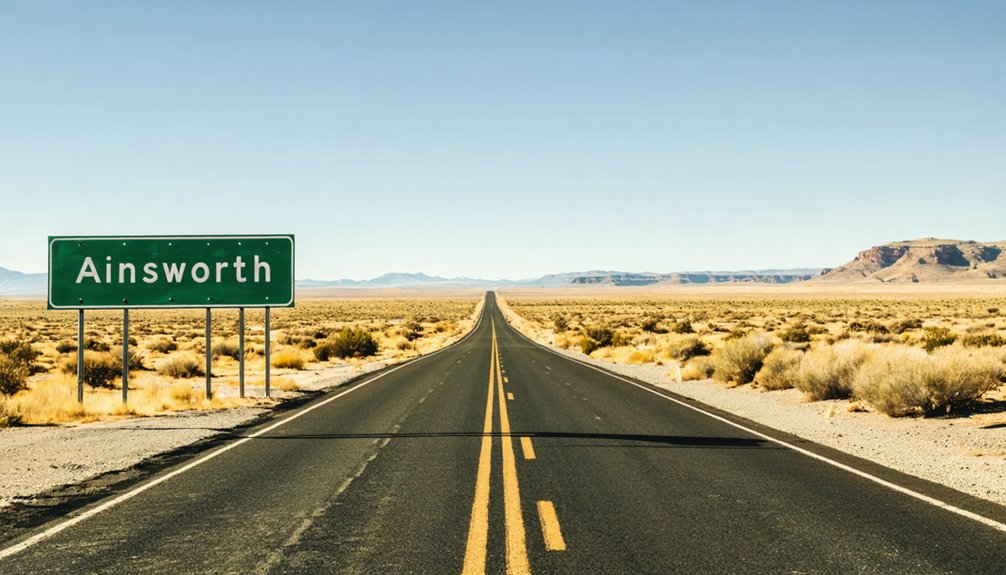
Getting to Ainsworth from the Tri-Cities is a straightforward drive, putting you at the site in under 15 minutes from Pasco.
You’ll head toward Sacajawea State Park, then take the gravel and dirt roads on the north side of the park to reach the Snake River bank.
Parking is basic, so you’ll want a 2WD-capable vehicle comfortable on unpaved surfaces before you set out on foot to explore the brushy shoreline.
Driving Routes From Tri-Cities
Reaching Ainsworth from the Tri-Cities takes just minutes, making it one of the easiest ghost town detours you’ll find in eastern Washington. Head toward Sacajawea State Park in Pasco, then follow the gravel and dirt roads along the Snake River’s north bank. River navigation instincts help here — the site hugs the shoreline where historical artifacts peek through the brush.
Follow these straightforward route options:
- From Kennewick: Cross the Blue Bridge onto Court Street, then head east toward Sacajawea State Park.
- From Richland: Take Highway 240 south, merging toward Pasco via Road 68.
- From Pasco: Drive directly south on Oregon Avenue straight into the park entrance.
Standard 2WD vehicles handle the gravel roads comfortably year-round.
Parking And Site Access
Once you’ve made it to Sacajawea State Park, finding the Ainsworth townsite comes down to a short drive along the Snake River’s north bank on gravel and dirt roads. You won’t need a high-clearance vehicle — roads are rated 2WD, so standard cars handle them fine. Parking options are informal; pull off where the road widens near the riverbank and explore on foot from there.
Site accessibility is straightforward but expect dense brush along the water’s edge. The knoll overlooking the Confluence Story Circles gives you the clearest vantage point over what remains.
Look toward the river’s edge and you’ll spot concrete slabs and broken foundations partially submerged offshore — quiet remnants of a town that vanished within five years of its founding.
What You’ll Actually See at the Ainsworth Site
Visiting the Ainsworth townsite means setting realistic expectations, because what remains is modest but genuinely haunting. You won’t find standing structures or restored historical artifacts, but the raw honesty of the site makes site preservation feel irrelevant — nature already claimed this place.
Ainsworth offers no museums, no restored artifacts — only honest ruins and the quiet, patient work of a river reclaiming its own.
Here’s what you’ll actually encounter:
- Concrete slabs and broken foundations visible along the Snake River’s edge, partially submerged offshore.
- Brushy, overgrown riverbank terrain that swallowed most of the original townsite after dam construction raised water levels.
- Ambiguous remains where distinguishing original Ainsworth foundations from old ferry infrastructure proves genuinely difficult.
You’re fundamentally reading a landscape rather than touring a museum. The Snake River quietly erased most of this railroad boomtown, leaving only fragments that reward curious, patient explorers willing to look closely.
Best Time of Year to Visit Ainsworth
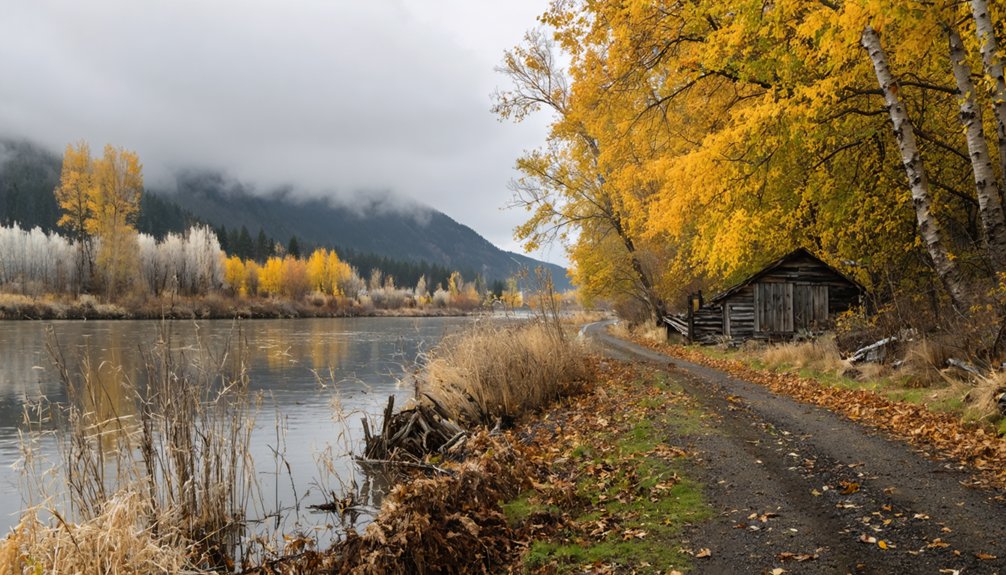
Ainsworth welcomes visitors year-round, and the region’s climate makes trip planning straightforward. Seasonal weather here means mild winters and blazing hot summers, so you’ll want to dress accordingly.
Spring and fall offer the sweetest balance — comfortable temperatures without the punishing summer heat that can make scrambling through brushy riverbanks genuinely exhausting.
Summer brings longer daylight hours, giving you more time to explore the foundations and concrete slabs visible near the shoreline, but pack plenty of water.
Winter visits are absolutely doable since snowfall stays light in this part of Washington.
The best news? Visitor crowds are rarely a concern at Ainsworth. This isn’t a polished tourist destination — it’s a raw, forgotten stretch of riverbank where you’ll likely explore completely alone, on your own terms.
Sacajawea State Park and Other Stops Near Ainsworth
Just south of the Ainsworth townsite, Sacajawea State Park sits at the confluence of the Snake and Columbia Rivers and makes an ideal companion stop for your ghost town visit. You’ll find interpretive exhibits, walking trails, and sweeping river views that add rich context to Ainsworth’s story.
Just south of the ghost town, Sacajawea State Park crowns the Snake and Columbia Rivers confluence with trails and sweeping views.
While you’re exploring the area, don’t miss these nearby highlights:
- Confluence Story Circles – Public art installations honoring Indigenous history sit just below the old townsite knoll.
- Snake River Shoreline – Scan the water’s edge for concrete foundations, where local legends claim the river still guards Ainsworth’s secrets.
- Franklin County Historical Sites – Regional museums preserve ghost stories and railroad-era artifacts that bring the broader Tri-Cities history alive.
Frequently Asked Questions
Who Was John C. Ainsworth, and Why Was the Town Named After Him?
Like a titan of industry, John C. Ainsworth steered the Oregon Steam Navigation Company, leaving his historical significance stamped on the town’s name due to his enormous economic impact on the Pacific Northwest’s railroad and river transport expansion.
Can Visitors Legally Access the Ainsworth Ghost Town Site Today?
You can legally access Ainsworth’s ghost town site today! Navigate gravel roads near Sacajawea State Park to explore abandoned structures, uncover haunted legends, and spot concrete foundations jutting from the Snake River’s edge on your adventurous visit.
Are Any Artifacts From Ainsworth Preserved in Local Museums Nearby?
The knowledge doesn’t confirm local museum exhibits with Ainsworth artifacts, but you’ll want to explore nearby Pasco’s historic preservation resources. Check local cultural centers around the Tri-Cities area — they’re your best bet for uncovering Ainsworth’s buried past!
How Deep Underwater Are the Submerged Ainsworth Town Foundations?
Exact depth measurement isn’t documented, but you’ll spot Ainsworth’s underwater ruins — concrete slabs and foundations — just offshore in the shallow Snake River. Descend into and explore these ghostly remnants yourself!
Was Ainsworth Considered Dangerous, and What Crimes Occurred There?
Yes, Ainsworth was considered a dangerous railroad town! You’d have encountered rough laborers, lawlessness, and chaos among its 8,000 workers. Today, its abandoned structures fuel haunted legends, echoing the wild, untamed freedom of its turbulent, short-lived past.
References
- https://www.confluenceproject.org/library-post/town-vanishes-dust-bust-and-railroads-of-ainsworth/
- https://en.wikipedia.org/wiki/Ainsworth
- https://www.facebook.com/groups/thetricities/posts/34808726502075497/
- https://www.ghosttowns.com/states/wa/ainsworth.html
- https://en.wikipedia.org/wiki/List_of_ghost_towns_in_Washington
- http://pearailroad.blogspot.com/2016/04/history-snapshot-ainsworth.html