Planning a ghost town road trip to Remlig, Texas means heading deep into East Texas wilderness, about 4 miles east of Brookeland. You’ll need a 4WD vehicle since unpaved backroads are your only way in. Once a thriving sawmill community of nearly 1,000 residents, Remlig was abandoned in 1926 and reclaimed by the pines. Fall or spring are your best bets for comfortable exploring. Stick around — there’s a lot more to uncover about this forgotten East Texas relic.
Key Takeaways
- Remlig, Texas, sits about 4 miles east of Brookeland, roughly 93 miles north of Beaumont through East Texas pine country.
- Unpaved backroads require a 4WD vehicle; seasonal rain creates muddy, treacherous conditions, so carry recovery gear and offline maps.
- Visit during fall, spring, or winter for comfortable temperatures; summer heat makes exploration unpleasant.
- Pack GPS, paper maps, camera, notebook, plus sufficient water and food for this remote, off-grid destination.
- Respect crumbling structures and the local cemetery by staying on foot and photographing rather than disturbing fragile remnants.
What Is Remlig, Texas: and Why Do People Still Seek It Out?
Once a thriving lumber town carved out of the East Texas wilderness, Remlig sits frozen in time roughly 4 miles east of Brookeland. Its name is a reverse spelling of its founder Alexander Gilmer’s surname.
Remlig — a ghost town whose very name spells out the legacy of its founder, Alexander Gilmer, in reverse.
At its peak, nearly 1,000 residents called this self-contained community home, supported by a sawmill producing 160,000 board feet of lumber daily.
Today, it’s a ghost town with zero population, drawing curious travelers who value historical preservation and the raw freedom of exploring forgotten places.
Local legends surrounding the town’s rapid rise and collapse after 1926 keep its memory alive. Only a cemetery remains as a tangible marker of what once was.
If you’re seeking an off-the-beaten-path adventure steeped in history, Remlig offers exactly that.
How Remlig Got Its Name (It’s Simpler Than You Think)
Once you know the story behind Remlig’s name, you’ll never forget it. Alexander Gilmer, the founder who built the town’s massive sawmill in 1904, lent his surname to the settlement — just spelled backward.
That single reversal gave Remlig its identity, and it’s a detail that makes the town instantly memorable even a century after its abandonment.
Gilmer’s Name Reversed
If you’ve ever wondered how Remlig got its unusual name, the answer’s surprisingly straightforward — someone simply spelled “Gilmer” backward. Alexander Gilmer founded this East Texas lumber town in 1904, and the community took shape around his cutting-edge sawmill operation.
Rather than searching for poetic inspiration, early settlers reversed his surname and stamped it permanently onto the landscape.
It’s a small detail, but it carries real weight for historical preservation enthusiasts who dig into forgotten places. The name itself becomes a living artifact, connecting you directly to the man who built an entire self-contained community from scratch.
As community revival conversations grow around Texas ghost towns, Remlig’s quirky origin story reminds you that even abandoned places hold identities worth remembering, exploring, and passing forward.
A Founder’s Legacy
Alexander Gilmer didn’t leave Remlig’s name to chance — he left it in reverse. When he established this East Texas lumber town in 1904, he simply flipped his surname to create something permanent. That act of historical preservation keeps his identity alive even as the town fades into memory.
You’re stepping into community memories the moment you understand the name’s origin. Gilmer’s legacy shaped everything here:
- He founded the sawmill that employed 400 workers at peak operation
- He built 190 tenant houses for worker families
- He established a self-contained community with schools and churches
- He created the post office in 1905, cementing Remlig’s identity
His name isn’t just reversed — it’s embedded into Texas history, waiting for you to discover it.
The Sawmill That Built Remlig: and the Timber Bust That Killed It
When Alexander Gilmer erected his state-of-the-art sawmill in 1904, he didn’t just build a mill — he built an entire town around it, employing 400 workers who churned out up to 160,000 board feet of lumber daily.
For over two decades, that relentless production fueled Remlig’s growth, supporting nearly 1,000 residents and establishing the mill as the largest lumber operation in Sabine County.
But the very timber that built Remlig ultimately destroyed it, as decades of aggressive harvesting stripped the surrounding forests bare, forcing the mill’s closure in 1926 and leaving the town to fade into abandonment.
Gilmer’s Visionary Sawmill
Though Alexander Gilmer built his sawmill in the heart of East Texas timber country, he didn’t settle for anything ordinary. His operation redefined what a mill town could be, leaving a lasting community impact that echoed long after the timber ran out.
At its peak, the mill delivered:
- 400 workers powering daily operations
- 160,000 board feet of lumber produced every single day
- Multiple lumber camps surrounding the town
- A company commissary keeping the workforce self-sufficient
You’re looking at a facility that stood as Sabine County’s largest lumber operation. Gilmer’s commitment to historical preservation lives in the stories this land still holds.
When you visit Remlig today, you’re walking ground shaped by one man’s ambitious, forward-thinking vision.
Peak Lumber Production Years
For two decades, Remlig’s sawmill roared at full throttle, transforming raw East Texas timber into one of the region’s most impressive industrial outputs. At its peak, 400 workers pushed the mill to produce up to 160,000 board feet of lumber daily — an extraordinary figure that cemented Remlig’s place in the regional lumber industry.
You’d have witnessed a town fully alive, humming with purpose and economic energy. Workers earned company scrip, spent it at the commissary, and kept the whole ecosystem moving.
But nothing lasts forever. By 1926, the timber was gone, and so was the money. Town decline came swiftly — the mill shuttered, the workers scattered, and Remlig’s extraordinary run ended as abruptly as it had begun.
Timber Depletion And Abandonment
Once the last marketable timber fell, Remlig’s fate was sealed. The mill that once churned out 160,000 board feet daily went silent in 1926, leaving nearly 1,000 residents with nowhere to turn. You can almost feel the community nostalgia hanging over this abandoned landscape.
The collapse happened fast:
- Timber depletion gutted the town’s only economic engine
- Railroad and machinery maintenance costs became unsustainable
- Workers lost their livelihoods practically overnight
- Residents scattered, leaving homes and memories behind
Today, historical preservation efforts remain minimal — only the local cemetery survives as a tangible connection to Remlig’s past. When you visit, you’re witnessing raw history: a self-sufficient community that thrived, then vanished, entirely on timber’s terms.
What’s Actually Left to See at Remlig Today
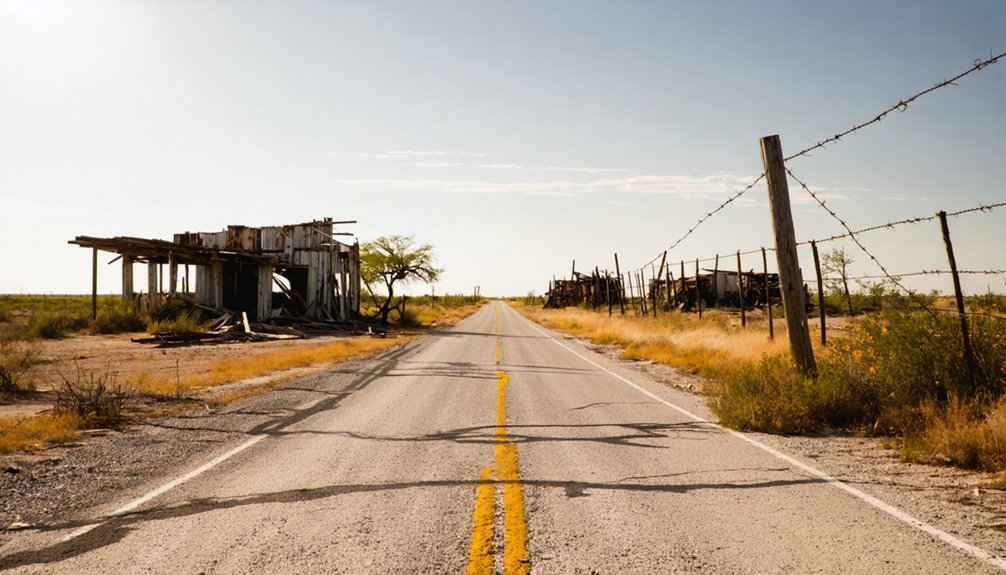
When you visit Remlig today, you’ll find little more than echoes of its industrial past. The once-thriving mill town has largely vanished, reclaimed by East Texas wilderness. Scattered buildings and crumbling structures dot the landscape, offering fragmented glimpses into the town’s peak years.
Historical artifacts are rare, but sharp eyes might spot remnants of the old infrastructure beneath the overgrowth.
The most significant surviving feature is the local cemetery, standing as the town’s last tangible marker.
Local legends surrounding Remlig’s rapid rise and fall add a haunting layer to your exploration.
You’ll need a 4WD vehicle to navigate the unpaved roads leading to the site.
Despite its sparse remains, Remlig delivers a raw, unfiltered ghost town experience that few other abandoned Texas towns can match.
Ghost Towns Near Remlig Worth Visiting on the Same Trip
Remlig doesn’t have to be the only stop on your East Texas ghost town adventure. The region is rich with historical significance and community legacy waiting to be uncovered. Pack your curiosity and explore these nearby ghost towns worth adding to your road trip:
- Aldridge, Texas – A former sawmill town in Jasper County with deep timber industry roots
- Fastrill, Texas – A vanished community swallowed by the Angelina National Forest
- Bevilport, Texas – Once a thriving riverport town now reclaimed by wilderness
- Chireno, Texas – A historic community carrying centuries of cultural memory
Each destination adds another layer to East Texas’s forgotten past. You’ll leave with a fuller picture of how boom-and-bust industries shaped — and erased — entire communities across this region.
How to Reach Remlig From Beaumont, San Augustine, and Brookeland
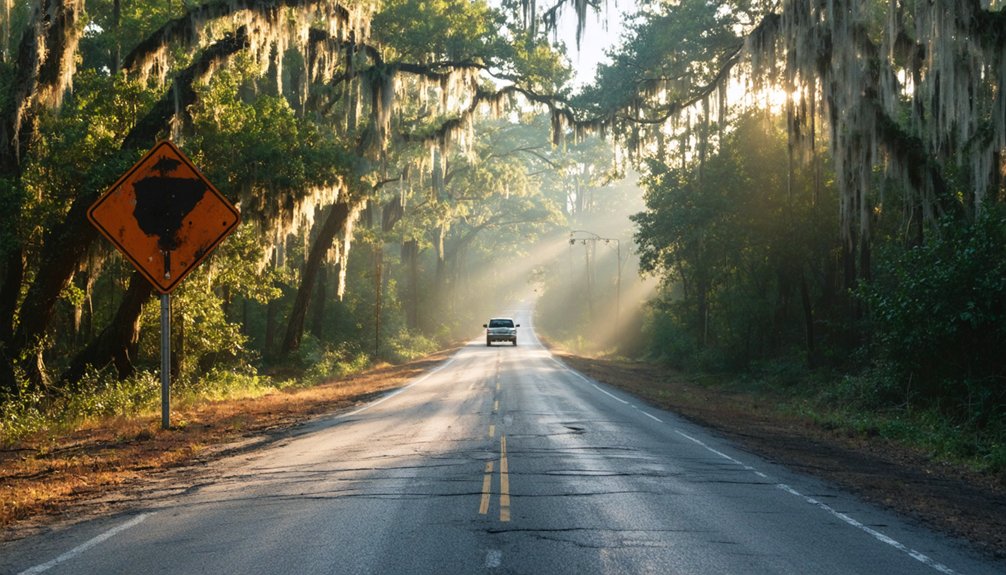
Reaching Remlig takes some planning, but the journey itself rewards you with some of East Texas’s most scenic backroads. From Beaumont, drive approximately 93 miles north through pine-covered terrain.
From San Augustine, head roughly 41 miles southeast, cutting through historic timber country rich in cultural preservation.
If you’re starting from Brookeland, Remlig sits just 4 miles east near Browndell, making it your quickest approach.
Regardless of your starting point, prepare for unpaved roads requiring a 4WD vehicle. No exact road directions currently exist, so download offline maps before departing.
The site’s historical significance as East Texas’s largest Sabine County sawmill makes traversing the rough terrain worthwhile.
Pack water, wear sturdy boots, and embrace the adventure of discovering a place most modern maps have forgotten.
Road Conditions and Vehicle Requirements for Getting Into Remlig
Getting into Remlig means tackling unpaved backroads that demand a 4WD vehicle — there’s no way around it. The terrain reflects the town’s isolated character, unchanged since its 1926 abandonment.
Respecting these conditions honors the site’s historical preservation and the community impact this lumber town once had on East Texas.
Before you head out, prepare for:
- 4WD is mandatory — standard vehicles won’t handle the rough, uneven terrain
- Seasonal mud — hot summers dry the roads, but rain turns them treacherous fast
- No paved access routes — expect dirt and gravel the entire approach
- Limited navigation data — no exact road directions exist, so download offline maps beforehand
Go in prepared, stay aware of conditions, and you’ll reach one of Texas’s most compelling forgotten places.
Best Season to Visit Remlig Without the Heat Working Against You
Once you’ve sorted out your vehicle, timing your visit becomes the next piece of the puzzle — and in East Texas, getting the season right makes a real difference. Remlig’s climate brings brutal summer heat that’ll drain you before you’ve explored a fraction of the site.
Fall and spring offer cooler temperatures, making it far easier to walk the grounds, photograph remnants, and genuinely absorb the cultural significance of what once stood here.
Winter works too — mild conditions keep you comfortable while you reflect on the historical preservation value of this forgotten lumber town.
You’re not just passing through ruins; you’re stepping into 1904. Give yourself the best possible conditions to do that experience justice by avoiding those peak summer months entirely.
What to Pack When Visiting a Remote, Unmapped East Texas Ghost Town
Packing smart separates a successful ghost town visit from a miserable one, especially when you’re heading somewhere as remote and unmapped as Remlig. You’ll need to prepare for rugged terrain, unpredictable weather, and zero nearby services.
Bring these essentials:
- Navigation tools – GPS and paper maps, since Remlig doesn’t appear on modern maps
- Camera and notebook – document historical artifacts and record local legends you uncover
- Water and food – no stores exist nearby; the old commissary closed with the mill in 1926
- 4WD vehicle and recovery gear – unpaved roads demand serious capability
Don’t underestimate East Texas remoteness. You’re exploring a community that housed nearly 1,000 people and then vanished completely.
Respect the cemetery, the only surviving remnant, and leave everything undisturbed.
How to Explore Remlig Without Damaging What Little Remains
When you step into Remlig, you’re walking through a fragile piece of East Texas history, so every move you make matters.
Don’t touch, lean on, or enter any standing structures, since weakened wood and unstable foundations can collapse without warning.
Treat the site the way you’d want others to treat it — leave everything exactly as you found it so future visitors can experience the same haunting stillness you did.
Tread Lightly While Exploring
Because so little of Remlig survives, every crumbling foundation and weathered timber you encounter deserves your utmost respect.
Historical preservation isn’t just a rule here — it’s your responsibility to the community stories embedded in every remaining structure.
Follow these principles while exploring:
- Stay on foot — don’t drive vehicles over fragile foundations or scattered remnants
- Leave everything untouched — resist pocketing bricks, timber fragments, or any artifacts you discover
- Photograph instead of disturb — your camera captures history without destroying it
- Watch your step — deteriorating structures can collapse without warning
Remlig’s silence speaks volumes about the hundreds of families who once called it home.
You’re walking through their legacy, so treat every inch of this forgotten East Texas town accordingly.
Protect Remaining Structures
Remlig’s remaining structures are fragile relics that can’t withstand careless handling, so you’ll want to keep your interactions with them minimal and intentional.
Historical preservation starts with simple decisions — don’t climb on weathered walls, don’t pull at rotting timber, and don’t disturb foundations that have barely held their ground for nearly a century.
Structural stability in abandoned buildings is deceptive; what looks solid can collapse without warning.
Photograph everything you find, but leave it exactly where it stands. Removing artifacts, carvings, or materials strips away irreplaceable context from this site’s story.
You’re free to explore every corner of Remlig, but that freedom carries responsibility.
The choices you make today determine whether future visitors encounter a living piece of East Texas lumber history or nothing at all.
Frequently Asked Questions
Is There an Official Historical Marker or Monument at Remlig?
No official historical marker exists at Remlig. Like a forgotten veteran’s grave, you’ll find only the cemetery whispering local legends. Historic preservation hasn’t reached here yet — you’re free to discover its raw, unmarked history yourself.
Are There Any Guided Tours Available for Visiting Remlig?
No guided tours exist for this ghost town preservation site, but you’ll find that exploring Remlig’s scattered remnants independently makes it one of Texas’s most adventurous, off-the-beaten-path tourist attractions you can freely discover yourself.
Can Visitors Legally Access the Remlig Cemetery Without Permission?
You’ll want to research local private property and trespassing laws before visiting Remlig’s cemetery, as ownership status isn’t clearly documented. Always seek permission first to explore freely and responsibly without risking legal consequences.
Has Remlig Ever Been Featured in Any Documentaries or Films?
We don’t have records of Remlig appearing in documentaries or films, but its ghost town legends and haunting abandoned sites make it a compelling subject that’s just waiting for adventurous filmmakers and explorers like you to discover.
Are There Any Local Historians Who Specialize in Remlig’s History?
It’s a needle-in-a-haystack search, but you’ll find that local historical preservation efforts and community involvement in Sabine and Jasper Counties can connect you with passionate historians who’ve dedicated themselves to uncovering Remlig’s fascinating past.
References
- https://www.texasescapes.com/EastTexasTowns/Remlig-Texas.htm
- https://en.wikipedia.org/wiki/List_of_ghost_towns_in_Texas
- https://www.ghosttowns.com/states/tx/remlig.html