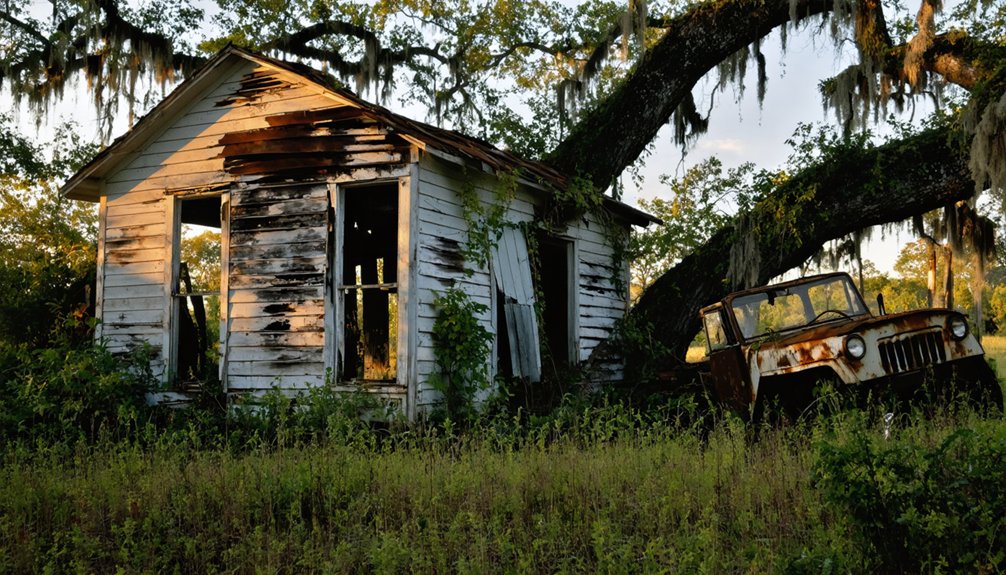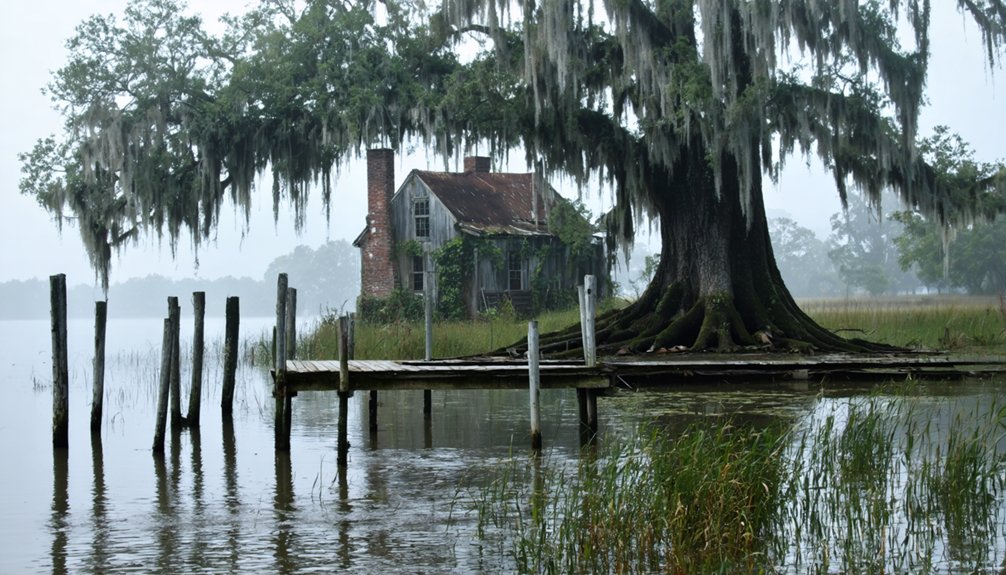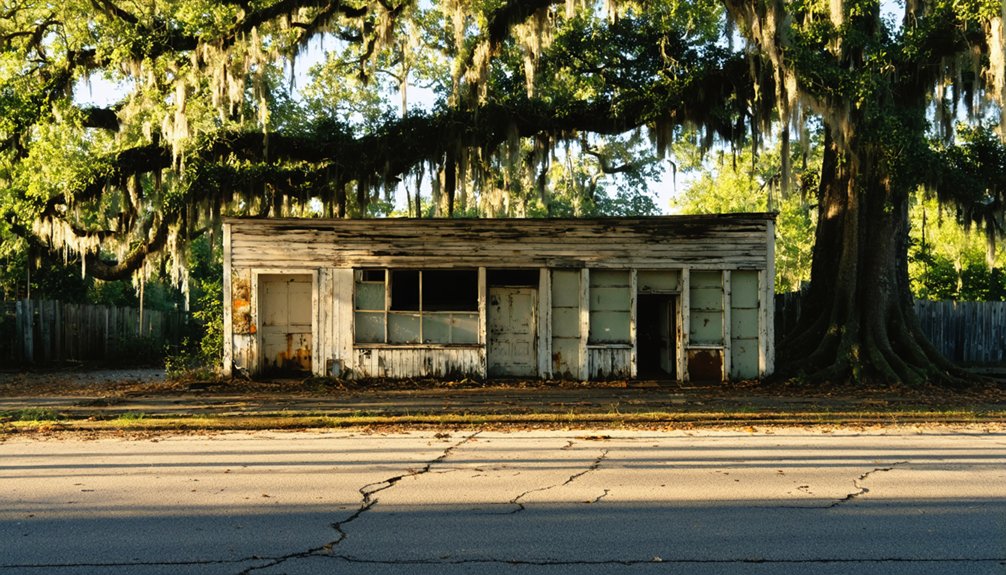
Planning a ghost town road trip to Albany, Louisiana means heading down quiet back roads in Caddo Parish, where open land and roadside markers replace what was once a thriving community. You’ll want sturdy boots, insect repellent, and a camera ready before you go. Bring printed maps since cell service gets spotty out there. Albany’s story of boom, decline, and silence runs deeper than it first appears, and there’s plenty more to uncover ahead.
Key Takeaways
- Albany, Louisiana, is a ghost town in Caddo Parish with open land, roadside markers, and cemeteries as its primary remaining features.
- Use GPS and printed maps when traveling, as back roads and poor cell service make navigation challenging in northwestern Louisiana.
- Depart in the morning to maximize daylight exploration time and pack essentials like water, insect repellent, sturdy boots, and a portable charger.
- Read the landscape for sunken foundations, old tree clusters, and elevated cemeteries to uncover clues about Albany’s former settlement.
- Extend your road trip by visiting nearby Louisiana ghost towns like Frenier, Morningsport, and small Minden-area communities for a richer experience.
What Makes Albany, Louisiana a Ghost Town?
Albany, Louisiana carries the quiet weight of a town that time simply left behind. Caddo Parish holds this forgotten settlement, now listed among Louisiana’s confirmed ghost towns — places where residents packed up and moved on as local conditions shifted.
Some towns don’t vanish overnight — Albany, Louisiana simply exhaled, and the people quietly followed the air out.
You won’t find a bustling main street here. Instead, you’ll encounter silence, open land, and the faint echo of a community that once had purpose.
Ghost towns like Albany form when economic or environmental drivers vanish, pulling people toward stronger opportunities elsewhere. Local legends often fill the gaps that written records leave behind, adding texture to an otherwise sparse historical record.
Historical preservation efforts remind you that these places mattered, even if their visible remains are minimal. Albany isn’t dramatic — it’s honest.
The Boom-and-Bust History Behind Albany’s Decline
When you trace Albany’s history, you’ll find a familiar Southern pattern: a community rises around a specific resource or economic driver, then fades once that driver disappears.
As the resource dried up, residents didn’t stay to watch the town hollow out — they packed up and followed opportunity to larger regional centers.
That population shift left Albany behind, transforming it from a functioning settlement into the quiet ghost town you’re road-tripping to explore today.
Resource Exhaustion Drives Decline
Like many small settlements across the American South, Albany rode the wave of a local boom before the conditions driving that growth quietly disappeared. When the resource or economic activity anchoring the community dried up, residents followed opportunity elsewhere, leaving little behind.
You won’t find scenic overlooks or dramatic wildlife encounters here — just quiet land holding the memory of what once existed. That absence tells its own honest story.
Resource exhaustion follows a familiar pattern across Louisiana’s ghost towns: a settlement rises, thrives briefly, then empties once the driving force vanishes. Albany fits that pattern cleanly.
Understanding this cycle helps you appreciate why these places matter — not as tourist destinations with preserved attractions, but as unfiltered reminders of how fragile early communities actually were.
Population Shifts To Centers
Once a settlement loses its economic foundation, people don’t linger — they follow opportunity wherever it’s taken root. Albany’s population drifted toward stronger regional centers as local conditions deteriorated, leaving behind only fragments of what once existed.
You’ll find this pattern repeated across Louisiana’s ghost-town landscape:
- Historical preservation efforts capture what residents left behind, turning scattered markers into meaningful stops.
- Larger towns absorbed Albany’s population by offering jobs, infrastructure, and stability that smaller settlements couldn’t match.
- Local legends often fill the gaps where written records fall short, giving voice to communities that official histories overlook.
When you visit Albany, you’re tracing a human decision made generations ago — the choice to move toward something better rather than stay and watch everything disappear.
What’s Left to See in Albany, Louisiana Today
Albany doesn’t offer much to the eye, but that’s part of its quiet appeal. You won’t find restored buildings or guided tours waiting for you. Instead, you’ll encounter open land, roadside markers, and the kind of stillness that sparks famous legends and ghost stories about what once stood here.
Walk the landscape slowly. Notice how nature has reclaimed what people left behind.
Historical markers offer your clearest window into Albany’s past, grounding the silence in something real and documented.
Cemeteries, if accessible, often hold the most tangible evidence of former residents. Some remnants may sit on private property, so respect boundaries as you explore.
Come prepared to use your imagination. Albany rewards curious travelers who find meaning in absence rather than spectacle.
Other Louisiana Ghost Towns Worth Adding to Your Route
Louisiana holds more ghost towns than most travelers realize, and pairing Albany with a few other abandoned stops makes for a richer road trip. Scatter your route across the state and you’ll uncover layers of local legends, forgotten communities, and historic architecture hiding in plain sight.
Consider adding these stops to your itinerary:
- Frenier: A lakeside settlement nearly wiped out by an 1915 hurricane, leaving behind eerie silence and scattered remnants.
- Minden vicinity ghost settlements: Small communities swallowed by shifting railroad routes and economic migration.
- Morningsport: A Red River community that faded as steamboat traffic declined and residents relocated.
Each stop rewards the curious traveler willing to dig past the surface. Bring a map, keep your expectations flexible, and let Louisiana’s abandoned history tell its own story.
Plan Your Drive to Albany, Louisiana
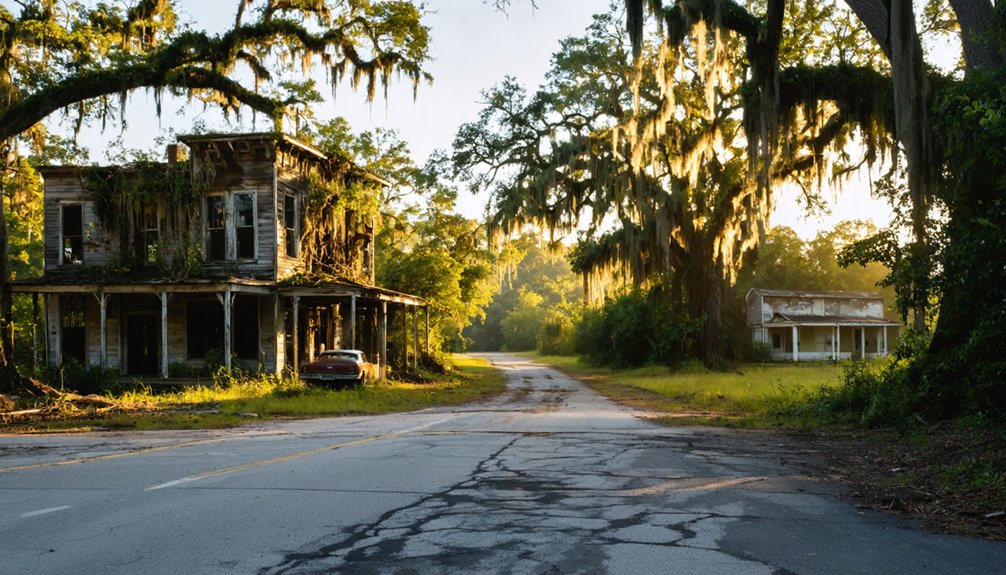
Tucked into Caddo Parish in northwestern Louisiana, Albany sits off the kind of roads that reward drivers who don’t mind trading speed for scenery. You’ll want to plan your route with flexibility, since the area’s back roads offer unexpected detours through flatlands where local legends still circulate among longtime residents. Pack a state map alongside your GPS, because cell service can thin out fast.
If historical architecture interests you, keep your eyes open as you approach — remnants and regional structures along the corridor hint at the settlement patterns that once shaped this corner of Louisiana. Morning departures work best, giving you daylight to explore and time to absorb the landscape without rushing.
The drive itself becomes part of the story you’ll carry home.
What to Pack for a Southern Ghost Town Road Trip
When you’re heading out to explore Albany and other Southern ghost towns, packing the right gear makes all the difference between a frustrating trip and a memorable one.
You’ll want sturdy, breathable clothing that handles both Louisiana’s heat and the uneven terrain you’re likely to encounter at overgrown or undeveloped sites.
Toss in essentials like insect repellent, a first aid kit, a charged power bank, and a printed or downloaded map in case cell service drops in rural areas.
Essential Gear To Bring
Packing smart makes the difference between a frustrating outing and a genuinely rewarding ghost town experience. Albany’s terrain demands preparation, so load up intentionally before you hit the road.
- Camera and notebook: Document historical artifacts, grave markers, and landscape details you’ll want to reference later.
- Printed local legends and maps: Cell service gets unreliable in rural Louisiana, so carry offline resources covering the area’s history.
- Sturdy boots, insect repellent, and water: Southern heat and mosquitoes are relentless, especially near low-lying terrain.
You’re not visiting a curated museum — you’re reading a landscape. Dress for overgrown paths, pack sunscreen, and bring a portable charger. Traveling light but smart keeps your focus where it belongs: on the stories the land still holds.
Clothing For Outdoor Exploration
Gear fills your bag, but what’s on your body matters just as much. Louisiana heat is relentless, so wear lightweight, breathable layers you can strip or add as temperatures shift unexpectedly.
Long sleeves and pants protect against thick brush, insects, and sun exposure when you’re pushing through overgrown cemetery paths or abandoned lots. Choose moisture-wicking fabrics that handle sweat without stiffening throughout the day.
Sturdy, closed-toe boots give your ankles real support on uneven ground.
Weather preparedness means packing a compact rain shell since Southern storms appear without warning. Clothing maintenance keeps your gear functional, so bring a small stain stick and a backup shirt.
A wide-brimmed hat and UV-protective sunglasses complete your kit, letting you explore freely and comfortably under an unforgiving Louisiana sky.
How to Read a Ghost Town Landscape Like a Local
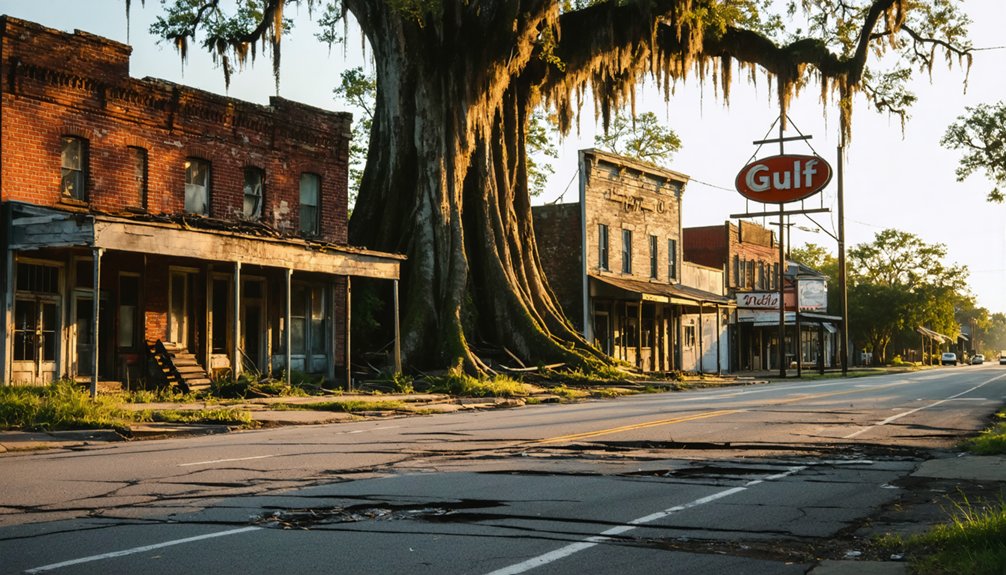
Once you’ve pulled off the road and stepped into the quiet of a ghost town like Albany, the real skill is knowing what to look for. Landscape clues tell stories that no sign can fully capture. Train your eye and you’ll start reading history like local storytelling passed down through generations.
The real skill isn’t finding the ghost town — it’s knowing what to look for once you’re there.
Look beyond the obvious and notice:
- Sunken ground or stone foundations — they mark where buildings once stood
- Clusters of old trees or overgrown shrubs — settlers planted these near homes and gathering places
- Cemetery placement — communities built burial grounds on high ground, away from flood zones
These details reveal settlement patterns, resource use, and why people eventually left. You don’t need a guidebook — the land itself tells the truth.
Frequently Asked Questions
Is Albany, Louisiana Ghost Town Located on Private Property?
The knowledge doesn’t confirm if Albany’s abandoned buildings rest on private land, but you’ll want to tread carefully. Focus your visit on accessible historical landmarks and roadside markers to honor this quietly forgotten community.
Are There Guided Ghost Town Tours Available Near Albany, Louisiana?
You won’t find formal guided tours, but you can explore historical landmarks and chase haunted legends independently. Grab local histories, follow roadside markers, and let Louisiana’s ghost town spirit fuel your own unforgettable adventure.
What Is the Best Time of Year to Visit Albany?
Spring’s sweet spot suits your seasonal weather exploration best! You’ll find mild temperatures that make wandering historical significance-rich sites comfortable. Avoid summer’s sweltering heat and embrace cooler fall months for an equally freeing, fascinating ghost town adventure.
Are Pets Allowed When Exploring Ghost Town Sites in Louisiana?
You’ll generally find pets welcome at outdoor ghost town sites, but you’ve got to prioritize pet safety and honor leash requirements. Keep your furry companion close while exploring Louisiana’s hauntingly beautiful, abandoned landscapes.
Can Children Safely Participate in a Louisiana Ghost Town Road Trip?
Ready for a family adventure? Yes, children can safely join your Louisiana ghost town road trip! Take safety precautions, respect historical preservation sites, supervise kids near ruins, and you’ll create unforgettable memories exploring Albany’s fascinating past together.
References
- https://kids.kiddle.co/Albany
- https://en.wikipedia.org/wiki/List_of_ghost_towns_in_Louisiana
- https://albanyherald.com/news/local/little-known-ghost-town-exists-right-up-the-road-from-albany/
- https://albanyherald.com/news/local/former-lee-county-seat-now-ghost-town/
- https://973thedawg.com/17-ghost-towns-in-louisiana/