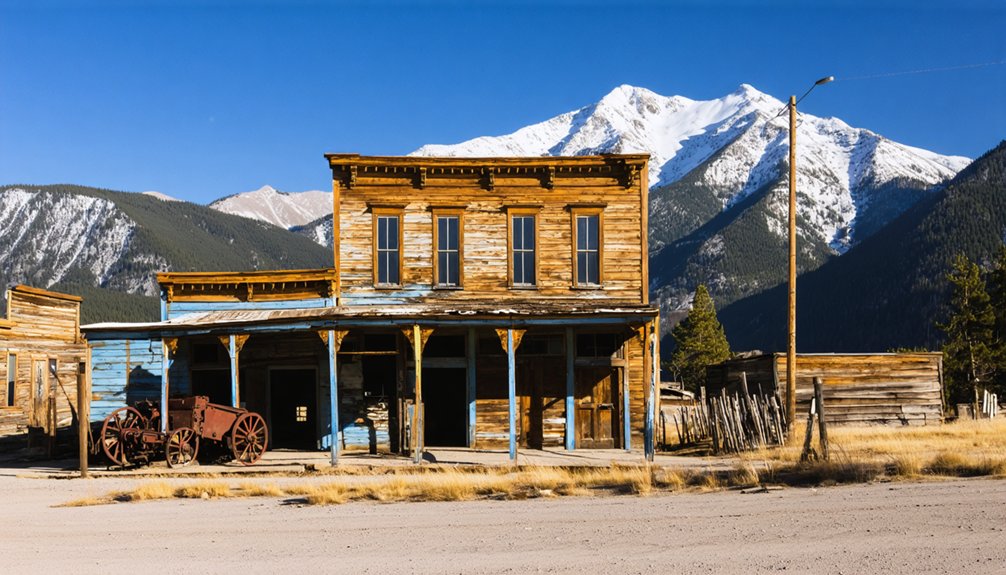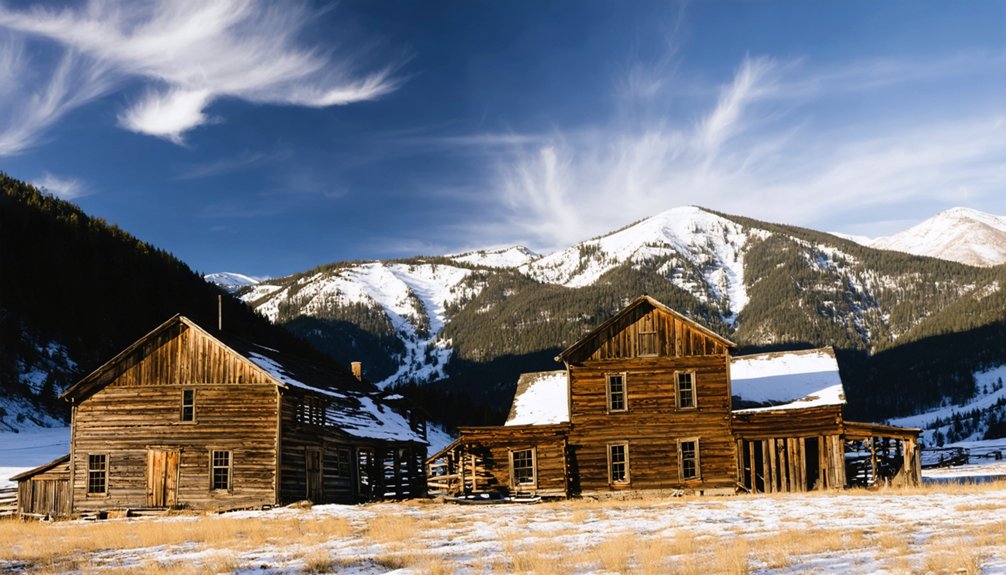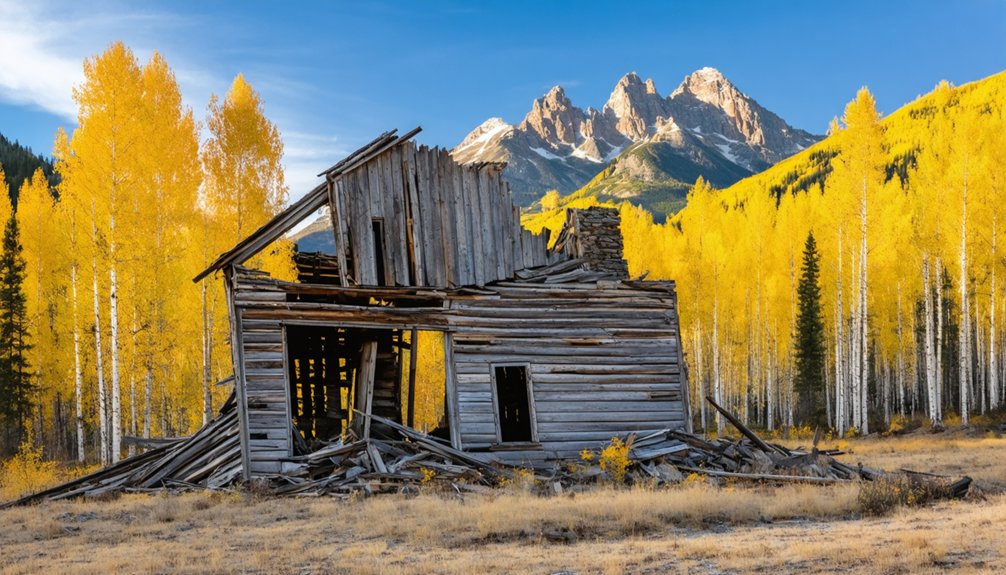
Plan your Ashcroft road trip as a half-day drive from Aspen, heading eleven miles south on Castle Creek Road into Colorado’s preserved silver-mining past. You’ll explore nine to thirteen weathered frontier structures frozen since the 1880s boom, when this valley held 2,000 residents and twenty saloons. Arrive early to beat afternoon thunderstorms and enjoy quieter surroundings. Allow two to three hours on-site. Everything you need to make the most of this ghost town—and the full valley beyond—is ahead.
Key Takeaways
- Ashcroft sits 11 miles south of Aspen via Castle Creek Road, making it an easy half-day road trip from town.
- Visit in summer or early fall for reliable road access and stable mountain weather conditions.
- Arrive in the morning to avoid afternoon thunderstorms, enjoy softer light, and explore with fewer crowds.
- Nine to thirteen preserved structures remain, with interpretive signage guiding self-guided exploration throughout the site.
- Extend the trip into a full day by adding a midday valley hike before returning to Aspen for dinner.
What Is Ashcroft and Why Visit This Ghost Town?
Tucked into Castle Creek Valley about 11 miles south of Aspen, Ashcroft is one of Colorado’s most vivid preserved ghost towns — a silver-mining boom camp that roared to life in 1880 and collapsed almost as fast as it rose.
At its peak, it held roughly 2,000 residents, 20 saloons, 6 hotels, and 2 newspapers. The silver ran shallow, though, and by the mid-1880s, the crowds had moved on to Aspen.
At its peak: 2,000 residents, 20 saloons, 6 hotels. Then the silver ran shallow, and Ashcroft emptied.
You visit Ashcroft because it gives you direct, unfiltered access to that arc of rise and ruin. Ghost town preservation efforts by the Aspen Historical Society keep the remaining structures standing and readable.
The mining history here isn’t buried — it’s walkable, visible, and framed by the Elk Mountains at every turn.
The Drive From Aspen to Ashcroft
The drive from Aspen to Ashcroft covers only 11 miles, but you’re trading a ski resort town for a silver ghost town the entire way. Head south on Castle Creek Road and watch the valley open into alpine meadows framed by the Elk Mountains.
The road follows Castle Creek through terrain that once funneled prospectors toward silver strikes discovered in spring 1880.
Wildlife encounters are common here — keep your eyes on the meadow edges for deer and elk, especially in early morning.
For photography tips, the soft light at golden hour transforms the surrounding peaks and weathered structures into something cinematic.
Pull over freely, breathe the elevation, and let the landscape shift your mindset before you ever reach Ashcroft’s surviving buildings.
What Survives at Ashcroft: Buildings, Mines, and Historic Structures
When you arrive at Ashcroft, you’ll find more than a scatter of collapsed walls — the Aspen Historical Society maintains nine to thirteen surviving structures, roughly half of which are original to the boom years. The site was placed on the National Register of Historic Places in 1975, preserving both historic architecture and mining relics for independent explorers.
Three highlights worth your attention:
Three highlights define Ashcroft: a storied mine, weathered frontier buildings, and interpreted signage guiding independent explorers.
- The Tam O’Shanter Mine — once celebrated for extraordinarily rich ore grades during Ashcroft’s silver peak
- Original frontier buildings — weathered storefronts and cabins reflecting 1880s boom-camp construction
- Interpreted signage — placed throughout the site, giving you historical context without a guided tour
You’re free to roam the open meadow setting at your own pace, connecting directly with Colorado’s raw silver-mining past.
When to Visit Ashcroft Ghost Town and How Long to Allow
Knowing what survives at Ashcroft is only half the planning — you’ll also want to time your visit right and set aside enough hours to absorb what remains. Summer and early fall offer the most reliable access, with stable seasonal weather and clear views across Castle Creek Valley’s alpine meadows.
Spring snowmelt can make the road unpredictable, and winter closes the site entirely. Arrive in the morning to avoid afternoon thunderstorms common at elevation.
You’ll spot local wildlife along the drive, so keep your eyes open.
Plan on two to three hours minimum — enough time to walk the surviving structures, read the interpretive signage, and take in the surrounding Elk Mountains. A half-day from Aspen covers the round trip comfortably.
How to Build a Full Day Around Ashcroft and Castle Creek Valley
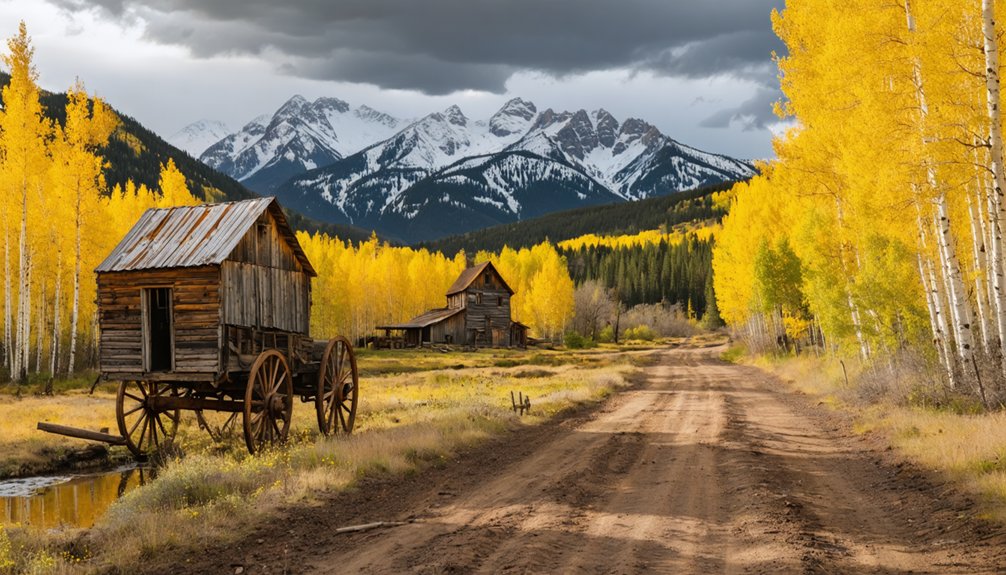
Ashcroft rewards more than a quick stop, and Castle Creek Valley gives you enough scenery and history to fill an entire day without backtracking to Aspen between stops. Structure your day to move efficiently through the valley’s best offerings:
Ashcroft deserves more than a passing glance — Castle Creek Valley holds a full day’s worth of scenery and history.
- Morning: Walk the preserved townsite early, when light hits the Elk Mountains and crowds stay thin.
- Midday: Hit a mountain hiking trail branching from the upper valley, where you’ll trace routes miners once used to reach higher claims.
- Afternoon: Return toward Aspen for local dining at one of the town’s independent restaurants before the dinner rush.
This sequence keeps you moving forward rather than doubling back, letting the valley’s alpine meadows and silver-camp history carry the day naturally.
Frequently Asked Questions
Who Were the Original Prospectors That Discovered Silver Near Ashcroft?
Two prospector legends kickstarted Ashcroft’s silver rush stories — Charles B. Culver and W. F. Coxhead discovered silver in spring 1880, sparking a boom that’d attract 2,000 freedom-seeking settlers to Castle Creek Valley.
What Was Ashcroft Originally Called Before It Was Renamed?
You’ll love this ghost town history detail — Ashcroft was originally called Castle Forks City. That early name reflects the mining town evolution, capturing the raw ambition settlers poured into Colorado’s silver-rich Castle Creek Valley.
Which Mine at Ashcroft Became Famous for Extremely Rich Ore Grades?
The Tam O’Shanter Mine made Ashcroft legendary — one of 20 saloons once crowded this boomtown. You’ll discover how historic mining techniques and ghost town preservation keep its extraordinarily rich ore legacy vibrantly alive today.
Who Was the Last Known Resident to Live in Ashcroft?
Jack Leahy was Ashcroft’s last known resident, dying in 1939. He’d walked those abandoned buildings alone, outlasting the silver rush’s haunted legends, leaving you to wonder what drove one soul to stay until the very end.
Was Ashcroft Built on Land Previously Used by Indigenous Peoples?
Can you imagine silver prospectors staking claims on ancestral Ute hunting grounds? Yes, they did. Ashcroft rose on land tied to Indigenous land rights and cultural heritage preservation, displacing Ute peoples who’d long called Castle Creek Valley home.
References
- https://aspenhistory.org/ashcroft-ghost-town/
- https://en.wikipedia.org/wiki/Ashcroft
- https://sheenashahangian.com/ashcroft-ghost-town-colorado/
- https://historynet.com/ghost-town-ashcroft-colorado/
- https://coloradoencyclopedia.org/article/ashcroft
- https://thenextsummit.org/ashcroft-ghost-town-the-complete-visitor-guide-2025/
- https://www.youtube.com/watch?v=UCIfOTVgxXU
- https://www.businessinsider.com/ashcroft-colorado-ghost-town-photos-2022-1
- https://www.atlasobscura.com/places/ashcroft-townsite
- https://janmackellcollins.wordpress.com/2019/06/03/ashcroft-a-premiere-colorado-ghost-town/