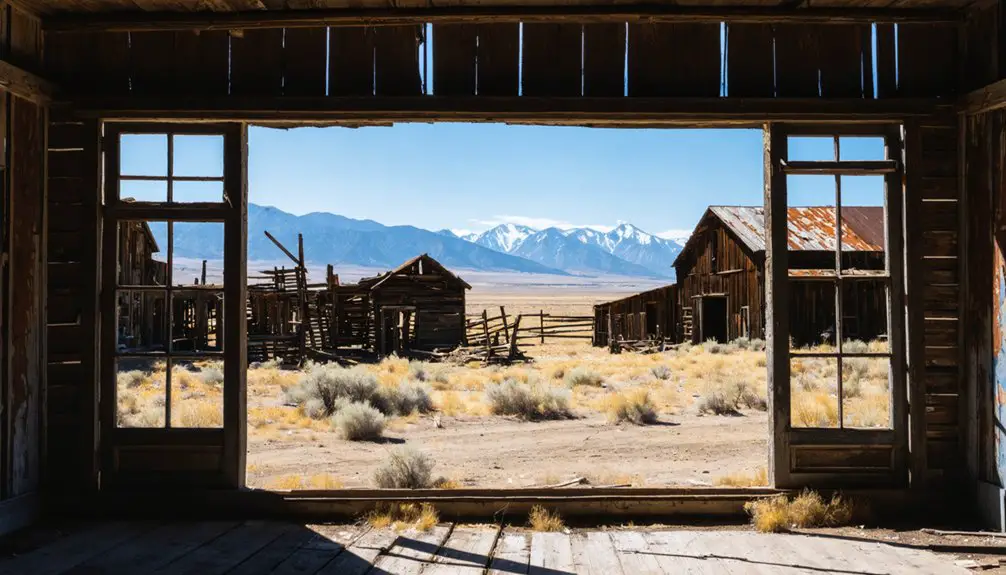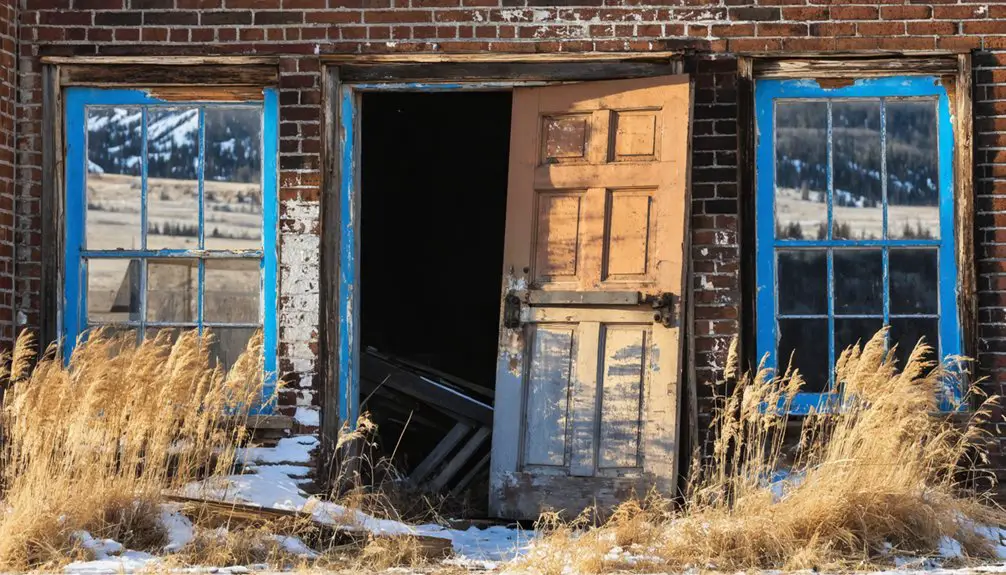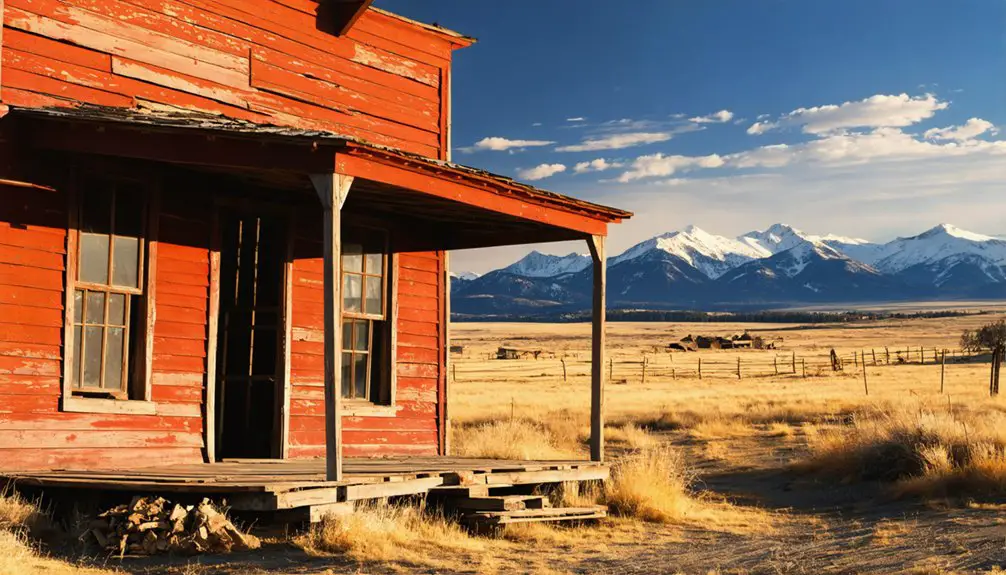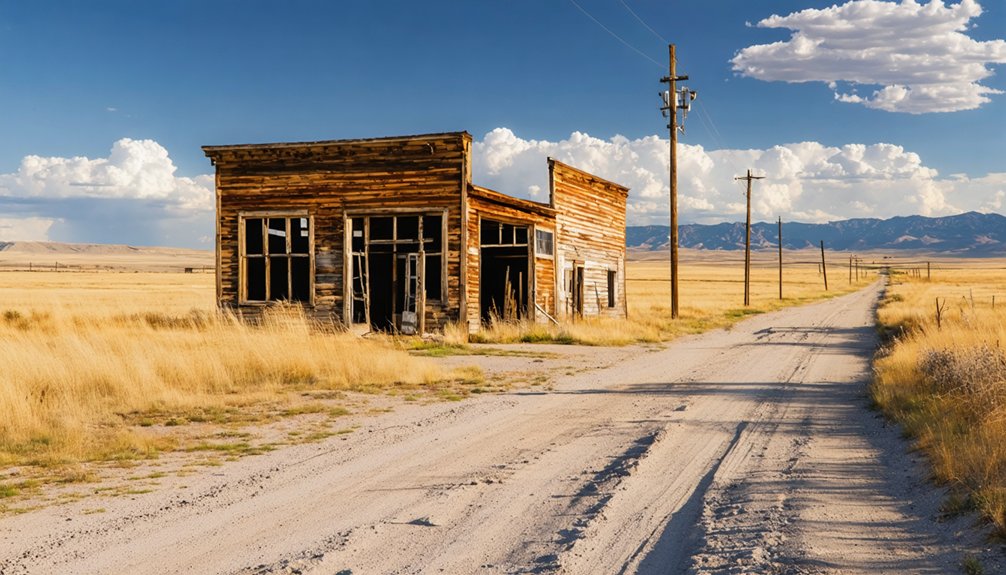
Planning a ghost town road trip to Storrs, Montana means heading southwest of Bozeman along I-90, past the Bear Canyon exit, until a crumbling stone wall rises beside the road. Once home to nearly 5,000 residents, Storrs collapsed when its mines failed and its smelter burned. Today, only foundations and silence remain. Visit in September for the best conditions, stay road-side to respect private land, and there’s much more to uncover about this forgotten Montana town.
Key Takeaways
- Storrs is located southwest of Bozeman along I-90, past the Bear Canyon exit, making it an easy roadside stop.
- The main attraction is a large stone wall and scattered foundations; most remains sit on private land, so stay roadside.
- Visit during summer or fall, ideally a clear September morning, for optimal road conditions and photography lighting.
- Pack layers, wide and telephoto lenses, water, snacks, and a paper map since no amenities or signage exist onsite.
- Combine Storrs with nearby ghost towns like Bannack, Garnet, and Elkhorn for a comprehensive Montana ghost town road trip.
What Is Storrs, Montana and Why Visit?
Once a bustling company town of nearly 5,000 residents, Storrs, Montana now stands as a quiet ghost along I-90, just southwest of Bozeman. Its mine silent, its smelter long burned away, and its streets reduced to stone foundations and a solitary wall beside the road.
Where hotels and stores once thrived, only traces of town architecture remain, whispering of an industrial era built on ore and ambition. You won’t find manicured trails or visitor centers here — just open road, honest history, and historical artifacts embedded in the landscape.
Storrs rewards the curious traveler who values raw, unpolished places over tourist-packaged experiences. If you’re chasing Montana’s boom-and-bust past on your own terms, this roadside ghost town deserves a spot on your map.
How Storrs Went From 5,000 Residents to a Ghost Town
At its peak, Storrs hummed with the ambitions of nearly 5,000 residents — workers, merchants, and families who’d staked their livelihoods on the Storrs mine and smelter. The town boasted a hotel, busy stores, and the kind of industrial momentum that made permanence feel guaranteed.
At its peak, nearly 5,000 souls called Storrs home — certain the ore would never run out.
Then the ore gave out.
When the mine failed to produce high-grade ore, the economic foundation crumbled fast. The mine closed, and the smelter later burned down under circumstances that still fuel local legends today.
What took years to build vanished in a fraction of that time.
Historical preservation wasn’t a priority when survival was. You’ll find no restored buildings waiting for you — just stone walls and foundations quietly holding the memory of everything Storrs once dared to be.
What’s Left to See at Storrs Today?
When you pull off near Storrs today, you’ll find a large stone wall standing beside the road and scattered foundations — the last quiet witnesses to a town that once held 5,000 people.
There’s no walking tour, no preserved main street, and no historic buildings left standing where the mine and smelter once roared.
You’re really making a drive-by stop here, pausing long enough to photograph what remains and let the silence fill in the rest of the story.
Stone Wall And Foundations
Though little remains of the once-thriving company town that sheltered nearly 5,000 workers, what you’ll find at Storrs still carries a quiet, weathered presence. A large stone wall stands beside the road, stubborn and enduring, whispering of the industry that once roared here.
Scattered stone foundations mark where the hotel and stores once stood, serving a community built entirely around ore and ambition.
These historical artifacts aren’t behind museum glass — they’re open to the sky, shaped by decades of Montana weather. No formal preservation efforts protect the site, so what you’re seeing is raw and honest.
Pull over, take it in, and let the silence do the talking. The land remembers even when the buildings don’t.
Drive-By Visit Only
Storrs doesn’t ask much of your time — a slow roll past the stone wall, a glance at the foundations, and you’ve seen what the town left behind. Pull over, cut the engine, and let the silence settle.
This isn’t a walkable historic district with interpretive signs and manicured paths. It’s raw, unpolished historical preservation at its most honest.
Bring your camera and work the light. Morning or late afternoon golden hours reward strong photography techniques — the stone wall’s texture pops under angled sunlight, and shadows carve depth into the foundations.
Frame the remnants against the Montana hills, and suddenly 5,000 vanished lives feel tangible. Respect the private land boundaries, shoot from the road, and carry that quiet history with you down the highway.
Stay on the Right Side of the Fence at Storrs
Most of what remains at Storrs sits on private land, so you’ll want to keep your feet close to the road and your eyes doing the heavy lifting.
That stone wall rising beside the pavement is yours to photograph freely, but the foundations and structures beyond it aren’t yours to wander.
Respect the fence lines here — the land’s owners are your only barrier between a great roadside stop and a trespassing problem.
Respect Private Land Boundaries
What’s left of Storrs sits behind fences and property lines that weren’t there when 5,000 workers crowded around the mine and smelter. Today, most of the stone foundations and surviving structures occupy private land, and you’ll need to respect those boundaries to protect both historical preservation and your own freedom to roam. Don’t cross fences or wander past posted signs hoping for a closer look.
The large stone wall visible from the road gives you a genuine connection to the town’s industrial past without requiring land access beyond the roadside. Pull over, study the stonework, photograph what you can see, and let your imagination fill in the hotel, the stores, and the hum of a smelter that once defined this forgotten corner of Montana.
Stay Near the Road
When you pull off near Storrs, the road itself becomes your viewing platform, and that’s exactly enough. The large stone wall standing beside the pavement tells its story from right where you’re standing. You don’t need to cross a fence line to feel the weight of this place’s mining history.
Stay near the road, keep your eyes sharp, and let the stone foundations speak quietly from a distance. Historic preservation here isn’t a visitor center or a guided trail — it’s the unspoken agreement between travelers and private landowners that keeps these remnants standing at all.
You came for the freedom of the open road and the ghost of a vanished world. Respect that boundary, and the road will give you everything Storrs has left to offer.
No Trespassing Allowed
Staying near the road isn’t just good instinct — it’s the rule at Storrs. Most of the land surrounding those stone walls and foundations is privately owned, and that boundary warrants your respect. You’re free to pull over, take in the quiet remains, and feel the weight of what once housed 5,000 souls — but the fence marks where your exploration ends.
Historical myths tend to romanticize trespassing as rugged independence, yet crossing that line threatens the preservation challenges already facing fragile sites like this. Private owners hold the keys to what little survives.
Your restraint keeps those relationships intact and ensures future visitors find something worth stopping for. True freedom on the road means knowing exactly which lines you never cross.
How to Find Storrs on Your Montana Road Trip
Finding Storrs is straightforward once you’re on I-90 heading eastbound out of Bozeman — look for the first exit past the Bear Canyon exit, and you’re practically there. The road pulls you through open Montana landscape before the remnants of a once-thriving industrial town quietly appear roadside.
You’ll spot the large stone wall first, standing as one of the few historical artifacts that survived the mine’s collapse and the smelter’s mysterious fire. Stone foundations scattered nearby hint at the 5,000 lives once lived here.
Preservation efforts haven’t transformed Storrs into a formal site, so there’s no parking lot or interpretive signage waiting for you — just open road, weathered stone, and Montana sky. Keep your camera ready and respect the private land surrounding the remains.
When Is the Best Time to Visit Storrs?
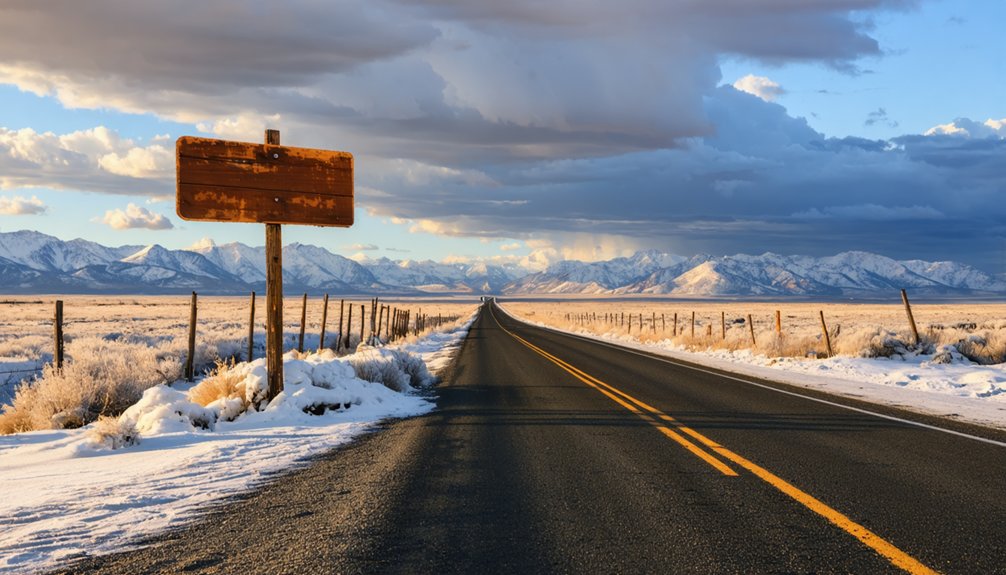
Timing your visit to Storrs makes a genuine difference in what you’ll experience. Summer and fall offer the clearest road conditions, the sharpest light for photography, and the easiest 2WD access along the route past Bear Canyon.
You’ll read the stone wall and foundations more clearly when snow isn’t obscuring what little historical preservation remains on site. Winter technically remains possible, but you’ll need 4WD and patience.
Spring mud can make the road unpredictable. Don’t expect visitor amenities — there are none.
Storrs rewards travelers who arrive self-sufficient, curious, and unhurried. A dry September morning, windows down, the Gallatin hills quiet around you — that’s the version of this stop worth planning for.
Go when the road is open and the light is long.
Gear and Supplies for Visiting a Montana Ghost Town
Packing well matters more than packing much when you’re heading to a site like Storrs. Bring your photography gear — a wide lens captures that weathered stone wall beautifully against Montana’s open sky. A telephoto helps when structures sit beyond private land boundaries.
Layer your clothing; mountain weather shifts fast even in summer. Your camping essentials — water, snacks, a basic first-aid kit, sturdy boots — keep you self-sufficient on roads that don’t always reward the unprepared. A paper map backs up your phone when signal drops in canyon country.
Bring a notebook too. Standing beside foundations where 5,000 people once lived, worked, and disappeared deserves more than a quick scroll. Let the silence settle. That’s the real reason you came.
How to Combine Storrs With Bannack, Garnet, and Comet
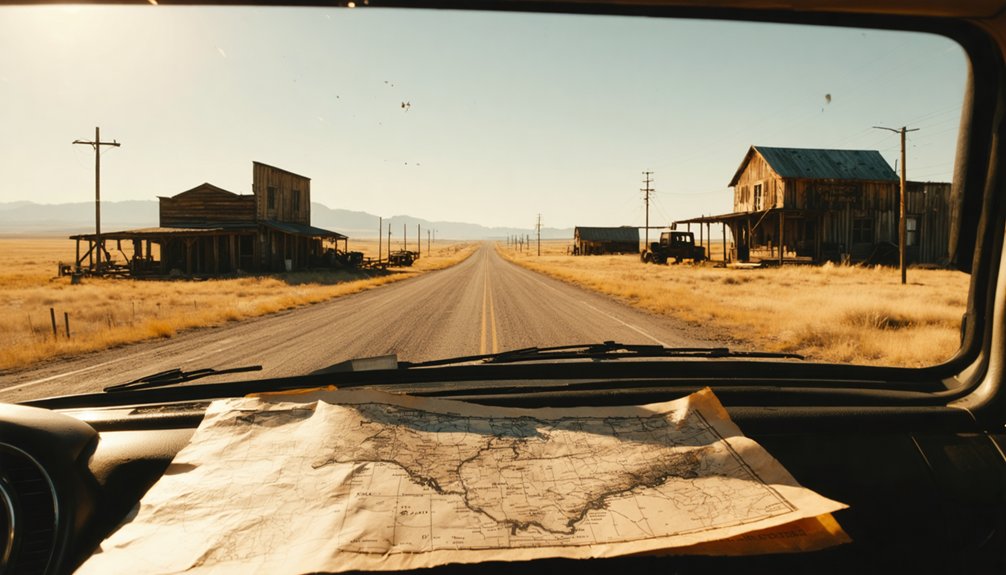
Montana rewards the ghost-town traveler who thinks in loops rather than straight lines. Storrs sits near Bozeman, making it a natural anchor for a wider swing through Montana’s abandoned past. Chain it with these stops to build an itinerary worth remembering:
- Bannack — Montana’s first territorial capital, rich in preservation efforts and walkable historical artifacts
- Garnet — a high-elevation mining ruin with standing structures and raw atmosphere
- Comet — a compact, quietly haunting site tucked into the Boulder River valley
- Storrs — your roadside industrial opener before heading deeper into the state
You’ll move through boom-and-bust landscapes that shaped Montana’s identity. Each town layers something different — frontier timber, collapsed headframes, crumbling stone — onto your understanding of what once hummed with life here.
Other Montana Ghost Towns Near Storrs Worth the Detour
Beyond the four anchors of that wider loop, the roads around Bozeman will pull you toward smaller, quieter sites that reward an extra hour or two on the odometer.
Pony, tucked in the Tobacco Root Mountains, still holds weathered storefronts and scattered historical artifacts that whisper of silver-rush ambition.
Elkhorn offers two preserved Gothic Revival buildings standing against serious preservation challenges, where weather and time press hard against what little remains.
Maiden, farther north, demands more miles but returns a lonelier, rawer silence that feels genuinely earned.
Each site carries its own particular sadness and beauty.
You don’t need a rigid schedule—just a full tank, good light, and the willingness to follow a gravel road toward whatever the past left behind.
Frequently Asked Questions
Is There an Entrance Fee to Visit the Storrs Ghost Town Site?
No entrance fee chains your journey here. Storrs offers no visitor amenities or historical preservation facilities — you’re free to pause roadside, absorbing stone walls and foundations, letting Montana’s boom-and-bust ghost whisper its nostalgic, vanished story directly to you.
Are Pets Allowed When Visiting the Storrs Ghost Town Area?
No official pet policies exist for Storrs since it’s a roadside stop with no visitor amenities. You’re free to bring your dog, but respect private land boundaries as you explore these haunting stone remnants.
Can You Camp Overnight Near the Storrs Ghost Town Location?
No official camping exists, but nearby options await you. Respect historical preservation as you chase photography opportunities at dawn. You’ll find freedom exploring Storrs’ haunting stone walls before retreating to Bozeman’s campgrounds for the night.
Is the Storrs Site Accessible for Visitors With Mobility Limitations?
You’ll find Storrs welcoming your spirit of exploration, even with mobility limitations. The roadside stone wall offers easy viewing without mobility assistance or accessibility improvements, letting you soak in that haunting, freedom-calling history from your vehicle.
Are Guided Tours of the Storrs Ghost Town Currently Available?
Like a road without a map, you’re on your own here—no guided tours exist at Storrs. You’ll chase historical artifacts and photography opportunities freely, writing your own nostalgic story among the stone walls.
References
- https://visitmt.com/things-to-do/ghost-towns
- https://www.greatfallstribune.com/story/life/my-montana/2014/04/13/mining-history-found-in-comet/7617587/
- https://www.garnetghosttown.org/history.php
- https://southwestmt.com/blog/ghost-towns/
- https://www.ghosttowns.com/states/mt/storrs.html
- https://en.wikipedia.org/wiki/List_of_ghost_towns_in_Montana
- https://arc.lib.montana.edu/msu-student-papers/item/326
- https://montanastateparksfoundation.org/parks/granite-ghost-town-state-park/
- https://en.wikipedia.org/wiki/Spring_Canyon