Planning a ghost town road trip to Canfield, California means chasing a settlement that quietly vanished after Charles W. Canfield founded it in 1874 near Old River in Kern County. There are no remaining landmarks, no welcome signs—just dry terrain and layered history tied to Gold Rush ambitions and forgotten farming dreams. You’ll need historical maps, a 4×4-ready vehicle, and extra supplies before heading out. The full story of what shaped Canfield and how to find it runs much deeper.
Key Takeaways
- Canfield, established in 1874 near Old River in Kern County, is a ghost town with no remaining landmarks, requiring historical maps to locate.
- Visit during spring or fall (March–May, September–November) to avoid summer temperatures exceeding 100°F and impassable winter roads.
- Pack a 4×4-ready spare tire, recovery kit, extra water, food, camera, notebook, and GPS with offline maps for the trip.
- Canfield often sits on privately owned agricultural land, so obtain written permission and respect posted “No Trespassing” signs to avoid legal issues.
- Extend your road trip by visiting nearby ghost towns Vanderbilt in San Bernardino County and Leadfield in Inyo County.
What Was Canfield, California?
Though it never grew into the bustling community its founder envisioned, Canfield, California, tells a story that’s quintessentially Californian. Charles W. Canfield established it in 1874 in Kern County, positioning it near Old River with hopes of building a thriving farming settlement.
Canfield himself arrived during the 1849 Gold Rush, carrying that same restless pioneer spirit that drew thousands westward. He platted this settlement as part of a late 1800s wave of hopeful new communities, but it never took hold.
No mining boom, no industrial surge — just a quiet fading into history. Today, you won’t find historic landmarks or local legends marking the spot. Canfield exists only in records, a ghost town that dissolved gradually, leaving Kern County’s landscape largely unchanged by its brief presence.
What Makes Kern County a Ghost Town Hot Spot
Canfield wasn’t alone in its quiet disappearance — Kern County’s history is littered with settlements that bloomed briefly and vanished. The region’s historical significance runs deep, shaped by Gold Rush ambitions, agricultural dreams, and the relentless push westward. When economic tides shifted, towns simply emptied, leaving behind whispers of what once was.
Kern County’s dry terrain preserves those whispers remarkably well. You’ll find traces of forgotten communities scattered across its landscape, each carrying stories of resilience and risk. Preservation efforts remain limited here, which means you’re often exploring raw, unfiltered history — no velvet ropes, no visitor centers. Just open land and your curiosity.
That freedom is exactly what draws road trippers to this corner of California. You write your own tour through its abandoned past.
Pack This Before You Drive to Canfield
Before you head out to this vanished corner of Kern County, you’ll want to pack smart since no modern markers or infrastructure remain at Canfield’s site.
Bring a paper copy of historical Kern County maps alongside your GPS, because digital signals can fade as quickly as the settlement itself did back in the 1870s.
You’ll also need sturdy boots, water, and a 4×4-ready vehicle since many of California’s forgotten towns sit at the end of rough, unpaved roads that demand more than a casual Sunday drive.
Essential Gear To Pack
Packing the right gear can make or break your drive out to Canfield, where Kern County‘s dusty backroads and scarce modern infrastructure leave little room for unpreparedness. Local legends suggest the settlement faded quietly, leaving behind terrain that demands respect for historical preservation and personal safety.
Pack smart before you roll out:
- Detailed historical maps of Kern County to pinpoint Canfield’s unmarked location
- 4×4-ready spare tire and recovery kit for unpredictable off-road conditions
- Extra water and food since no services exist near the former settlement
- Camera and notebook to document what little remains
- Portable GPS device with downloaded offline maps for dead-zone navigation
Freedom means arriving prepared so the road stays yours to explore.
Navigation Tools Needed
Traveling to a ghost town that’s left no modern footprint means you’ll need more than a standard smartphone app to find Canfield’s forgotten coordinates in Kern County. Pull historical Kern County maps from state archives or university collections — they’ll reveal boundaries that digital tools simply don’t preserve.
A handheld GPS unit loaded with topographic data keeps you oriented when roads disappear into scrubland. Carry printed backup maps because cell signals vanish fast in this region.
Local legends passed down through Kern County communities sometimes pinpoint landmarks better than any database. Understanding Canfield’s historical significance also sharpens your instincts — knowing Charles Canfield settled near Old River guides your search westward.
Combine these tools, trust your preparation, and you’ll navigate toward a place most people have completely forgotten.
Best Time of Year to Visit Canfield
Spring and fall offer you the most comfortable conditions for exploring Kern County’s dusty back roads, with mild temperatures that make outdoor exploration far more enjoyable than the region’s brutal summer heat.
You’ll want to avoid July and August, when inland California temperatures regularly climb past 100°F, turning any off-road adventure into a grueling endurance test.
Winter visits are possible, but unpredictable rain can make rural dirt roads impassable, so plan your trip between March and May or September and November for the best experience.
Ideal Visiting Seasons
When you’re planning a visit to the ghost of Canfield in Kern County, timing matters more than you might expect. The region’s climate shapes your experience of its historical significance and whispers of local legends tied to Charles Canfield’s 1874 dream.
- Spring (March–May): Mild temperatures make exploring dusty back roads comfortable.
- Fall (September–November): Cooler air arrives, perfect for long drives through Kern County.
- Summer: Extreme heat can exceed 100°F — pack water and plan early morning starts.
- Winter: Occasional rain softens roads but offers dramatic, moody landscapes.
- Avoid holiday weekends: Quieter visits let you absorb the solitude these forgotten places deserve.
Go when the land breathes easier — you’ll feel the freedom that settlers once chased here.
Weather Considerations For Travel
Kern County’s climate will shape every mile of your Canfield road trip, so you’ll want to plan around its seasonal extremes. Summers bake the valley floor past 100°F, turning dirt roads into punishing stretches that drain radiators and patience alike. Weather safety demands you skip July and August entirely unless you’re chasing hardship rather than history.
Spring and fall hand you the sweet window — mild temperatures, manageable winds, and golden light that makes forgotten land feel alive again. Seasonal planning around March through May or September through November keeps your vehicle reliable and your spirit sharp.
Winter brings cold nights and occasional fog through the valley, but it’s rarely dangerous. Layer up, start early, and let Kern County’s quieter months carry you back to 1874.
How to Find Canfield Without Modern Markers
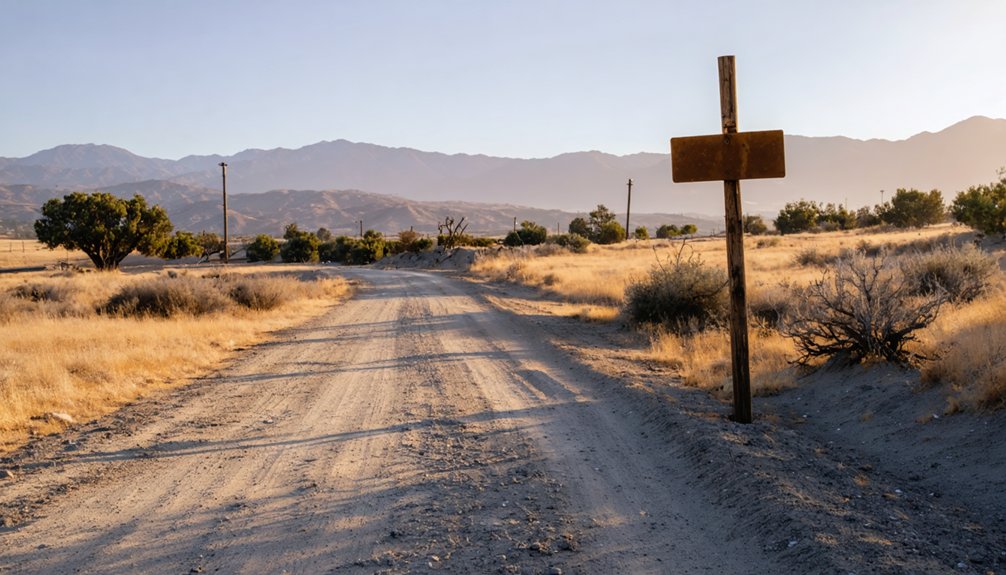
Finding Canfield today means stepping back into 19th-century California without a GPS pin to guide you. No signs mark this forgotten corner of Kern County, so you’ll need historical maps and sharp instincts to locate where Charles Canfield’s dream once stood.
Use these strategies to track it down:
- Pull historical maps from Kern County archives or the California State Library
- Cross-reference old survey records with modern satellite imagery
- Search for GPS coordinates through historical geography databases like GNIS
- Ask local historians familiar with Old River’s surrounding landmarks
- Study 1870s–1880s settlement patterns to narrow your search area
You’re fundamentally doing detective work across time. That freedom to explore unmarked, uncrowded history is exactly what makes Canfield worth finding.
What Actually Remains at the Canfield Site Today
Once you’ve tracked down Canfield’s approximate location, don’t expect crumbling facades or rusted relics to reward your effort. Unlike ghost towns that left behind saloons or mine shafts, Canfield surrendered quietly to time. No documented historical artifacts mark where Charles Canfield’s vision once stood, and no confirmed archaeological remains have been recorded in available historical sources.
What you’ll find instead is open Kern County land — the same soil that once promised agricultural prosperity to hopeful settlers in 1874. There’s something haunting about that emptiness. The absence itself tells the story of a settlement that never quite took root.
You’re standing where ambition met reality, and reality won. Bring a historical map, your imagination, and respect for a place that exists now only in memory.
Trespassing Laws and Physical Hazards at Kern County Ghost Towns
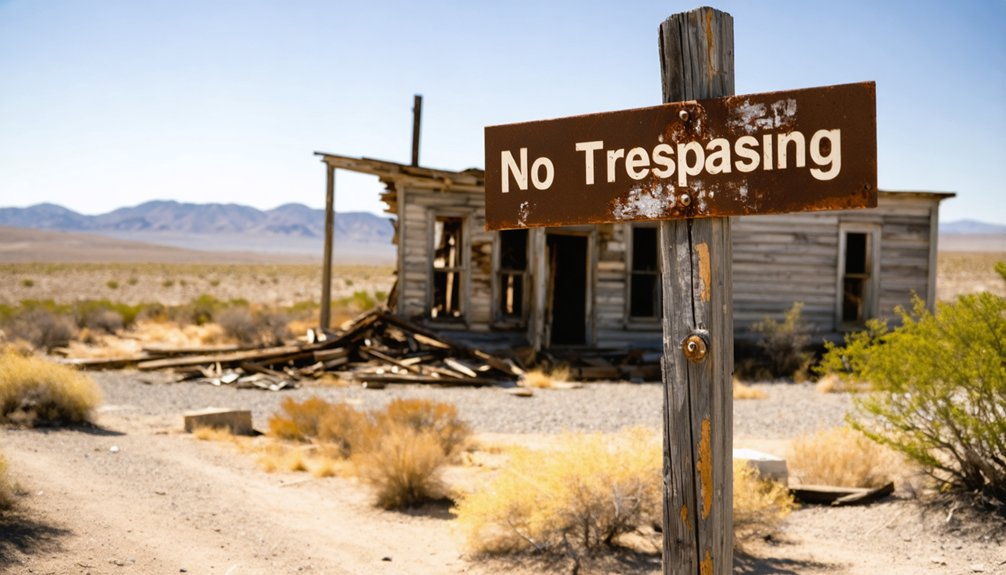
Before you set foot on any land near Canfield’s former site, you’ll want to understand that Kern County ghost towns often sit on privately owned agricultural parcels where trespassing laws apply as firmly as they do in any California city. Legal restrictions and safety concerns go hand in hand here.
- Unmarked property boundaries can shift without warning across rural farmland
- Collapsing foundations and buried debris create serious injury risks underfoot
- Posted “No Trespassing” signs carry real legal consequences under California Penal Code 602
- Abandoned wells and irrigation ditches hide beneath overgrown vegetation
- Heat exposure in Kern County’s valley terrain escalates danger during summer months
Always secure written landowner permission before exploring, and carry detailed historical maps to navigate responsibly through this vanished corner of California’s past.
Nearby Ghost Towns Worth Pairing With Canfield
With the legal and safety groundwork covered, you’re free to think bigger about your Kern County adventure—and California’s ghost town landscape rewards that ambition.
Pair Canfield with Vanderbilt in San Bernardino County, a mining settlement that rose and collapsed between 1891 and 1895, now tucked within Mojave National Preserve. Its historical significance lies in how quickly fortune-seekers built—and abandoned—entire communities.
Vanderbilt rose and collapsed within four years—proof that ambition alone couldn’t hold a community together.
Further north, Leadfield in Inyo County tells a similar story, accessible via the dramatic one-way Titus Canyon Road near Beatty, Nevada. Both sites face real preservation challenges, as desert winds, vandalism, and neglect slowly erase what little remains.
Connecting these stops creates a 770-mile journey through California’s restless past—one that reveals how ambition, isolation, and shifting economies shaped the West you’re now exploring.
Add Canfield to a Kern County Ghost Town Loop
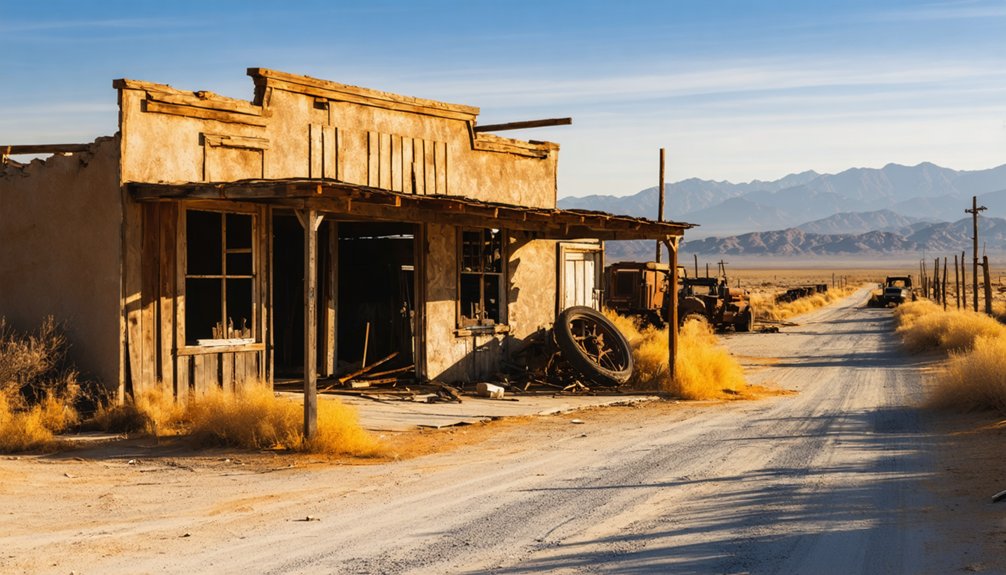
Canfield fits naturally into a broader Kern County loop that rewards curious travelers willing to dig into the region’s layered history. Its historical significance as an 1874 planned settlement and its quiet settlement decline make it a compelling anchor for a self-guided tour.
Build your loop around these stops:
- Canfield’s original site near Old River for historical context
- Local Kern County archives to uncover 19th-century settlement maps
- Nearby farming communities that echo Canfield’s rise-and-fade story
- Historic roadways connecting Gold Rush-era settlements across the county
- Regional landmarks tied to Charles W. Canfield’s 1849 California arrival
You’ll trace forgotten ambitions across open land, piecing together why some towns thrived while others like Canfield quietly disappeared into California’s expansive, untamed history.
Frequently Asked Questions
Was Canfield Ever Officially Incorporated as a California Municipality?
No, Canfield never achieved official incorporation. It faded before reaching municipal status, making it a ghost town tourism gem worth exploring. You’ll uncover its nostalgic spirit through historical preservation efforts and Kern County’s forgotten, freedom-evoking landscapes.
Are There Any Descendants of Charles W. Canfield Still Living Today?
Like roots stretching through time, Charles W. Canfield’s descendants may still walk among us today. You’d need genealogy research and historical family stories to uncover those living connections to Canfield’s pioneering legacy.
Did Canfield Have a Post Office During Its Years of Operation?
You won’t find clear records confirming Canfield had a post office. As you explore ghost town tourism and historical preservation, you’ll discover this forgotten settlement left behind little documentation of its brief, fading existence.
How Does Canfield Compare Historically to Other 1874 California Settlements?
Like many 1874 California settlements, Canfield didn’t flourish—it faded quietly. You’ll find it mirrors others that never sustained growth, making ghost town tourism and historical preservation essential for honoring these nostalgic, freedom-seeking pioneers’ forgotten dreams.
Were Any Photographs or Illustrations of Canfield Ever Recorded Historically?
You won’t find any historic photographs or illustrations of Canfield in available records. Ghost town preservation efforts haven’t uncovered visual documentation, leaving this faded settlement shrouded in mystery, igniting your imagination about what once freely thrived there.
References
- https://www.youtube.com/watch?v=ZtBc0thPiyE
- https://www.sfgate.com/travel/article/leadfield-ghost-town-death-valley-22086144.php
- https://www.destination4x4.com/vanderbilt-california-san-bernardino-county-ghost-town/
- https://en.wikipedia.org/wiki/Leadfield
- https://www.visitcalifornia.com/road-trips/ghost-towns/
- https://kids.kiddle.co/Canfield