Planning a ghost town road trip to Charleston, Oklahoma means venturing deep into Harper County’s remote Great Plains landscape. You’ll find weathered buildings, abandoned streets, and raw, unmanaged history from the late 1800s — all without a tourist in sight. Pack water, sturdy boots, and emergency supplies, and choose spring or fall for the best conditions. There’s far more to uncover about making this unforgettable road trip everything it should be.
Key Takeaways
- Charleston, Oklahoma, is a remote Harper County ghost town with weathered abandoned buildings that rose and fell within a single generation during the late 1800s.
- Reach Charleston via rural Harper County roads using a reliable vehicle with decent clearance, as GPS signals are inconsistent and paved roads give way to rough terrain.
- Visit in spring or fall for mild weather, or winter for dramatic photography skies; summer heat on the Oklahoma plains can be punishing.
- Pack water, sturdy boots, a first aid kit, a map, sunscreen, and insect repellent, and inform someone of your travel plans before departing.
- Extend your road trip by visiting nearby ghost towns Aetna, Elmwood, Fargo, and Laverne, each featuring abandoned landscapes and crumbling storefronts.
What’s Left Standing in Charleston, Oklahoma?
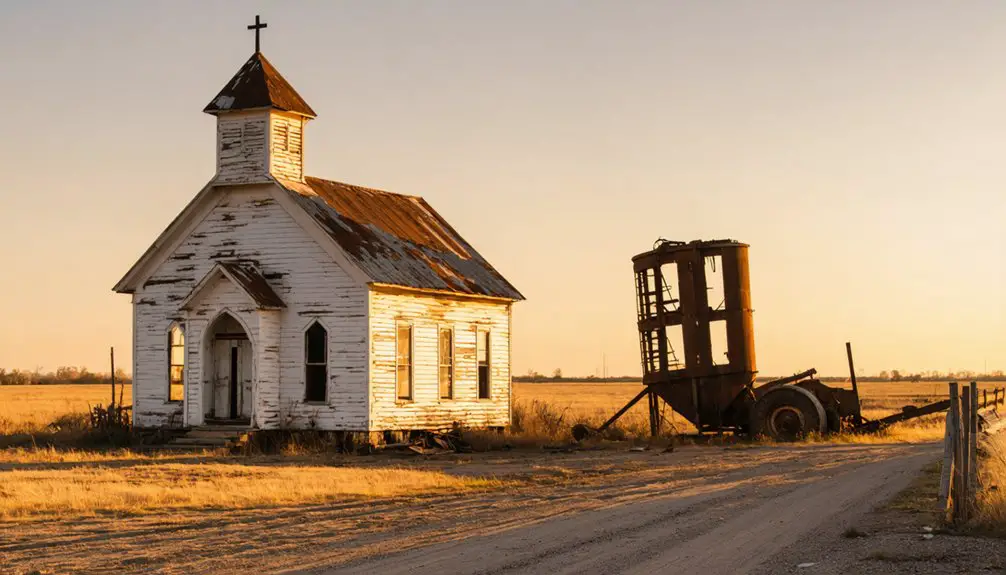
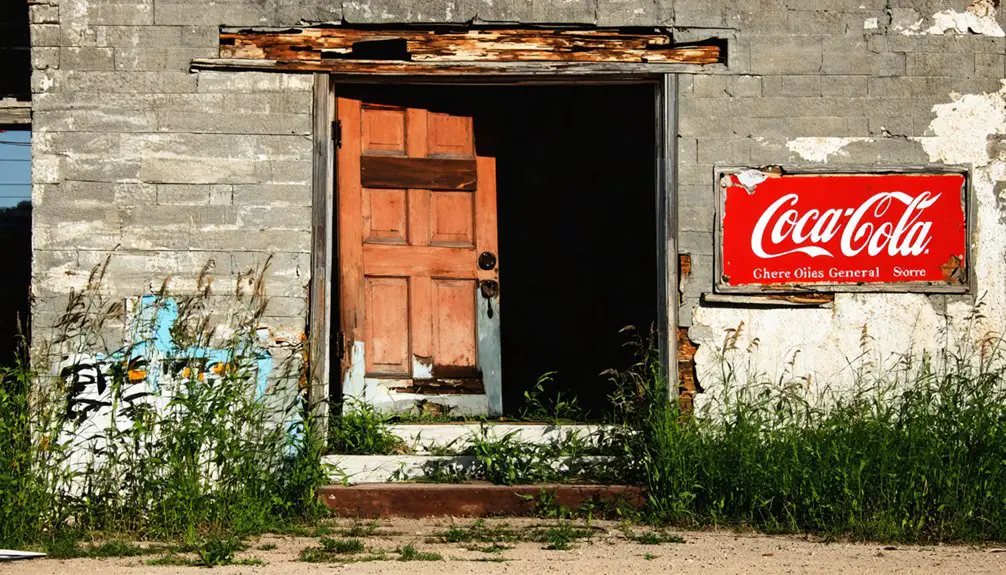
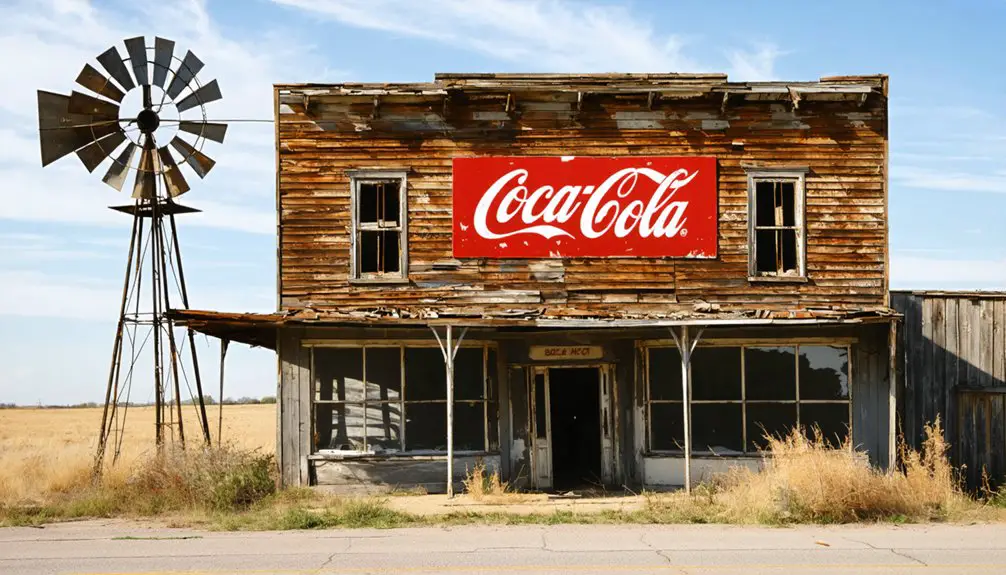
When you visit Charleston, Oklahoma, you’ll find only scattered remnants of what was once a thriving frontier community. Abandoned buildings stand weathered against the Great Plains sky, and a former store remains as one of the few recognizable structures still holding its shape. These physical traces tell the story of a town that rose and fell within a single generation during the late 1800s.
Scattered remnants of a frontier dream, Charleston stands weathered and forgotten against the endless Oklahoma sky.
Historical preservation efforts here are fundamentally nonexistent, so don’t expect manicured pathways or informational signage. You’re exploring raw, unmanaged history.
Keep visitor safety in mind — deteriorating structures can be unpredictable, and the remote location means help isn’t nearby. Stay alert, watch your step, and respect the site’s fragile condition.
Charleston rewards the curious traveler who appreciates history in its most unfiltered form.
How to Get to This Harper County Ghost Town
Reaching those weathered remnants requires traversing the remote stretches of Harper County, Oklahoma, where paved roads give way to rural routes across the Great Plains. You’ll want a reliable vehicle with decent clearance since the terrain can turn unforgiving, especially after rainfall.
Before heading out, study current maps and confirm your route through the county’s road network — GPS signals can be inconsistent in isolated areas.
Visitor safety should stay front of mind throughout your journey. Pack water, a spare tire, and emergency supplies. Let someone know your planned route and expected return time.
Charleston’s remote setting actually contributes to its historical preservation by limiting foot traffic that might otherwise damage what little remains. That isolation is exactly what makes the trip feel like a genuine frontier adventure.
When’s the Best Time to Visit Charleston?
Timing your visit to Charleston makes a real difference in what you’ll experience on the ground. Spring and fall offer the most rewarding conditions, with mild local weather that keeps you comfortable during long stretches of outdoor exploration.
Summer heat on the Oklahoma plains can be punishing, so pack water if that’s your only window.
Winter visits bring stark, dramatic skies that serious travelers actually love for seasonal photography — bare trees and grey light give abandoned structures a haunting, cinematic quality.
Fall earns the top spot overall, delivering golden light, cooler temperatures, and rich contrast between decaying wood and autumn color.
Whatever season you choose, aim for morning hours when soft directional light transforms every weathered beam and broken window into something worth photographing.
What to Bring for Charleston’s Remote Ghost Town Site
Packing right for Charleston matters just as much as choosing the right season. You’re heading into a remote Harper County site with no services, so self-sufficiency is non-negotiable. Bring more water than you think you’ll need, sturdy boots for uneven terrain, and a first aid kit for visitor safety on isolated ground.
Pack a map or download offline GPS — cell service won’t save you out here. A camera captures the abandoned structures worth documenting for historical preservation awareness. Wear layered clothing since Great Plains temperatures shift fast.
Carry snacks, sunscreen, and insect repellent. A flashlight helps if you’re exploring shaded structures. Leave nothing behind and take nothing from the site — respecting what remains protects Charleston’s fragile historical identity for every future traveler who follows your tire tracks.
Which Ghost Towns Near Harper County Are Worth the Drive?
Once you’ve walked Charleston’s quiet grounds, the open roads of Harper County practically dare you to keep driving.
Nearby Aetna and Elmwood offer similarly abandoned landscapes worth exploring. Both carry their own haunted legends—locals whisper about strange sightings and unexplained sounds after dark, adding an eerie edge to your journey.
Aetna and Elmwood whisper their haunted histories to those bold enough to explore their abandoned, eerie landscapes.
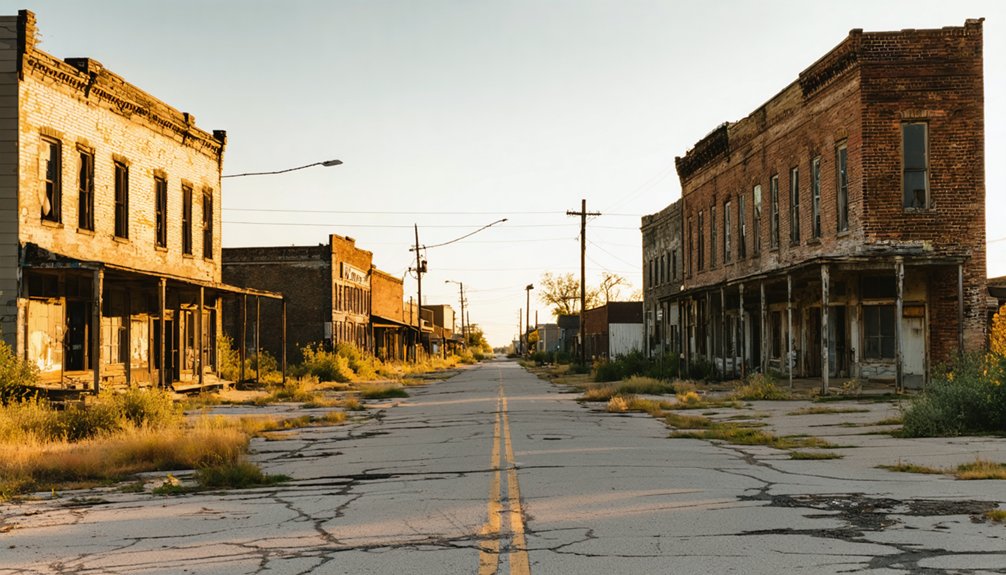
You’ll also want to swing through Fargo and Laverne, where crumbling storefronts tell stories of booms long forgotten. Preservation challenges plague every one of these sites; without active restoration efforts, structures deteriorate season by season.
That urgency makes visiting now feel essential rather than optional.
Pack your maps, keep your tank full, and treat each stop as a discovery. These towns won’t wait forever, and neither should you.
Frequently Asked Questions
Is Charleston, Oklahoma Officially Recognized as a Historical Landmark?
Yes, Charleston’s officially recognized as a historical landmark! You’ll discover ghost town legends etched into its abandoned ruins, where you can freely explore Harper County’s forgotten past and connect with Oklahoma’s rich, untamed 1800s heritage.
Were Any Preservation Efforts Ever Attempted for Charleston’s Abandoned Structures?
You won’t find active preservation initiatives tackling Charleston’s abandoned structures. Restoration challenges have proven too great, leaving the site untouched. It’s a raw, unfiltered slice of history you’re free to explore independently.
What Cultural Significance Did Charleston Hold During the 1800S?
Ironically, Charleston’s fleeting cultural heritage once thrived with community spirit and historic architecture you’d now only imagine. In the 1800s, residents actively built vibrant lives, establishing meaningful communities that briefly flourished before fading into Oklahoma’s windswept silence.
Why Did Charleston’s Population Decline so Rapidly Before the 1900S?
You’ll find that economic decline and shifting migration patterns drove Charleston’s rapid population drop. As opportunities dried up, residents didn’t hesitate — they packed up and chased better prospects elsewhere, leaving this once-vibrant Oklahoma town behind.
Are There Any Restrictions on Accessing Charleston’s Ghost Town Site?
Like a locked door to the past, access restrictions guard Charleston’s secrets. You’ll find visitor guidelines limit your entry, so plan carefully before you chase this ghost town’s whispered history across Harper County’s open plains.
References
- https://kids.kiddle.co/Charleston
- https://www.youtube.com/watch?v=wSb7cuQnp_Q
- https://www.youtube.com/watch?v=aLjY5Pdhleg
- http://files.usgwarchives.net/ok/okstate/history/bghosttowns.txt
- https://www.okhistory.org/publications/enc/entry?entry=GH002
- https://www.sekhistory.com/seeking-the-misfits-of-charleston/
- https://www.youtube.com/watch?v=i6h5huyY4q0
- https://www.travelok.com/articles/oklahomaghosttowns
- https://www.ou.edu/news/articles/2024/may/ou-researcher-unveils-book-of-oklahomas-ghost-towns
- https://www.youtube.com/watch?v=OF-bpvVR6-I