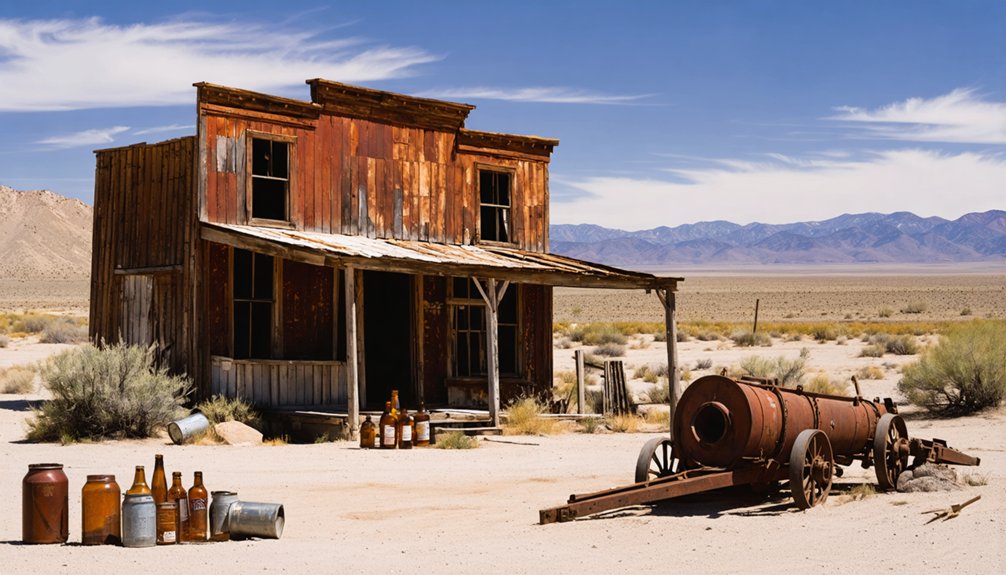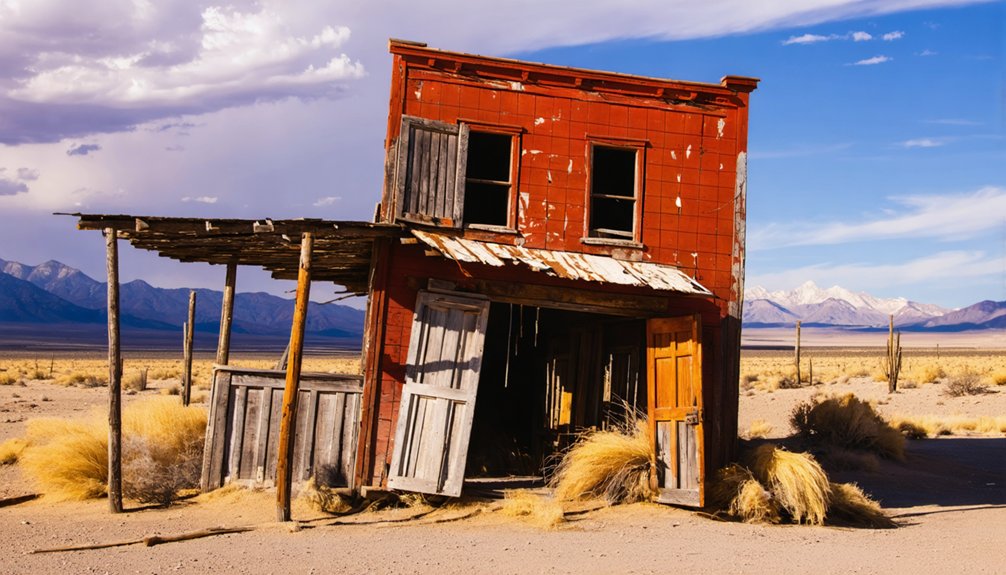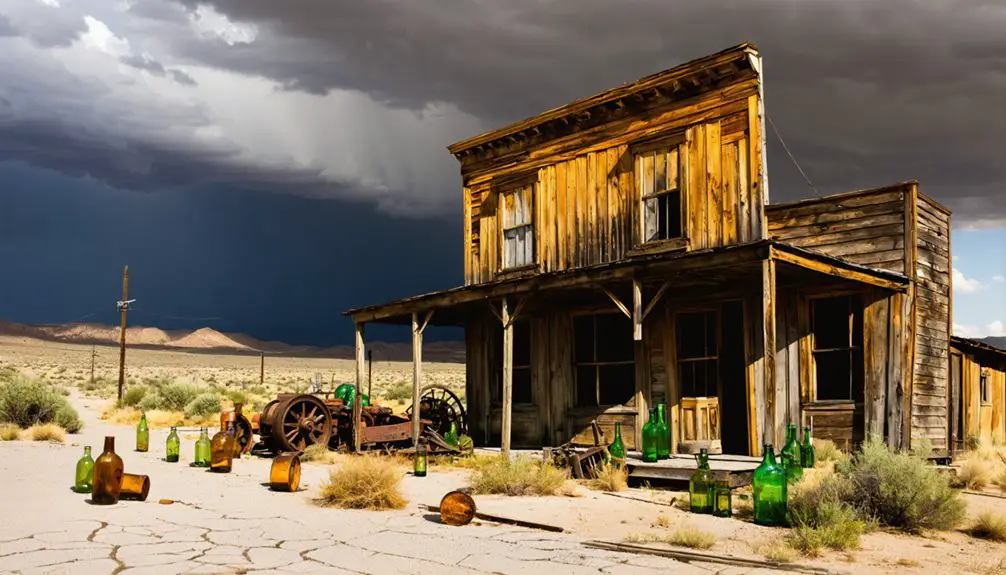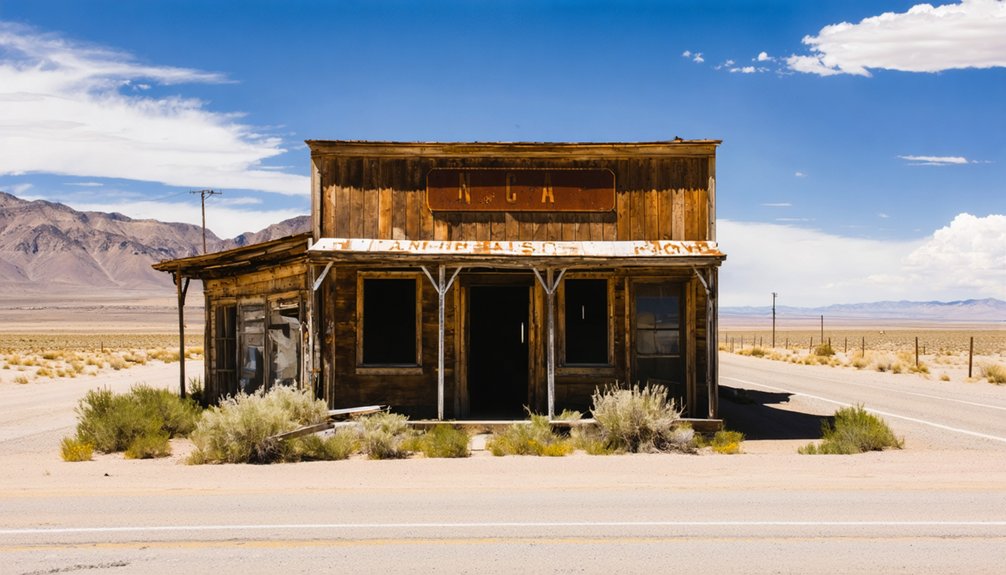
Planning a ghost town road trip to Columbus, Nevada means heading into Esmeralda County’s remote high desert, where borax-boom ruins and salt marsh silence reward the prepared traveler. Base yourself in Tonopah, about 40 miles northeast, and take Nevada State Route 10 in a high-clearance vehicle. Bring plenty of water, sturdy boots, and a paper map—cell service won’t save you out here. There’s far more to discover about what remains and what surrounds it.
Key Takeaways
- Base your trip in Tonopah, ~40 miles northeast, for fuel, lodging, and supplies before heading to Columbus via Nevada State Route 10.
- A high-clearance vehicle is essential, as no paved roads lead directly to the ruins near Columbus Salt Marsh.
- Pack water, sun protection, sturdy footwear, a paper map, and a first aid kit for this remote, no-service location.
- Visit in spring for mild temperatures, wildlife, and migratory birds, or arrive early morning for optimal photography lighting.
- Extend your trip by visiting nearby ghost towns Candelaria, Belleville, and Marietta, each sharing Nevada’s mining boom-and-bust history.
How to Get to Columbus, Nevada
Reaching Columbus, Nevada means venturing deep into Esmeralda County’s high desert, where the town sits near the edge of the Columbus Salt Marsh at roughly 4,560 feet elevation. You’ll approach via Nevada State Route 10, traveling through open basin terrain that rewards patient drivers with sweeping views and wildlife observation opportunities around the marsh.
The coordinates 38°06′37″N 118°01′09″W will anchor your GPS precisely. No paved roads lead directly to the ruins, so a high-clearance vehicle serves you well.
The remoteness that accelerated Columbus’s abandonment now protects its historical preservation, keeping the site raw and largely undisturbed.
Tonopah makes the most practical base camp, sitting roughly 40 miles northeast and offering fuel, lodging, and supplies before you push into the surrounding solitude.
What to Bring for Visiting a Remote Nevada Ghost Town
Once you’ve locked in your route and topped off your tank in Tonopah, your gear list becomes the next deciding factor between a rewarding visit and a preventable ordeal. Columbus sits at 4,560 feet in open desert with no services, so carry more water than you think you’ll need, sturdy footwear for uneven foundations, and sun protection.
For photography tips, arrive in early morning or late afternoon light, when long shadows define the mill remnants and ruined foundations with striking contrast. A wide-angle lens captures the vast salt marsh backdrop effectively.
Respect historical preservation by keeping hands off unstable ruins and leaving everything in place. Carry out all trash. A paper map, charged phone, and basic first aid kit round out what this remote, rewarding landscape demands of you.
What’s Left to See at the Columbus Ghost Town?
What remains at Columbus today won’t overwhelm you with preserved structures, but the scattered ruins tell a quietly compelling story if you know what you’re looking at.
Building foundations mark where stores, mills, and homes once supported a population of 1,000 during the borax boom of the 1870s.
Mill remnants and industrial debris anchor the desert landscapes, giving you a tangible sense of the machinery that drove Columbus toward prosperity and ultimately exhausted it.
Historical artifacts surface across the site, remnants of both the original mining era and 1950s revival attempts that left additional foundations and tanks east of the townsite.
No fences, no tour guides — just open ground, salt marsh horizon, and the quiet freedom to piece the history together yourself.
Best Time to Visit Columbus, Nevada
Spring brings mild temperatures and occasional marsh activity, making wildlife observation surprisingly rewarding alongside the mill foundations. Migratory birds move through the wetland edges while you’re picking through industrial debris and foundations.
Winter roads can turn unpredictable, and the remote location offers no services.
Whatever season you choose, bring your own water, protect the ruins you encounter, and move through this landscape like someone who respects what little remains.
Ghost Towns Near Columbus Nevada Worth Combining Into One Trip
Columbus doesn’t have to be your only stop. The surrounding region holds several ghost towns worth weaving into a single desert loop.
Candelaria, just southeast, shares Columbus‘s historical significance as a silver mining hub and offers crumbling adobe walls that reward careful exploration.
Belleville, once a milling center, sits nearby with foundations still visible if you know where to look.
Marietta adds another layer, its borax history echoing Columbus’s own arc of boom and abandonment.
Each site faces preservation challenges, as vandalism, weathering, and neglect quietly erase what little remains.
You’ll move through landscapes where whole economies rose and collapsed within a generation.
Linking these stops transforms a single visit into a broader story about Nevada’s relentless, restless pursuit of extractable wealth across an unforgiving desert.
Frequently Asked Questions
When Did Columbus, Nevada Officially Become a Ghost Town?
Columbus officially became a ghost town when its post office closed in 1899. You’ll find no haunted legends obscure that fact — local legends confirm the town’s silence sealed its fate long before then.
What Mineral Discovery Transformed Columbus Beyond Silver and Gold Mining?
Borax transformed Columbus—like a hidden vein reshaping everything above it. In 1871, you’d have watched William Troop’s mineral extraction from geological formations near the marsh rewrite the town’s entire identity, launching four competing borax companies by 1873.
How Large Was Columbus, Nevada During Its Peak Population Years?
At its peak around 1875, you’d have found Columbus bustling with a historical population of roughly 1,000 residents. The town infrastructure included stores, a school, a post office, an iron foundry, and a newspaper.
Who First Discovered the Borax Deposits Near the Columbus Salt Marsh?
William Troop single-handedly rewrote ghost town legends when he discovered borax deposits near the Columbus Salt Marsh in 1871, forever transforming historical mining’s story. You can’t overstate how that one find changed everything.
What Newspaper Operated in Columbus During Its Boom Years?
During Columbus’s boom years, you’d have read *The Borax Miner*, a local newspaper capturing the era’s raw energy. This historic publication chronicled the town’s prosperous peak, connecting free-spirited settlers to the bustling marsh-driven economy they’d built together.
References
- https://www.destination4x4.com/columbus-esmerelda-county-nevada-ghost-town/
- https://en.wikipedia.org/wiki/Columbus
- https://forgottennevada.org/sites/columbus.html
- http://www.nv-landmarks.com/towns-c/columbus.htm
- https://en.wikipedia.org/wiki/List_of_ghost_towns_in_Nevada
- https://www.facebook.com/groups/nevadaghosttowns/posts/2441047826333748/
- https://westernmininghistory.com/towns/nevada/columbus/
- https://forgottennevada.org/sites/candelaria.html
- https://urbexunderground.com/ghost-towns-in-nevada/
- https://erikjengh.wordpress.com/2016/07/03/columbus-nv-salt-of-the-earth-part-deux/