Planning a ghost town road trip to Martin Valley means heading into the remote Black Hills of Custer County, South Dakota, where gravel roads lead to the weathered remnants of a once-living rural community. You’ll want a high-clearance vehicle, detailed maps, and extra supplies for backcountry conditions. The valley’s identity runs deep through the Martin Family’s legendary 7-11 Ranch. Stick around, and you’ll uncover everything you need to make this journey unforgettable.
Key Takeaways
- Martin Valley, a faded Custer County ranch community, is accessible via gravel roads requiring high-clearance vehicles and detailed offline maps for navigation.
- Visit between late May and September for the best road conditions, avoiding winter travel due to snow and impassable mountain routes.
- Expect crumbling foundations, weathered timber, and scattered stone walls rather than intact structures when exploring Martin Valley’s remnants.
- Pair your visit with nearby Black Hills ghost towns to maximize historical discovery and reduce unnecessary driving across rural roads.
- Pack water, a paper map, bear spray, sturdy boots, and a portable charger before heading into this remote backcountry location.
What Is Martin Valley and Where Did It Come From?
Tucked into the Black Hills of Custer County, South Dakota, Martin Valley once served as the beating heart of a widely scattered rural community, complete with a post office and a school that kept local family life running.
Nestled deep in the Black Hills, Martin Valley once pulsed with rural life, anchored by a post office and schoolhouse.
The valley takes its name from the Martin Family, owners of the 7-11 Ranch, whose presence shaped the land and its local legends for generations.
As transportation routes shifted and economic patterns changed, the community quietly faded, leaving behind little more than its story.
You won’t find much modern preservation here, which is exactly what makes it compelling for explorers craving something raw and real.
Martin Valley represents hundreds of similar Black Hills communities that rose, served their purpose, and eventually surrendered back to the landscape.
How Did the Martin Family’s 7-11 Ranch Shape the Valley’s History?
When you look into Martin Valley’s past, you quickly find the Martin Family and their 7-11 Ranch at the center of it all. Their ranching operation gave the valley its name, turning a family’s land ownership into a lasting geographic identity.
That kind of local influence didn’t stop at the property line — a working ranch anchored the surrounding community, drawing settlers and supporting the small hub of services that once made Martin Valley a recognized place on the map.
Ranch Origins And Legacy
Few ghost towns carry their origin stories as clearly in their name as Martin Valley does. When you trace the name back, you land on the Martin Family, the ranchers who built and operated the 7-11 Ranch right in this valley. Their presence didn’t just shape the land — it shaped the community that grew around it.
Farming traditions and local legends both took root here because of that ranching foundation. The family’s work gave the valley an identity strong enough to attract a school, a post office, and neighbors who built lives nearby.
As you plan your road trip through Custer County, remember that what you’re chasing isn’t just ruins — it’s the story of a family whose name outlasted everything else they built.
Naming A Valley
Names carry weight, and in the case of Martin Valley, that weight belongs entirely to one ranching family. The Martins ran the 7-11 Ranch here, and their presence shaped not just the land but the identity of everything around it. When settlers and neighbors referred to this stretch of Custer County, the family name stuck naturally.
You can picture how that worked — a working ranch anchored amid local flora, rolling terrain, and wildlife habitats that once supported both cattle and community life. The valley didn’t earn its name through a dramatic event or political appointment. It earned it through daily presence, hard work, and deep roots.
That quiet kind of legacy is exactly what makes places like Martin Valley worth seeking out on your road trip.
Ranching Shapes Community
A ranching family doesn’t just raise cattle — they build the bones of a community around them. When you explore Martin Valley’s past, you quickly see how the Martin Family’s 7-11 Ranch did exactly that. Their presence turned a quiet valley into a functioning settlement with a school, a post office, and neighbors who depended on each other.
That’s the power of agricultural heritage — it pulls people together, creating family histories woven into the land itself. The ranch gave the valley both its name and its identity.
As you plan your road trip through Custer County, remember that what you’re tracing isn’t just abandoned buildings. You’re following the footprint of real people who carved a life from open country and left something lasting behind.
Where Exactly Is Martin Valley Located in Custer County?
Tucked into the Black Hills landscape of Custer County, South Dakota, Martin Valley sits within a region that’s home to well over 600 ghost towns scattered across rural roads and remote turnoffs. Pinning down its exact coordinates isn’t straightforward, since public sources offer limited location data beyond county identification. You’ll want to treat this as an exploratory destination.
Use these planning anchors before you go:
- Custer, South Dakota serves as your most reliable regional hub for orientation
- Gravel roads and remote turnoffs define access throughout this ghost-town landscape
- Local legends tied to ranching and early farming techniques help you contextualize what you’re seeing once you arrive
Approach Martin Valley with flexibility, a detailed map, and curiosity rather than expectations of developed visitor amenities.
What Can You Still See at a South Dakota Ghost Town Site?
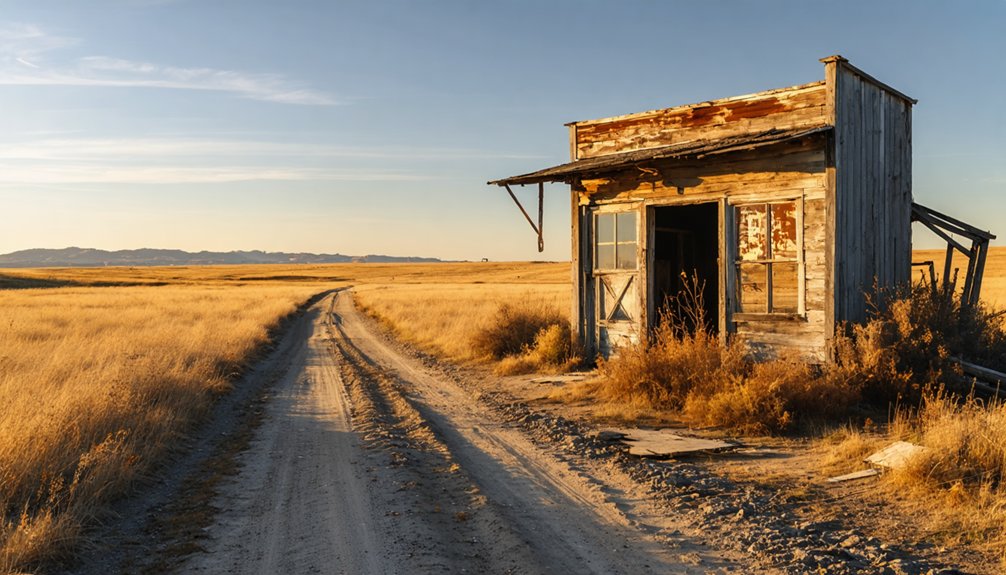
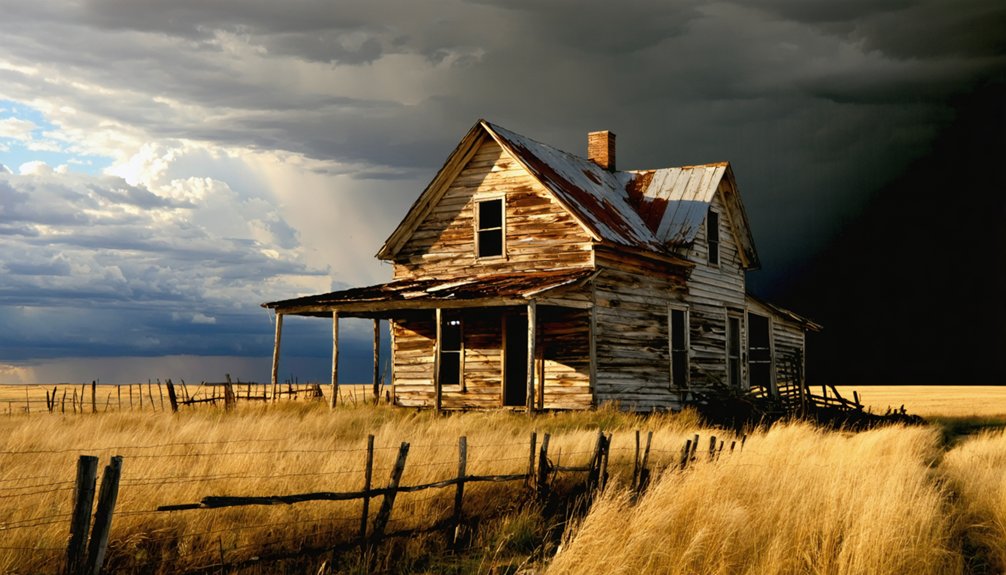
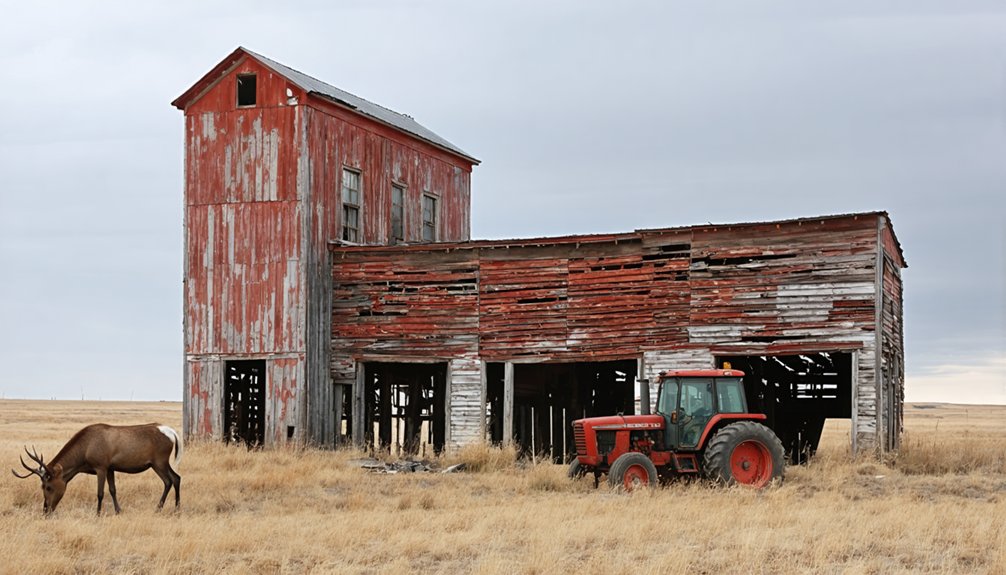
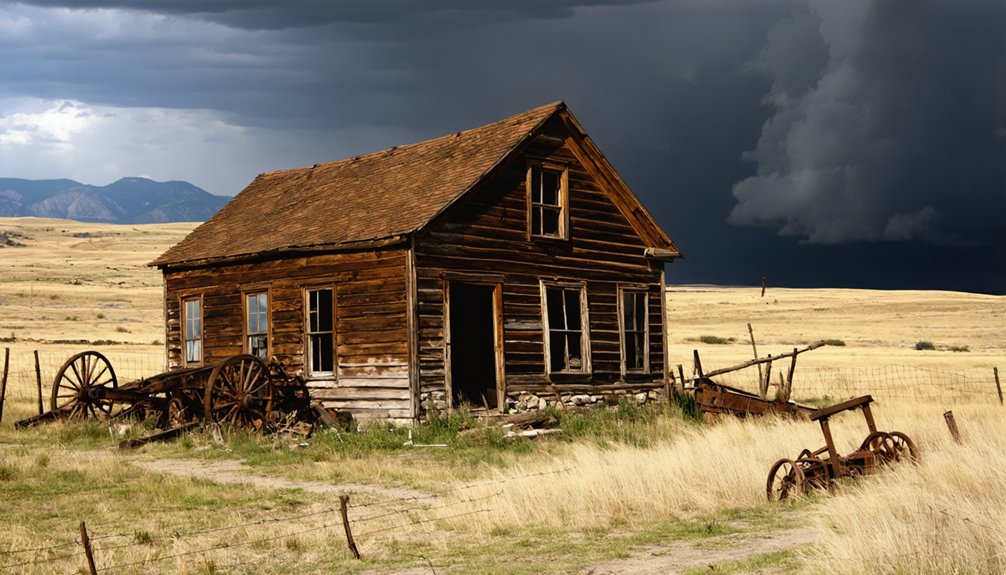
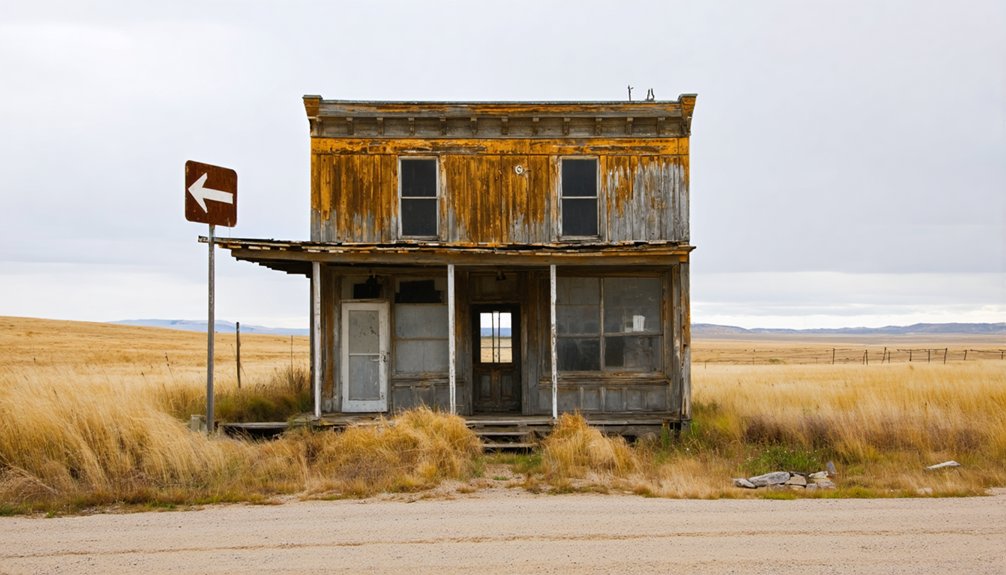
When you arrive at a South Dakota ghost town site, you might find crumbling foundations, weathered timber remnants, or scattered stone walls where buildings once stood. These ruins aren’t just debris—they’re clues that let you reconstruct how the community once functioned, from where families gathered to where business took place.
Train your eye on the landscape itself, because subtle signs like leveled ground, old fence lines, or overgrown pathways often reveal as much as any standing structure.
Ruins And Remaining Structures
Visiting a South Dakota ghost town like Martin Valley means setting realistic expectations about what’s actually left standing. Many sites offer fragments rather than fully intact buildings, but those fragments carry real historical weight rooted in local folklore and quiet preservation efforts.
You might encounter:
- Foundation outlines where structures like schools or community buildings once stood
- Scattered debris or weathered wood, hinting at former ranch life tied to families like the Martins
- Open land with subtle landscape clues, such as old road traces or leveled ground
Don’t expect maintained pathways or signage. What you’re reading in the terrain is the story itself.
Coming prepared with research lets you interpret these remnants confidently and experience the freedom of uncovering history on your own terms.
Reading The Historical Landscape
Beyond the physical remnants themselves lies a deeper skill worth developing: reading the historical landscape. When you stand in a place like Martin Valley, you’re not just seeing empty land — you’re deciphering layers of human experience.
Notice where the ground dips or rises unnaturally, hinting at old foundations. Watch for mature trees clustered in otherwise open terrain, often marking former homesteads.
Local legends and ghost stories add another dimension, pointing you toward sites that dry records overlook. Talk to longtime residents when you can. They carry oral histories that no archive holds.
Train yourself to see absence as evidence. A missing building still leaves a story in the soil. Once you develop this skill, every ghost town you visit reveals far more than it first appears to offer.
How Do You Access Remote Ghost Town Sites in the Black Hills?
Reaching remote ghost town sites in the Black Hills often means trading paved roads for gravel ones, so you’ll want to prepare accordingly. Custer County’s rural roads can shift quickly depending on weather conditions, turning a straightforward drive into a genuine backcountry challenge.
Gravel roads and shifting weather make every Black Hills ghost town drive a genuine backcountry adventure.
Before heading out, cover your basics:
- Vehicle readiness: High-clearance vehicles handle rutted gravel roads far better than standard sedans.
- Navigation tools: Download offline maps since cell service drops across large stretches of the Black Hills.
- Local folklore: Stop at small-town diners or hardware stores — locals often carry directions and stories that no GPS holds.
You’re not just driving to a dot on a map. You’re moving through a landscape that rewards preparation, curiosity, and a willingness to embrace the unexpected.
Which Other Custer County Ghost Towns Pair Well With Martin Valley?
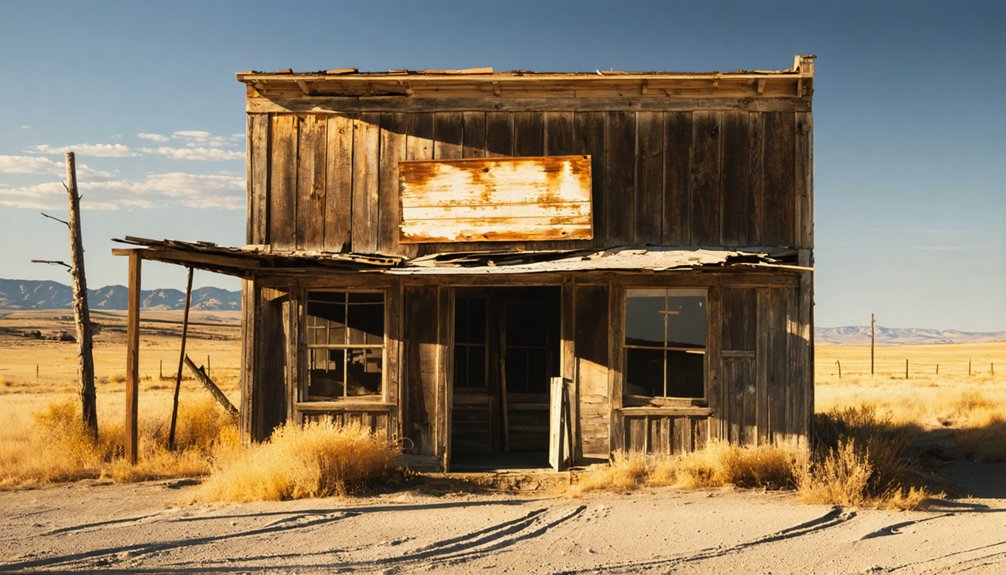
Once you’ve sorted your vehicle and navigation game plan, the next smart move is building a route that makes the most of your time in Custer County. The Black Hills hold well over 600 ghost towns, many shaped by the same forces of historical economy and community development that defined Martin Valley.
Pairing your visit with other nearby defunct settlements lets you trace how ranching, mining, and shifting settlement patterns reshaped the entire region. Custer County’s rural roads connect multiple historic sites within reasonable driving distance, giving you a richer picture of how small communities rose and faded across the same landscape.
Research your stops in advance, cross-reference county records, and you’ll craft a road trip that genuinely rewards your curiosity without wasting a single mile.
When Is the Best Time to Drive the Black Hills Ghost Town Circuit?
Timing your drive through the Black Hills ghost town circuit matters more than most travelers expect. Seasonal weather shapes every aspect of your experience, from road conditions to visibility across open ranch land. Late spring through early fall gives you the widest window, but each season carries its own trade-offs.
Timing your Black Hills ghost town drive matters more than most travelers expect — seasonal weather shapes everything.
- Late May to June delivers wildflower blooms along rural roadsides, softer light, and manageable crowds.
- July to August offers reliable dry roads but brings peak traffic to nearby attractions.
- September brings cooler air, thinner crowds, and dramatic landscape color before winter closes gravel routes.
Avoid winter entirely unless you’re experienced with mountain driving. Snow can make remote turnoffs impassable. You want the freedom to explore on your own terms, and smart timing protects that freedom.
What Should You Bring to an Abandoned Rural Site in Custer County?
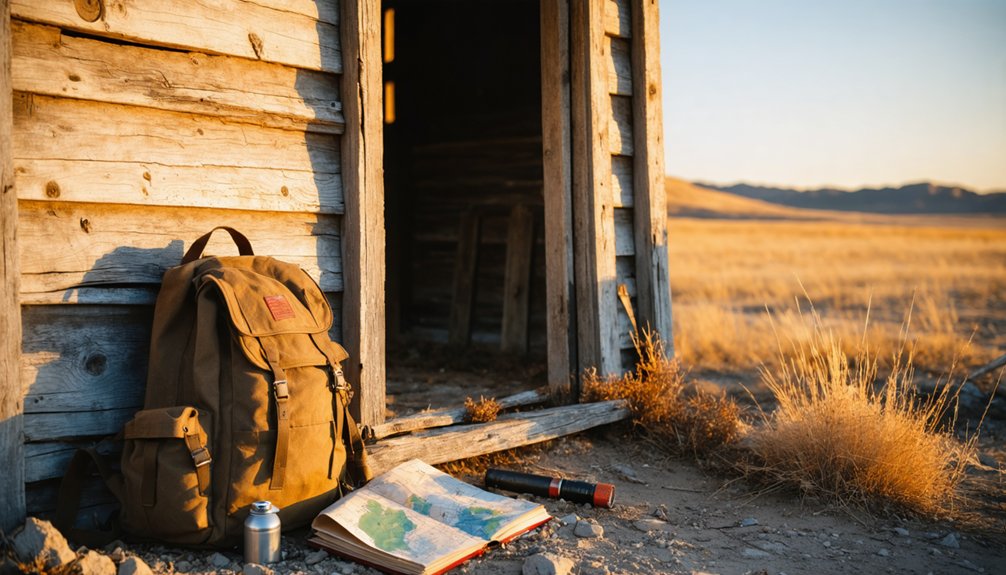
Packing the right gear before you leave cell range can make or break your visit to a remote Custer County site like Martin Valley. Toss a detailed paper map, extra water, and a first-aid kit into your vehicle before heading out on gravel roads.
Wildlife encounters are common across the Black Hills, so keep bear spray accessible and stay alert near brushy areas.
For photography tips, bring a wide-angle lens to capture open ranch landscapes and a polarizing filter to cut glare on bright South Dakota days.
Sturdy boots protect your ankles on uneven terrain where foundations or debris may hide underfoot.
A portable charger keeps your camera and GPS running when you’re far from any outlet.
Where Do You Find Reliable Historical Records on Martin Valley Before You Go?
Before you hit the road, tracking down solid historical records on Martin Valley saves you from arriving with more questions than answers. Custer County’s ranching past and local legends surrounding the Martin Family’s 7-11 Ranch are best understood through deliberate research before departure.
Start with these targeted sources:
- South Dakota State Historical Society – holds records on post offices, schools, and historic preservation efforts across ghost-town sites
- Custer County Courthouse and local libraries – often archive plat maps, land records, and community documentation unavailable online
- Ghost-town compilations and regional history books – published surveys of South Dakota’s Black Hills frequently include Martin Valley alongside hundreds of comparable sites
Cross-referencing these sources sharpens your expectations and grounds your visit in verified facts rather than assumption.
Frequently Asked Questions
Is Martin Valley Ghost Town Located on Private or Public Land?
Like a locked gate on an open road, the sources don’t confirm whether Martin Valley sits on private land or allows public access — you’ll want to verify before chasing this forgotten frontier.
Are There Any Guided Ghost Town Tours Available in Custer County?
You’ll find limited confirmed guided tours focused on historical preservation in Custer County, but you can explore tourist accessibility independently through local visitor centers, which often share self-guided routes covering the Black Hills’ fascinating ghost town landscapes.
Can You Legally Collect Artifacts or Souvenirs From South Dakota Ghost Towns?
History beckons, but artifact regulations and souvenir laws hold you back — you can’t legally collect items from South Dakota ghost towns on public or protected land, so explore freely with your eyes, not your pockets.
Does Custer County Have Any Local Museums Covering Martin Valley’s History?
You won’t find a museum dedicated solely to Martin Valley, but Custer County’s local museums embrace historical preservation and local legends, so you’ll likely uncover fascinating ranching stories and community histories tied to the region.
Is a Four-Wheel-Drive Vehicle Required to Reach Martin Valley’s Site?
Funny enough, you don’t *require* a four-wheel-drive, but rural gravel roads reward it. If you’re exploring off road trails, consider vehicle rental upgrades — you’ll thank yourself when Martin Valley’s remote terrain surprises you.
References
- https://en.wikipedia.org/wiki/List_of_ghost_towns_in_South_Dakota
- https://www.sdpb.org/rural-life-and-history/2023-08-21/some-black-hills-ghost-towns-and-their-origins
- https://www.youtube.com/watch?v=iLdeP_SBrJc
- https://www.pbs.org/video/galena-the-ghost-town-that-refuses-to-die-ehw4x2/
- https://kids.kiddle.co/List_of_ghost_towns_in_South_Dakota
- https://thehistoryofthewest.wordpress.com/2024/03/30/ghost-towns-and-almost-ghost-towns-of-bennett-county-south-dakota/
- https://en.wikipedia.org/wiki/Category:Ghost_towns_in_South_Dakota
- https://www.sdpb.org/arts-and-culture/2018-07-25/ghost-towns-of-south-dakota-tinton