Planning a ghost town road trip to Cowboy Flats means heading to Logan County, Oklahoma, where dirt roads wind north and east of Guthrie toward a forgotten settlement once roamed by the Doolin-Dalton Gang. You’ll find scattered ruins, an old elevator foundation, and weathered walls standing quietly against Oklahoma’s open grasslands. Spring’s the best time to visit, so pack sturdy boots, water, and a paper map. There’s far more to this outlaw-era ghost town than meets the eye.
Key Takeaways
- Cowboy Flats sits in Logan County, Oklahoma, roughly 7 miles north and east of Guthrie, accessible only via unpaved dirt roads.
- Spring is the best time to visit, offering mild temperatures, lush grasslands, and ideal soft morning light for photography.
- Bring sturdy boots, water, a camera, a paper map, and a printed guide, as cell service is unreliable.
- Key landmarks include the old elevator foundation, weathered business walls, and original street layouts tracing the town’s former footprint.
- The site offers solitude and authentic frontier history, embodying Oklahoma’s outlaw era and post-Land Run ghost town legacy.
Where Is Pleasant Valley (Cowboy Flats) in Oklahoma?
Tucked between Stillwater and Guthrie in Logan County, Oklahoma, Pleasant Valley — once called Cowboy Flats — sits just south of the Cimarron River along a quiet dirt road, roughly 7 miles north and 7 miles east of Guthrie. No state highway leads you there. No railroad ever did either. You’ll navigate unpaved roads to reach it, which feels fitting for a place shaped by Wild West cattle drives and open-range freedom.
The land was once part of the Unassigned Lands in Indian Territory, a raw stretch where cowboys pushed herds north and outlaws moved freely. Today, that same isolation defines it. If you’re chasing authentic Oklahoma history off the beaten path, Pleasant Valley delivers a rare, unfiltered glimpse into frontier life.
Before Settlement: Cowboys, Outlaws, and the Doolin-Dalton Gang
That isolation you feel driving out to Pleasant Valley today? Cowboys felt it too — and so did outlaws. Before the Land Run of 1889 opened these Unassigned Lands, Cowboy Flats was pure Wild West territory.
Cattle drovers pushed herds northward across this open range, drawn by the plentiful grass stretching toward the Cimarron River. Cattle rustlers worked the same land, exploiting its remoteness to dodge lawmen.
Military camps and Indian movement shaped the region further, making it a crossroads of competing interests. Then came the notorious Doolin-Dalton Gang, who held unworked claims in the area, using the isolation as cover.
Figures like Elsworth Wyatt, Bill Powers, and Dick Broadwell also roamed here. This ground you’re standing on carried serious danger before it ever carried a plow.
How Cowboy Flats Grew Into a Small Town
After the Land Run of 1889, you’d have watched Cowboy Flats transform from open cattle country into a surprisingly lively community known as Pleasant Valley.
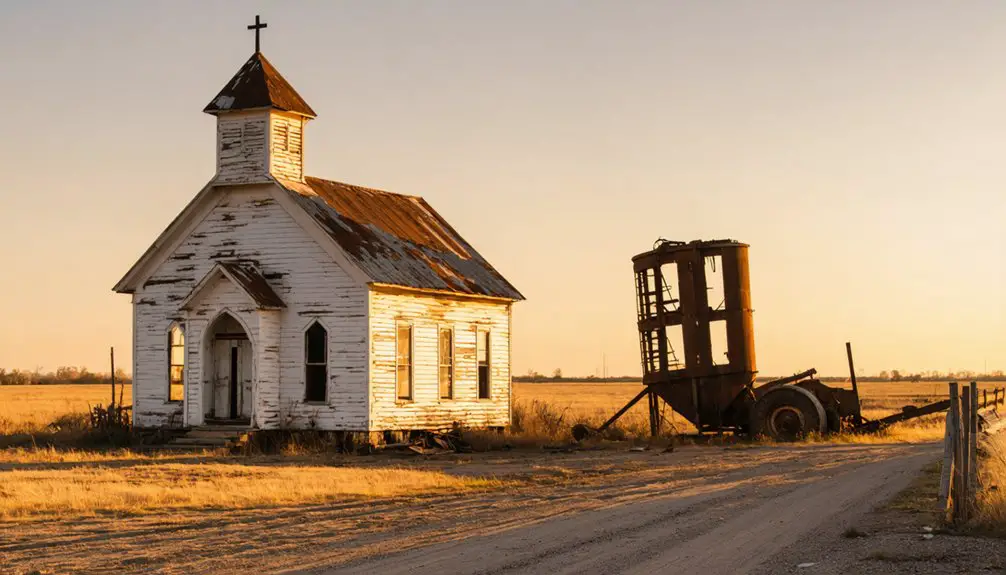
By the early 1900s, the town had churches, several doctors, and essential services that gave settlers a real sense of permanence and purpose.
The post office, which operated from February 1904 to May 1947, served as the community’s lifeline, anchoring daily life for nearly half a century.
From Cattle Trails To Community
What started as open range where cowboys drove cattle north and outlaws carved out a lawless existence eventually transformed into something far more ordinary — and in its own way, more remarkable.
After the Land Run of 1889, settlers replaced the wild west chaos of cattle drives and rustlers with something surprisingly civil. By the early 1900s, Pleasant Valley had developed churches, doctors, and a functioning post office.
You’d have found neighbors building community from raw, unsettled land — no railroad, no highway, just determination. The same isolation that once sheltered outlaws now shaped hardworking farming families.
It’s a striking contrast worth thinking about as you drive out on those dirt roads today, tracing the outline of a town that quietly refused to stay lawless.
Churches, Doctors, And Services
By the early 1900s, Pleasant Valley had grown into something genuinely functional — churches anchored the community, several doctors set up practice, and a post office kept residents connected to the outside world. You can almost picture it: wagons pulling up to clapboard buildings, neighbors exchanging local legends about outlaws who once roamed these same flats.
The post office ran from February 29, 1904, to May 31, 1947, a quiet but steady lifeline for decades.
Fragments of historical architecture still mark where commerce and community once thrived — an old elevator foundation, crumbling business walls standing like stubborn reminders. When you visit, you’re walking through a real working town’s memory.
No myth, no recreation — just honest Oklahoma history embedded in the soil beneath your boots.
The Post Office Era
When a post office opens in a frontier settlement, it signals something important: the place has earned its permanence. Pleasant Valley’s post office did exactly that on February 29, 1904, anchoring the community for over four decades. Letters moved in and out, connecting isolated homesteaders to the wider world beyond those dirt roads.
You can almost picture it — neighbors gathering, trading local legends about outlaws who once rode these same flats. The post office stood alongside historic architecture that defined a working town: churches, storefronts, doctors’ offices.
For 43 years, mail kept arriving until May 31, 1947, when the post office finally closed. That closure marked the town’s quiet surrender. Without that lifeline, Pleasant Valley’s momentum stalled, and the slow drift toward ghost-town status became inevitable.
Why Pleasant Valley Became a Ghost Town
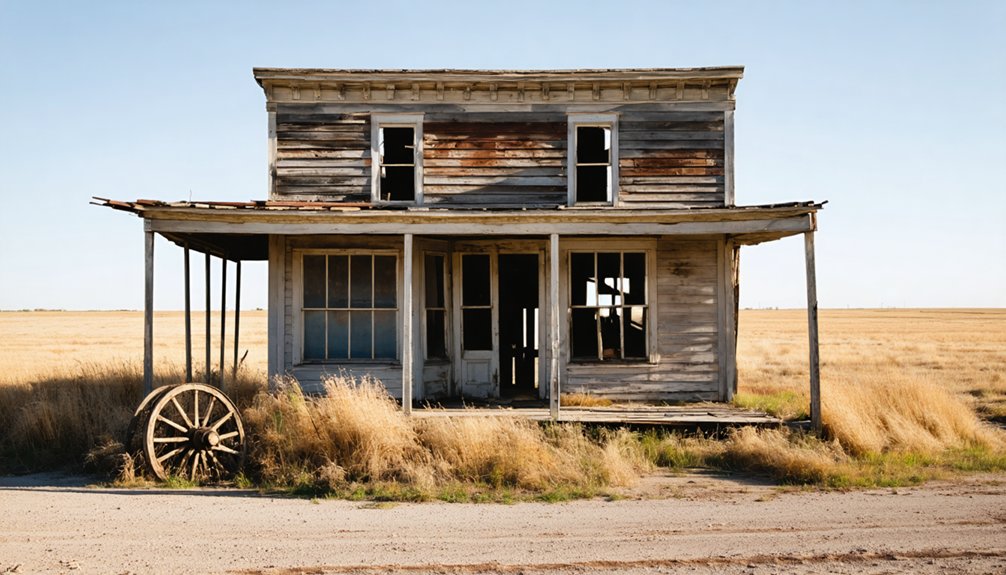
When you trace Pleasant Valley’s decline, you’ll find that improved roads and expanding highway systems simply routed travelers and commerce elsewhere, leaving the town without the economic lifeline it needed.
You can still feel that abandonment today, knowing the post office — often a small town’s last institutional heartbeat — finally shut its doors on May 31, 1947.
Once the mail stopped coming, Pleasant Valley’s identity as a functioning community effectively ended, and the slow transformation into a ghost town became complete.
Transportation Bypassed The Town
Although Pleasant Valley once thrived as a bustling rural community, it never secured a railroad connection or a state highway, and that absence ultimately sealed its fate. As automobile travel expanded across Oklahoma, towns without paved routes simply couldn’t compete.
Travelers bypassed Pleasant Valley entirely, choosing faster corridors that connected commerce and opportunity elsewhere.
You can still see the consequences written across the landscape. Historical architecture crumbles quietly here — an old elevator foundation, weathered business walls standing like silent witnesses to busier days.
Local legends recall a town with doctors, churches, and a working post office, but highway progress cared nothing for that legacy.
When the post office closed in the 1940s, the community’s slow fade became irreversible. Transportation didn’t just bypass Pleasant Valley — it erased it from relevance.
Post Office Finally Closed
Few markers signal a community’s death knell quite like a shuttered post office. When Pleasant Valley‘s post office closed on May 31, 1947, it made official what residents already sensed — their town was gone.
For over four decades, that small building had anchored daily life, connecting isolated farming families to the wider world beyond the dirt roads.
You can still wander what remains of Pleasant Valley’s historical architecture — crumbling walls, an old elevator foundation, echoes of streets that once hummed with purpose.
Local legends whisper about the characters who passed through during busier days. But without that post office, the community lost its last institutional heartbeat.
Today, you’re free to explore these quiet remnants and piece together a town that time simply moved past.
What Survives at the Pleasant Valley Site Today
Once a bustling small town complete with churches, doctors’ offices, and a functioning post office, Pleasant Valley has shrunk to little more than a handful of homes and scattered architectural bones.
Pleasant Valley once buzzed with churches, doctors, and a post office — now only a few homes and ruins remain.
When you roll down that dirt road today, keep your eyes open for the modern remnants that quietly tell the town’s story.
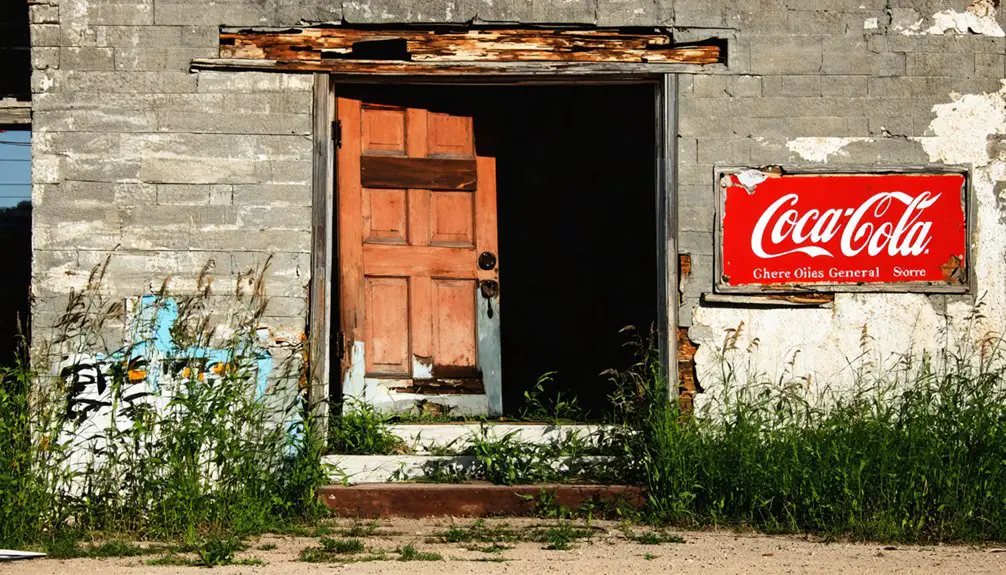
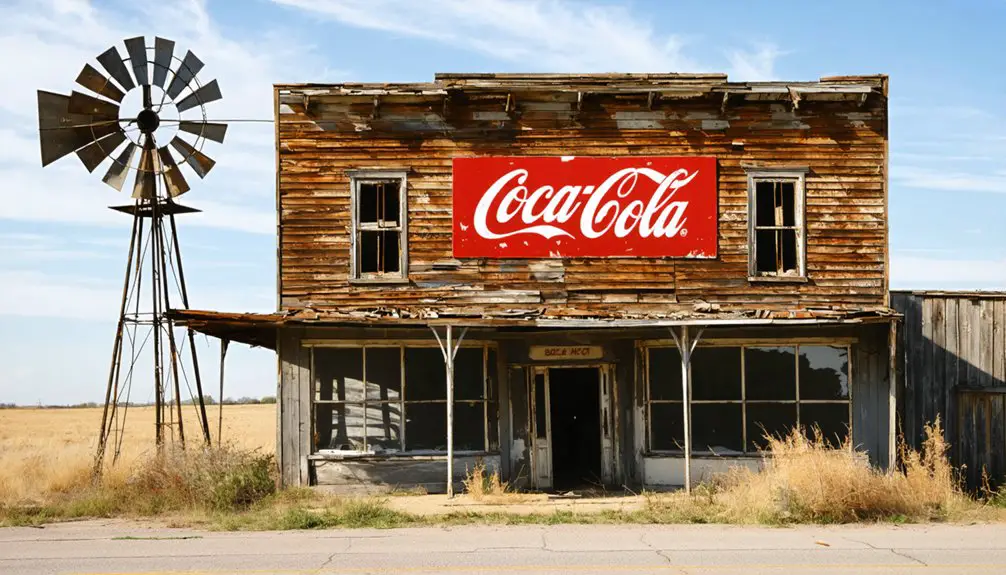
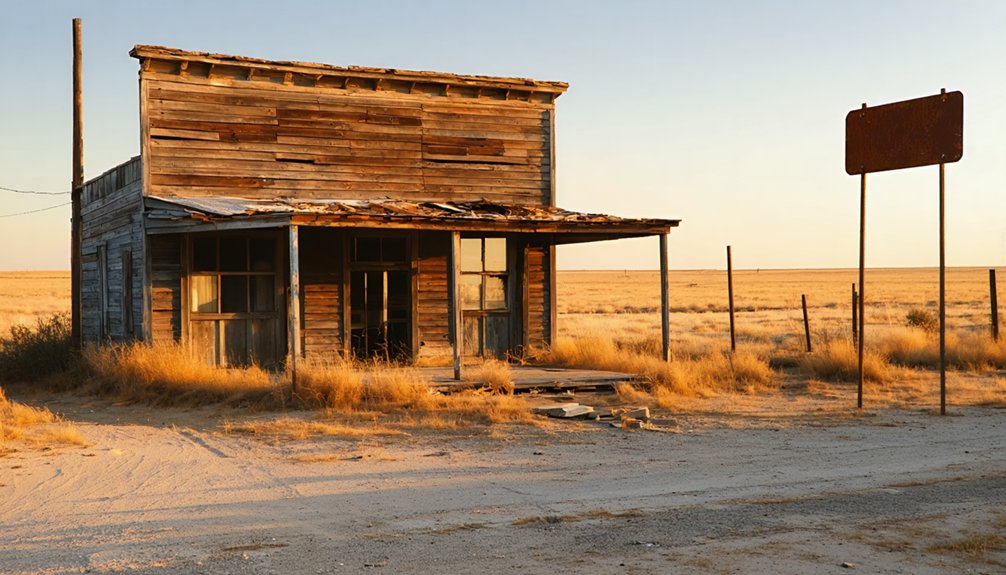
You’ll spot the old elevator foundation rising from the earth like a stubborn historical artifact refusing to disappear. Nearby, the crumbling walls of an old business building still stand, weathered but present.
A few former streets remain open, letting you trace the town’s original layout on your own terms.
It’s raw, unpolished history — exactly the kind of freedom-filled exploration that makes ghost town road trips worth every dusty mile.
Best Time to Visit Cowboy Flats and What to Bring
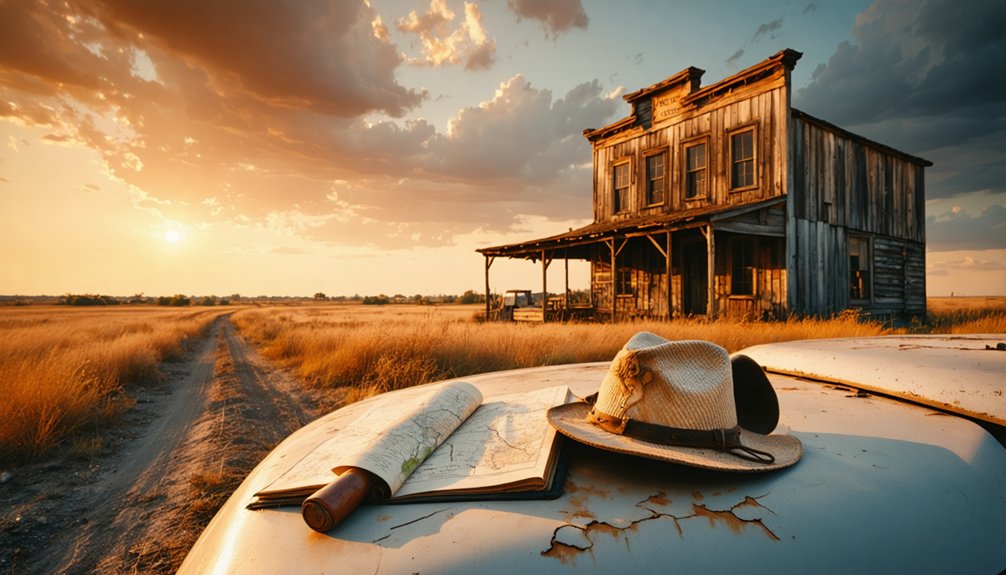
Spring earns its reputation as the best season to visit Cowboy Flats, when mild temperatures and green Oklahoma grasslands make the long dirt road feel less like a hardship and more like a scenic prelude. You’ll move through open land carrying the weight of local legends — outlaws, cattle drovers, and forgotten settlers who shaped this isolated corner of Logan County.
Pack accordingly. Wear sturdy boots for uneven terrain around historical landmarks like the old elevator foundation and crumbling business walls. Bring water, a paper map, and a camera. Cell service is unreliable out here.
A printed guide to Oklahoma ghost towns helps contextualize what you’re seeing. Arrive in the morning while light is soft and the land feels unhurried — exactly the kind of freedom a place like this still offers.
Frequently Asked Questions
Was Pleasant Valley Ever Considered for a Railroad Connection?
No railroad history ever touched Pleasant Valley — it remained cut off from transportation development. You’ll find no tracks led here, leaving this free-spirited, isolated community to wither naturally as highways claimed Oklahoma’s traveling soul.
Are There Any Guided Tours Available at the Pleasant Valley Site?
You won’t find guided tour options at Pleasant Valley’s remote, wind-swept ruins. You’ll explore freely on your own terms, but follow visitor safety tips — watch crumbling foundations and navigate unpaved dirt roads carefully before wandering this evocative ghost town.
Is the Dirt Road to Pleasant Valley Accessible by Standard Vehicles?
You’ll want to carefully assess the dirt road conditions before heading out, as vehicle requirements aren’t clearly defined. A high-clearance vehicle gives you the freedom to navigate unpaved terrain with confidence and adventure.
Can Visitors Legally Explore the Remaining Buildings at Pleasant Valley?
Freedom has its fences—you’ll want to respect them. For urban exploration at Pleasant Valley, always verify land ownership first. Historical preservation laws protect remaining structures, so don’t enter or disturb buildings without confirmed legal permission from property owners.
Are There Nearby Towns With Accommodation for Ghost Town Visitors?
You’ll find accommodation in nearby Stillwater and Guthrie, both supporting historic preservation efforts. Explore local dining options there, then venture freely toward Pleasant Valley’s haunting remnants — these towns make perfect base camps for your ghost town adventure.
References
- https://www.rideok.com/pleasant-valley-oklahoma-ghost-town/
- https://okmag.com/blog/gone-but-not-forgotten/
- https://www.travelok.com/articles/oklahomaghosttowns
- https://www.rideok.com/tag/cowboy-flats/
- https://www.ghosttowns.com/states/ok/campbell-pleasantvalley-cowboyflats.html
- https://www.ghosttowns.com/states/ok/ok.html
- http://sites.rootsweb.com/~oktttp/ghost_towns/ghost_towns.htm
- https://en.wikipedia.org/wiki/List_of_ghost_towns_in_Oklahoma
- https://kids.kiddle.co/List_of_ghost_towns_in_Oklahoma