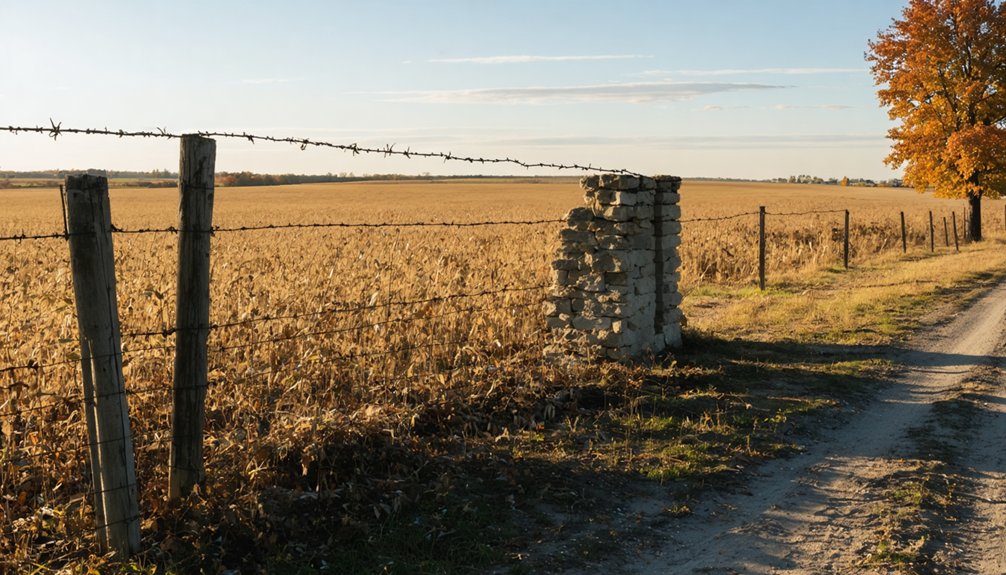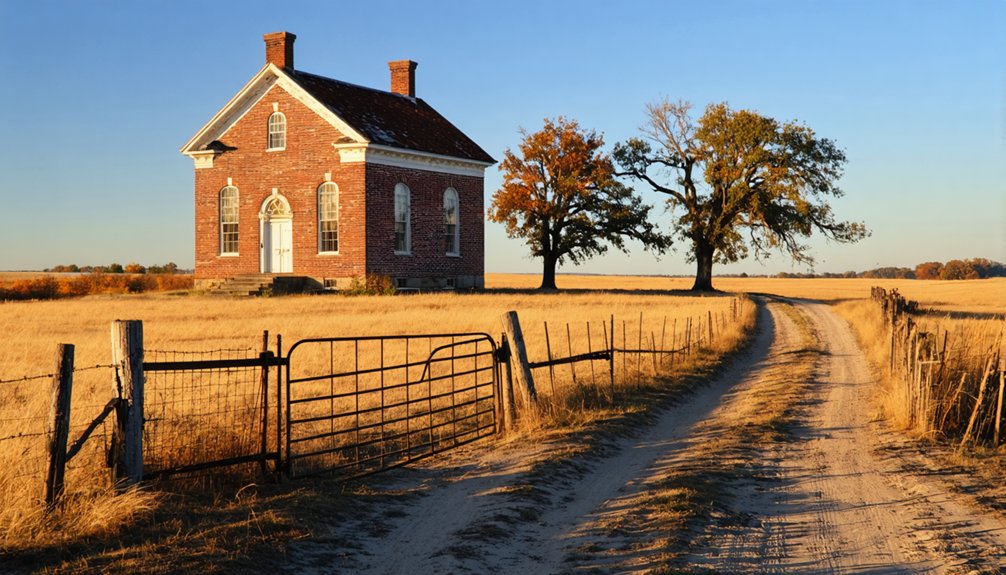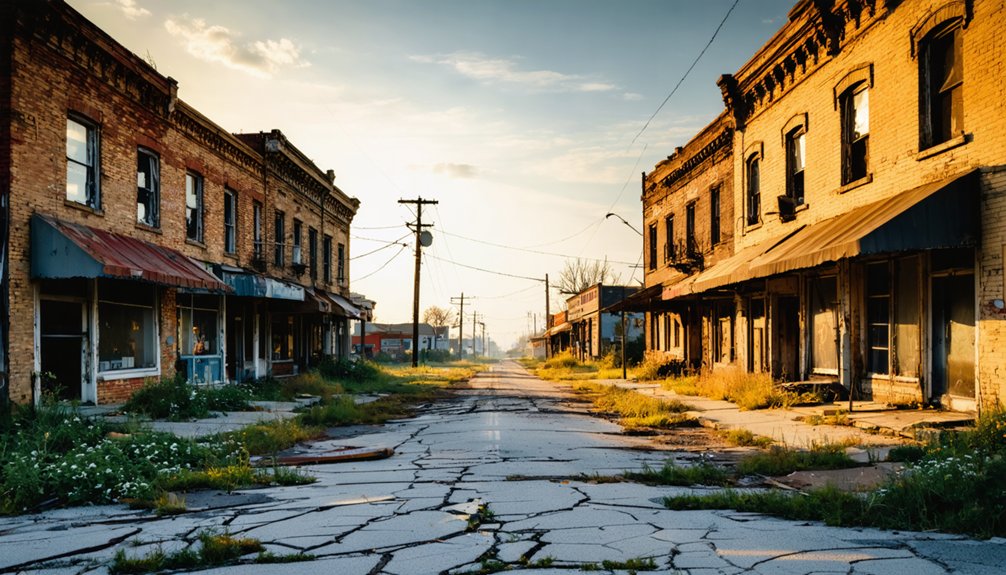
Planning a ghost town road trip to Crawfordsville, Illinois means stepping into a place where history stands still. You’ll find crumbling docks along the Illinois River, hollow buildings lining empty streets, and the haunting silence of a once-thriving mill town erased by railroads. Situated in Crawford County between Flat Rock and Birds, it’s a self-directed, off-the-beaten-path experience. Timing your visit right and knowing what to expect will make all the difference.
Key Takeaways
- Crawfordsville, Illinois, is located at 38°52′00″N 87°40′10″W, accessible via rural Crawford County roads between Flat Rock and Birds.
- Visit in late spring or early fall for mild weather, wildflowers, and vibrant foliage while avoiding winter ice and mud.
- Bring sturdy boots, flashlights, a first aid kit, and a phone with offline maps for safe self-directed exploration.
- The site features derelict buildings and abandoned docks, offering a haunting atmosphere reflecting its 19th-century river port history.
- Nearby ghost towns Coltonville, Cardiff, and Old Valmeyer provide additional stops to enhance your regional road trip experience.
What Made Crawfordsville, Illinois a Ghost Town?
Once a thriving riverport, Crawfordsville, Illinois lost its economic footing when the railroads arrived in the region and bypassed the town entirely. Without rail access, businesses collapsed, the post office relocated to nearby Flat Rock, and residents abandoned their homes.
When the railroads bypassed Crawfordsville, Illinois, they didn’t just reroute commerce — they erased an entire town.
The woolen mill, added around 1870, shut down permanently by 1879, sealing the town’s fate.
What’s left today feeds both haunted legends and urban legends that draw curious explorers to its crumbling streets. You’ll find derelict buildings and forgotten docks along the riverbank, standing as silent witnesses to a community that simply couldn’t survive economic isolation.
Railroads didn’t just redirect commerce — they redirected life itself. Understanding this collapse helps you appreciate what you’re actually walking into when you visit.
How Did the Mills and River Port Shape Crawfordsville?
When you trace Crawfordsville’s roots, you’ll find that Edward Allison’s water mill, built around 1830, sparked the town’s early growth and set the stage for everything that followed.
From there, the settlement evolved into a bustling Illinois River port, driving commerce and pulling in residents enthusiastic to capitalize on waterway trade.
Water Mill Origins
Edward Allison’s decision to build a water mill around 1830 fundamentally put Crawfordsville on the map, transforming a quiet stretch of Illinois riverbank into a working settlement. You can almost picture the water wheel churning against the current, powering mill machinery that drew settlers seeking reliable grain processing and economic opportunity.
When H. Martin later acquired the property, the site became known as Martin’s Mill, cementing its identity around industrial production. That single structure sparked a chain reaction — a community formed, a post office followed, and Samson Taylor stepped in as its first postmaster.
Allison’s original gamble on water power proved visionary. Without that mill, Crawfordsville likely never breaks free from obscurity, and you’d have nothing worth road-tripping to explore today.
River Port Commerce
How did a single water mill evolve into a thriving river port economy? Crawfordsville’s position on the Illinois River transformed it into a genuine commercial hub. River transportation connected the town to broader markets, letting goods flow freely across the region.
Three key developments defined this economic peak:
- The water mill attracted merchants and traders seeking reliable grain processing
- River docks enabled direct shipping, bypassing costly overland routes
- A woolen mill added around 1870 expanded production capacity considerably
You’d have witnessed a genuinely busy settlement during those decades. However, industrial decline arrived swiftly when railroads bypassed Crawfordsville entirely.
Without rail access, river transportation alone couldn’t sustain commerce. The post office relocated, businesses collapsed, and residents followed opportunity elsewhere, leaving behind only weathered docks and crumbling structures.
Woolen Mill Legacy
Though it operated for only nine years, the woolen mill added around 1870 became Crawfordsville’s boldest industrial statement. Connected directly to the steam mill, it signaled the town’s ambition to diversify beyond river transportation and build something lasting.
But industrial decline arrived swiftly — the woolen mill shuttered permanently in 1879, leaving machinery silent and workers without purpose.
You can almost feel that turning point when you visit today. The town had already leveraged the Illinois River brilliantly, moving goods and people through a thriving port economy.
Losing the woolen mill accelerated the unraveling. When railroads bypassed Crawfordsville entirely, the post office relocated to Flat Rock, and residents followed.
What you’ll find now are crumbling structures that quietly testify to a community that once dared to build big.
What’s Left to See in Crawfordsville Today?
While Crawfordsville won’t dazzle you with a vibrant downtown or bustling crowds, it’ll captivate you with its haunting, time-worn atmosphere. As you explore, you’ll discover historical landmarks that tell stories of a once-thriving river port and local legends that linger in the quiet air.
Here’s what you can expect to find:
- Derelict buildings — crumbling structures that once housed businesses and families during the town’s peak years.
- Abandoned docks — weathered riverbank remnants where steamboats once loaded goods along the Illinois River.
- Open, empty streets — walkable paths through a settlement frozen in time, perfect for photography and reflection.
You’re free to wander at your own pace, soaking in the eerie stillness that defines this forgotten Crawford County settlement.
Is Crawfordsville, Illinois Worth the Road Trip?
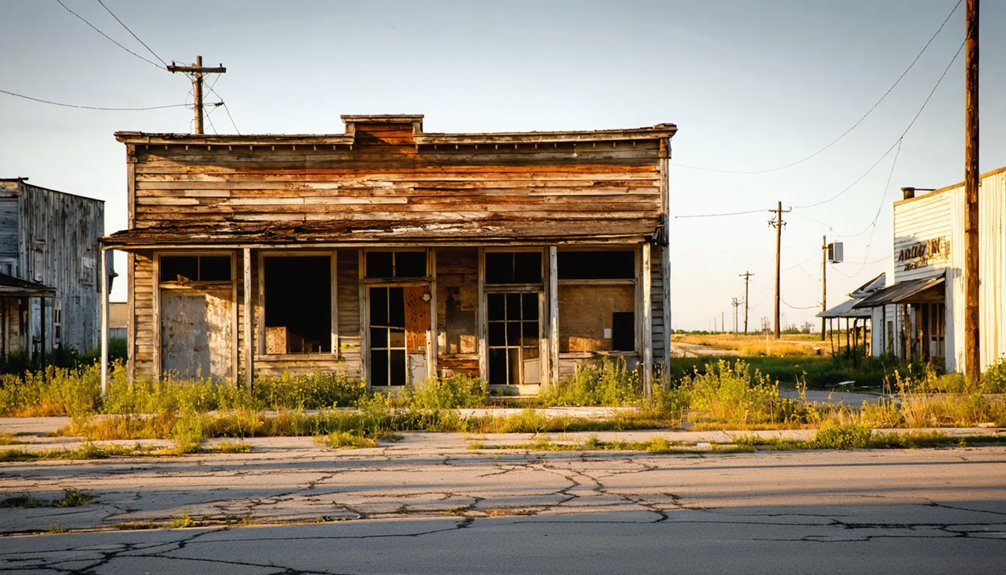
If you appreciate early American history, Crawfordsville rewards your curiosity with a tangible connection to 19th-century mill towns and river commerce that shaped Illinois. You’ll find derelict buildings and abandoned docks still standing as quiet proof of the town’s former bustle, giving you something concrete to explore beyond just reading about the past.
Nearby communities like Flat Rock and Birds also provide food, fuel, and context that make the detour through Crawford County feel like a fuller regional experience rather than a single-stop drive.
Historical Significance Matters
Crawfordsville, Illinois packs a surprising amount of history into its quiet, crumbling footprint. You’re stepping into a place where local legends and abandoned architecture tell a story railroads tried to erase.
Three historical layers make this stop genuinely worthwhile:
- 1830 origins — Edward Allison’s water mill launched a working riverside economy that thrived for decades.
- Industrial ambition — A woolen mill operated from 1870 until 1879, leaving behind echoes of serious 19th-century enterprise.
- Transportation betrayal — Railroads bypassing the town killed its post office, its commerce, and eventually its population.
You’re not just wandering through decay. You’re reading a timeline carved into derelict buildings and abandoned docks.
That kind of raw, unfiltered history is exactly what freedom-seeking explorers come to find.
What Remains Today
What’s left of Crawfordsville, Illinois won’t impress anyone expecting a polished historic site — and that’s exactly the point. You’ll find a handful of derelict buildings, abandoned docks hugging the riverbank, and streets that echo with emptiness. Urban decay defines every crumbling wall and weathered timber here.
There’s no visitor center, no guided tour, no manicured path. What you get instead is raw, unfiltered history — the kind that historic preservation efforts rarely capture authentically.
The riverbank still pulls you in, offering glimpses of a once-thriving 19th-century port that railroads quietly killed.
If you crave freedom to explore on your own terms, Crawfordsville delivers. Bring curiosity, sturdy shoes, and respect for the site. This place rewards those willing to look beyond the surface.
Nearby Attractions Help
Whether Crawfordsville justifies a solo road trip depends on what else you stack around it. Pair the abandoned structures with neighboring stops, and suddenly you’ve built a full day of exploration through Crawford County’s forgotten corners.
- Flat Rock sits just 2.5 miles north, offering supplies and local folklore about the region’s river trading past.
- Birds, Illinois lies 2.5 miles south, another quiet settlement worth a quick detour.
- Surrounding Crawford County towns fill your route with additional history, keeping momentum between stops.
You’re not just visiting one ghost town — you’re threading together a landscape where railroads reshaped everything. Stack your stops strategically, verify road conditions beforehand, and you’ll transform a sparse destination into a genuinely rewarding, freedom-fueled Illinois road trip.
How to Get to Crawfordsville in Crawford County
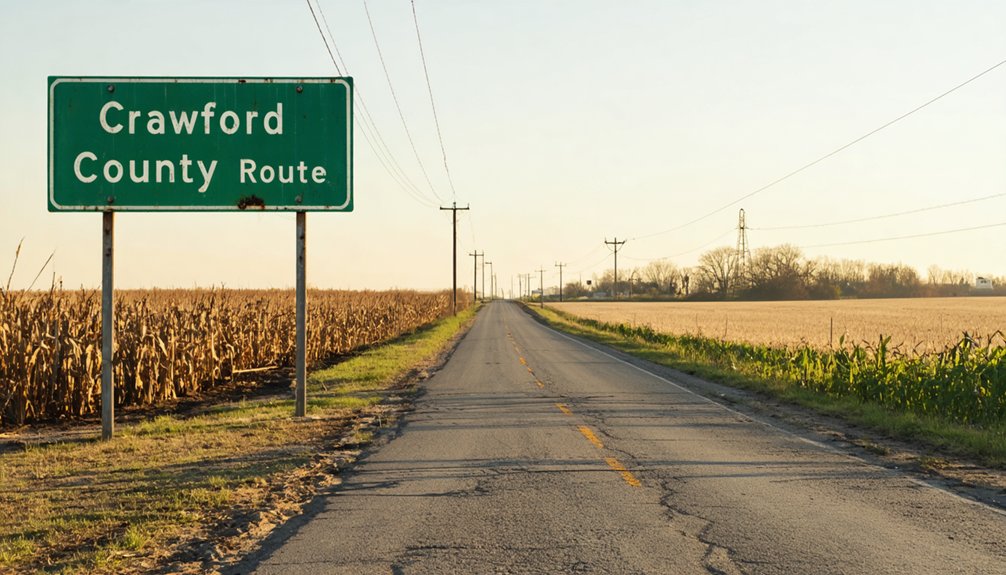
Finding Crawfordsville in Crawford County, Illinois, means steering to coordinates 38°52′00″N 87°40′10″W. Tucked between two small reference towns: Flat Rock, 2.5 miles to the north, and Birds, 2.5 miles to the south. You’ll navigate Crawford County’s rural roadways to reach this forgotten settlement, so check current road conditions before heading out since no major marked routes lead directly to the site.
Once you’re close, the townsite straddles the boundary between Honey Creek Township and Montgomery Township, making it a genuinely unique geographic stop. Local legends surrounding its 19th-century river port days add depth to every crumbling structure you’ll encounter.
Historic landmarks like the abandoned docks and derelict buildings reward explorers willing to venture off the beaten path. Your freedom to roam this quiet, ghostly stretch makes the journey worthwhile.
Best Season to Visit Crawfordsville Without Getting Stranded
Timing your visit to Crawfordsville smartly keeps you from getting stuck on Crawford County’s unpredictable rural roads. Seasonal conditions dramatically affect your access to this ghost town’s derelict buildings and abandoned riverbank docks.
- Late Spring (May–June): Mild temperatures open rural roads. Wildflowers bloom across wildlife habitats. Lighting favors photography of crumbling structures.
- Early Fall (September–October): Cooler weather makes exploration comfortable. Foliage enhances the eerie atmosphere. Wildlife habitats remain active without summer heat exhaustion risks.
- Avoid Winter and Early Spring: Ice and mud render Crawford County’s back roads dangerous. Potentially, you could be stranded miles from help.
Cultural preservation enthusiasts find fall particularly rewarding, since the crisp air and dramatic scenery sharpen your appreciation for Crawfordsville’s haunting, historically significant remnants.
What to Bring for Exploring Crawfordsville’s Abandoned Site

Once you’ve locked down the right season for your visit, packing the correct gear determines whether your exploration of Crawfordsville’s crumbling remnants stays safe and rewarding or turns frustrating fast.
Sturdy boots protect your feet across uneven riverbank terrain near those abandoned docks. Bring a flashlight for darker interior spaces inside derelict buildings. A first aid kit handles unexpected scrapes against rotting wood or rusted metal.
Pack a notebook to record details connected to local folklore and urban legends surrounding this forgotten Illinois settlement. A fully charged phone with offline maps keeps you oriented since modern road signage is unreliable here.
Carry water and snacks because nearby services are sparse. A camera captures the ghostly atmosphere that draws history buffs and urban explorers to Crawford County’s quietly haunting landscape.
Other Ghost Towns Near Crawfordsville Worth Visiting
Crawfordsville isn’t the only ghost town worth hunting down in Illinois, since the state holds at least 23 abandoned settlements scattered across its counties. Each carries its own urban legends and folklore stories that’ll make your road trip unforgettable. Consider adding these stops to your route:
- Coltonville – A Northern Illinois relic steeped in eerie silence and local folklore stories about its sudden abandonment.
- Cardiff – A town swallowed by circumstance, where urban legends still circulate among history enthusiasts.
- Old Valmeyer – Relocated after disaster struck, leaving behind haunting remnants that explorers actively seek out.
Crawford County sits near enough to several forgotten settlements that you can craft a multi-stop adventure, connecting Illinois’s scattered ghost towns into one compelling, freedom-fueled journey through history.
Frequently Asked Questions
Who Was Crawfordsville’s First Postmaster When the Post Office Opened?
Samson Taylor served as Crawfordsville’s first postmaster, anchoring the town’s postal history and shaping its community origins. You’ll find his role fascinating as you explore this ghost town’s remarkable, freedom-filled past waiting to be discovered!
Which Two Townships Does the Crawfordsville Townsite Boundary Divide?
Forget your neat borders! Crawfordsville’s townsite boldly straddles Honey Creek Township and Montgomery Township — two historic landmarks wrapped in local legends. You’ll find this divided ghost town doesn’t care much for bureaucratic boundaries, much like its free-spirited, wandering past!
How Long Did the Crawfordsville Woolen Mill Operate Before Permanently Closing?
You’ll find that Crawfordsville’s woolen mill operated for nine years before it permanently closed in 1879. It’s a fascinating piece of historical textile mills history, weaving ghost town legends into the fabric of this once-thriving, now-silent Illinois settlement.
What Were the Original Coordinates Recorded for Crawfordsville’s Townsite Location?
You’ll find Crawfordsville’s townsite sitting at 38°52′00″N 87°40′10″W, where historical landmarks whisper local legends of a bustling river port. These coordinates pinpoint Crawford County, Illinois, straddling two townships, inviting your free-spirited exploration.
Did you know you’ll find 23 ghost towns sharing Crawfordsville’s weird or legendary status in Illinois? Each carries haunted tales and legendary sightings, beckoning you to explore their forgotten, eerie streets and reclaim their untold histories.
References
- https://en.wikipedia.org/wiki/Crawfordsville
- https://drloihjournal.blogspot.com/2022/09/lost-towns-of-illinois-crawfordsville.html
- https://kids.kiddle.co/Crawfordsville
- https://www.youtube.com/watch?v=X-k9IxjPWqc
- https://illinoisstateonline.com/ghost-towns-in-illinois/
- https://kids.kiddle.co/List_of_ghost_towns_in_Illinois