Planning a ghost town road trip to Rheingold, Texas means heading 13.5 miles northeast of Fredericksburg through scenic Hill Country terrain to a place most travelers never find. You’ll need offline maps, a full tank, and extra water before you go. Once there, you’ll discover an 1889 German immigrant schoolhouse listed on the National Register of Historic Places that still serves the local community. Keep going to uncover everything this remote Hill Country treasure has to offer.
Key Takeaways
- Rheingold sits 13.5 miles northeast of Fredericksburg; navigate using coordinates 30.34519770, -98.68531240 or address 334 Rheingold School Road.
- Download offline maps and fuel up in Fredericksburg, as rural roads offer no services or cell coverage.
- The 1889 German immigrant schoolhouse, listed on the National Register of Historic Places, now serves as a community center.
- Spring and fall offer the best visiting conditions; avoid July and August due to extreme heat.
- Bring binoculars, extra water, snacks, and a GPS device, as no emergency services are nearby.
What Makes Rheingold, Texas Worth the Drive?
Tucked 13.5 miles northeast of Fredericksburg along North Grape Creek, Rheingold carries a quiet history that’s well worth the rural drive.
Founded in 1869 by German immigrant widows and their sons, this eastern Gillespie County settlement rose from tragedy — the Gold brothers both died of cholera in 1852, leaving their families to build something lasting from grief.
Two widows. Two families. One devastating loss — and the quiet resolve to build something that would outlast their grief.
You’ll find local legends woven into every corner of this ghost town, from the family that owned the land and cotton gin to the early settlers who shaped daily life.
Ghost stories aside, the real draw is the Rheingold School, a standing landmark added to the National Register of Historic Places in 2005.
It’s history you can actually stand inside and feel.
How to Get to Rheingold From Fredericksburg
To reach Rheingold from Fredericksburg, you’ll drive northeast for 13.5 miles through eastern Gillespie County toward North Grape Creek.
Plug the coordinates 30.34519770, -98.68531240 into your navigation app before leaving town, since the rural route offers no commercial landmarks to guide you.
Your destination is 334 Rheingold School Road, where the historic school building stands as the community’s sole maintained structure.
Driving Route From Fredericksburg
Reaching Rheingold from Fredericksburg is a straightforward 13.5-mile drive northeast, and you’ll want to set your navigation to coordinates 30.34519770, -98.68531240 for the most precise route. Head northeast from Fredericksburg toward eastern Gillespie County, following roads that trace North Grape Creek through open Texas Hill Country terrain.
Your destination is 334 Rheingold School Road, where the historic school building stands as the community’s last maintained landmark.
Before departing, fuel up and grab local cuisine from Fredericksburg’s many restaurants, since you won’t find any services along the route. The rural landscape offers excellent wildlife observation opportunities as you drive through sparsely farmed land.
Road conditions in eastern Gillespie County can vary, so checking current local maps before you leave guarantees a smooth, uninterrupted journey to this remote ghost town.
Since Rheingold sits 13.5 miles northeast of Fredericksburg in eastern Gillespie County, you’ll want to lock in the exact coordinates—30.34519770, -98.68531240—before hitting the road. Plug them into your navigation app to avoid guesswork on rural backroads where signage gets sparse.
Use 334 Rheingold School Road as your destination address, since the historic school building serves as the area’s most recognizable local landmark. Most mapping apps will recognize this address and guide you reliably.
A few essential visitor tips: download offline maps before departing, because cell service thins out quickly past Fredericksburg.
Note your fuel level, confirm your water supply, and expect gravel or uneven road surfaces.
Eastern Gillespie County rewards prepared travelers with genuine solitude and fascinating history.
What You’ll Find at the Rheingold School Today
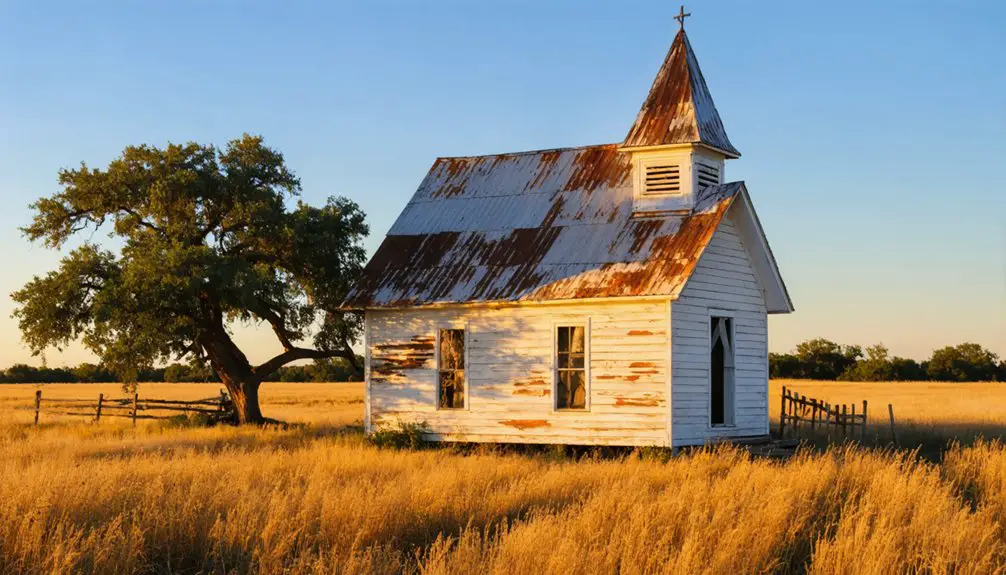
When you arrive at 334 Rheingold School Road, you’ll find the historic school building still standing as the most tangible remnant of this once-thriving German settlement.
The structure earned a spot on the National Register of Historic Places in 2005, recognizing its cultural and architectural significance to Texas history.
Today, the building serves as a community center, giving you a rare chance to step inside a piece of living ghost town history rather than simply observing ruins.
Historic School Building Standing
Although much of Rheingold has faded into history, the old schoolhouse still stands as a quiet but tangible reminder of the community that once thrived here. Its local architecture reflects the determination of German immigrant families who built something lasting from nothing.
Thanks to historic preservation efforts, you can still walk up to this structure and feel the weight of real lives lived here.
When you visit, let these details sink in:
- 1889 construction — built when forty students filled these rooms
- National Register listing — officially recognized in 2005
- Community center use — the building still serves a purpose today
- Remote silence — no crowds, no noise, just unfiltered history surrounding you
National Register Recognition
That standing schoolhouse earned more than local admiration — in 2005, the National Register of Historic Places gave it official federal recognition, cementing its importance beyond Gillespie County. That designation means you’re visiting a federally protected piece of American history, not just a forgotten relic weathered by the regional climate’s brutal summers and unpredictable winters.
When you arrive, you’ll find the building functioning as a community center, its walls holding stories of German immigrant resilience.
Step outside and notice the local flora — native grasses and cedar typical of the Hill Country — framing the structure naturally.
Respect the grounds, since federal recognition carries real expectations for visitor conduct. You’re free to explore, photograph, and absorb the history, but treat this landmark as the irreplaceable cultural treasure it legally and historically is.
Community Center Function
Step inside the Rheingold School today and you’ll find a building still earning its place in the community — functioning as an active gathering space rather than sitting frozen as a museum piece.
You’re not walking into ruins. You’re stepping into living history. The school anchors what little community remains here, hosting gatherings that keep Rheingold’s spirit breathing.
While you’re here, let these four realities sink in:
- Neighbors still meet inside these 1889 walls, choosing connection over isolation
- Local cuisine from surrounding farms occasionally graces community events held here
- Scenic views of North Grape Creek surround you just beyond the schoolhouse door
- No staff greets you — your presence alone honors the German families who built this place
Respect it. That’s all it asks.
How Rheingold Went From German Settlement to Ghost Town
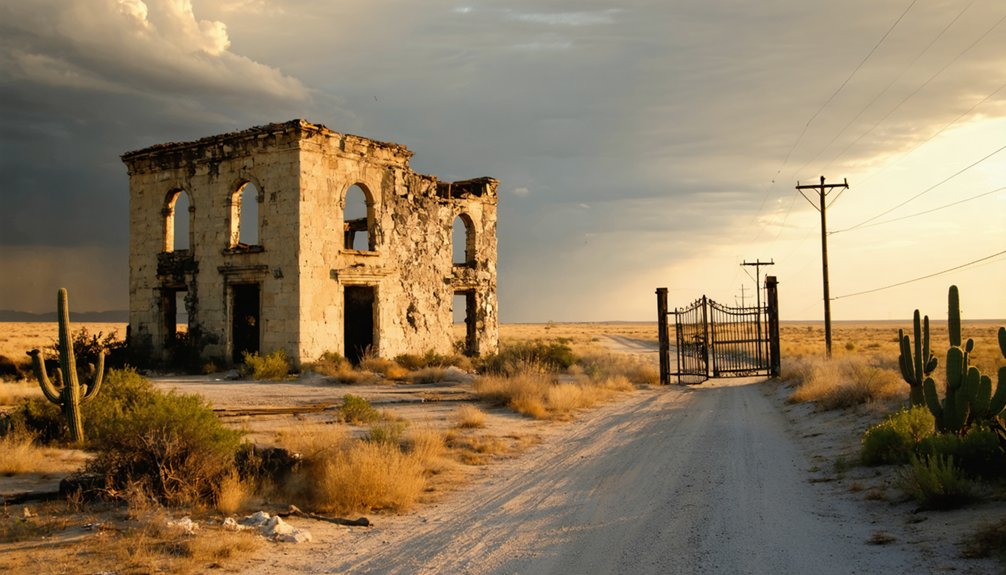
What started as a tight-knit German immigrant community in 1869 quickly blossomed into a thriving rural settlement. Yet Rheingold couldn’t escape the slow unraveling that claimed so many small Texas towns.
The Gold family shaped early land use, controlling the store, cotton gin, and most surrounding acreage. By 1929, the population peaked at 100 residents, but the 1930s hit hard.
Economic pressures gutted the community, sending the population plummeting to just ten by 1933. Cultural preservation efforts kept the Rheingold School standing through the decades, eventually earning it a spot on the National Register of Historic Places in 2005.
Today, only small farmers remain scattered across the land. What was once a vibrant German settlement now qualifies as a genuine ghost town worth exploring.
What to Bring Before Driving Out to Rheingold
Before you head out to Rheingold, packing smart makes the difference between a smooth visit and a frustrating one. This remote ghost town sits 13.5 miles from Fredericksburg with zero commercial stops between you and it.
- Water and snacks – No services exist out here, so bring more than you think you’ll need. Skip the local cuisine this time; there isn’t any.
- Full fuel tank – Running dry on rural eastern Gillespie County roads isn’t freedom; it’s a nightmare.
- Wildlife sightings gear – Binoculars and a camera capture the untamed landscape surrounding North Grape Creek.
- Navigation backup – Save coordinates 30.34519770, -98.68531240 offline. Cell service isn’t guaranteed.
Pack right, and Rheingold rewards you with raw, unfiltered Texas history.
Is Rheingold, Texas Safe to Visit?
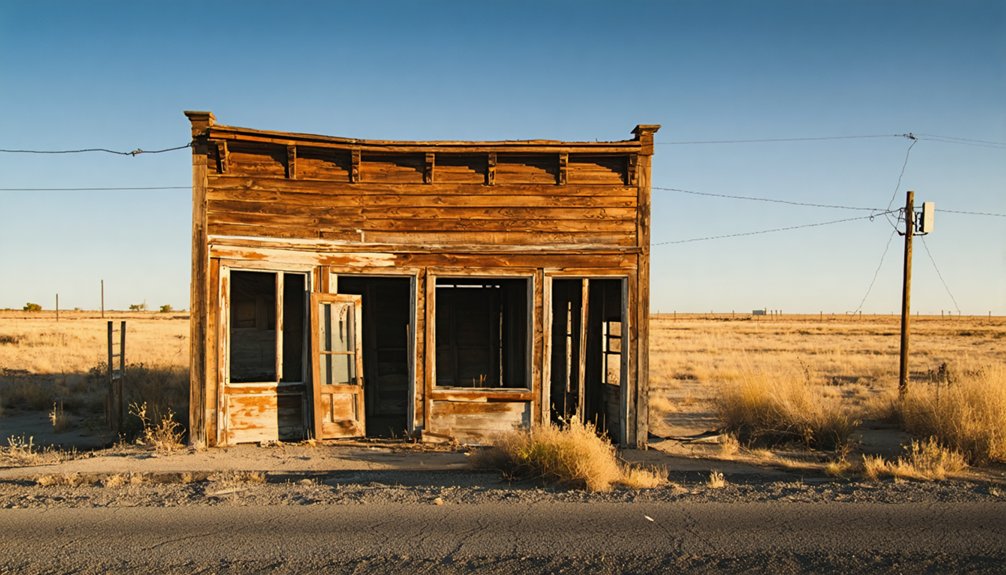
Rheingold is safe to visit, but it demands respect for its remoteness. You’re heading 13.5 miles northeast of Fredericksburg with no emergency services, no fuel stops, and no neighbors to flag down. Carry extra water, a full tank, and a charged phone loaded with the coordinates 30.34519770, -98.68531240.
The Rheingold School stands as the heart of active preservation efforts, so treat it with care. You’re walking through a living piece of history, not an abandoned lot. Local legends surrounding the Gold family and early German settlers give this place its soul, and that soul deserves your attention.
Stay aware of your surroundings on rural roads, respect any posted boundaries, and you’ll leave with nothing but memories worth keeping.
Best Time to Visit Rheingold, Texas
Spring and fall own the best windows for a Rheingold road trip, when Central Texas temperatures sit comfortably between 60°F and 80°F and the Hill Country landscape earns every mile of the drive. Weather conditions stay manageable, and local wildlife moves freely through the creek corridors near North Grape Creek.
- March through May — Wildflowers blanket eastern Gillespie County, turning empty roads into something worth remembering.
- October through November — Crisp air sharpens the silence of a ghost town beautifully.
- Avoid July and August — Triple-digit heat punishes remote, serviceless terrain without mercy.
- Winter visits — Possible but unpredictable; sudden cold fronts can isolate rural routes fast.
Pack water regardless of season, and check local weather conditions before you leave Fredericksburg.
Before You Go: Safety at Abandoned Sites
Ghost town structures have stood without maintenance for decades. Floors, stairs and roof timbers fail without warning, and a building that looks solid from outside may not hold your weight. Stay out of standing structures unless the site is actively maintained and open to visitors.
Mine workings are the more serious hazard. Vertical shafts can be hundreds of feet deep, are often unfenced, and may be hidden by brush or capped with rotted boards. Never enter an adit, tunnel or shaft: abandoned workings can hold oxygen-poor or toxic air that gives no warning before you lose consciousness.
Enclosed spaces with rodent droppings carry a risk of hantavirus, which is contracted by breathing contaminated dust. Do not sweep or stir up dust inside old cabins and outbuildings.
Cell coverage at these sites is usually poor or absent. Tell someone your route and expected return time, and carry more water than you think you need.
Frequently Asked Questions
Can Visitors Enter the Rheingold School Community Center Building Inside?
You’ll want to respect the site’s community events and preservation efforts, as it’s a historic landmark. Check local guidelines before entering, since it’s an active community center serving the area’s ongoing needs.
Are There Any Guided Tours Available at the Rheingold Historic Site?
Like a hidden gem waiting to be discovered, no guided tours exist for historical preservation at Rheingold. Tour accessibility remains self-directed, so you’ll explore freely on your own terms, embracing the adventure independently.
Is Photography Permitted at the Rheingold School National Historic Register Site?
The knowledge doesn’t confirm specific photography rules or visitor restrictions for the Rheingold School site. You’ll want to contact local Gillespie County authorities before visiting, as you’re exploring a National Register property deserving historical respect and sensitivity.
Were There Any Other Ghost Towns Near Rheingold in Gillespie County?
Take Luckenbach, for example — you’ll find abandoned mines and local legends scattered across Gillespie County’s ghost towns. These forgotten settlements whisper freedom’s rugged history, inviting you to explore their mysterious, untamed stories just miles from Rheingold.
Did the Gold Family Have Any Surviving Descendants Still in Texas?
The knowledge doesn’t confirm Gold family descendants still living in Texas, but you can explore their Texas heritage preservation legacy firsthand by visiting Rheingold’s historic school, where the Gold family’s founding story beautifully endures.
References
- https://www.texasalmanac.com/places/rheingold
- https://en.wikipedia.org/wiki/List_of_ghost_towns_in_Texas
- https://kids.kiddle.co/Rheingold_School_(Gillespie_County
- https://en.wikipedia.org/wiki/Das_Rheingold
- https://www.youtube.com/watch?v=2SYrcARN0qg
- https://perichore.com/2025/08/30/homesteading-in-ghost-towns-rheingold-and-the-dead-internet-frontier/