To reach Davis in Rowe, Massachusetts, head to Franklin County near the Vermont border and navigate the winding, forested rural roads into town. Check weather and road conditions before you go, update your maps, and don’t rely on cell service. Spring and fall offer the clearest views, with deer and wild turkey along the way. Once you arrive, you’ll find 150 cellar holes and crumbling stone foundations — and there’s much more to uncover ahead.
Key Takeaways
- Davis ghost town is located in Rowe, Massachusetts, within Franklin County near the Vermont border, accessible via winding, forested rural roads.
- Cell service is limited in the area, so download updated maps and rely on local posted signs before departing.
- Lodging in Rowe is scarce, so book accommodations in neighboring communities and sample local cuisine nearby before exploring.
- The site features roughly 150 cellar holes, stone foundations, and a surviving blacksmith shop with no guided tours or fences.
- Terrain is rugged and uneven with hidden cellar holes and overgrowth, so wear sturdy footwear and navigate cautiously throughout.
Davis: Massachusetts’s Most Forgotten Pyrite Ghost Town
Tucked into the hills of Franklin County near the Vermont border, Davis is one of Massachusetts’s most forgotten ghost towns — a former mining village that once bustled with workers extracting iron pyrite from the earth. H.J. Davis discovered significant deposits here in the late 19th century, and the settlement quickly grew into the largest pyrite mine in the entire state.
By the 1930s, however, the community had collapsed completely, leaving behind roughly 150 cellar holes and scattered stone foundations. Today, local wildlife roams freely through what was once a thriving residential landscape.
The historical significance of Davis runs deep — it’s a rare, unfiltered glimpse into Massachusetts’s industrial past, and it’s yours to explore on your own terms, without admission fees or guided tours controlling your experience.
How H.J. Davis Built a Mining Village: and Why It Vanished
When H.J. Davis discovered rich iron pyrite deposits in the hills of western Massachusetts, he didn’t just start a mine — he built an entire community around it. Using mining techniques that made the operation the largest pyrite mine in the state, he transformed a remote hillside into a thriving village with homes, a blacksmith shop, and a working population.
The historical significance of this settlement is undeniable. At its peak, Davis represented industrial ambition carved directly into the wilderness.
But mines don’t last forever. As pyrite demand declined, the economic foundation crumbled, and residents steadily packed up and left over roughly two decades.
How To Reach Davis in Rowe, Massachusetts
To reach Davis, you’ll need to head to far western Massachusetts, where Franklin County sits right on the Vermont border. Once you’re in the region, navigate the rural roads toward the modern-day town of Rowe, which serves as your primary landmark for locating the ghost town.
Arriving in Rowe puts you directly on the doorstep of one of Massachusetts’ most fascinating abandoned communities, where roughly 150 cellar holes wait to tell their story.
Starting Your Journey West
Reaching Davis means heading deep into far western Massachusetts, where Franklin County’s rolling hills press up against the Vermont border. You’ll navigate winding rural roads that cut through dense forest, so check weather conditions before you go — winters hit hard out here, and mud season can make access unpredictable.
Spring and fall offer the clearest views of the landscape, though you’ll share the terrain with local wildlife, including deer and wild turkey that roam freely through the hills. Keep your maps updated, since cell service thins considerably as you push west toward Rowe.
The drive itself signals your shift from populated Massachusetts into something wilder and quieter — exactly the kind of freedom that makes ghost town exploration worth the effort.
Navigating Franklin County Roads
Once you’ve committed to the western push, Franklin County’s road network becomes your guide into Rowe’s backcountry. You’ll wind through narrow, tree-lined routes that demand attention, so check local road conditions before departing — seasonal weather and rural maintenance schedules can shift your plans fast.
As you climb deeper into Franklin County’s hills, scenic viewpoints open across the forested ridgelines, offering glimpses of the Vermont border country just beyond. These aren’t polished overlooks with parking lots; they’re raw, unscripted breaks in the tree canopy that reward patient travelers.
Keep your navigation app updated but trust posted signs once you’re close to Rowe. The roads thin considerably near the site, and staying alert ensures you’ll arrive ready to walk the landscape where Davis once stood.
Arriving In Rowe
Where exactly does the road to Davis begin? It begins in Rowe, a small town tucked into the hills of Franklin County in far western Massachusetts, right against the Vermont border. Once you’ve arrived, you’ll find yourself surrounded by quiet, rugged countryside that sets the perfect tone for ghost town exploration.
Before heading to the ruins, consider settling into nearby accommodations in the surrounding towns, since Rowe itself offers little in the way of lodging. You’ll also want to sample local cuisine at one of the small eateries in neighboring communities before you venture out.
From Rowe’s center, navigate toward the wooded hills where approximately 150 cellar holes mark the outline of what Davis once was. Freedom-seekers will appreciate the unstructured, open access waiting ahead.
The Cellar Holes, Foundations, and Ruins Still Standing Today
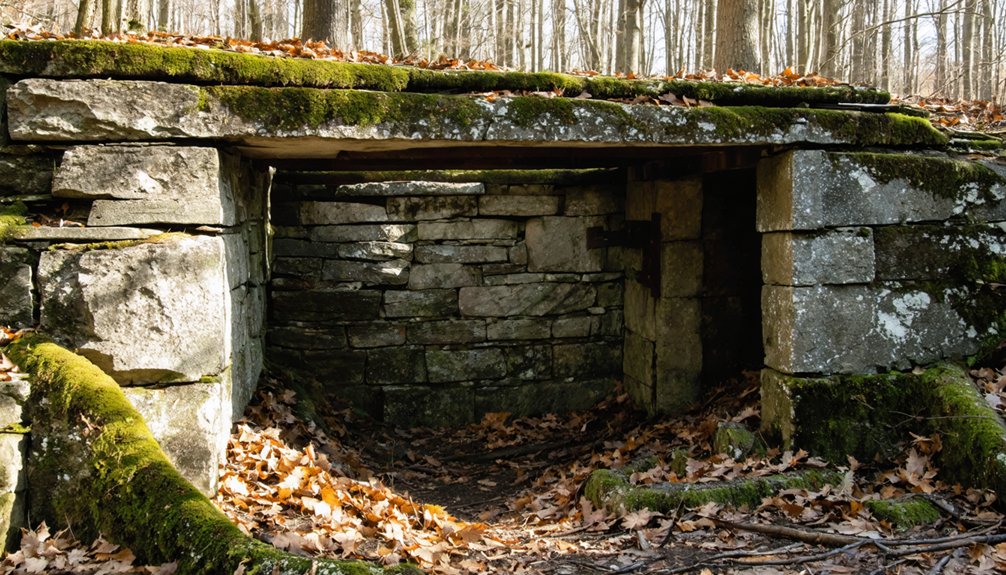
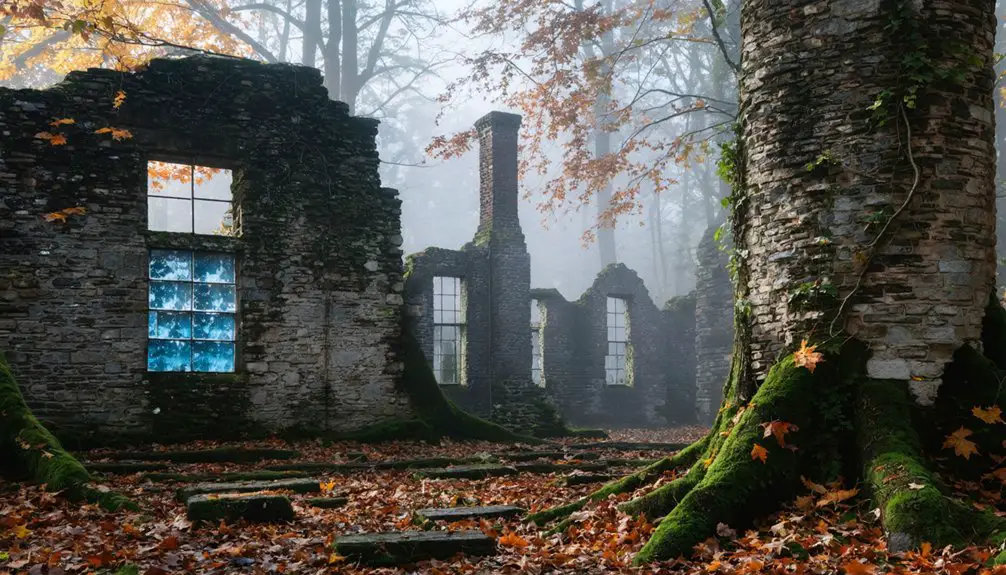
Although no intact buildings remain at Davis, the ruins you’ll find scattered across the landscape paint a vivid picture of the bustling mining community that once thrived here. Roughly 150 cellar holes punctuate the terrain, each one marking where a family once lived, cooked, and sheltered from harsh New England winters.
As you walk the site, you’ll encounter stone foundations representing the historical architecture of a self-sustaining mining village. A blacksmith shop also survives among the remnants, offering a rare glimpse into daily industrial life.
Preservation techniques here rely entirely on visitor responsibility — there are no rangers, fences, or guided tours protecting these fragile structures. Tread carefully around exposed foundations, resist the urge to remove artifacts, and let the landscape speak for itself.
What the Terrain Is Actually Like When You Walk the Site
Stepping onto the Davis site, you’ll quickly realize this isn’t a manicured historic park — it’s raw, uneven New England terrain blanketed by decades of overgrowth. Rocky terrain dominates the landscape, with tree roots, loose stones, and sunken cellar holes creating genuine hazards beneath your feet.
The Davis site isn’t a manicured park — it’s raw terrain that demands respect and sturdy boots.
The uneven ground demands your full attention as you navigate between foundations half-swallowed by forest growth.
Wear sturdy footwear — this isn’t a casual stroll. The site sprawls across hilly western Massachusetts land, meaning elevation changes catch you off guard.
Brush obscures many of the 150 cellar holes, so you’ll stumble upon them rather than spot them from a distance. That unpredictability is part of the experience.
You’re moving through an abandoned world on its own terms, not yours.
How To Explore Davis Without Damaging What Remains
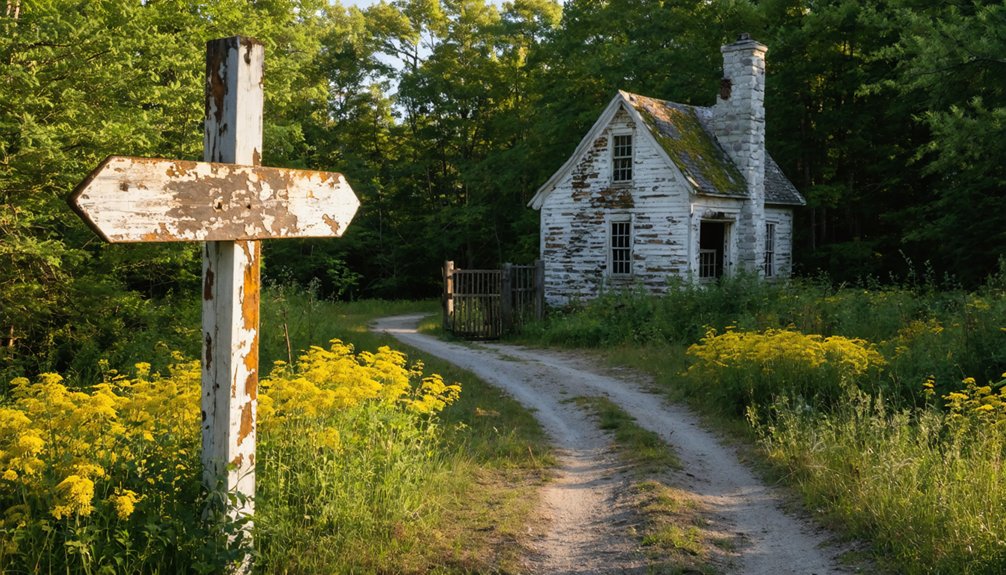
Exploring Davis well means treating it like the fragile historical record it is. Stay on established paths and never step directly onto stone foundations — they’re structurally unpredictable and irreplaceable. Cellar holes deserve extra caution; their edges can crumble without warning.
For photography tips, shoot from stable ground rather than climbing walls for a better angle. Natural light filtering through the forest canopy creates striking compositions without requiring you to disturb anything.
Regarding wildlife encounters, move quietly and give animals space — the site’s untouched landscape supports active ecosystems that existed long before you arrived.
Don’t remove artifacts, however small they seem. Every fragment contributes to the site’s collective story. Your freedom to explore this place depends entirely on leaving it intact for whoever comes next.
Frequently Asked Questions
Are There Any Guided Tours Available at the Davis Ghost Town Site?
Formally, no facilitated tours exist here! You’ll freely explore Davis’s intriguing foundations yourself, discovering historical artifacts scattered across 150 cellar holes. Your mindful steps support preservation efforts, so tread carefully while uncovering this enchanting, abandoned community independently.
What Is the Best Time of Year to Visit Davis in Rowe?
You’ll find late spring or early fall offer the best seasonal weather for exploring Davis’s historical significance. You can navigate the 150 cellar holes comfortably, avoiding summer’s overgrowth and winter’s hazardous, foundation-obscuring snow.
Is There Parking Available Near the Davis Ghost Town Entrance?
The knowledge doesn’t specify parking options or access points for Davis, so you’ll want to research local Rowe, Massachusetts resources before heading out to make certain you’ve got a smooth, hassle-free arrival at this fascinating ghost town.
Are Pets Allowed When Exploring the Davis Ghost Town Ruins?
The knowledge doesn’t specify pet policies or leash requirements for Davis, so you’ll want to check with local Rowe authorities before bringing your furry companion to explore these fascinating cellar holes and stone foundations.
How Long Does a Typical Visit to Davis Ghost Town Usually Take?
Like a treasure hunt through time, you’ll typically spend two to three hours exploring Davis. You can soak in photography opportunities, marvel at 150 cellar holes, and honor historical preservation while wandering freely through these enchanting ruins.
References
- https://historyofmassachusetts.org/ghost-towns-massachusetts/
- https://www.youtube.com/watch?v=_DK85quY_Eo
- https://www.youtube.com/watch?v=_UNjC7EDpAE
- https://bostonuncovered.com/ghost-towns-massachusetts/