To plan your ghost town road trip to Fortuna, Arizona, you’ll need a free permit from Luke Air Force Base or Marine Corps Air Station Yuma — no on-site permits are issued. Bring a capable 4WD vehicle, plenty of water, and offline navigation tools. You’ll explore weathered ruins, old foundations, and a historic 20-stamp mill site tucked inside the Barry M. Goldwater Air Force Range. Stick around to uncover everything this remarkable desert ghost town has to offer.
Key Takeaways
- Fortuna sits within the Barry M. Goldwater Air Force Range, requiring a free permit from Luke Air Force Base or MCAS Yuma beforehand.
- Access requires a 4WD vehicle via Fortuna Mine Trail or El Camino del Diablo; bring extra fuel, water, and recovery tools.
- Visit during fall or winter to avoid extreme heat and enjoy dramatic lighting on the weathered ruins.
- Key site features include old foundations, gravesites, a fenced vertical shaft, and remnants of the historic 20-stamp mill.
- Nearby ghost towns like Castle Dome, Gila City, and King of Arizona mine enrich the regional road trip experience.
What’s Left to See at Fortuna Ghost Town?
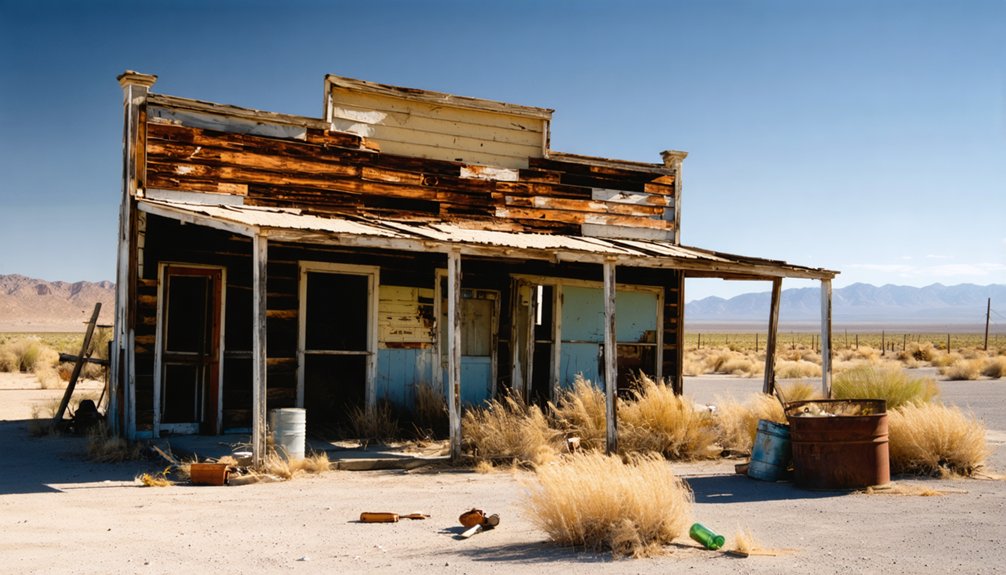
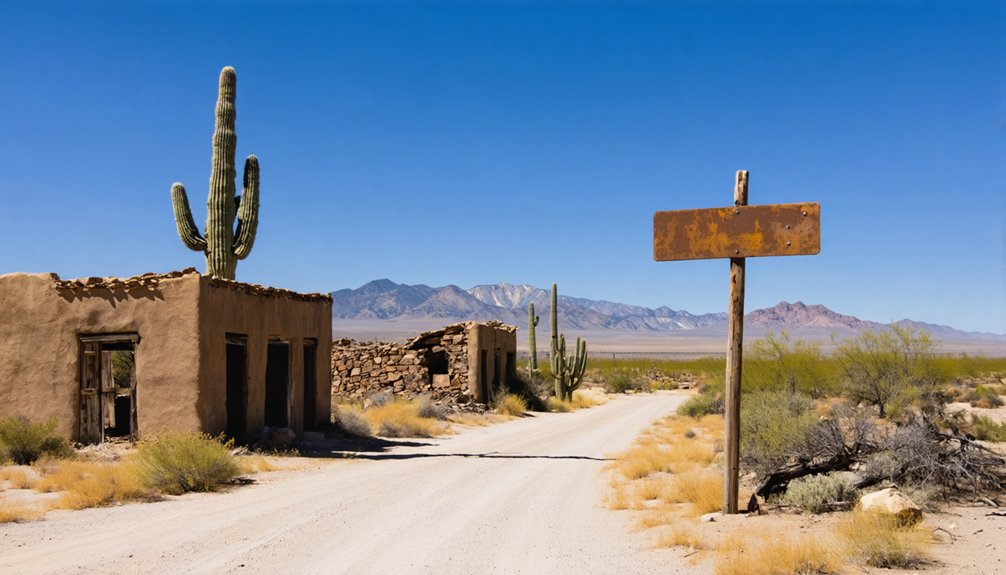
Though much of Fortuna has crumbled into the desert floor, you’ll still find remnants worth exploring scattered across the military landscape. Old foundations, gravesites, and weathered ruins tell the story of a community that once supported nearly 100 residents.
A walking tour leads you past an overlook near the historic 20-stamp mill structure, where mining machinery once processed gold extracted from the surrounding Gila Mountains.
You’ll spot a large vertical shaft near the kiosk, though it’s fenced off for safety. Historical artifacts and deteriorating structures pepper the terrain, offering tangible connections to Fortuna’s boom-and-bust past.
While most sources confirm that little survives above ground, the atmosphere alone rewards the effort. Every crumbling wall and scattered foundation quietly echoes the ambition that once drove men into this unforgiving desert.
How Fortuna’s Gold Rush Began and Ended
When you explore Fortuna’s history, you’ll find its gold rush began around 1893–1894, when prospectors stumbled upon rich deposits in the Gila Mountains, sparking a boom that built a thriving desert community of nearly 100 residents.
Charles Lane’s La Fortuna Mining Company drove operations to their peak, extracting over 123,000 ounces of gold worth $2.5 million before the mine’s momentum collapsed.
In 1904, miners lost the gold vein behind a geological fault, forcing the post office to close and effectively ending Fortuna’s short but spectacular run.
Gold Discovery Origins
Around 1893, a handful of prospectors stumbled upon gold in the Gila Mountains, sparking what would become one of Arizona’s most dramatic boom-and-bust stories. Charles Thomas, William Holbert, and their partners recognized the region’s rich mineral deposits and staked their claims near what’s now Fortuna.
Some accounts suggest three cattle-seekers independently struck gold in 1894, adding mystery to the town’s origins.
Charles Lane’s La Fortuna Mining Company soon took control, extracting over 123,000 ounces of gold worth $2.5 million.
Today, these historic landmarks stand as weathered monuments to that extraordinary era of discovery. When you visit, you’re walking the same rugged terrain where ambitious men gambled everything on a single golden vein hidden deep within Arizona’s unforgiving desert landscape.
Mining Operations Peak
From that initial gold strike, Fortuna’s mining operations exploded into full-scale production, with Charles Lane’s La Fortuna Mining Company driving the site’s most prosperous years. The numbers tell a striking story:
- Miners extracted 123,000+ ounces of gold valued at $2.5 million
- A 20-stamp mill processed ore at peak efficiency
- A 20-mile pipeline delivered Colorado River water to sustain operations
- The post office ran continuously from 1896 to 1904
Intermittent mining continued 20 years after losing the gold vein behind a geological fault.
You’ll encounter historical artifacts throughout the site today, though visitor safety remains a priority — the vertical shaft near the kiosk is fenced off for good reason.
The Vein’s Disappearance
Gold’s discovery in the Gila Mountains came swiftly, but its disappearance proved just as sudden. By 1904, miners lost the vein behind a geological fault, effectively ending Fortuna’s boom overnight. You can almost feel that gut-punch moment walking the grounds today, surrounded by desert flora—creosote and brittlebush reclaiming foundations where nearly 100 residents once hustled.
Local legends suggest the vein still hides somewhere beneath those fractured rocks, tantalizing prospectors for decades after. Intermittent mining continued for roughly 20 years following the 1904 closure, with some gold recovery reportedly ending in 1926.
How Do You Get a Free Permit for the Goldwater Range?
Before heading out to Fortuna, you’ll need to secure a free permit to access the Barry M. Goldwater Air Force Range. Don’t let local legends of bureaucratic hassle discourage you — the process is straightforward. The geological formations and ghost town ruins awaiting you’re absolutely worth it.
A free permit unlocks the Barry M. Goldwater Range — don’t let rumors of red tape keep you from its wonders.
Here’s what you need to know:
- Visit Luke Air Force Base or Marine Corps Air Station Yuma to obtain your permit
- Bring valid government-issued ID for all travelers
- Plan your trip during fall or winter to avoid dangerous desert heat
- Drive a 4WD vehicle — the terrain demands it
- Access the site via the Fortuna Mine trail from Yuma or El Camino del Diablo
Freedom starts with preparation — get your permit and hit the trail.
The Best Time of Year to Visit Fortuna
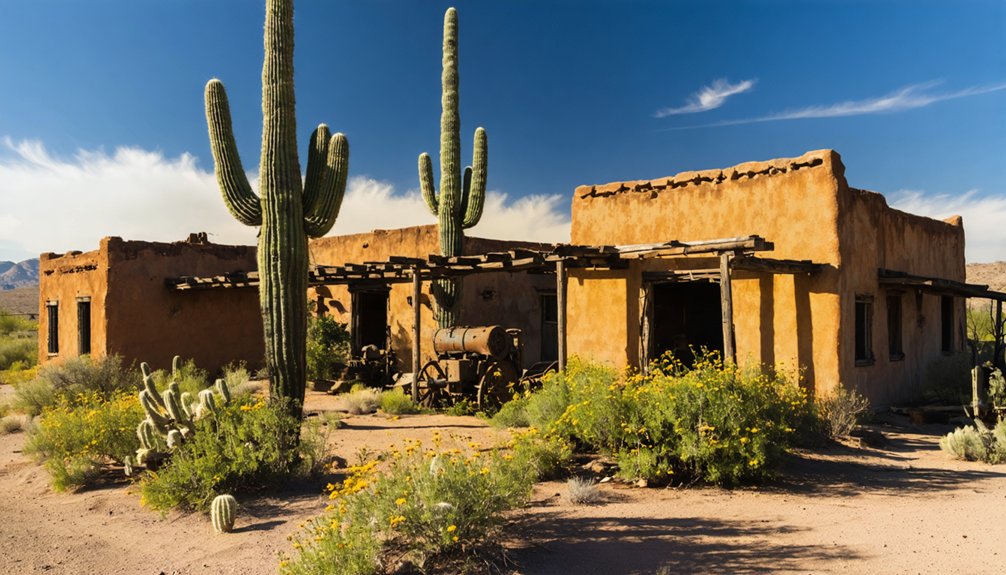
When you’re planning your trip to Fortuna, timing can mean the difference between an unforgettable adventure and a dangerous ordeal. The desert heat in summer becomes genuinely life-threatening, turning the remote terrain into a punishing environment where visitor safety is nearly impossible to guarantee.
Your best windows are fall and winter, when cooler temperatures make the 4WD trail manageable and the arid landscape almost welcoming. You’ll explore ruins, gravesites, and historical artifacts with clear skies overhead and comfortable conditions underfoot.
Winter light also rewards photographers, casting dramatic shadows across the old foundations and weathered structures that survived the boom-and-bust era.
Choose your season wisely, pack enough water, and you’ll experience Fortuna on your own terms — free, prepared, and fully present.
What Kind of Vehicle You Actually Need for This Trip?
Getting to Fortuna isn’t a highway cruise — you’ll need a capable 4WD vehicle to handle the off-road conditions and desert isolation that define every mile of the approach. Before you head out, solid vehicle maintenance and the right off-road gear aren’t optional — they’re survival essentials.
A capable 4WD and serious prep aren’t optional out here — they’re the price of admission.
Pack smart and prepare for:
- Full-size spare tire plus tools to change it solo
- Extra fuel since no stations exist near the Barry M. Goldwater Range
- Recovery gear including tow straps and a hi-lift jack
- Ample water supply for both passengers and your radiator
- Navigation tools like offline maps or a GPS unit
The desert doesn’t negotiate. Arrive prepared, and Fortuna rewards you with raw, unfiltered history few people ever witness firsthand.
How to Reach Fortuna Ghost Town From Yuma
Before you hit the trail, you’ll need to secure a free permit, since Fortuna sits within the Barry M. Goldwater Air Force Range and access without one isn’t an option.
Once you’ve got that squared away, you can choose between two main routes — the Fortuna Mine trail out of Yuma or the rugged historic El Camino del Diablo.
Both paths cut through raw, unforgiving desert terrain, so knowing your route before you leave town makes all the difference.
Permit Requirements Before Visiting
Since Fortuna sits within the Barry M. Goldwater Air Force Range, you’ll need a free permit before setting foot on this historically significant land. These preservation efforts guarantee the site’s cultural significance remains protected while still granting explorers access.
Securing your permit is straightforward — here’s what to know:
- Permits are free and available through the Luke Air Force Base website
- You must apply before arrival — no on-site permits are issued
- The permit covers specific access routes, including the Fortuna Mine trail
- Carry your permit at all times during your visit
- Violations carry serious consequences given the active military range
Don’t let the paperwork discourage you — it’s a small step that allows an unforgettable desert adventure through Arizona’s rugged mining past.
Recommended Access Routes
With your permit secured, the next step is plotting your path into the desert. Two primary routes connect you to Fortuna from Yuma: the Fortuna Mine Trail and the legendary El Camino del Diablo.
The Fortuna Mine Trail offers a more direct approach, while El Camino del Diablo carries deep cultural significance as one of the Southwest’s most historic desert corridors, traveled by explorers and missionaries centuries ago.
Both routes demand a 4WD vehicle — the terrain is unforgiving and remote. Travel during winter or fall to avoid dangerous summer heat.
Stay on established trails to minimize environmental impact across this fragile Sonoran Desert ecosystem. The Barry M. Goldwater Range‘s pristine landscape deserves your respect as much as Fortuna’s haunting ruins deserve your curiosity.
The Ruins, Shaft, and Stamp Mill You’ll See on the Walking Trail
Though much of Fortuna has crumbled beyond recognition, the walking trail still delivers a haunting glimpse into the town’s boom-and-bust past. You’ll encounter historical artifacts and weathered remnants scattered across the desert floor, each telling a story of ambition and abandonment.
Fortuna may be crumbled and forsaken, but its haunting trail still echoes with stories of ambition and abandonment.
Here’s what you’ll find along the trail:
- Vertical mine shaft — fenced off for visitor safety, but visible near the kiosk
- Historic 20-stamp mill — viewable from a dedicated overlook along the route
- Old foundations — concrete and stone outlines marking where buildings once stood
- Gravesites — scattered across the surrounding landscape
- Deteriorating ruins — weathered structures slowly reclaimed by the Sonoran Desert
Walk the trail at your own pace and let the silence of this forsaken place speak for itself.
Four More Ghost Towns Near Yuma Worth the Detour
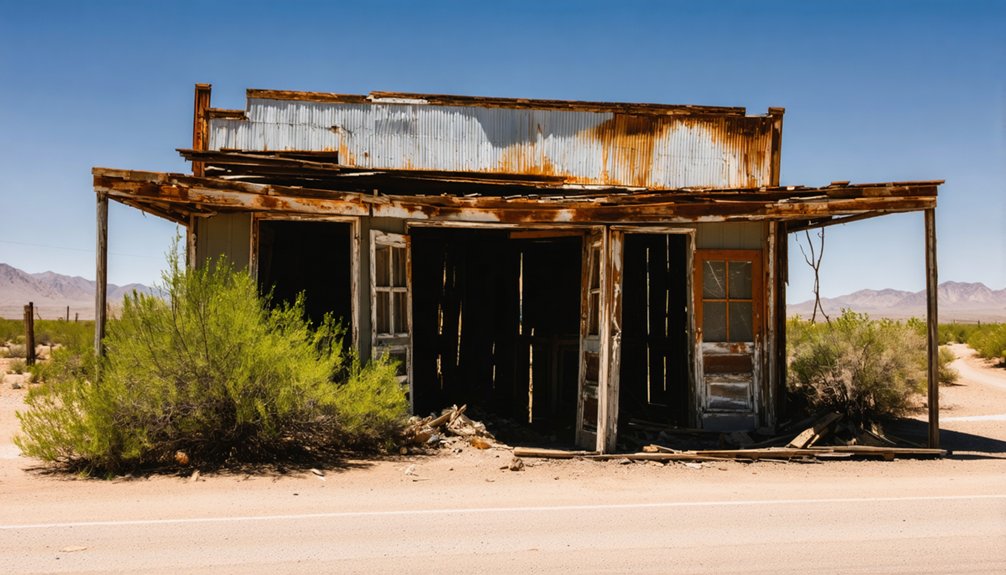
Fortuna isn’t the only ghost town worth chasing near Yuma. The region holds four more sites that reward curious travelers willing to push off the pavement.
Castle Dome Mining District ran from the 1600s through 1979, housing 3,000 residents across 300 silver mines. Today, preservation efforts have kept historical artifacts accessible inside a working museum on-site.
Gila City sparked Arizona’s first major gold rush in 1858, only to vanish by 1862 after floods reclaimed the land.
Castle Dome Landing served Colorado River steamboat traffic during 1863–1864, connecting remote mining camps to supply lines.
Finally, the King of Arizona mine in the Kofa District pulled 227,500 ounces of gold between 1896 and 1928 before falling silent.
Each stop adds another chapter to the same relentless, freedom-driven story.
Frequently Asked Questions
How Many Residents Lived in Fortuna During Its Peak Population?
You’ll find that nearly 100 residents once called Fortuna home at its peak! Historical landmarks and local legends reveal a thriving desert community where freedom-seekers chased golden dreams in Arizona’s rugged, unforgiving wilderness.
How Far Did Fortuna’s Water Pipeline Stretch From the Colorado River?
You’ll marvel at Fortuna’s impressive water infrastructure — the pipeline construction stretched an incredible 20 miles from the Colorado River, delivering life-sustaining water to this remote desert settlement where freedom-seekers and miners carved out their bold existence.
When Did Fortuna’s Post Office Officially Open and Close?
Can you imagine the local legends that passed through its doors? Fortuna’s post office officially opened in September 1896 and closed November 30, 1904, leaving behind historic architecture and untold stories for you to explore.
How Much Gold Did La Fortuna Mining Company Extract in Total?
You’ll be amazed that Charles Lane’s La Fortuna Mining Company extracted over 123,000 ounces of gold worth $2.5 million — a stunning gold production milestone that’s cemented Fortuna’s place in Arizona’s rich mining history forever.
What Year Was Fortuna Ghost Town Completely and Finally Abandoned?
Like a flame snuffed by desert winds, Fortuna’s last breath came in 1942. You’ll find haunted legends and vintage photographs tracing its final days, though some records suggest gold recovery actually ended earlier in 1926.
References
- https://en.wikipedia.org/wiki/Fortuna
- https://kids.kiddle.co/Fortuna
- https://azoffroad.net/fortuna-mine
- https://www.ghosttowns.com/states/az/fortuna.html