Freeman Junction sits at the junction of CA-178 and CA-14, about 7 miles east of Inyokern — and it’s unlike any ghost town you’ve visited before. There’s no crumbling saloon, no rusted wagon, no dramatic skyline. What you’ll find is open desert, a California Historical Landmark plaque, and a story stretching from Native American trails to stagecoach stops to abandonment. Pack water, pull off carefully, and let the landscape do the talking — there’s far more here than first meets the eye.
Key Takeaways
- Freeman Junction sits just before the CA-178 and CA-14 junction, about 7 miles east of Inyokern, making it an easy roadside stop.
- No ruins or artifacts remain; the desert has fully reclaimed the site, so visit for historical reflection, not physical exploration.
- A California Historical Landmark plaque (No. 766) marks the site, offering brief historical context about its frontier past.
- Arrive prepared with water, sunscreen, and historical knowledge, as no parking lots, restrooms, or amenities exist at the site.
- Freeman Junction’s history spans Native American trails, a stagecoach station, and a 1920s roadside stop, making it historically rich.
What Was Freeman Junction?
Before the highways carved through the Mojave, Freeman Junction was a critical lifeline for travelers pushing between desert mines and Los Angeles. Freeman S. Raymond built his stagecoach station here in the early 1870s, transforming a dusty watering spot once called Coyote Holes into a genuine frontier outpost. You’re standing at a crossroads that shaped California’s desert corridor long before CA-178 and CA-14 ever met.
Its cultural significance runs deep — Native American trails, pioneer movement, and gold-rush-era ambition all converged at this spot. Yet preservation challenges have erased nearly every trace. A 1909 conflict destroyed the original station, and by 1978, abandonment claimed what remained. Today, nothing stands.
What you’ll find instead is raw desert and a powerful sense of history hiding just beneath the surface.
How Freeman Junction Became a Ghost Town
Though Freeman Junction once thrived as a desert lifeline, its decline came swiftly and in stages. In 1909, Native Americans defending their homes burned the stage station, halting the settlement’s momentum for years.
Freeman Junction once thrived — until 1909, when fire and resistance brought its first chapter to an abrupt end.
The Mileys revived it in the 1920s, turning the stone cabin into a roadside stop offering fuel, repairs, and food. That second chapter carried its own cultural significance, reflecting how desert communities adapted to the automobile age.
But the revival didn’t hold. A planned 1953 post office never arrived, forcing residents to drive seven miles to Inyokern for mail.
By June 1978, Freeman Junction was abandoned again. Preservation challenges proved insurmountable — passersby gradually removed remaining structures, and the desert reclaimed everything.
Today, nothing stands. What you’ll find is silence, open sky, and history you have to feel rather than see.
What’s Left to See at Freeman Junction Today?
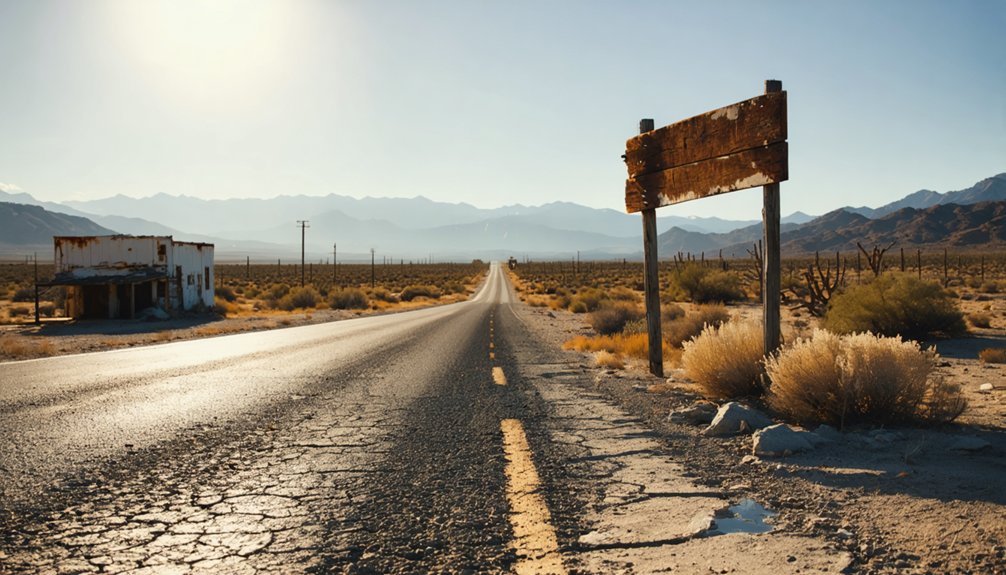
When you pull off CA-178 just before the junction with CA-14, you won’t find ruins, signage, or artifacts — the desert has reclaimed every trace of Freeman Junction. Passersby stripped remaining structures long before any preservation efforts could take hold, leaving only open sky and scrubland.
What you’ll find is something rarer: unfiltered space where history breathes beneath your feet. Local legends place stagecoaches, desperate miners, and frontier families across this exact stretch of Mojave ground. California Historical Landmark No. 766 anchors the site’s significance, giving you a concrete reason to stop and imagine.
You’re standing where a civilization tried twice to root itself and twice surrendered. That invisible weight — that freedom-edged emptiness — makes Freeman Junction worth every mile of the drive.
How to Get to Freeman Junction From Inyokern?
From Inyokern, you’ll head east on CA-178, tracing the same desert corridor that once carried stagecoaches, miners, and frontier settlers toward Freeman Junction.
The drive covers roughly seven miles, cutting through the stark Mojave landscape before the junction with CA-14 comes into view.
That’s where Freeman S. Raymond once ran his station — and where the ghost town’s story quietly unfolded over more than a century.
Starting Point In Inyokern
If you’re mapping out your route, Inyokern makes a natural and historically fitting starting point — head east on CA-178, and you’ll reach Freeman Junction in about 7 miles, just before the highway meets CA-14.
The drive itself rewards attention. Desert flora lines the roadside — creosote, Joshua trees, and scrub that’s barely changed since stagecoaches rolled this corridor. Keep your eyes open for local wildlife crossing the flats; hawks, jackrabbits, and the occasional coyote still claim this stretch as their own.
Inyokern also serves a practical purpose — it’s your last reliable stop for fuel and supplies before reaching a site where nothing remains. Stock up, check Caltrans for road conditions, and let the open Mojave pull you forward into a genuinely forgotten chapter of California history.
Seven-Mile Drive East
Leaving Inyokern behind, you’ll head east on CA-178 — a straight, unhurried desert run that once carried miners, traders, and stagecoach passengers toward the same vanishing point on the horizon. The seven miles pass quickly, but don’t rush them. Scenic vistas open wide across the Mojave, and desert flora — scrubby creosote, sparse Joshua trees, sun-bleached brush — lines both shoulders like a quiet honor guard.
You’re retracing a corridor that shaped California’s desert history long before asphalt existed. Watch for the CA-14 junction ahead; Freeman Junction sits just before that split. There’s no formal parking lot, so pull off carefully onto the roadside.
Before heading out, check Caltrans for road conditions — the desert rewards the prepared traveler.
No Parking, No Facilities: What to Expect On-Site
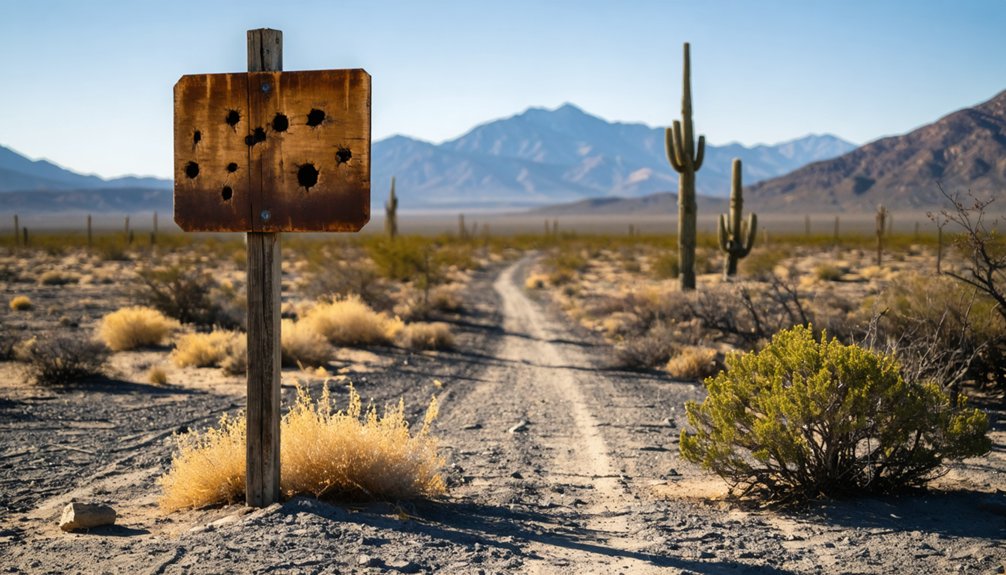
When you arrive at Freeman Junction, you won’t find a parking lot, a restroom, or a single posted sign welcoming you — just the open Mojave and the whisper of a place that once mattered.
You’ll pull off roadside along CA-178, stepping out where stagecoaches once rattled through on their way between desert mines and Los Angeles.
Come prepared, because the land offers nothing but history and silence.
Roadside Pull-Off Access
Once you’ve traced the route east from Inyokern along CA-178, you’ll find Freeman Junction just before it meets CA-14—a crossroads that once hummed with stagecoaches and desert-weary travelers. Now, it’s quiet enough that you’ll hear the wind before you see the site.
There’s no dedicated parking lot here—just open road and raw desert. Pull safely off the shoulder and step into a place carrying real cultural significance despite its stripped landscape. Preservation challenges mean no markers guide you; the land itself is the exhibit.
Before you stop, keep these in mind:
- Pull completely off the roadway onto stable ground
- Watch for fast-moving traffic merging near CA-14
- Check Caltrans updates beforehand—desert road conditions shift quickly
Freedom here means arriving prepared.
No Amenities Available
Stepping out of your car at Freeman Junction, you’ll find the desert offers no concessions to modern comfort—no restrooms, no water, no shade structures, no interpretive signs, and certainly no parking lot. That rawness is honest. Nothing pretends this place is anything other than what it’s become: a historical location reclaimed by wind and scrub.
The cultural significance here lives entirely in your imagination and preparation. Bring water, sunscreen, and whatever knowledge you’ve gathered beforehand, because the land won’t explain itself to you.
Those preservation challenges are real—without structures or markers, history erodes alongside the soil. You’re standing where stagecoaches once stopped, where lives were built and lost. The desert remembers nothing.
That responsibility falls entirely on you.
The Historical Marker and What It Actually Says
California Historical Landmark No. 766 marks the spot where Freeman Junction once stood, and it’s one of those roadside plaques that actually earns its place in the landscape. It connects you directly to local lore stretching back to the 1870s and represents a genuine act of historical preservation in an otherwise empty stretch of desert.
The marker tells you three things worth knowing:
- Freeman S. Raymond built a stagecoach station here, linking desert mines to Los Angeles.
- A post office named Freeman operated beginning in 1890.
- The site was originally called Coyote Holes before settlers renamed it.
Read it slowly. You’re standing where frontier commerce, Native American conflict, and desert survival all converged. The plaque won’t take long, but what it represents will stay with you.
Frequently Asked Questions
Is Freeman Junction Worth Visiting if Nothing Remains There?
It’s worth it if you crave historical preservation stories and wide-open desert freedom. You’ll find photography opportunities in the raw landscape itself, where the silence speaks louder than any standing ruin ever could.
Are There Other Ghost Towns Near Freeman Junction to Visit?
Why stop at one? You’ll find nearby ghost towns packed with abandoned mines and historic landmarks just waiting to be explored. The Mojave Desert rewards your restless spirit with endless forgotten stories around every dusty bend.
What Is the Best Time of Year to Visit Freeman Junction?
Visit in spring or fall—you’ll dodge brutal Mojave heat, capture stunning photography opportunities in golden light, and truly feel Freeman Junction’s historical significance as desert winds whisper stories of stagecoaches, pioneers, and forgotten freedom across the open landscape.
Can You Camp Overnight Near Freeman Junction Legally?
You can camp nearby legally. BLM land surrounds Freeman Junction, honoring both your freedom and wildlife conservation needs. Follow camping regulations — like keeping fires contained — and you’ll sleep where desert pioneers once rested their weary bones.
Is Freeman Junction Accessible for Visitors With Mobility Limitations?
Freeman Junction doesn’t offer accessible trails or wheelchair friendly facilities — it’s a raw roadside pull-off where history dissolved into desert. You’ll feel the freedom of open land, but uneven terrain makes mobility-limited visits genuinely challenging.
References
- https://en.wikipedia.org/wiki/Freeman_Junction
- https://fr.wikipedia.org/wiki/Freeman_Junction_(Californie)
- https://kids.kiddle.co/Freeman_Junction
- https://simple.wikipedia.org/wiki/Freeman_Junction
- https://en.wikipedia.org/wiki/List_of_ghost_towns_in_California
- https://digital-desert.wrightwoodcalifornia.com/freeman-junction/
- https://evendo.com/locations/california/southern-california/landmark/freeman-junction-california-historical-landmark-no-766
- https://fr.wikipedia.org/wiki/Liste_des_villes_fantômes_en_Californie
- https://en.wikipedia.org/wiki/Category:Ghost_towns_in_California
- https://a.osmarks.net/content/wikipedia_en_all_maxi_2020-08/A/List_of_ghost_towns_in_California