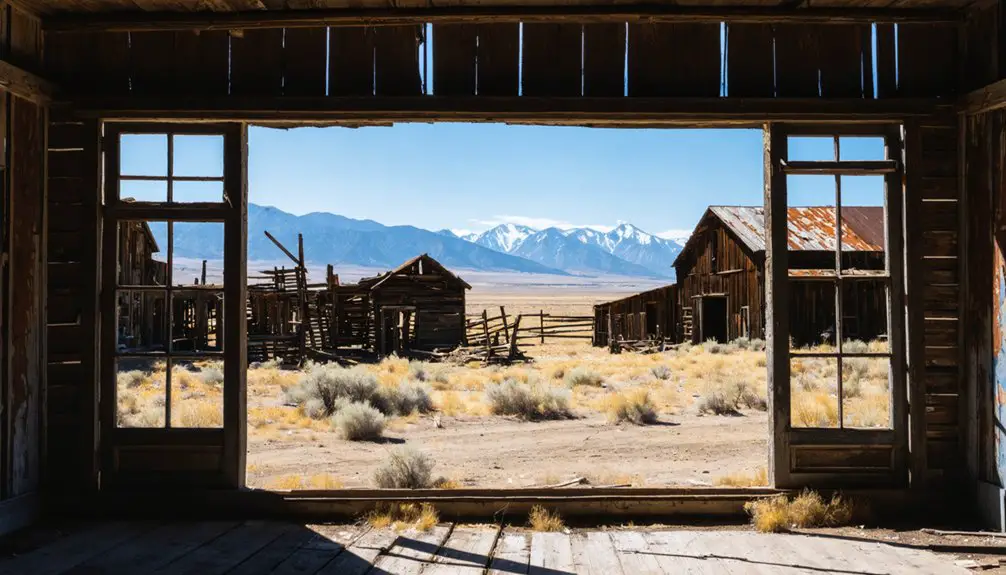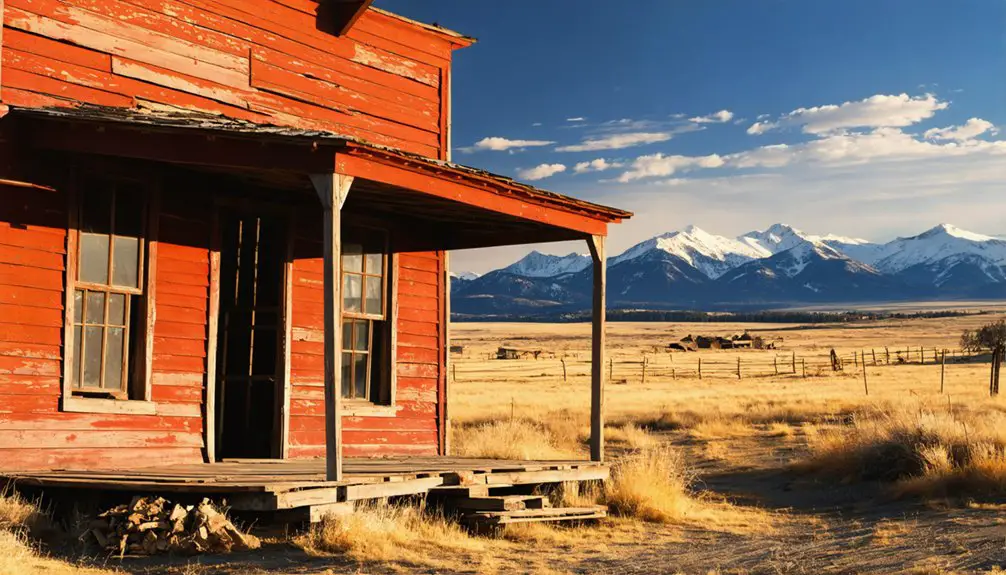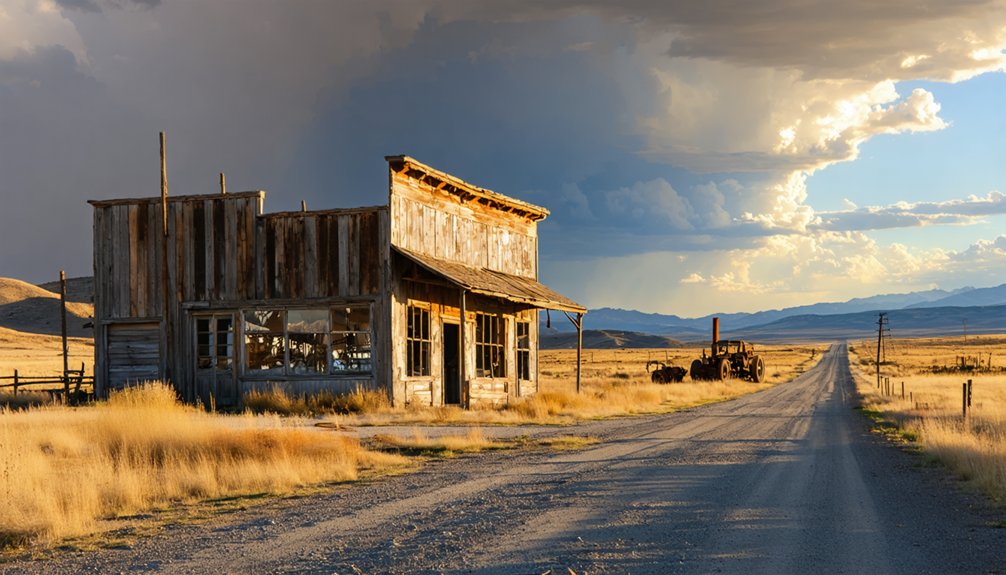
Planning a ghost town road trip to Glendale, Montana, starts with heading to Beaverhead County’s Pioneer Mountains, about 5 miles west of Melrose near the Big Hole River. Take Interstate 15 to Exit 93, then drive west on Trapper Creek Road. You’ll want a high-clearance vehicle, solid supplies, and offline maps since cell service is spotty. Glendale’s crumbling smelter stacks and silver-era ruins are just the beginning of what this remarkable district has to offer.
Key Takeaways
- Glendale Ghost Town is located in Beaverhead County, Montana, accessible via Interstate 15 Exit 93 near Melrose, then west on Trapper Creek Road.
- Bring a high-clearance vehicle, spare tires, water, snacks, a first aid kit, and offline GPS due to unreliable cell service.
- Glendale peaked with 4,000 residents, featuring a church, schoolhouse, hotels, and a smelter built in 1875 driving the local economy.
- The silver crash of 1893 caused rapid decline, with residents abandoning the town and operations fully ceasing by 1904.
- Key landmarks include a standing smelter chimney, crumbling walls, charcoal kilns, and mining equipment remnants scattered throughout the site.
How to Get to the Glendale Ghost Town in Montana
Tucked into the Pioneer Mountains of Beaverhead County, Glendale sits about five miles west of Melrose near the Big Hole River. To reach it, take Interstate 15 to Exit 93 near Melrose, then head west on Trapper Creek Road.
The drive runs roughly 15 miles to the ghost town area, winding through open terrain where wildlife viewing opportunities are excellent — keep your eyes open for deer, elk, and birds along the way.
Before you leave Melrose, grab a meal and sample the local cuisine at one of the small-town spots there, since you won’t find any services once you head west.
The road leads you deep into Montana’s mining past, rewarding your curiosity with a landscape that still echoes with industrial history.
What Made Glendale a Boomtown in the 1870s
When silver was discovered in the Hecla Mining District in the 1870s, Glendale transformed almost overnight from open mountain terrain into one of southwestern Montana’s most important industrial centers.
Silver struck in the 1870s turned Glendale from quiet mountain wilderness into southwestern Montana’s premier industrial powerhouse almost overnight.
A smelter built in 1875 sealed its fate as an industrial powerhouse, pulling miners, merchants, and families into the valley. Related towns like Trapper City, Lion City, and Hecla sprang up nearby, creating a network of settlements humming with ambition.
Local legends paint Glendale as surprisingly orderly compared to wilder mining camps, with churches, a two-story schoolhouse, and even a brewery keeping residents grounded. You’d have shared trails with wildlife encounters around every mountain bend.
The Hecla Mining Company drove it all, processing silver, lead, and copper ore hauled down from Trapper Mountain’s rich deposits.
What Glendale Looked Like at Its Peak
At its peak, Glendale wasn’t just a collection of mine shafts and smokestacks — it was a functioning community with schools, churches, hotels, stores, and even a working waterworks system.
You’d have found residents filling a two-story schoolhouse, worshipping at a Methodist Episcopal Church, and grabbing supplies at the general store, all while the smelter roared nearby.
Industry didn’t just fuel Glendale’s economy; it shaped every street, structure, and social rhythm of daily life.
A Town Built Fast
Glendale didn’t grow slowly — it erupted. After silver discoveries sparked the Hecla district in the 1870s, the town transformed from raw wilderness into a working industrial center almost overnight.
By the time the smelter fired up in 1875, settlers, laborers, and merchants had already staked their ground.
At its peak, Glendale supported thousands of residents — estimates range from 1,000 to 4,000, depending on who’s telling the story. Local legends describe a surprisingly orderly town, complete with a Methodist Episcopal Church, a two-story schoolhouse, hotels, offices, a brewery, and even a waterworks system.
Walking those streets today, you’ll find historical artifacts that hint at just how fully realized this community once was — built fast, lived hard, and gone faster than anyone expected.
Community Life Thrived
Though it’s easy to picture a rough-and-tumble mining camp, Glendale looked more like a functioning small city at its peak. You’d have found a Methodist Episcopal Church, a two-story schoolhouse, hotels, stores, and a working waterworks system lining the main street.
A brewery served locals unwinding after brutal shifts in harsh weather conditions, while the general store kept families supplied through long Montana winters. Residents enjoyed local cuisine at hotels that catered to miners, merchants, and company officials alike.
The town earned a reputation for being comparatively orderly compared to neighboring camps. With a population potentially reaching 4,000, Glendale wasn’t just a worksite — it was a real community where people built lives, raised families, and created something worth remembering.
Industry Shaped Everything
When the Hecla Mining Company’s smelter fired up in 1875, it didn’t just process ore — it defined Glendale’s entire identity. Every road, building, and decision revolved around production. Local legends say the mining machinery never truly slept, driving the town’s rhythm around the clock.
At its peak, Glendale’s industrial output shaped daily life through:
- Silver and lead smelting feeding eastern markets via 90-pound silver bars
- Ore hauled continuously down from Trapper Mountain mines
- $18–22 million in total district production between 1881 and 1900
- Copper, silver, and lead extraction diversifying the town’s economic base
- A full smelter operation processing raw mountain ore into refined bullion
You’re not just visiting a ghost town — you’re standing inside what was once Montana’s southwestern industrial heartbeat.
The Silver Crash That Turned Glendale Into a Ghost Town
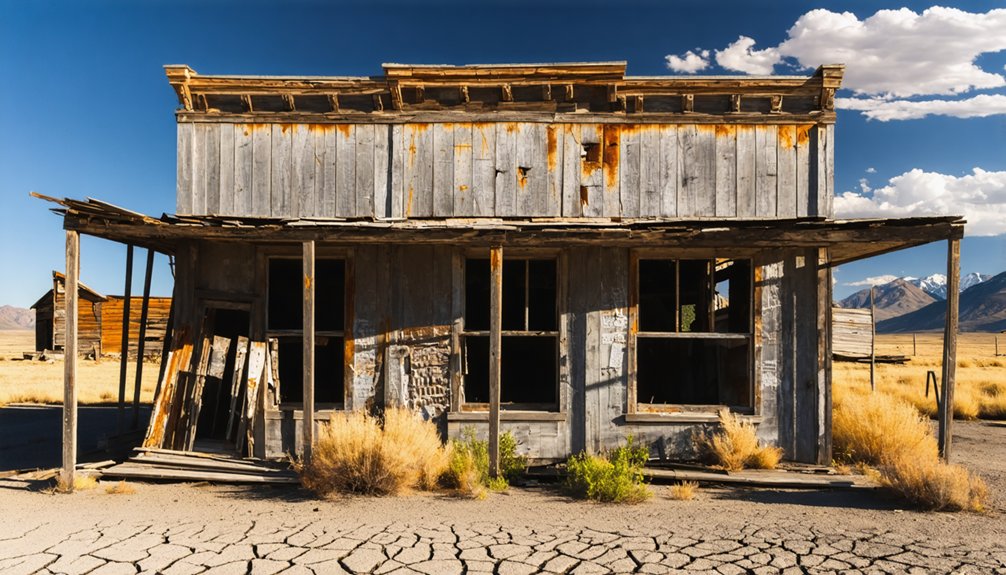
The silver crash of 1893 didn’t just rattle Glendale — it gutted it. When silver prices collapsed, the economics behind every furnace, cart, and crew collapsed with them. The Hecla Mining Company, once driving cutting-edge mining technology across the district, couldn’t sustain operations against falling returns.
When silver prices collapsed, so did everything else — every furnace, every crew, every reason to stay.
By 1900, most mining had stopped. By 1904, the company had largely pulled out.
Families packed up and headed to Dillon, Arizona, and Idaho. Buildings burned, rotted, or simply vanished. Town preservation became nobody’s priority when survival meant leaving.
What thrived as a community of potentially thousands shrank to silence within just a few years.
Walking the site today, you feel that abrupt ending. Glendale didn’t fade slowly — it stopped, almost overnight, when the market decided it was done.
What Survives at the Glendale Ghost Town Today
When you arrive at the Glendale ghost town site today, the most striking feature you’ll spot is the old smelter stack, a tall brick chimney that still rises above the valley floor as a silent reminder of the town’s industrial past.
You can also explore dilapidated buildings and rock foundations scattered across the townsite, giving you a tangible sense of the community that once thrived here.
Keep your eyes open for the charcoal kilns and coke ovens up the road, which round out the picture of Glendale’s ore-processing operation.
The Surviving Smelter Stack
Although little of Glendale’s once-bustling industrial town remains, the brick smelter stack still rises above the valley floor like a stubborn monument to the district’s silver-fueled past. You’ll feel the weight of history standing beside it, imagining the roar of furnaces and the smell of molten ore filling the air.
Local legends say the stack witnessed Glendale’s greatest boom and its quiet collapse.
Look around and you’ll spot traces of the town’s industrial soul:
- Scattered mining equipment fragments embedded in the earth
- Rock foundations outlining vanished structures
- Crumbling brick walls hinting at former buildings
- Charcoal kilns and coke ovens up the road
- The schoolhouse ruins standing nearby
The stack remains your clearest visual anchor to everything Glendale once was.
Ruins And Rock Foundations
Beyond the smelter stack, Glendale’s ghost town reveals itself in quieter, more scattered ways. Walk the old townsite and you’ll find rock foundations where hotels, stores, and homes once stood, their outlines still readable against the Montana landscape.
Dilapidated structures lean into the hillside, and remnants of mining equipment surface here and there, hinting at the industrial scale that once defined this valley.
You’re free to wander, piece together the layout, and let local legends about the Hecla district’s booming silver days fill the silence. The coke kilns up the road add another layer to the story.
Nothing’s manicured here — Glendale rewards curious, self-directed explorers who appreciate raw history over polished presentations. Every crumbling wall has something honest to say.
Other Ghost Towns Worth Visiting in the Hecla Mining District
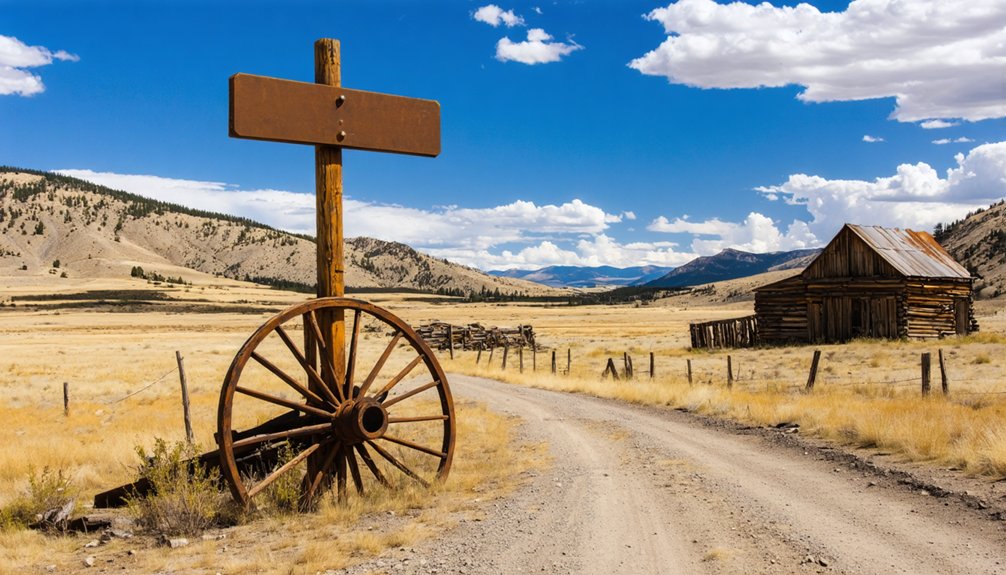
Glendale wasn’t the only town that thrived in the Hecla Mining District—Trapper City, Lion City, and Hecla itself once hummed with the same boom-era energy, and their remnants are scattered across the same rugged Pioneer Mountains landscape. Ghost town mysteries deepen when you explore beyond Glendale, uncovering mining legends buried in these forgotten settlements. Each stop reveals another layer of southwestern Montana’s industrial past.
- Trapper City supplied workers and resources to nearby smelter operations.
- Lion City developed alongside silver extraction in the surrounding mountains.
- Hecla served as a namesake hub for the broader district.
- Charcoal kilns along Trapper Creek Road connect multiple sites.
- All four towns share the same boom-and-bust timeline rooted in silver’s collapse.
Travel the full district—you’ll leave with a richer story.
What to Bring When Visiting Glendale and the Hecla District
Visiting a remote ghost town like Glendale means you’ll want to prepare before you leave pavement behind. Trapper Creek Road can be rough, so bring a vehicle with decent clearance and carry a spare tire.
Pack plenty of water, snacks, and a first aid kit for visitor safety, since cell service is unreliable this far into the Pioneer Mountains.
Wear sturdy boots for walking uneven terrain around rock foundations and the old smelter stack.
Bring a camera to document the smelter chimney and charcoal kilns.
Respect historical artifacts by leaving everything untouched, taking only photographs.
A detailed map or downloaded offline GPS route helps you navigate confidently.
A light jacket is smart too, since mountain temperatures shift quickly even on clear summer days.
Frequently Asked Questions
Is There an Admission Fee to Visit the Glendale Ghost Town?
Freely find Glendale’s fascinating ruins without fees! You’ll roam freely, supporting historical preservation naturally. Capture stunning Photography tips: shoot the smelter stack at golden hour for breathtaking, barrier-free shots of Montana’s magnificent mining legacy.
Are Pets Allowed When Exploring the Glendale Ghost Town Site?
The knowledge doesn’t confirm specific pet regulations for Glendale’s ghost town site. You’d want to check locally before visiting. Keep wildlife encounters in mind — leashing your pet protects both them and the area’s natural inhabitants!
Is the Glendale Ghost Town Accessible During Winter Months?
You can visit Glendale in winter, but you’ll want to prioritize winter safety — snow and ice heavily impact road accessibility along Trapper Creek Road, so pack emergency supplies and check conditions before adventuring out freely.
Can Visitors Legally Take Artifacts or Rocks From the Ghost Town?
You shouldn’t remove artifacts or engage in rock collection at Glendale, as federal laws protect ghost town sites. Respecting these rules guarantees you’re preserving history for future explorers who’ll treasure this remarkable Montana landmark just as much as you do.
Is There Camping Available Near the Glendale Ghost Town Site?
Coincidentally, you’ll find camping options right where adventure calls! The Big Hole River area near Glendale welcomes you and your pets, though you’ll want to verify current pet policies with Beaverhead County before pitching your tent.
References
- https://treasurestate.com/ghost-towns/glendale/
- https://www.facebook.com/groups/montanahistory/posts/966896655041890/
- https://www.abandonedspaces.com/towns/glendale.html
- https://www.facebook.com/ghosttownsandhistoryofmontana/posts/glendale-montana-located-about-five-miles-west-of-melrose-in-the-pioneer-mountai/3689923554361656/
- https://www.youtube.com/watch?v=e93C8d89-fw
- https://archiveswest.orbiscascade.org/ark:80444/xv88937
- https://www.facebook.com/ghosttownsandhistoryofmontana/posts/once-a-thriving-smelting-town-little-remains-of-glendale-montana-the-old-stone-c/1144463364376065/
- https://www.ultimatemontana.com/butte area/3385-glendale-ghost-town
- https://montanahistoriclandscape.com/tag/glendale-montana/
- https://www.killerurbex.com/abandoned-places-in-montana/