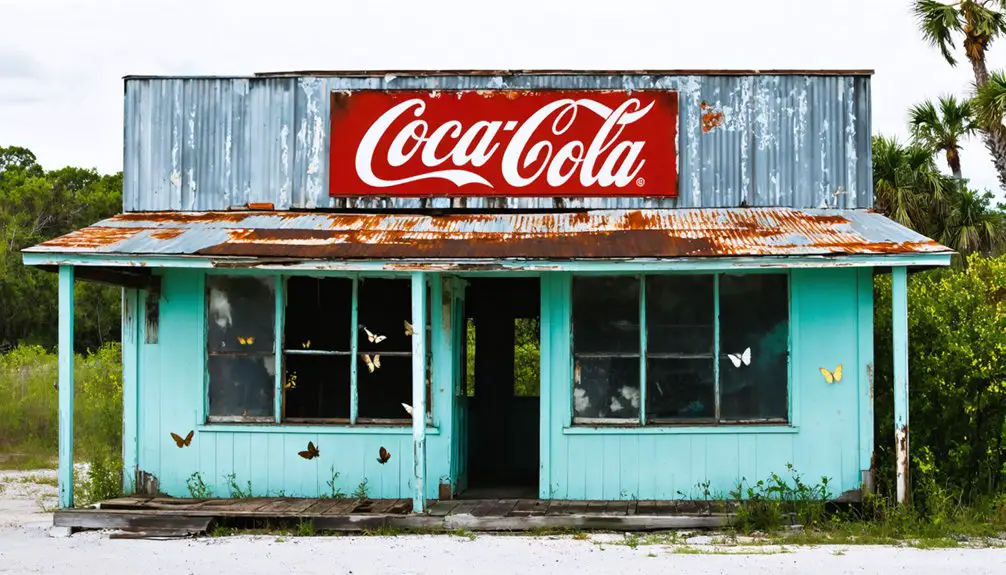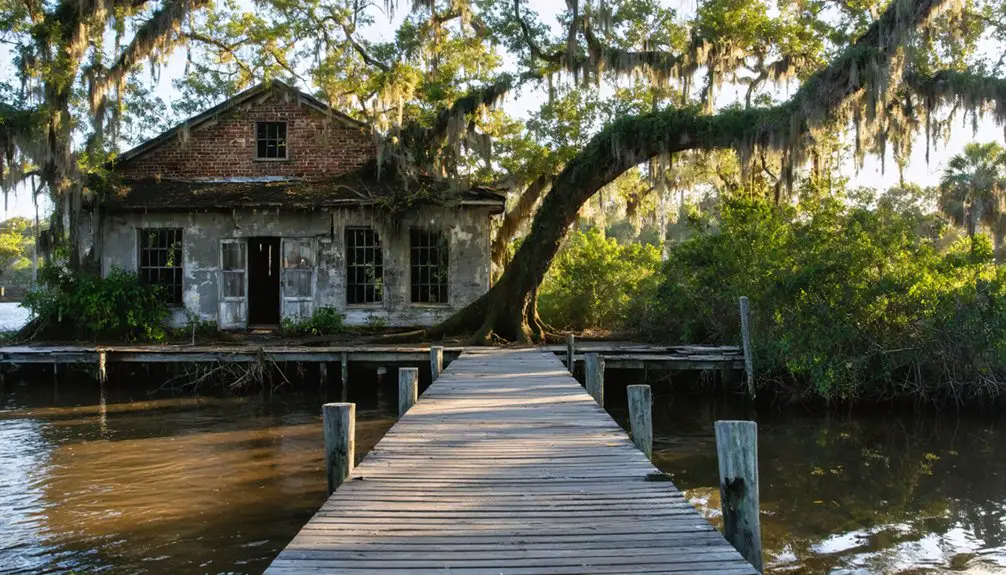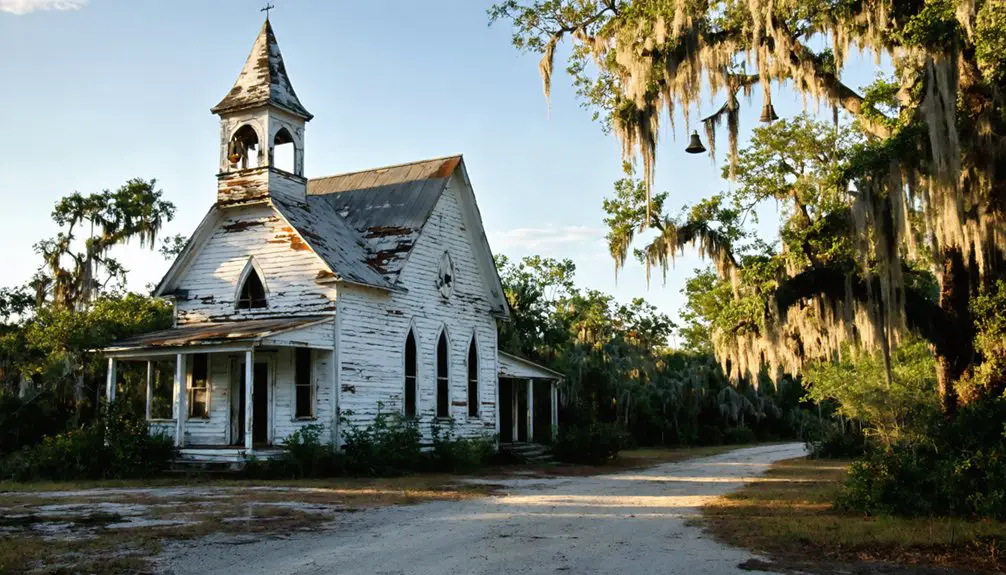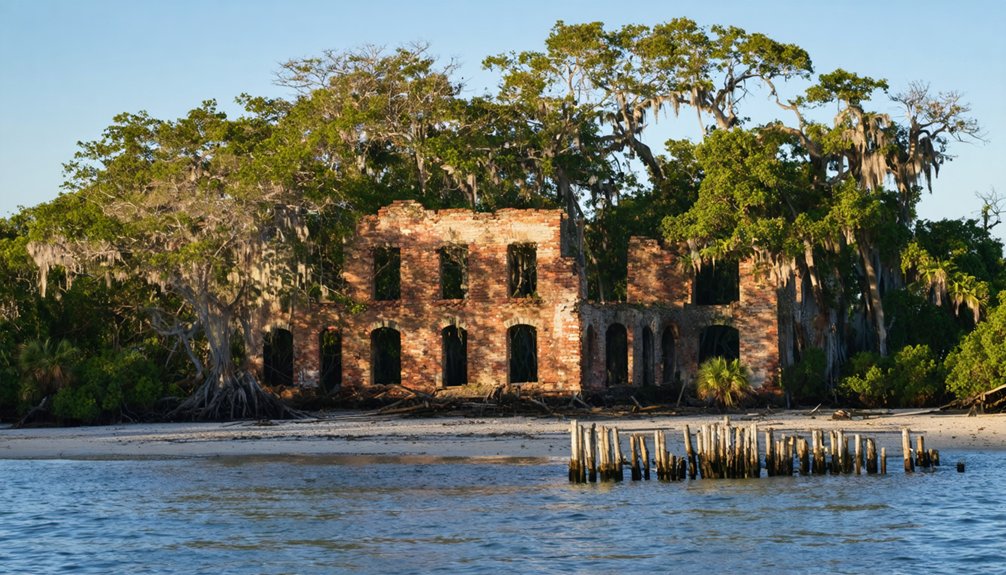
Atsena Otie Key isn’t your typical road trip destination — you’ll trade your car for a kayak and paddle half a mile across open Gulf water to reach it. Once a thriving 19th-century town of nearly 300 residents, a catastrophic 1896 hurricane swallowed it whole, leaving behind crumbling mill ruins, a weathered cemetery, and wildlife-draped silence. Launch from Cedar Key, pack your essentials, and prepare for one of Florida’s most hauntingly preserved ghost towns. There’s far more to uncover here than first meets the eye.
Key Takeaways
- Atsena Otie Key is only accessible by boat or kayak from Cedar Key’s city marina, roughly half a mile offshore with no roads or docks.
- Cedar Key serves as your essential base, offering supplies, local advice, and launch points before crossing to the ghost town.
- Key landmarks include the crumbling Eberhard Faber pencil mill ruins and a historic cemetery with weathered 19th-century markers reclaimed by nature.
- The best times to visit are fall (October–November) and spring (March–April) for calm waters, clear skies, and active wildlife.
- Pack water, sun protection, sturdy shoes, and a dry bag, as the island has had no services or infrastructure since 1896.
What Is Atsena Otie Key and Why Does It Matter?
Half a mile off the coast of Cedar Key, Florida, a ghost town quietly reclaims itself beneath a canopy of subtropical growth. Atsena Otie Key isn’t accessible by road, and that’s precisely the point. You’ll reach it only by boat or kayak, arriving at an island that once held factories, a school, a church, and nearly 300 residents before an 1896 hurricane erased most of it overnight.
Today, it’s part of the Cedar Keys National Wildlife Refuge, preserved through serious preservation efforts that kept developers out for good.
Local legends of the pencil mill, the storm, and the silent cemetery still echo across the shoreline. If you’re craving history without the crowds, this forgotten island rewards the effort to find it.
The Rise and Fall of Atsena Otie Key’s 19th-Century Town
Before it became a ghost town, Atsena Otie Key was a place with real ambitions. At its peak, it held real cultural significance — a working community shaped by cedar mills, fishing, and frontier determination.
Here’s what rose and fell on that island:
- 1818 — A trading post opens, anchoring the island during the First Seminole War
- 1840s — The U.S. Army builds a hospital and stockade, leaving historical artifacts still traceable today
- Late 1800s — The Eberhard Faber Pencil Company’s cedar mill drives growth, supporting 297 residents
- 1896 — A hurricane destroys roughly 50 buildings, ending the town entirely
Survivors salvaged what they could and moved to Cedar Key. The island never recovered — and that’s exactly why you should visit it.
How the 1896 Hurricane Turned Atsena Otie Key Into a Ghost Town
When the 1896 hurricane tore through the Cedar Keys, it didn’t just damage Atsena Otie Key — it erased it. Around 50 buildings collapsed, including the Eberhard Faber pencil mill that had anchored the local economy.
Residents didn’t rebuild. Instead, they salvaged what lumber they could and relocated to Way Key, the island now known as Cedar Key.
What they left behind was silence. No tourist infrastructure ever replaced what the storm destroyed. No modern amenities followed.
The town simply stopped existing, swallowed by vegetation and time. That abandonment is exactly what makes Atsena Otie Key worth visiting today.
You’re not walking through a restored historic site — you’re stepping into a place the storm froze in 1896, and nature has been quietly reclaiming ever since.
How To Reach Atsena Otie Key by Kayak or Boat
To reach Atsena Otie Key, you’ll launch from Cedar Key and cross roughly half a mile of open Gulf water to an island with no roads, no docks, and no developed access points.
A kayak gives you the most flexibility, letting you beach directly on the island’s shore and explore at your own pace.
A motorboat gets you there faster if wind or chop makes the crossing less forgiving.
Either way, Cedar Key serves as your staging point for supplies, rentals, and local knowledge before you make the short but meaningful push toward that ghost town shoreline.
Launching From Cedar Key
Reaching Atsena Otie Key means crossing just half a mile of open Gulf water from Cedar Key, a short paddle that’s deceivingly simple given how completely the island has slipped from modern memory. Launch from Cedar Key’s city marina and let the water carry you toward something preservation efforts fought hard to protect.
Before you push off, orient yourself:
- Check wind and tide conditions — Gulf crossings shift fast
- Pack water and sun protection — the island offers zero shade infrastructure
- Respect wildlife refuge boundaries — local legends of undisturbed nesting birds are real
- Bring a camera — ruins emerge unexpectedly through dense subtropical growth
You’re not just paddling half a mile. You’re crossing 130 years of silence toward a town the Gulf swallowed whole.
Kayak Versus Boat Options
Once you’re off the water and thinking through your approach, how you get to Atsena Otie Key shapes what you’ll actually experience once you’re there.
Kayaking the half-mile crossing from Cedar Key puts you directly inside the coastal ecosystems — mangroves, shallow flats, and tidal channels — before you ever set foot on the island. That slow passage earns the arrival.
A motorboat gets you there faster, but the tradeoff is immediacy over immersion.
Either way, you’ll land on a shore where historical artifacts, including mill ruins and old foundations, wait beneath the tree canopy.
If you’re comfortable on the water and the weather cooperates, a kayak offers the fuller experience.
If you’re bringing gear or older travelers, a hired boat makes the crossing simple without sacrificing the destination.
Ruins, Cemetery, and Wildlife To Find on Atsena Otie Key
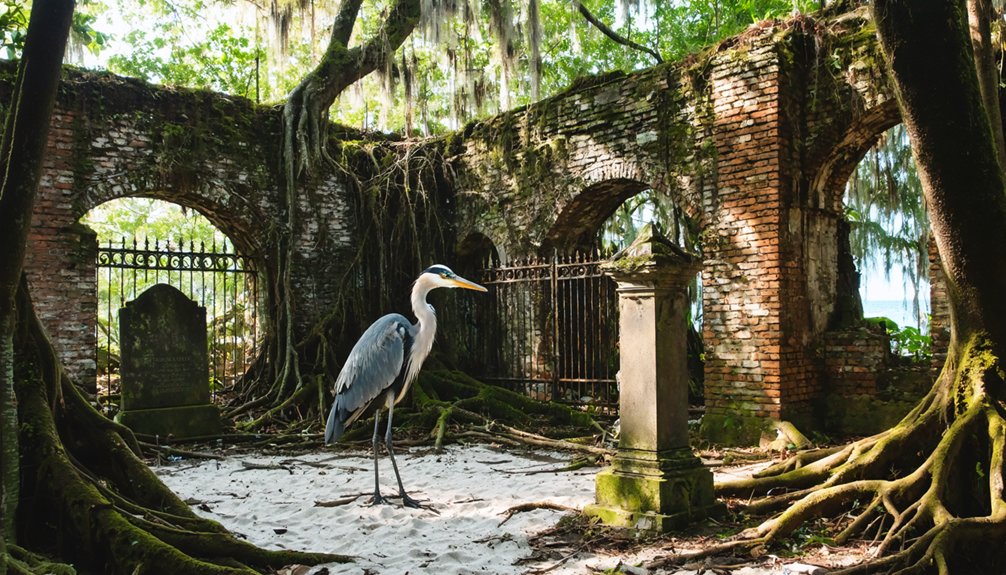
Once you step onto Atsena Otie Key, you’ll find the remains of the Eberhard Faber pencil mill slowly being reclaimed by subtropical vegetation. Its crumbling foundations are a quiet testament to the town’s industrial past.
A short walk inland brings you to the island’s historic cemetery, where weathered markers trace the lives of 19th-century residents who built, and ultimately lost, this community to the sea.
The island’s protected status as part of the Cedar Keys National Wildlife Refuge means you’ll also share the landscape with shorebirds, wading birds, and the kind of undisturbed coastal wildlife that rewards patient observers.
Pencil Mill Ruins
Though the 1896 hurricane erased most of Atsena Otie’s built world, it couldn’t claim everything. The pencil mill ruins still stand—quiet, overgrown, and strangely powerful. Walking among them connects you to the Eberhard Faber operation that once shaped this island’s entire economy.
What you’ll find yourself feeling among the ruins:
- Awe at how nature reclaims industrial historical artifacts without apology
- Grief for the 297 residents who lost everything in a single storm
- Curiosity about the cedar trees harvested from forests surrounding these marine ecosystems
- Freedom in standing somewhere tourism hasn’t sanitized or commercialized
These remnants aren’t curated exhibits. They’re raw, weathered evidence of a real town that lived and died here. You won’t leave unchanged.
Historic Island Cemetery
Beyond the mill ruins, the island asks something quieter of you. Tucked beneath a canopy of old growth, the cemetery holds the names of people who built this place, raised families here, and rode out storms until one finally won.
Weathered headstones mark lives shaped by cedar timber, Gulf tides, and local legends that never made it into any official record. You’ll notice the historical architecture of the grave markers themselves — modest, hand-cut, and honest in a way that modern memorials rarely are.
Walking through, you get a sense of how permanent these residents intended to be. The 1896 hurricane had other plans.
Spend a few quiet minutes here. It’s the kind of place that earns its silence.
Wildlife and Birdwatching
What surprises most visitors is how alive a ghost town can feel. Despite preservation challenges, Atsena Otie Key pulses with wildlife that’s claimed the ruins as home.
Local legends say the island never truly died — it just transformed.
Keep your eyes open for:
- Ospreys nesting above crumbling mill foundations
- Roseate spoonbills wading through the shallows in vivid pink
- Gopher tortoises moving slowly through overgrown cemetery paths
- Bald eagles circling overhead, indifferent to the history below them
You’re walking through a functioning refuge, not a museum.
Nature doesn’t wait for permission — it reclaims, rebuilds, and rewrites.
That tension between human abandonment and wild resurgence is exactly what makes Atsena Otie feel untamed, honest, and completely worth the paddle.
How To Use Cedar Key as Your Staging Point
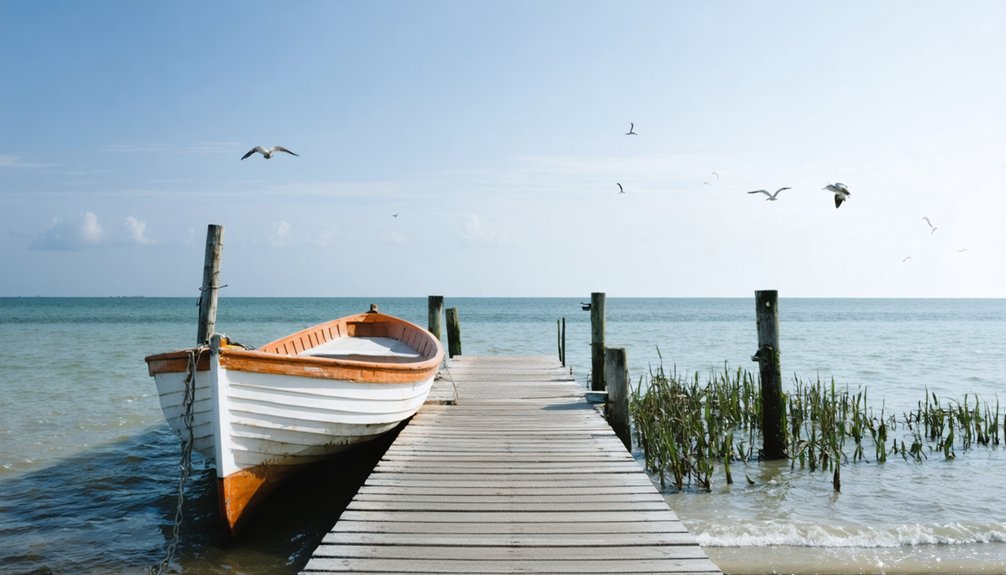
Since Atsena Otie Key has no docks, no services, and no way to reach it without crossing open water, Cedar Key is where your trip actually begins.
Atsena Otie Key offers no docks, no services, no shortcuts — Cedar Key is where every journey begins.
This quiet Gulf town carries its own local legends — shipwrecks, Seminole conflicts, and a pencil industry that once defined the region. Stock up on supplies here, rent a kayak, and talk to locals who can point you toward the best launch spots.
Cedar Key’s preservation efforts have kept much of its 19th-century character intact, giving you a living prologue before you paddle to the ghost town offshore. The crossing is short — roughly half a mile — but Cedar Key sets the tone.
Treat it as more than a staging point; treat it as part of the story.
The Best Time of Year To Visit Atsena Otie Key
Once you’ve got Cedar Key figured out as your base, timing your visit becomes the next piece of the puzzle. The island rewards those who choose wisely.
- Fall (October–November): Cooler temps, fewer crowds, and golden light perfect for photographing ruins tied to local legends.
- Winter (December–February): Birdwatching peaks as migratory species fill the refuge, honoring preservation efforts through protected habitat.
- Spring (March–April): Wildflowers reclaim the ghost town grounds, making ruins feel eerily alive again.
- Summer (May–August): Heat and humidity hit hard — mosquitoes own the island, and storms threaten paddlers.
Fall and spring give you the clearest skies, calmest waters, and the quiet that a place shaped by hurricane destruction and abandonment truly deserves.
What To Pack for a Day Trip to Atsena Otie Key
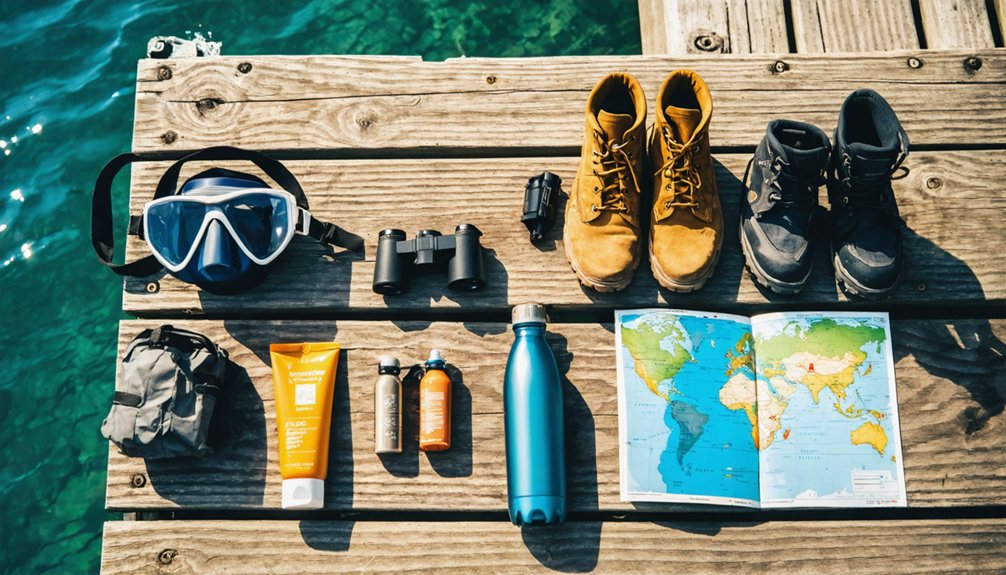
Packing for Atsena Otie Key means preparing for a place that hasn’t had town services since the 1896 hurricane swept them away — no shops, no shade structures, no infrastructure of any kind.
You’re stepping into a ghost town preserved by conservation efforts and salt air, so come self-sufficient. Bring more water than you think you’ll need, sun protection, and sturdy shoes for uneven terrain around the mill ruins.
A dry bag protects your gear during the kayak crossing. Carry a camera — the overgrown foundations and cemetery reward patient photographers.
A field guide sharpens your eye for both wildlife and local legends tied to the island’s Seminole War past.
Leave nothing behind; preservation efforts depend on visitors treating the island as the refuge it legally is.
Frequently Asked Questions
Is Fishing or Swimming Allowed at Atsena Otie Key?
When in Rome—respect the rules. You’ll want to check with U.S. Fish and Wildlife Service, as Atsena Otie Key’s wildlife habitats and historical significance shape activity restrictions, protecting this refuge’s delicate ecosystem and storied past.
Are Pets Permitted on Atsena Otie Key?
You can bring pets to Atsena Otie Key, but leash requirements apply throughout this wildlife refuge. Pet safety matters here — untamed nature and nesting birds demand you keep your companion close while exploring these haunted, hurricane-scarred shores.
Is There a Fee to Visit Atsena Otie Key?
The best things in life are free! You won’t pay an entry fee, as historical preservation and wildlife conservation keep Atsena Otie Key open to all who journey there by boat or kayak.
Can You Camp Overnight on Atsena Otie Key?
You can’t camp overnight on Atsena Otie Key. It’s a wildlife refuge, so you’ll want to arrive by boat, explore the historical ruins, capture your photography opportunities, and return to Cedar Key before dark.
Are Guided Tours of Atsena Otie Key Available for Visitors?
Guided tours aren’t formally offered, but you’ll freely explore 297 residents’ forgotten world solo. Chart your own course through historical preservation sites and wildlife observation havens — this ghost island rewards independent adventurers who crave unscripted discovery over structured itineraries.
References
- https://en.wikipedia.org/wiki/Atsena_Otie_Key
- https://www.youtube.com/watch?v=VBpRSnyXTr8
- https://www.ghosttowns.com/states/fl/atsenaotiekey.html
- https://www.youtube.com/watch?v=XiXNBjjRCiY
- https://www.floridarambler.com/kayaking-in-florida/atsena-otie-cedar-key/
- https://www.wusf.org/environment/2023-03-30/living-on-the-edge-leaving-atsena-otie
- https://www.forwardpathway.us/atsena-otie-key-hurricanes-digital-reconstruction-and-climate-change-reflections-on-coastal-vulnerability-in-florida
- https://www.floridasnaturecoastconservancy.org/property-acquisition/atsena-otie/
- https://www.youtube.com/watch?v=iu0W1v3AEII
- https://floridahikes.com/atsena-otie-key/