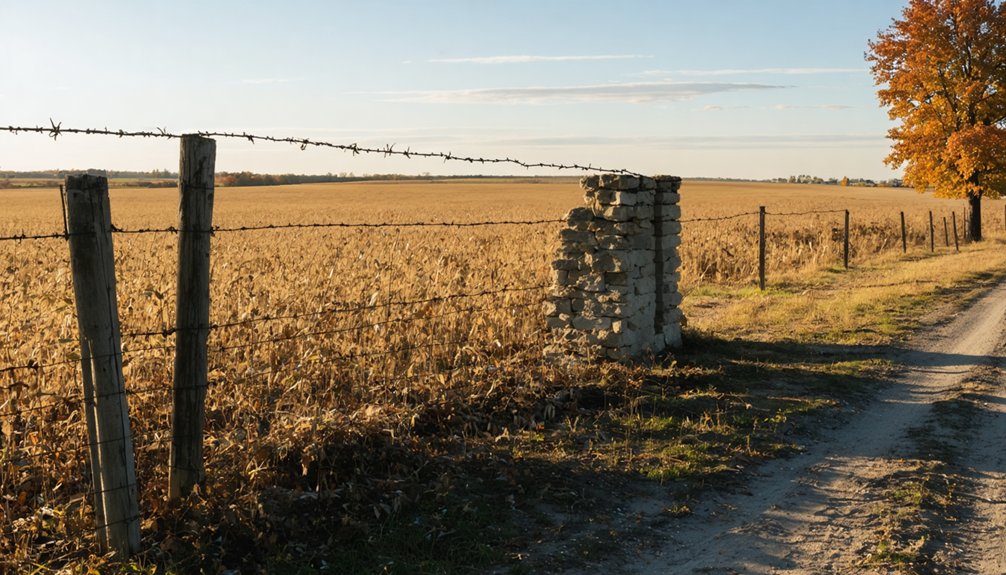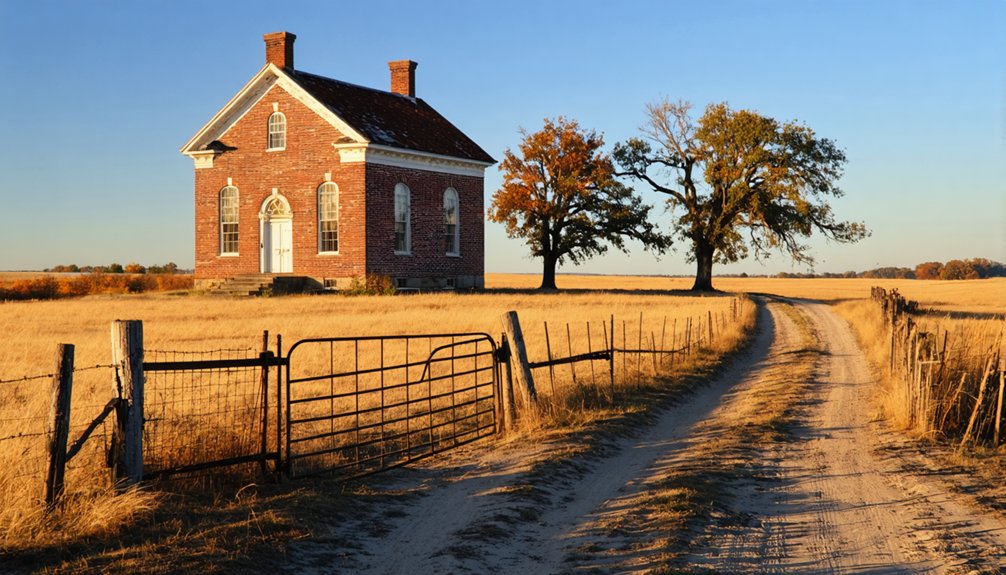
Green Rock, Illinois isn’t a ghost town in the traditional sense — you won’t find crumbling buildings or eerie silence. Established in 1939 at the confluence of the Green and Rock Rivers, it thrived as an independent municipality until residents voted to merge with Colona in 1995. Today, its original street signs and landmarks survive within Colona’s borders. It’s a story of civic choice, not decay — and there’s much more to uncover.
Key Takeaways
- Green Rock, established in 1939, merged with Colona in 1997, making it Illinois’ first voluntary municipal merger rather than a traditional ghost town.
- The site sits at the confluence of Green River and Rock River in Henry County, offering scenic natural surroundings.
- Original street signs and infrastructure from before 1997 remain visible, serving as subtle historical markers throughout the neighborhood.
- The area supports diverse wildlife, including herons, waterfowl, and native fish, making it rewarding for nature-focused visitors.
- Green Rock’s significance lies in its civic history and community preservation story, ideal for history-focused road trips.
Is Green Rock, Illinois Really a Ghost Town?
While the name “Green Rock” might conjure images of crumbling storefronts and tumbleweeds, this Illinois community doesn’t fit the classic ghost town mold. Forget the urban legends and ghost stories — Green Rock isn’t abandoned. It’s very much alive.
Established in 1939 at the confluence of the Green River and Rock River in Henry County, Green Rock thrived as an independent municipality for nearly 60 years.
In 1997, it voluntarily merged with neighboring Colona, making it Illinois’ first voluntary municipal merger. That’s its real claim to fame.
Today, you’ll find Green Rock as an active neighborhood within Colona, complete with original street names, functioning infrastructure, and engaged residents. No decay, no ruins — just a living community with a fascinating, freedom-driven history worth exploring.
The History Behind Green Rock’s Merger With Colona
When you look into Green Rock’s history, you’ll find that residents cast their votes on November 4, 1995, choosing to merge with neighboring Colona by a margin of 566 to 492.
That democratic decision officially took effect in 1997, making Green Rock and Colona’s union Illinois’ first voluntary municipal merger between two communities.
You’ll also notice that the merged city kept the name Colona, absorbing Green Rock’s identity into its own rather than creating an entirely new combined name.
Merger Vote Details
On November 4, 1995, Green Rock residents cast their votes on a question that would erase their town from Illinois maps forever — and the outcome wasn’t a landslide. The final tally stood at 566 in favor versus 492 against, a margin that reflects just how divided the community felt about surrendering its independence.
You can imagine the tension in that vote — neighbors weighing decades of local identity against the promise of urban development and shared resources. Two years later, in 1997, Green Rock officially became part of Colona.
The merged city retained Colona’s name, folding Green Rock into its neighborhoods rather than creating something entirely new. Community celebrations likely marked the shift, but for many residents, the vote’s closeness said everything about what they were giving up.
Colona’s Retained Identity
Despite that narrow margin, Green Rock didn’t vanish — it shapeshifted. When Colona absorbed its neighbor in 1997, it didn’t erase what came before. The merged entity kept Colona’s name, but Green Rock’s streets, infrastructure, and neighborhood identity survived the evolution.
That’s community preservation working exactly as it should.
You’ll notice this when you visit. Original street names still trace the old boundaries, and longtime residents carry the area’s distinct history forward. Urban development didn’t bulldoze Green Rock’s legacy — it folded it into something larger while keeping its bones intact.
This isn’t a ghost town in the traditional sense. It’s a living neighborhood wearing its history openly. If you’re chasing authentic Illinois stories, Green Rock’s survival within Colona is far more compelling than any abandoned ruin.
What Remains of Green Rock Inside Colona Today
When you explore the Green Rock neighborhood inside Colona today, you’ll find that the original street names still mark the area, quietly honoring the community that once stood independently.
Historic landmarks from the pre-merger era remain active and functional, serving current residents rather than sitting as relics of abandonment.
You’re fundamentally walking through a living neighborhood that carries Green Rock’s identity forward, making it far more vibrant than the typical ghost town label suggests.
Original Street Names Persist
Although Green Rock no longer appears on modern maps as its own municipality, its identity lives on through the street names that still thread through Colona’s neighborhoods. When you drive through the area, you’ll notice these original names quietly anchoring cultural preservation in everyday life. They’re not museum exhibits or historical markers — they’re functional roads locals use daily.
This subtle persistence carries local legends forward without fanfare. You don’t need a guided tour to feel Green Rock’s presence; the street grid itself tells the story. For a road tripper chasing authentic history, that’s genuinely compelling.
These aren’t ruins or relics — they’re living proof that a community’s character can survive political absorption. Walk or drive those streets, and you’re literally tracing Green Rock’s original footprint.
Historic Landmarks Still Active
Street names aren’t the only thread connecting modern Colona to its Green Rock past. As you explore the neighborhood, you’ll notice historic landmarks from the original municipality still standing and actively serving residents. These aren’t frozen relics behind velvet ropes — they’re functional pieces of living infrastructure that locals use daily.
This kind of cultural preservation keeps Green Rock’s identity breathing inside Colona’s boundaries. You won’t find crumbling facades or boarded windows here. Instead, community celebrations regularly bring residents together in spaces that carry genuine historical weight, honoring the merger story that made Illinois history in 1997.
If you’re road-tripping for authentic American history, this neighborhood delivers something rare — landmarks that survived municipal transformation and still anchor a community choosing to remember where it came from.
Green Rock’s Neighborhood Identity
Even though Green Rock no longer appears on modern maps as a standalone municipality, its identity survives in tangible ways throughout the Colona neighborhood it became. Community preservation efforts have kept its legacy alive through neighborhood evolution rather than erasure.
When you visit, you’ll notice:
- Original Green Rock street names still marking the local roads
- Infrastructure built before the 1997 merger still actively serving residents
- The geographic landmark of the Green and Rock River confluence defining the area’s character
- Local history documentation preserving the merger story for future generations
You won’t find decay here. Instead, you’ll discover a living community that chose integration over dissolution. Green Rock didn’t vanish — it transformed, embedding its distinct roots into every block of modern Colona.
How to Get to Green Rock in Colona, Illinois
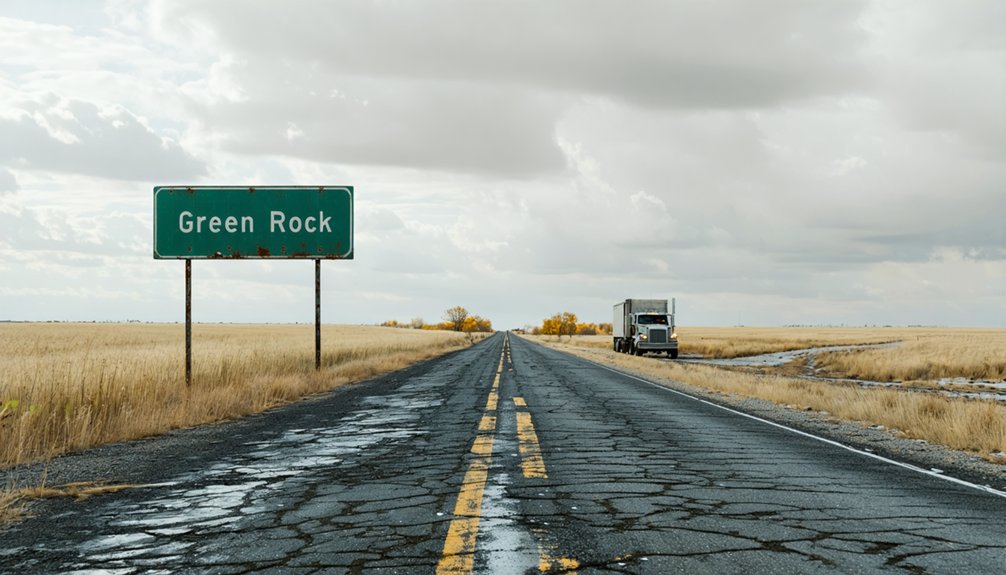
Since Green Rock no longer appears as a standalone destination on Google Maps, you’ll need to search for Colona, Illinois in Henry County to find your way there. Once you’ve locked in your destination, you’ll discover that local transportation options are fairly straightforward — whether you’re driving from the Quad Cities area or arriving from further west along I-80.
For the best experience, ditch the highway and take scenic routes along the Rock River corridor. Illinois Route 84 offers stunning river views that frame your approach beautifully.
Once inside Colona, head toward the confluence of the Green River and Rock River, where Green Rock’s historical identity truly comes alive.
Street signs bearing original Green Rock names will confirm you’ve found the neighborhood you’re looking for.
What’s Near the Green and Rock River Confluence?
Once you’ve spotted those original Green Rock street signs and gotten your bearings at the confluence, you’ll want to look around — because the meeting point of the Green River and Rock River isn’t just a historical footnote, it’s a genuine geographic landmark worth absorbing.
The river ecosystems here support rich local wildlife and reward patient observers. Watch for:
- Herons and waterfowl working the shallows
- Native fish species thriving where currents merge
- Riparian vegetation lining both riverbanks
- Migratory birds passing through seasonally
The confluence creates a natural junction zone where two distinct waterways blend, producing biodiversity that feels removed from suburban Colona just steps away. You’re standing where geology, ecology, and community history intersect — that’s a rare combination for any road trip stop.
Why Green Rock Belongs on Any Illinois History Road Trip
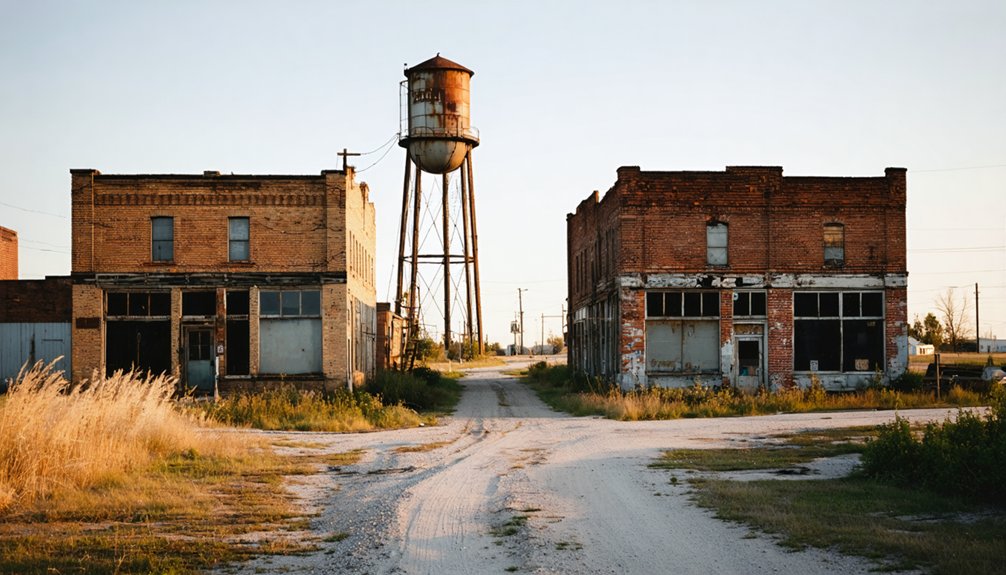
What makes Green Rock genuinely worth your time isn’t ruins or roadside spectacle — it’s a story Illinois doesn’t repeat anywhere else. In 1995, residents chose unity over independence, casting ballots that reshaped urban development in a way no other Illinois community had attempted.
That voluntary merger reflected real demographic changes — neighbors weighing identity against practicality and choosing cooperation.
You won’t find crumbling facades here. Instead, you’ll walk streets that still carry Green Rock’s original names inside a living, functioning Colona neighborhood. That’s rarer than any abandoned building.
History preserved through active community beats history frozen in decay every time.
If your road trip celebrates American self-determination and civic ingenuity, Green Rock delivers exactly that — a place where people rewrote their future on their own terms.
Frequently Asked Questions
What Geological Formation Underlies the Green Rock Quadrangle Area?
You’ll find the Maquoketa Formation underlying the Green Rock Quadrangle area. It’s the oldest rock penetrated there, revealing fascinating geological history and ancient formation processes that shaped this remarkable confluence of Rock Island and Henry Counties.
How Close Is Green Rock to Rock Island County’s Border?
“Close enough to touch!” Green Rock straddles Henry and Rock Island Counties, so you’ll find yourself steps from the border while exploring local ghost town legends and tracing historic trail routes through this fascinating merged community.
Did Green Rock Have Its Own Zip Code Before the Merger?
The knowledge doesn’t confirm Green Rock’s zip code history, but you’ll find its historic landmarks and local legends woven into Colona’s identity—explore freely and uncover what this unique merger community left behind!
What Was the Exact Voter Turnout Percentage During the 1995 Merger Vote?
The exact voter turnout percentage isn’t available, but you’ll find the election history fascinating—566 to 492 votes sealed the merger, showcasing remarkable voter engagement that shaped Illinois’ first voluntary municipal union forever.
Are Original Green Rock Street Names Still Visible on Current Maps?
You’ll discover historical street naming surprises still hiding in plain sight! Original Green Rock landmarks live on — those streets you’re tracing through modern Colona’s maps aren’t random; they’re echoes of an independent community that refused to disappear completely.
References
- https://www.youtube.com/watch?v=jtW4hbJwG_Y
- https://en.wikipedia.org/wiki/Green_Rock
- https://chf.isgs.illinois.edu/maps/quad/green-rock-bg.pdf