Start your ghost town road trip in Hiko, Nevada, where the 1860s silver rush left behind weathered buildings and raw frontier history along State Route 318. It’s about 150 miles north of Las Vegas via US-93, making it an easy escape into Nevada’s untamed past. You’ll find ancient petroglyphs, limestone caves, and historic mining towns all within reach. Stick around to discover everything you need to plan the perfect Lincoln County adventure.
Key Takeaways
- Hiko, located 150 miles north of Las Vegas via US-93 and SR-318, preserves authentic 1860s silver rush buildings without tourist traps.
- Late spring through early fall offers the best travel conditions, with long daylight hours for exploring Hiko’s frontier history.
- Key road trip stops include Pioche, Crystal Spring, and Caliente, each offering unique mining-era historical sites along SR-318.
- Pack extra water, fuel up beforehand, and download offline maps, as Hiko sits in a remote desert region with limited services.
- Nearby attractions include White River Petroglyphs, Leviathan Cave, and Cathedral Gorge State Park, enriching your ghost town road trip experience.
What Makes Hiko, Nevada Worth the Drive?
Tucked into Nevada’s Pahranagat Valley along State Route 318, Hiko isn’t your typical ghost town — it’s a living, breathing remnant of the 1860s silver rush that still shelters a small farming and ranching community today. You’ll find authentic buildings from the original mining era still standing, offering a rare look at historical preservation without the tourist traps.
Explore White River Petroglyphs, Crystal Wash Rock Art, and Leviathan Cave when you visit. The surrounding Worthington Mountains Wilderness rewards you with stunning local wildlife encounters and wide-open landscapes that embody true Nevada freedom.
With coordinates placing it in the Tonopah Basin near the Pahranagat range, Hiko delivers raw, unfiltered Western history that most travelers never discover — and that’s exactly what makes it worth the drive.
When to Visit Hiko for the Best Experience
Once you’ve decided Hiko is worth the drive, timing your visit makes all the difference. Hiko’s climate rewards those who plan ahead — late spring through early fall offers the most comfortable conditions for exploring the area’s historical preservation sites, rock art, and standing mining-era structures.
Summer gives you long daylight hours to roam freely without rushing. Winters turn harsh, limiting access to surrounding wilderness areas like the Worthington Mountains. Check local festivals and community events before finalizing your dates, as small agricultural towns occasionally host gatherings that offer rare glimpses into regional culture and heritage.
Weekday visits tend to feel quieter and more personal, letting you move at your own pace through the remnants of what was once Nevada’s Lincoln County seat.
How to Get to Hiko, Nevada
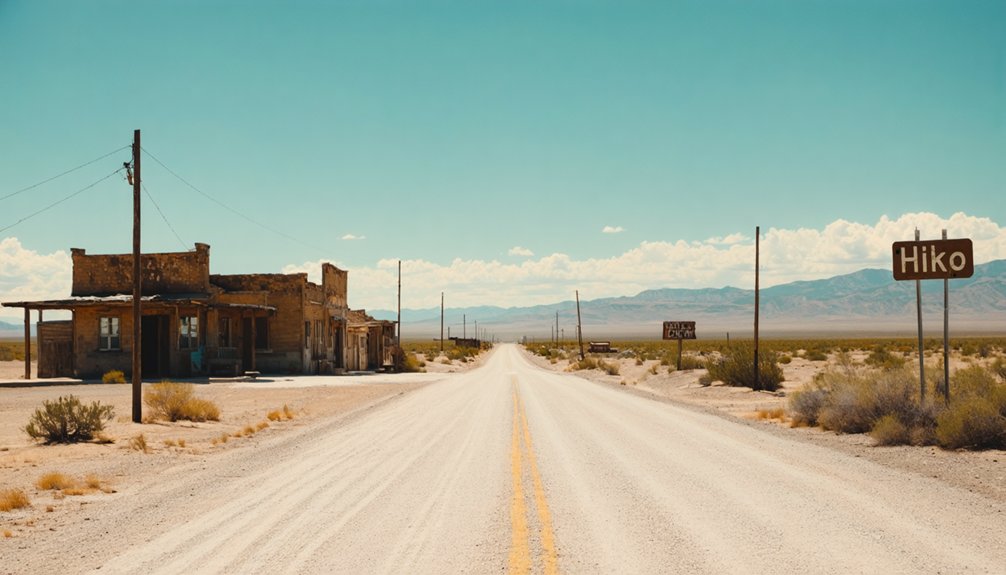
Hiko sits along State Route 318 in Nevada’s Pahranagat Valley, roughly 150 miles north of Las Vegas — making Sin City your most practical jumping-off point.
You’ll drive north on US-93 before connecting to SR-318, following a mostly paved route through open desert terrain.
This route is straightforward in dry conditions but can turn tricky after winter storms.
Check road conditions before you head out, since this remote stretch of Lincoln County sees limited maintenance and you won’t find much help if something goes wrong.
Nearest Major City Routes
Getting to Hiko, Nevada is straightforward once you know your starting point. From Las Vegas, you’ll head north on US-93 before connecting to State Route 318 through the Pahranagat Valley — roughly a two-hour drive through open desert.
Salt Lake City travelers drop south via I-15, then cut west through Caliente on US-93.
- From Las Vegas (160 miles): US-93 North to SR-318, passing wildlife viewing opportunities at Pahranagat National Wildlife Refuge.
- From Salt Lake City (300 miles): I-15 South to US-93 West through Caliente.
- From Reno (350 miles): US-95 South connects through Tonopah toward the valley.
- From Cedar City, Utah (180 miles): I-15 South to US-93, with stops for local cuisine in Caliente.
Road Conditions And Access
Traveling to Hiko is a revitalizing straightforward process — State Route 318 serves as your main artery through the Pahranagat Valley, and it’s a well-maintained paved road for the majority of routes travelers take.
You’ll cruise through stunning high desert terrain, passing through rich wildlife habitat that shelters pronghorn, migratory birds, and native species unique to this basin landscape.
Winter months can introduce icy patches and cold snaps, so late spring through early fall remains your best travel window.
If you’re timing your visit around local festivals or community gatherings, road conditions are typically at their prime during those warmer seasons.
Cell service gets sparse outside populated areas, so download offline maps beforehand and carry extra water — the desert rewards prepared travelers with unmatched freedom and solitude.
Mining Era Buildings You Can Still See in Hiko Today
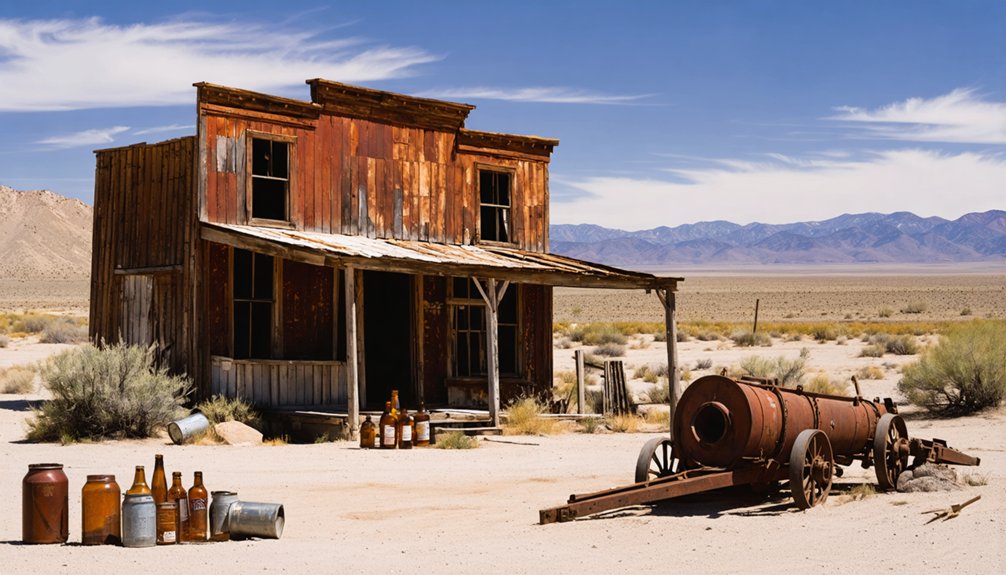
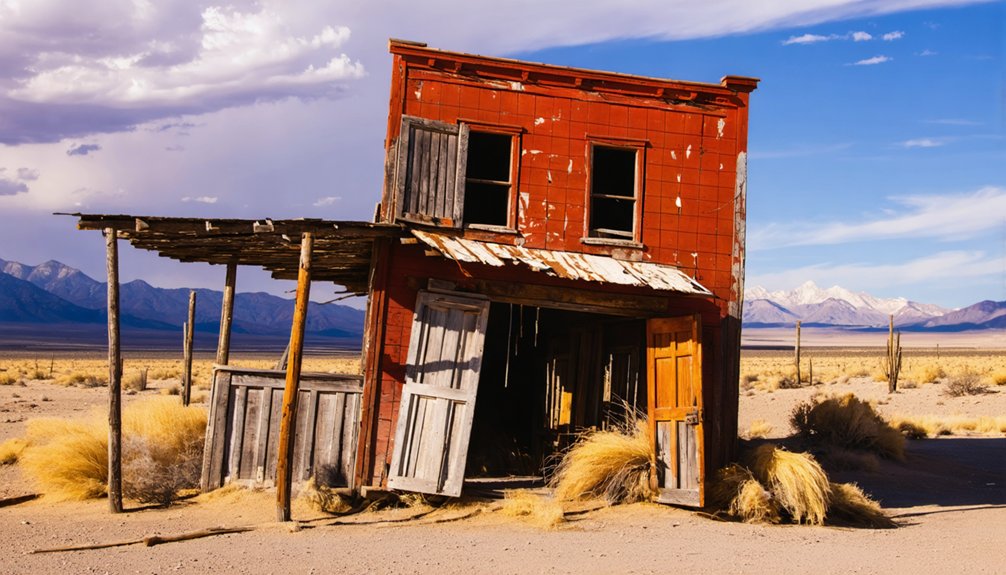
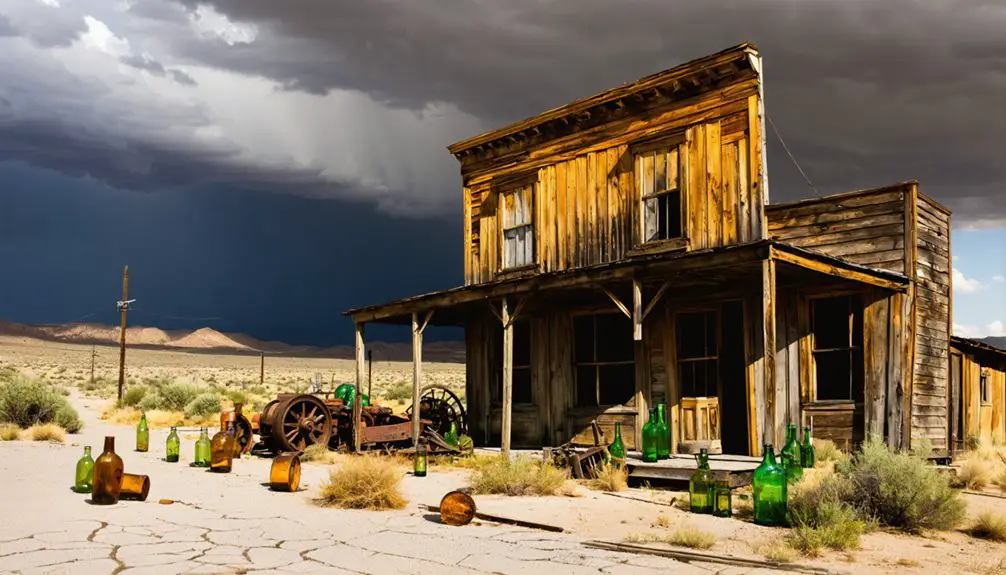
Although much of Hiko’s mining era has faded into history, several buildings from that boom period still stand today, offering you a rare, tangible connection to the town’s mid-1800s past. You’ll find historical architecture and mining relics scattered throughout this semi-ghost town, each telling its own story of ambition and struggle.
- Walk among original structures that survived over 150 years of desert conditions.
- Photograph weathered facades that reflect Hiko’s 1866 mining rush identity.
- Spot remnants of infrastructure tied to the famous five-stamp mill operation.
- Read historical markers that provide context for each standing structure.
Don’t rush through — take your time exploring these silent witnesses to Nevada’s silver boom. They’re free to observe and endlessly fascinating to anyone craving authentic frontier history.
Petroglyphs and Caves Worth Visiting Near Hiko
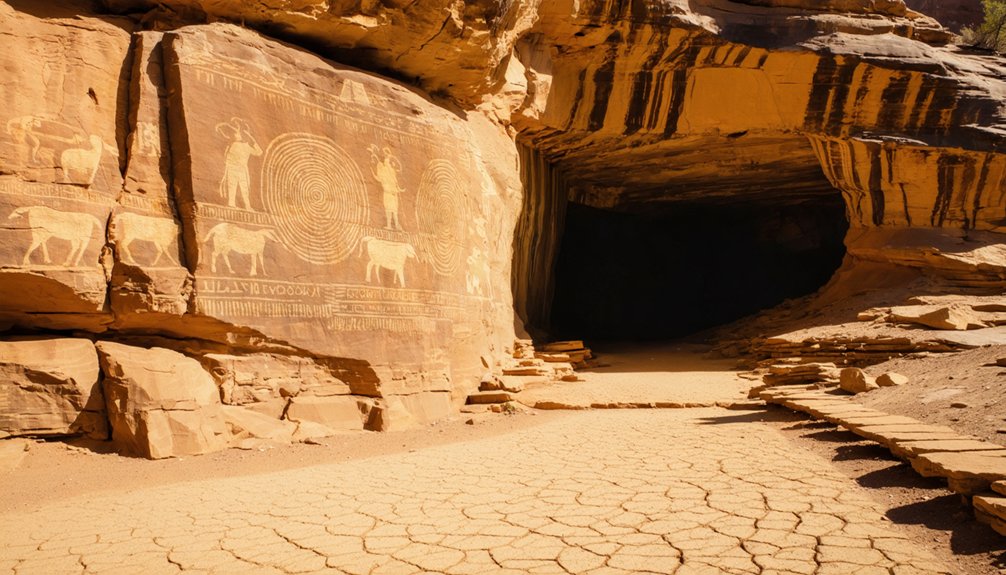
Beyond Hiko’s weathered buildings, the surrounding desert landscape holds ancient secrets that predate the silver rush by thousands of years. Head toward the White River Petroglyphs, where indigenous artists carved symbols into canyon walls centuries before prospectors arrived. These markings reward patient visitors who take time to study their meaning.
Leviathan Cave, nestled within the Worthington Mountains Wilderness, offers an entirely different adventure. You’ll find remarkable geological formations alongside opportunities for wildlife observation, spotting desert creatures that call these rocky corridors home.
After exploring both sites, seek out local cuisine in nearby communities to refuel before returning to the trail. The combination of ancient rock art, dramatic cave interiors, and open desert freedom makes this region genuinely unforgettable for road trippers craving authentic, unfiltered Nevada wilderness.
Where to Stay Near Hiko, Nevada
Hiko itself won’t offer you a hotel lobby or a pool, but you’ll find solid lodging options in nearby Caliente and Alamo, where small motels put a roof over your head without breaking your budget.
If you’d rather sleep under the stars, the Pahranagat National Wildlife Refuge provides camping spots that land you right in the heart of the valley’s natural beauty.
For something more immersive, a ranch stay in the surrounding Lincoln County area lets you trade ghost town history for wide-open skies and authentic high desert ranch life.
Nearby Hotel Options
Since Hiko itself doesn’t offer lodging, you’ll need to base yourself in one of the nearby towns while exploring this fascinating semi-ghost town. Caliente and Alamo serve as your best options, each offering basic accommodations, local cuisine, and access to outdoor adventures throughout Lincoln County.
- Caliente: Features historic railroad-era hotels and easy highway access to Hiko.
- Alamo: Closest town with budget-friendly motels and Pahranagat Valley views.
- Ely: Larger city with full-service hotels, casinos, and diverse dining options.
- Pioche: Small historic mining town offering charming bed-and-breakfast stays.
Booking ahead is smart, especially during late spring through early fall when visitors flock to Nevada’s backcountry.
Cell service is limited throughout the region, so plan accordingly.
Camping And RV Sites
Outdoor enthusiasts have 3 solid camping options within striking distance of Hiko, making it easy to stay close to the action without sacrificing comfort.
Pahranagat National Wildlife Refuge offers primitive camping surrounded by local wildlife, including migratory birds and desert mammals that thrive in this valley ecosystem. You’ll wake up to stunning high-desert scenery just minutes from town.
Cathedral Gorge State Park, roughly an hour away, delivers dramatic clay formations alongside developed campsites with hookups perfect for RVs.
Kershaw-Ryan State Park provides another solid alternative with shaded campsites near a canyon oasis.
Each location puts you within easy reach of Hiko’s historic architecture and mining-era remnants, letting you explore Nevada’s rugged past by day and retreat to genuine open-sky solitude each night.
Ranch Stay Experiences
Ranch stays near Hiko put you directly inside Nevada’s living ranching culture, where agricultural traditions have shaped this valley for well over a century. You’ll wake up surrounded by local wildlife, working landscapes, and historic architecture that tells authentic stories no museum can replicate.
- Book working ranch accommodations in Lincoln County through Nevada’s agritourism networks.
- Ask hosts about guided horseback rides through Pahranagat Valley’s open terrain.
- Watch for pronghorn, mule deer, and migratory birds common throughout the region.
- Request tours of original ranch structures showcasing 19th-century building techniques.
These stays give you genuine connection to the land rather than a sanitized tourist experience. You’re living the valley’s rhythm, not just passing through it.
How to Build a Lincoln County Ghost Town Road Trip Around Hiko
Hiko makes a natural anchor for a Lincoln County ghost town road trip, sitting along State Route 318 in the Pahranagat Valley where history and open desert converge.
From here, you can push north toward Pioche, the tough mining camp that stripped Hiko of its county seat status in 1871. Pioche’s Boot Hill cemetery and preserved downtown deliver genuine historical artifacts and powerful cultural preservation without the tourist polish.
Swing south toward Crystal Spring, Hiko’s predecessor as county seat, then loop through Caliente for railroad-era architecture.
The route stays manageable in a single long day or a relaxed overnight. Pack water, fuel up before leaving Alamo, and keep your timeline flexible.
These roads reward curiosity, and every stop deepens the story Hiko first started telling.
Frequently Asked Questions
What Does the Name “Hiko” Actually Mean in the Local Indian Language?
You’ll find Hiko’s native language origins fascinating — it means “white man” or “white man’s town.” This cultural significance reflects the area’s early interactions between indigenous peoples and European-American settlers exploring Nevada’s untamed frontier.
How Much Money Did William Raymond Lose Developing Hiko’s Mining Operations?
Like sand slipping through fingers, William Raymond’s mining investment vanished fast—he poured roughly $900,000 into Hiko but only recovered $150,000, making his economic decline a staggering $750,000 loss you won’t forget.
Why Did Hiko Lose Its Status as the Lincoln County Seat?
Hiko lost its county seat status in 1871 when it moved to Pioche, following the mill’s 1869 removal and mining’s decline. You’ll still find ghost town tourism and historic preservation opportunities waiting to be explored here!
What Is Hiko’s Current Population According to the Most Recent Census Data?
Hiko’s barely a blip on the map with just 123 residents as of July 2024! You’ll find ghost town attractions and historic landmarks outnumbering locals, making it an unforgettable, freedom-filled desert escape.
When Did the Five-Stamp Mill First Begin Operating in Hiko, Nevada?
You’ll love knowing the five-stamp mill first began operating in November 1865, making it one of Hiko’s most fascinating historic landmarks during the silver rush that rivaled any gold rush era excitement!
References
- https://www.nvexpeditions.com/lincoln/hiko.php
- https://www.destination4x4.com/hiko-lincoln-county-nevada-ghost-town/
- https://en.wikipedia.org/wiki/Hiko
- https://southwestexplorers.com/hiko-nevada/
- https://en.wikipedia.org/wiki/List_of_ghost_towns_in_Nevada