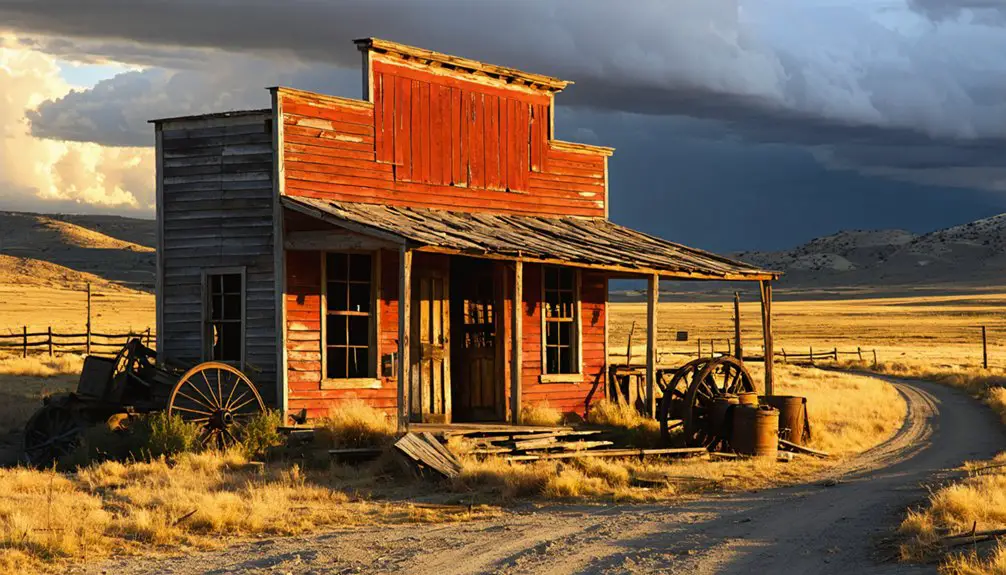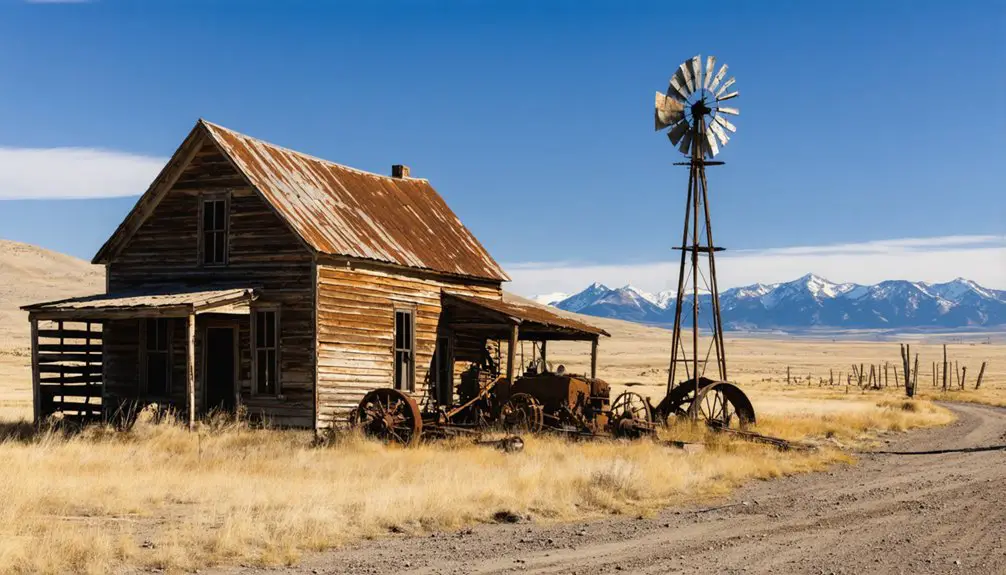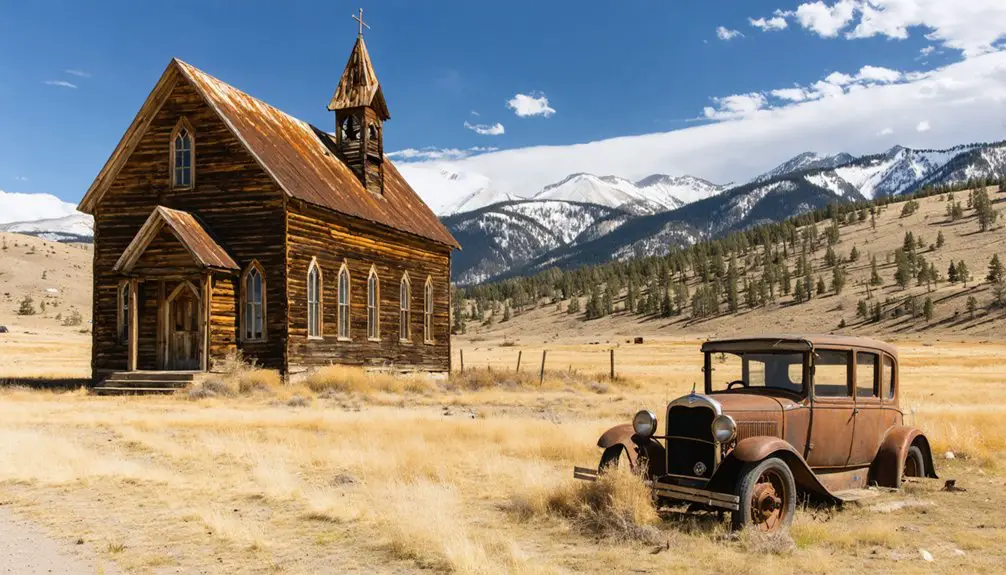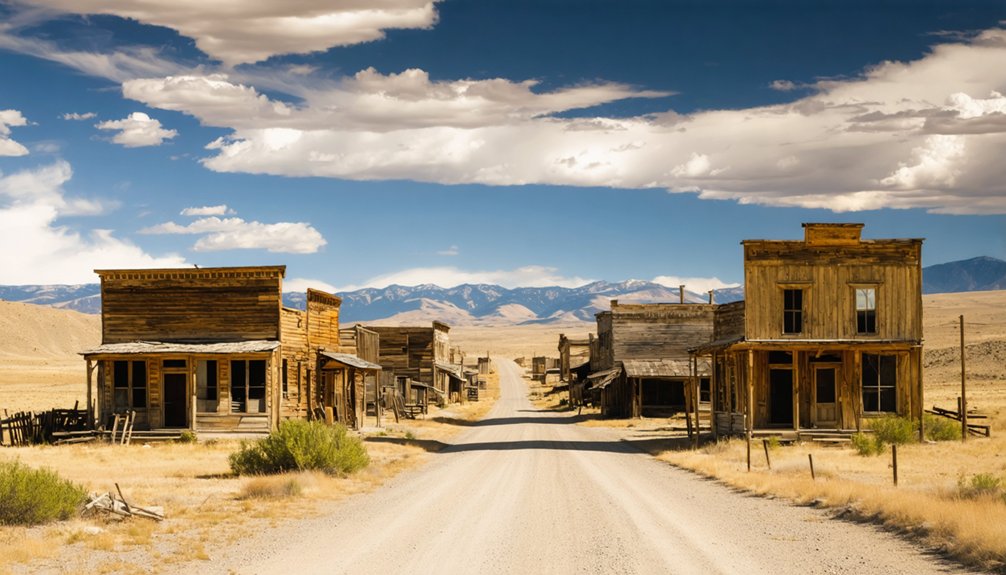
Plan your ghost town road trip to Jay Em, Wyoming, by heading south of Lusk on Highway 85, then detouring west toward Rawhide Creek. You’ll discover one of Wyoming’s most intact frontier towns, where stone buildings, unpaved streets, and a century-old townscape survive remarkably untouched. Time your visit between late spring and early fall for the best road conditions. Stick around—there’s far more history, practical tips, and hidden stops along this storied corridor waiting ahead.
Key Takeaways
- Jay Em is located off Highway 85, about 23 miles south of Lusk in Goshen County, near Rawhide Creek in eastern Wyoming.
- Late spring through early fall offers the best road conditions, clearest skies, and most accessible dirt roads for visiting Jay Em.
- Top off your fuel tank, carry water, pack a first-aid kit, and bring paper maps before leaving Highway 85.
- Jay Em features well-preserved frontier structures, including a general store, bank, water tower, and repair shop built from local Rawhide Buttes stone.
- Combine your Jay Em visit with stops at Lusk, Fort Laramie, Torrington, and Lingle for a full Highway 85 ghost town road trip.
What Ranching History Shaped Jay Em’s Founding?
Long before Lake Harris ever platted a single lot, Jim Moore staked his claim to the land around a quiet watering hole on Rawhide Creek back in the 1860s. Turning it into the second-largest cattle ranch in Wyoming Territory under his “J Rolling M” brand by 1869.
That brand didn’t just mark cattle — it named a creek and eventually an entire town. You’re standing on ground shaped by cattle drives pushing north along the old Texas Trail, where drovers stopped to water their herds before pressing on toward Lusk.
Jay Em’s ranching heritage runs deeper than its abandoned storefronts suggest. Moore’s empire came first, and everything Harris later built grew directly from that raw, open-range foundation that once defined eastern Wyoming’s wide, unenclosed freedom.
How Do You Get to Jay Em on Highway 85?
You’ll find Jay Em tucked off Highway 85, roughly 23 miles south of Lusk in eastern Wyoming’s Goshen County.
When you’re ready to leave the main road, take the short detour west toward Rawhide Creek, following the same corridor that once funneled Texas cattle north along the old trail.
It’s a quick departure from the highway, but you’re stepping into a landscape that’s carried ranchers, homesteaders, and cattle drives across its dry grasslands for well over a century.
Highway 85 Access Points
Highway 85 cuts through eastern Wyoming like a thread stitching together forgotten places, and Jay Em sits just off this route between Lusk to the north and Fort Laramie to the south. You’re roughly 23 miles from Lusk and about 30 miles from Fort Laramie when you make your turn toward Rawhide Creek.
Watch for the Jay Em area turnoff and commit to the detour — it’s worth every unpaved mile. The architectural styles you’ll encounter reflect vernacular building traditions born from necessity, not ornamentation.
Local legends trace this ground back to Jim Moore’s cattle empire in the 1860s, long before Lake Harris platted the town.
Keep your tank full before you leave Highway 85. Services disappear fast out here, and that’s exactly the point.
Detour Into Jay Em
Once you’ve committed to the detour, finding Jay Em means leaving Highway 85 and following a short cut toward Rawhide Creek, where the town sits tucked into Goshen County’s quiet eastern flats. You’re roughly 23 miles south of Lusk, tracing ground that cattle drovers once covered on the old Texas Trail. Local legends breathe through every weathered board here.
Make the most of your detour:
- Park near the historic core — buildings cluster within one block
- Walk slowly — historical landmarks reveal details only up close
- Note the vernacular architecture — nothing here was built to impress, only to last
- Respect remaining residents — caretakers still protect this place
Jay Em rewards the curious, not the hurried.
What’s the Best Time of Year to Visit Jay Em?
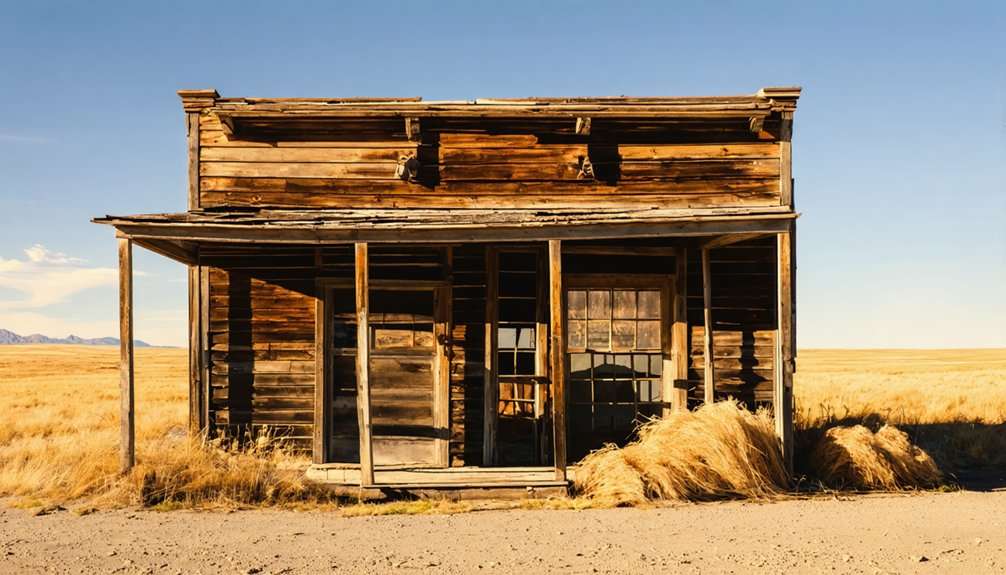
Timing your visit to Jay Em can make or break the experience. Late spring through early fall gives you the clearest skies and passable roads on unpaved terrain.
Timing your Jay Em visit matters — late spring through early fall promises clear skies and navigable dirt roads.
Wildflower season, typically May through June, transforms the high plains around Rawhide Creek into something unexpectedly vivid, softening the town’s stark, abandoned edges.
Summer heat stays manageable at this elevation, and long daylight hours let you soak in every weathered detail of those vernacular stone buildings.
Autumn brings sharp light and quiet that feels almost sacred.
Avoid deep winter unless you’re chasing a winter landscape of haunting beauty — snow isolates Jay Em completely, and roads become treacherous.
Spring mud can trap vehicles just as effectively. Your safest, most rewarding window remains May through October.
What to Pack When Visiting Jay Em’s Remote Site
Jay Em’s unpaved, ungraveled roads and remote Goshen County terrain demand that you pack smart before you leave the highway. Bring water, snacks, a first-aid kit, and a paper map, since cell service is unreliable this far off Highway 85.
You’ll also want sturdy footwear and a camera, because the site’s remarkably preserved vernacular buildings deserve a closer look on foot.
Essential Supplies To Bring
Because Jay Em sits roughly 30 miles north of Fort Laramie with no modern services to speak of, you’ll want to pack as though the old watering hole on Rawhide Creek is your only lifeline — because, fundamentally, it is.
This historical cattle country demands respect; the ranching legacy here was built on self-reliance, and your visit should honor that same spirit.
- Water — carry more than you think you need; the creek isn’t your backup plan
- Fuel — top off before leaving Highway 85; stations aren’t waiting for you
- Navigation tools — paper maps plus a charged GPS device
- Sun and weather protection — Wyoming’s eastern plains offer zero shade and zero mercy
Once you leave Highway 85 behind, the terrain between you and Jay Em’s historic district doesn’t forgive careless preparation. Streets were never paved here, and that tradition holds — you’re driving raw Wyoming earth toward a place that rejected municipal polish from the start.
Pack a physical map, extra water, and a first aid kit. Cell service fades fast across Goshen County’s open range. Sturdy footwear matters when you’re stepping around century-old structures worth protecting — historical preservation depends partly on visitors who watch where they walk.
Keep your eyes open beyond the buildings, too. Rawhide Creek’s corridor makes wildlife spotting genuinely rewarding — pronghorn, mule deer, and raptors work this landscape freely.
Come prepared, move deliberately, and Jay Em rewards you with something most tourist stops never deliver: unfiltered solitude.
What Makes Jay Em Wyoming’s Most Intact Ghost Town?
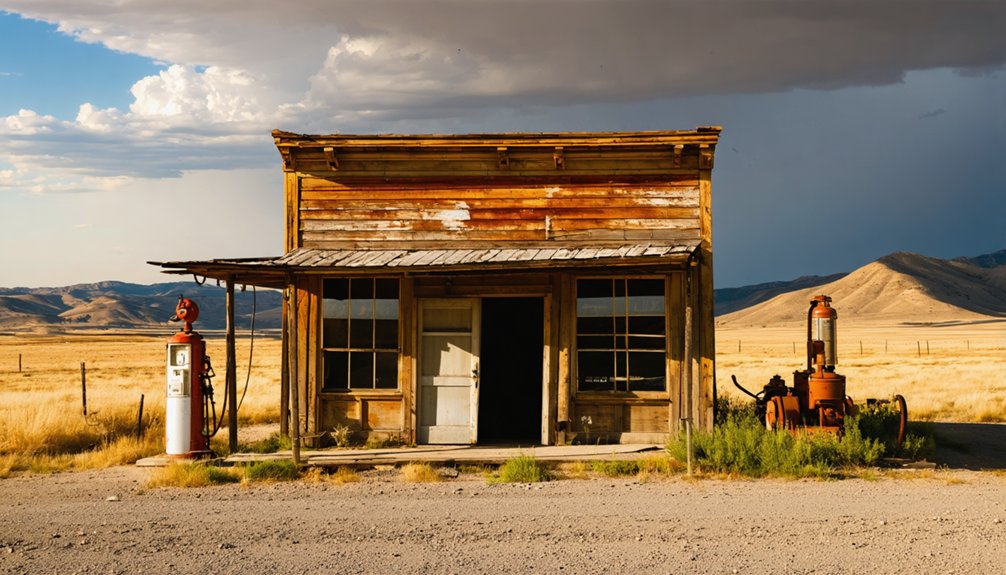
Unlike most ghost towns that have crumbled beyond recognition, Jay Em still stands in remarkable condition—its vernacular buildings clustered within a single block, looking much as they did when ranchers and homesteaders once rode in for supplies.
You’re walking through living historical architecture, preserved not by museums but by quiet preservation efforts and dedicated caretakers. Here’s what sets Jay Em apart:
- Buildings constructed from local Rawhide Buttes stone remain structurally sound
- The original general store, bank, and repair shop still define the townscape
- Streets were never paved, keeping the raw frontier character intact
- No municipal development ever altered its authentic, unpolished layout
Jay Em wasn’t engineered for permanence—it simply survived. That accidental integrity makes it one of Wyoming’s most honest windows into early 20th-century homesteading life.
What’s Left to See in Jay Em’s Historic District?
When you step into Jay Em’s historic district, the whole town unfolds within a single block—a general store, bank, repair shop, gas station, water tower, and lumber yard all within easy walking distance of each other.
What’s remarkable is the condition these structures have held despite decades of abandonment.
Historical preservation here wasn’t orchestrated by government grants or tourism boards—it happened organically, sustained by a handful of caretakers who refused to let local legends fade into the prairie wind.
You’ll notice streets never paved, no sidewalks, no curbs—Jay Em never pretended to be anything grander than it was.
That raw honesty is exactly what draws free-spirited explorers here.
Walk slowly, look closely, and let the silence tell you everything the history books leave out.
Other Ghost Towns Along the Highway 85 Corridor
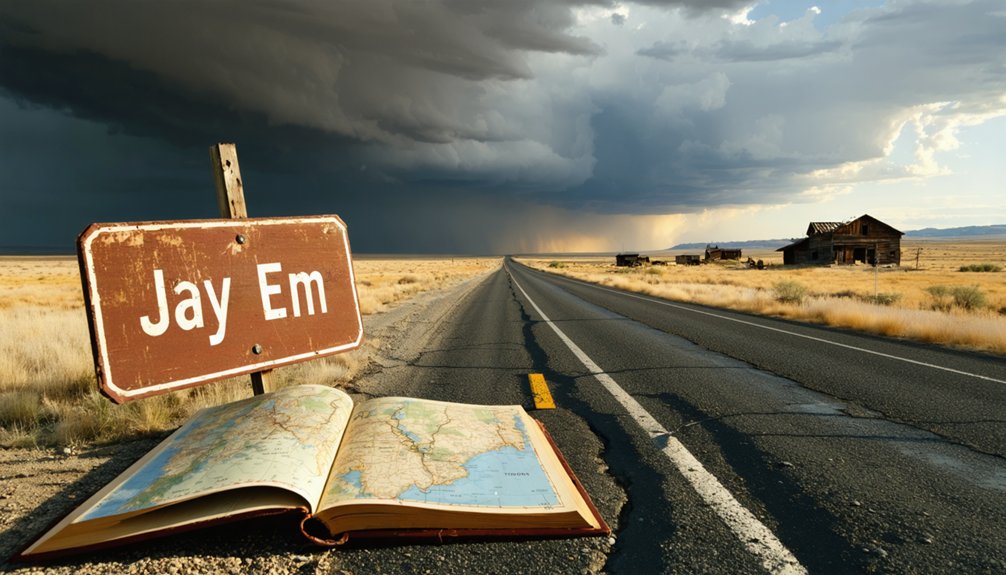
Highway 85 doesn’t just pass through Jay Em—it threads together a string of forgotten communities that once stitched southeastern Wyoming into a functioning frontier economy. You’ll find historical architecture and local legends scattered across the corridor if you know where to slow down.
Pack your curiosity and work these stops into your route:
- Lusk – A regional hub holding frontier-era buildings and stories of the old Texas Trail cattle drives.
- Fort Laramie – A preserved military post where westward expansion left its clearest marks.
- Torrington – Once a homesteader lifeline, still carrying agricultural history in its bones.
- Lingle – A quiet crossroads town that absorbed trade as smaller communities like Jay Em surrendered their customers to better roads.
Frequently Asked Questions
Is There an Entrance Fee to Visit Jay Em’s Historic District?
Like a open door to the past, you’ll find no entrance fee here! Jay Em’s historical significance and remarkable architectural features are yours to explore freely, so saddle up and ride in anytime.
Can You Stay Overnight or Camp Near Jay Em, Wyoming?
You won’t find formal campgrounds beside Jay Em’s historic landmarks, but freedom-seekers can explore nearby public lands for camping. Fuel your adventure with local dining in Lusk before chasing Wyoming’s wide-open, historically-rich horizons.
Is Jay Em on Private Property, and Is Access Permitted?
Much of Jay Em sits on private land, so you’ll want to respect boundaries a thousand times over. Seek permission before exploring, honoring historical preservation and local legends that keep this extraordinary, wind-swept Wyoming settlement alive for adventurous souls like you.
Are There Any Guided Tours Available at Jay Em?
No formal guided tours exist at Jay Em, but you’ll uncover ghost town history and local legends on your own terms — wandering freely through this remarkably preserved, adventurous slice of Wyoming’s raw, untamed past.
Does Jay Em Have Any Cell Service or Emergency Contacts Nearby?
Don’t count on cell service in Jay Em’s remote Goshen County wilds. You’ll want emergency contacts established before you venture out—tell someone your plans and keep Lusk’s resources roughly 23 miles north as your lifeline.
References
- https://en.wikipedia.org/wiki/Jay_Em_Historic_District
- https://www.legendsofamerica.com/jay-em-wyoming/
- https://wyoshpo.wyo.gov/index.php/programs/national-register/wyoming-listings/view-full-list/584-jay-em-historic-district
- https://www.youtube.com/watch?v=fUTZ4eFzZqI
- https://wyomingwhispers.com/jay-em-wy-ghost-town/
- https://www.ghosttowns.com/states/wy/jayem.html
- https://en.wikipedia.org/wiki/Jay_Em
- https://www.loc.gov/item/2017685185/
- https://vancouver.citynews.ca/2018/02/20/coalition-of-caretakers-keeping-wyomings-ghost-towns-alive/