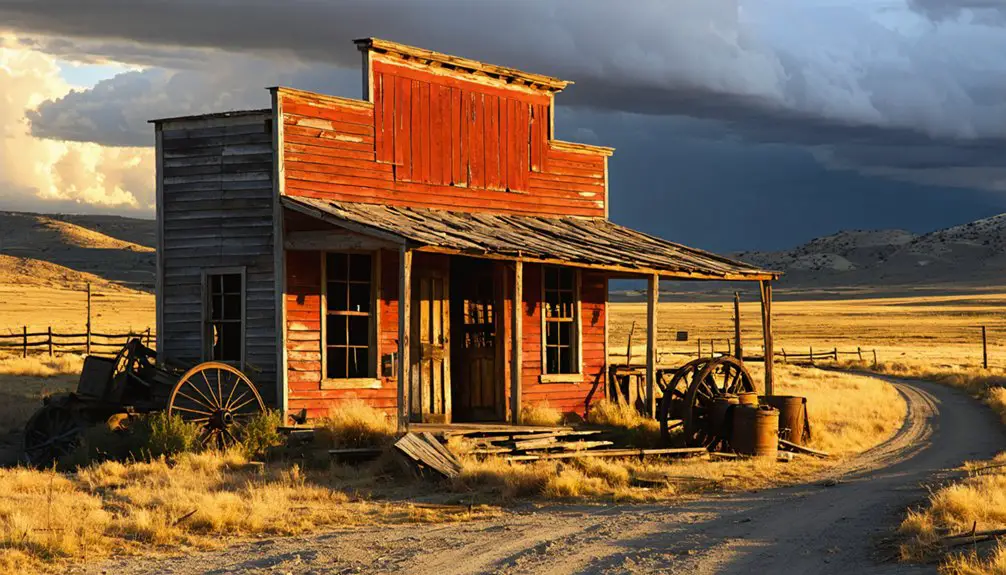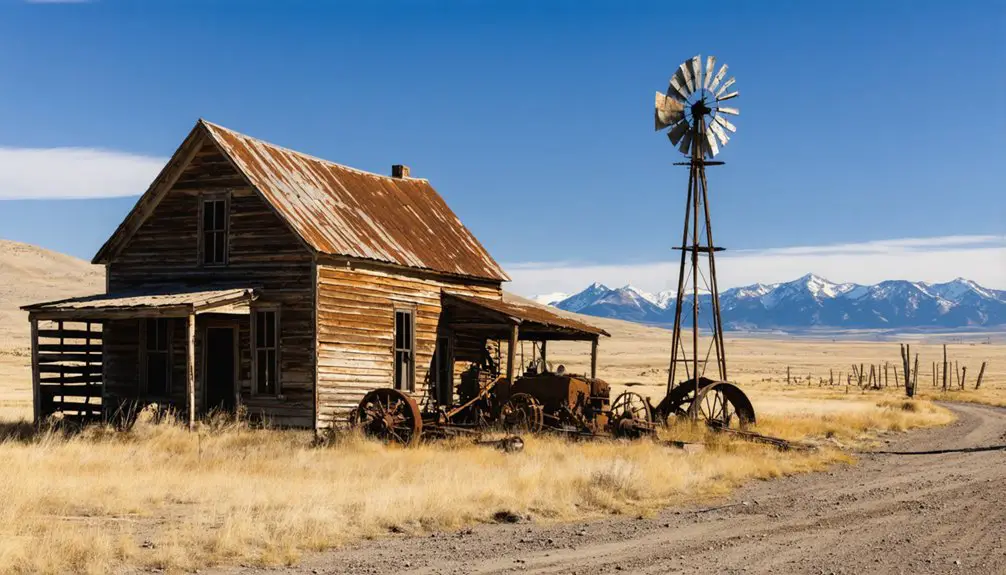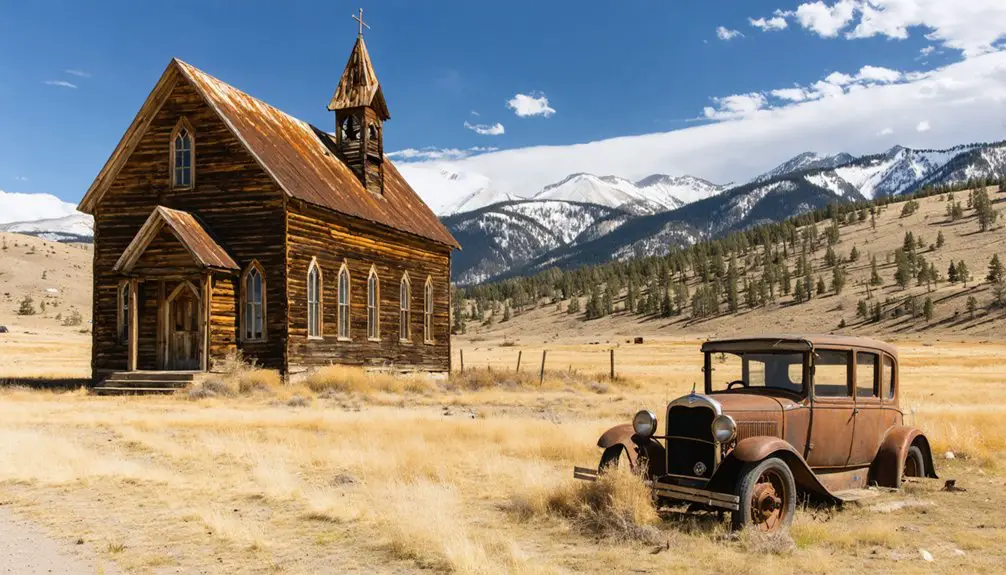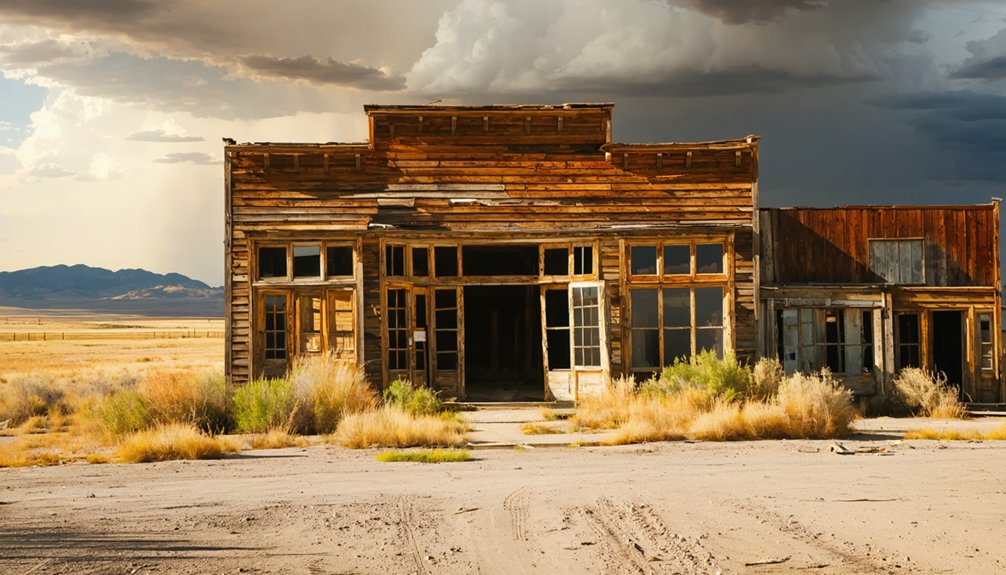
Planning a road trip to Kane, Wyoming means visiting a ghost town that’s literally beneath a lake. Kane thrived as the only Bighorn River crossing north of Greybull, but Yellowtail Dam’s completion submerged it under Bighorn Lake by 1967. Your best chance to explore it is late summer, when dropping reservoir levels expose foundations and remnants. Time it right, and Kane’s haunting history will rise up to meet you.
Key Takeaways
- Visit in late summer or early fall when seasonal drawdowns expose Kane’s submerged foundations, artifacts, and ghostly structural remnants.
- Check current Bighorn Lake water levels through the Bureau of Reclamation before your trip to ensure optimal visibility.
- Kane is located within Bighorn Canyon National Recreation Area; use the Visitor Center in Lovell, WY for navigation guidance.
- Year-round visible features include bridge pillars, a railroad marker, and the accessible Kane/Iona Cemetery.
- Extend your road trip by visiting nearby ghost towns like South Pass City, Point of Rocks, and Encampment.
What Was Kane, Wyoming: and Why Did It Disappear?
Once a thriving transportation hub in Big Horn County, Wyoming, Kane served as the only Bighorn River crossing north of Greybull, making it an essential link for cattle ranchers, sheepherders, and farmers moving goods across the Northern Basin.
At its peak, Kane’s historical significance extended beyond transportation — it had schools, hotels, a bank, and a railroad shipping point that kept the region connected.
But Kane’s story didn’t end quietly. When the federal government completed Yellowtail Dam in the 1960s, rising waters from Bighorn Lake swallowed the town by 1967. No rebuilding followed.
Today, preservation efforts focus on what remains — bridge pillars, a cemetery still in use, and seasonal glimpses of foundations when reservoir levels drop — keeping Kane’s memory alive for those willing to explore it.
When to Visit Kane Ghost Town for the Best Visibility
Timing your visit to Kane ghost town can make the difference between seeing open water and walking among weathered foundations. Seasonal water levels in Bighorn Lake dictate what’s accessible, so late summer and early fall typically offer your best chances.
Timing your visit right could mean the difference between open water and walking Kane’s exposed, weathered past.
By August, drawdown often exposes foundations, bridge remnants, and structural traces that sit submerged the rest of the year.
Historical climate patterns show that drought years reveal even more of Kane’s ghostly footprint. Conversely, wet cycles push water higher and swallow the site completely.
Check current reservoir levels through the Bureau of Reclamation before committing to the drive.
Spring visits carry flood-season risk, and winter roads near Lovell can be unpredictable.
Plan around low-water windows, and you’ll experience Kane at its most tangible and raw.
What’s Left to See at Kane Ghost Town Today?
Depending on the season and reservoir levels, Kane offers fragments of its former life that range from fully submerged to surprisingly walkable. When water levels drop, you’ll spot foundations, scattered historical artifacts, and remnants of structures that once served ranchers, sheepherders, and travelers.
Bridge pillars rise from the landscape year-round, giving you an immediate sense of Kane’s former role as a crucial river crossing. A railroad marker anchors the site historically, while the Kane/Iona Cemetery remains active and visitable regardless of conditions.
Low reservoir periods reward explorers most, revealing details that high water conceals. Before heading out, check current Bighorn Lake levels to gauge what’s accessible.
The Lovell-Kane Area Museum nearby adds essential context, helping you piece together what you’re actually walking through.
How Do You Get to Kane Within Bighorn Canyon?
Kane sits within the Bighorn Canyon National Recreation Area near Lovell, Wyoming, so that’s your starting point for any serious route planning. From Lovell, follow the signs toward the canyon’s south district, where access routes lead you deeper into the recreation area.
The roads are manageable in 2WD under dry conditions, but check weather before you roll out because remote terrain punishes unprepared travelers fast.
As you navigate toward the site, watch for historical landmarks like bridge pillars and the railroad marker that signal you’re closing in on Kane’s former footprint.
The Bighorn Canyon Visitor Center in Lovell can sharpen your bearings before you head out.
Cell service thins quickly, so download offline maps and carry water. Freedom out here rewards preparation.
Other Wyoming Ghost Towns Worth Adding to Your Route
While you’re mapping out your Kane detour, it makes sense to string a few more ghost towns onto the same road trip rather than burn a separate tank of gas for each one. South Pass City delivers gold rush history alongside preserved historic architecture that you can actually walk through.
Point of Rocks sits right off Interstate 80, making it an easy grab without backtracking.
Encampment tells a different story through its copper boom-and-bust cycle and local legends tied to outlaws and frontier ambition.
Each stop layers onto Kane’s flooded narrative with something distinct — mining, rail commerce, or ranching culture.
Together, they give your Wyoming road trip a complete arc instead of a single isolated destination.
Frequently Asked Questions
Is the Kane/Iona Cemetery Still an Active Burial Ground Today?
Ironically, life persists in this ghost town — the Kane/Iona Cemetery’s still in use today. You’ll find it’s a living piece of historic preservation, quietly carrying local legends forward, long after Bighorn Lake silenced Kane forever.
Who Was Riley Kane, and Why Was the Town Named After Him?
You’ll find Riley Kane’s historical significance shrouded in mystery—he’s believed to be a local figure whose naming origins reflect Wyoming’s tradition of honoring early settlers, but detailed records about who he actually was remain scarce.
Can You Visit Kane Ghost Town Without Entering the National Recreation Area?
There’s no way around it — you’ll need to enter Bighorn Canyon National Recreation Area to visit Kane. Pack your road trip essentials, follow Photography tips for low water seasons, and embrace the journey freely.
Does the Lovell-Kane Area Museum Require an Admission Fee to Enter?
The knowledge doesn’t confirm whether you’ll pay admission, but you’d love exploring the Lovell-Kane Area Museum’s historic architecture and nearby wildlife viewing opportunities as you freely uncover Kane’s fascinating, submerged ghost-town story your own way.
Are There Guided Tours Available Specifically Focused on Kane Ghost Town History?
Like a hidden gem waiting to be uncovered, Kane’s guided tours aren’t widely documented, but you’ll find historical preservation efforts and tourist attractions through Bighorn Canyon National Recreation Area rangers who actively share Kane’s fascinating ghost town history.
References
- https://travelwyoming.com/blog/stories/post/5-wyoming-ghost-towns-you-need-to-explore/
- https://en.wikipedia.org/wiki/Kane
- https://www.youtube.com/watch?v=Oe33S_KII3k
- https://www.nps.gov/bica/learn/historyculture/kane-town-history.htm
- https://www.sweetwaternow.com/gas-up-the-tank-and-go-find-some-ghouls-a-haunted-wyoming-road-trip/
- https://www.ghosttowns.com/states/wy/kane.html
- https://wyomingwhispers.com/kane-wyoming-tale-of-a-ghost-town/
- https://www.youtube.com/watch?v=18DWwqHU5ac
- https://www.rv.com/archive/wyomings-spook-route/