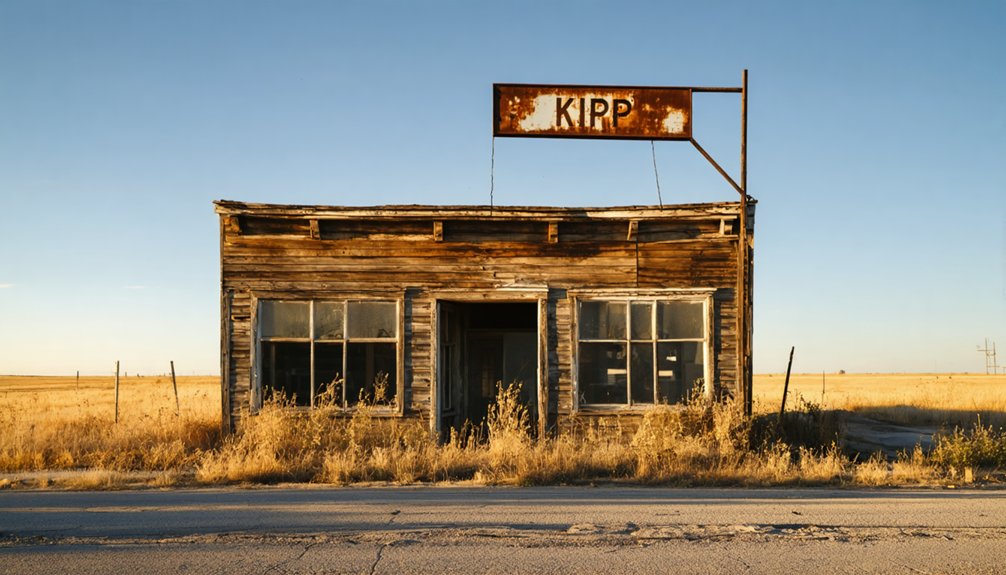
Planning a ghost town road trip to Kipp, Kansas starts eleven miles southeast of Salina, where the Missouri Pacific Railroad once defined an entire community. You’ll follow Schilling Road through open Kansas plains to reach what remains of a town that peaked at 150 residents in 1910 and now barely whispers of its past. Its post office closed in 1957, and today only fading structures and an abandoned railroad grade remain. Keep going — there’s far more to discover.
Key Takeaways
- Kipp, Kansas, located 11 miles southeast of Salina, is accessible via Schilling Road between Whitmore Road and Kipp Road.
- The abandoned Missouri Pacific Railroad line is Kipp’s primary historic landmark, alongside remnants of telegraph wires and express offices.
- Visit during late spring or early fall for mild weather; early mornings offer golden light ideal for photography.
- Pack water, snacks, a camera, and offline maps, as cell coverage is unreliable in this remote rural area.
- Extend your trip by exploring additional ghost towns in nearby Ellsworth and McPherson counties for more historical adventures.
What Kind of Ghost Town Is Kipp, Kansas?
Although Kipp still shows a flicker of life on modern census records, it’s firmly classified as an extinct Kansas town — a designation earned when its post office shuttered in 1957. You’re not visiting a town frozen by disaster or drama. Kipp simply became unnecessary, quietly fading as economic shifts rewrote the region’s story.
What you’ll find fits the pattern of a near-ghost town — shrinking population, absent commerce, and whispers of local legends tied to its Missouri Pacific Railroad roots. The historical architecture that once supported telegraph offices and express shipping has surrendered to time.
You’re standing where 150 people once built something real. Kipp didn’t vanish violently — it dissolved gradually, making your exploration feel less like ruins and more like rediscovery.
The Railroad That Built and Abandoned Kipp
Before a single house took root, the Missouri Pacific Railroad drew the boundary line that would define Kipp’s entire existence. Historical railroads didn’t just carry freight — they carried purpose, and Kipp’s entire town development depended on that iron track running through Saline County.
When the railroad hummed with activity, Kipp thrived. Telegraph offices clicked, express shipments moved, and 150 residents called this place home by 1910. The community built itself around reliable transport and commercial connection.
Then the railroad quietly stepped back. Without that economic lifeline, Kipp’s population drained slowly over decades.
Today, you’ll notice the abandoned railroad line sitting adjacent to what remains of the settlement. It’s a powerful reminder that the same force that built Kipp ultimately rendered it unnecessary.
How to Get to Kipp From Salina
You’ll find Kipp sitting roughly 11 miles southeast of Salina, a quick but meaningful drive into Kansas’s quieter past. Follow Schilling Road between Whitmore Road and Kipp Road, and you’ll trace a path that once hummed with railroad commerce and small-town ambition.
Keep an eye out for the abandoned railroad line running alongside the community — it’s your clearest sign that you’ve arrived.
Distance From Salina
Getting to Kipp from Salina takes just 11 miles southeast, a short drive that feels like stepping back through Kansas history. You’ll follow Schilling Road between Whitmore Road and Kipp Road, tracing a path once defined by the Missouri Pacific Railroad‘s steady rhythm.
As you approach, the abandoned railroad line appears like a quiet monument, hinting at local legends of a busier era when telegraph offices hummed and express shipments moved goods across the plains.
The historical architecture that once served 150 residents in 1910 now stands as testament to a community that simply faded rather than fell.
Key Roads To Follow
Once you leave Salina heading southeast, the route to Kipp unfolds simply: take Schilling Road and follow it between Whitmore Road and Kipp Road. It’s a straightforward drive, but don’t let the simplicity fool you. Every mile carries historical significance, tracing paths once carved by Missouri Pacific Railroad trains that kept this small community alive.
As you roll down Schilling Road, you’ll notice the abandoned railroad line sitting quietly beside the settlement. That weathered stretch of forgotten track isn’t just scenery — it’s cultural preservation in its rawest form. Nobody restored it. Nobody polished it. It simply remains, honest and unhurried.
Keep your navigation loose and your eyes open. Kipp doesn’t announce itself grandly. You find it by paying attention, which is exactly the kind of freedom this road demands.
What’s Left to See When You Arrive in Kipp
Arriving in Kipp, you’ll find a quiet stretch of Saline County that speaks more through absence than presence. The abandoned railroad line running alongside the settlement is one of the few remaining historic landmarks, a rusted reminder of the Missouri Pacific’s former dominance here.
Residential homes still dot the landscape, housing the 60 souls recorded in 2020, but commerce vanished long ago.
You’ll walk ground layered with local legends — telegraph wires once hummed, express offices once bustled, and a money order post office once connected this small community to the wider world. Now, the land breathes slowly.
Schilling Road cuts through without ceremony. For travelers chasing freedom along Kansas backroads, Kipp offers something rare: unfiltered, honest American decline, preserved by simple irrelevance.
When to Drive Out to Kipp and Saline County

Spring and fall offer you the most rewarding drives out to Kipp, when mild temperatures and clear skies make Saline County’s open roads feel almost timeless.
You’ll want to avoid summer visits if you can, since heavy rains can compromise road conditions along Schilling Road and leave low-lying rural routes muddy and unpredictable.
Pack a map, check the forecast before you leave Salina, and give yourself time to arrive without rushing a landscape that rewards slow attention.
Best Seasons To Visit
Although Kansas weather can be unpredictable, late spring and early fall are your best windows for driving out to Kipp. May and September deliver mild temperatures, manageable winds, and skies wide enough to make the drive feel worth every mile.
Summer heat along Schilling Road can punish unprepared travelers, and winter ice makes rural Saline County roads genuinely dangerous. You don’t want weather cutting your exploration short when you’re chasing local legends and scanning the landscape for remnants of historic architecture against a prairie horizon.
Early morning arrivals reward you with golden light across the abandoned railroad grade and quieter roads between Whitmore and Kipp Road. Come prepared, move deliberately, and let the season work with you rather than against you.
Road Conditions And Weather
Knowing when to go is only half the battle — knowing what you’ll find on the road to Kipp completes the picture. Saline County’s summer months can soften rural roads, turning a straightforward drive into something more demanding.
You’ll follow Schilling Road between Whitmore and Kipp Roads, roughly 11 miles southeast of Salina, where the pavement thins and civilization quietly steps back.
Spring and fall offer firmer ground and clearer skies, making historical preservation efforts easier to appreciate without weather interference.
You’ll notice the abandoned railroad line cutting alongside the settlement — a monument to urban decay frozen mid-sentence.
Drive prepared. Keep your tank full, your expectations open, and your pace slow. Kipp doesn’t rush toward you. You earn it mile by quiet mile.
Nearby Kansas Ghost Towns to Combine With Your Kipp Visit
Since Kipp sits in the heart of Saline County, you’ve got a natural launching point for exploring several other forgotten Kansas communities scattered across the surrounding plains. The region holds towns that share Kipp’s quiet story — places where artistic symbolism once lived in hand-painted storefronts and depot signage, now faded against weathered wood.
Kipp anchors your journey through Saline County, where forgotten towns still whisper through faded storefronts and weathered depot signs.
Preservation challenges haunt nearly every stop along these routes, as crumbling foundations and overgrown lots resist restoration efforts.
Consider looping through nearby Ellsworth and McPherson counties, where ghost towns dot rural crossroads with equal mystery. Each community you visit adds another layer to Kansas’s vanishing rural identity.
You’re not just sightseeing — you’re witnessing history that won’t wait. Plan your stops deliberately, travel light, and let the open plains guide your pace.
What to Pack Before You Drive Out to Kipp
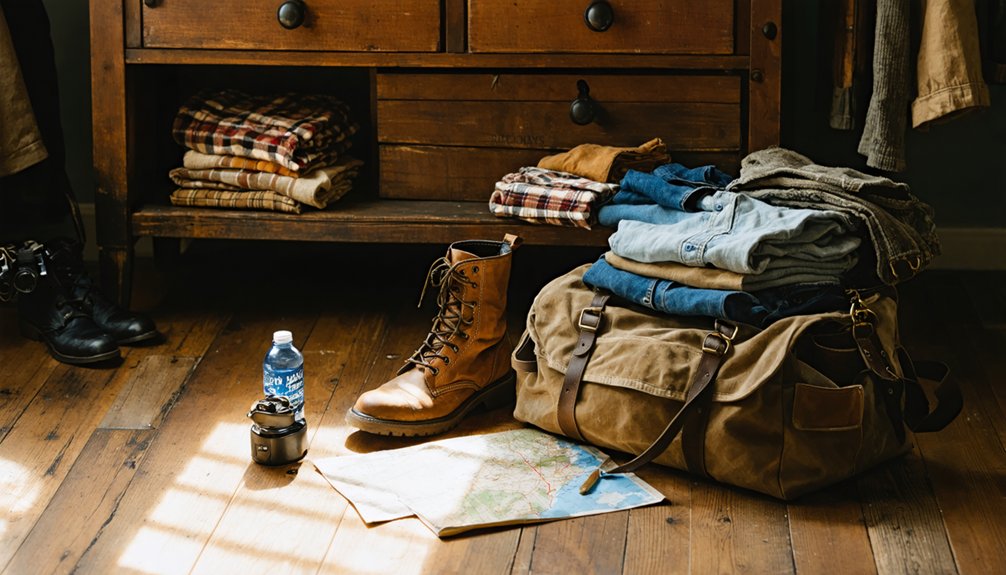
Once you’ve mapped out your ghost town loop, packing smart makes the difference between a memorable drive and an avoidable headache. Kipp sits along rural Schilling Road with no commercial stops nearby, so bring water, snacks, and a full tank before leaving Salina.
Carry a camera to document historical artifacts you’ll spot around the abandoned railroad corridor. A notebook helps you record local legends you might collect from longtime area residents or roadside markers. Wear sturdy shoes since you’ll likely walk uneven ground near the old railroad grade.
Download offline maps before you leave because cell coverage gets unreliable southeast of Salina. Pack sunscreen for summer visits when Saline County heat hits hard. You’re chasing history out here, so come prepared to stay as long as the road calls you.
Frequently Asked Questions
What Year Did Kipp’s Post Office First Open for Residents?
Kipp’s post office first opened in 1890, connecting you to historical postal services that fueled rural community development. You’d have felt that frontier freedom as this small Kansas town embraced its promising, independent future.
How Many People Lived in Kipp During Its Peak Population Year?
You’ll find that 150 souls once called Kipp home in 1910, when its abandoned town architecture buzzed with life. Those historical ghost stories echo a free-spirited community that’s since faded into Kansas’s nostalgic, windswept past.
How Many Households Were Recorded in Kipp’s 2020 Census Data?
You’ll find that Kipp’s 2020 census recorded 29 households — a hauntingly small number reflecting its place among historical ghost towns. These Kansas travel tips remind you that freedom means exploring communities time’s quietly left behind.
Solomon and Eureka Townships share Kipp’s boundary line, where you’ll find abandoned buildings steeped in local legends. You’re treading ground where two townships met, and that forgotten intersection shaped everything this quietly vanishing Kansas community became.
What Is Kipp’s Exact Elevation Above Sea Level in Feet?
You’ll find Kipp’s exact elevation reaches 1,207 feet above sea level, where ghost town attractions and historic landmarks quietly stand, inviting you to breathe free Kansas air and wander through time’s forgotten, beautifully preserved rural landscape.
References
- https://legendsofkansas.com/saline-county-kansas-extinct-towns/
- https://www.youtube.com/watch?v=dy7nLwjHkbY
- https://en.wikipedia.org/wiki/Kipp
- https://legendsofkansas.com/kansas-ghost-town-list/
- https://legendsofkansas.com/everywhere-kansas-k/
- https://ksgenweb.org/archives/1912/k/kipp.html
- https://en.wikipedia.org/wiki/List_of_ghost_towns_in_Kansas
- https://kids.kiddle.co/List_of_ghost_towns_in_Kansas