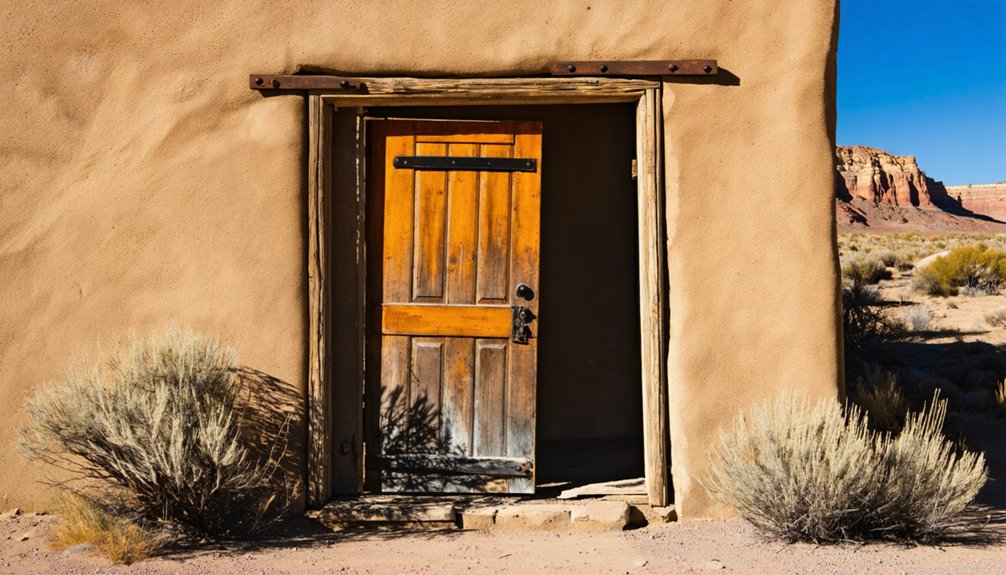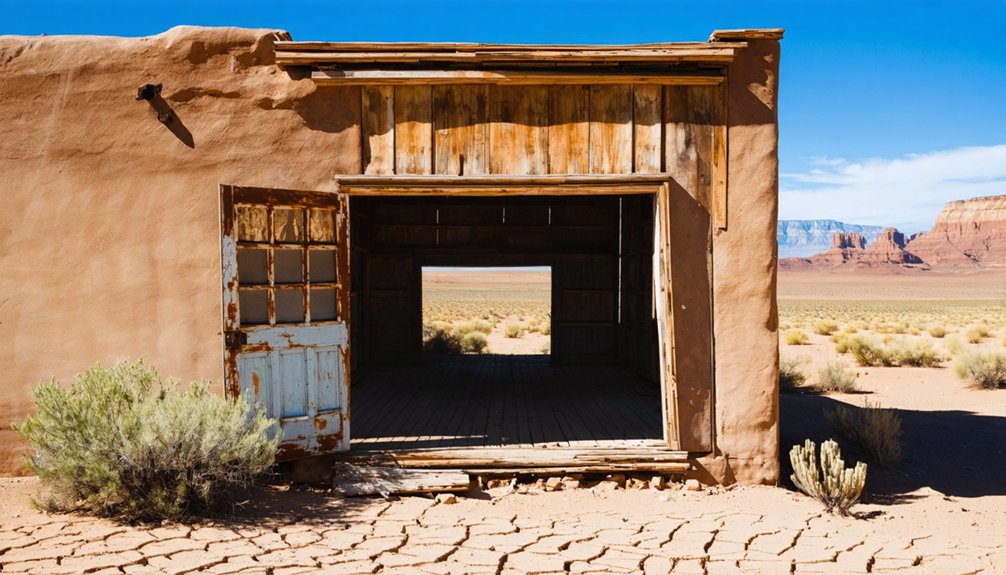
Planning a ghost town road trip to Kiz, Utah means heading into Clark Valley in eastern Carbon County, where a small farming community once stood before a devastating 1930 drought forced its abandonment. Named after Kiziah Dimick, the first woman to settle the valley, Kiz today offers little more than rubble and a quiet cemetery. You don’t need a 4WD to get there, and nearby ghost towns make it an easy day trip worth exploring further.
Key Takeaways
- Kiz is located in Clark Valley, eastern Carbon County, Utah, accessible via standard 2WD vehicles without requiring four-wheel drive.
- Use grid coordinate #5 on regional ghost town maps for navigation, as cell service is unreliable in the area.
- Spring and fall offer the most comfortable visiting conditions, though Kiz remains accessible year-round with proper preparation.
- Pack water, sunscreen, sturdy footwear, a first aid kit, printed maps, and a camera for a safe and rewarding visit.
- Combine your visit with nearby ghost towns Standardville, Rains, and Peerless via Spring Canyon Road for a comprehensive regional experience.
Kiz, Utah: The Ghost Town Named After Clark Valley’s First Woman
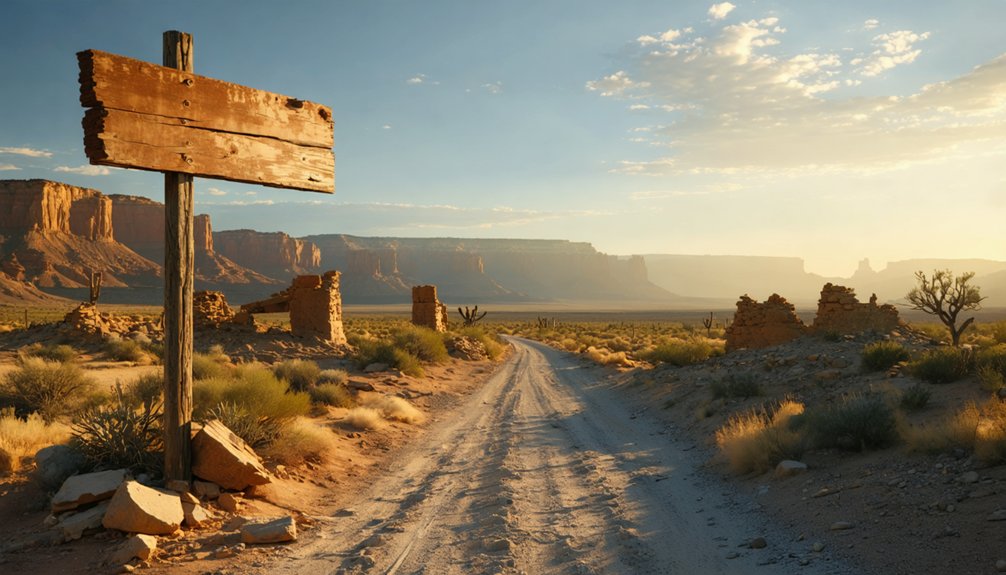
Tucked within the arid expanse of Clark Valley in eastern Carbon County, Utah, Kiz is a ghost town with a story rooted not in coal or silver, but in the quiet ambitions of farming families. Around 1906, roughly 20 families carved out an agricultural settlement here, drawn by the valley’s farming potential.
The town takes its name from Kiziah Dimick, the first woman to settle in Clark Valley — a fitting tribute that modern tourism now carries forward. A severe 1930 drought forced residents out, and by 1940, Kiz stood fully abandoned.
Today, historical preservation efforts acknowledge this site as a true ghost town. You’ll find no standing buildings, only scattered rubble and a small cemetery marking where a determined community once put down roots.
Kiziah Dimick and the Farming Community She Started in 1906
When you explore the story of Kiz, you quickly discover that one woman’s arrival shaped everything. Kiziah Dimick became the first woman to settle in Clark Valley, and families followed her lead, establishing roughly 20 households focused entirely on farming rather than the mining operations that defined so many nearby communities.
Her name lives on in the town itself, with “Kiz” serving as a lasting tribute to the pioneer who turned an arid valley into a working agricultural settlement in 1906.
Kiziah Dimick’s Historic Arrival
Before Kiz had a name, it had Kiziah Dimick. She was the first woman to settle in Clark Valley, and her arrival in 1906 sparked something remarkable — a genuine farming community built on grit and agricultural ambition.
Around 20 families followed her lead, staking their futures in Utah’s arid eastern landscape.
You’re walking into a story shaped by real people chasing real freedom. Kiziah’s legacy isn’t just historical artifacts buried beneath the rubble — it’s the reason this valley carries a name at all.
Modern preservation efforts recognize her foundational role, keeping her story alive for curious road trippers like you.
When you visit Kiz, you’re not just exploring a ghost town. You’re standing where one woman’s courage built an entire community from the ground up.
Building Clark Valley’s Farms
Farming in Clark Valley wasn’t easy, but Kiziah Dimick and the families who followed her didn’t come looking for easy. By 1906, roughly 20 families had put down roots in this arid stretch of eastern Carbon County, Utah, carving out an agricultural community in unforgiving terrain. They built homes, worked the dry soil, and created something rare — a settlement defined by crops, not coal.
Unlike nearby mining camps, Kiz represented independent, land-driven living. Families chose this valley for its farming potential, constructing a modest but functional town.
Today, preservation challenges have erased nearly every trace of that historical architecture, leaving only rubble where homes once stood. Yet that struggle to build something lasting in harsh conditions speaks directly to the pioneering spirit that drew settlers here in the first place.
How a 1930 Drought Emptied Kiz and Left It Abandoned
Though Kiz thrived as a small agricultural community for roughly three decades, a severe drought in 1930 stripped the land of its farming potential and forced the town’s approximately 20 families to pack up and leave.
Without water, crops failed, and the valley’s promise collapsed almost overnight. Unlike areas where urban development or technological advancements offered residents alternative paths forward, Kiz had no industrial backbone to fall back on. Its identity was purely agricultural, and when the land stopped producing, there was simply no reason to stay.
What’s Actually Left at the Kiz Ghost Town Site Today
When you arrive at the Kiz townsite, don’t expect much standing — because almost nothing is. The former homes have crumbled into rubble and scattered debris, leaving the landscape stark and open.
Historical preservation here is minimal; nature and time have reclaimed nearly everything the settlers built.
The cemetery stands as the lone surviving landmark, a small graveyard that anchors the site and gives you something concrete to find. It’s your best navigation point and the clearest connection to the people who once lived here.
Don’t arrive expecting tourist amenities — there are none. No signage, no facilities, no maintained paths.
What you get instead is raw, unfiltered history written in silence and dust, which for the right traveler, is more than enough.
Is Kiz Worth the Drive If Only a Cemetery Remains?
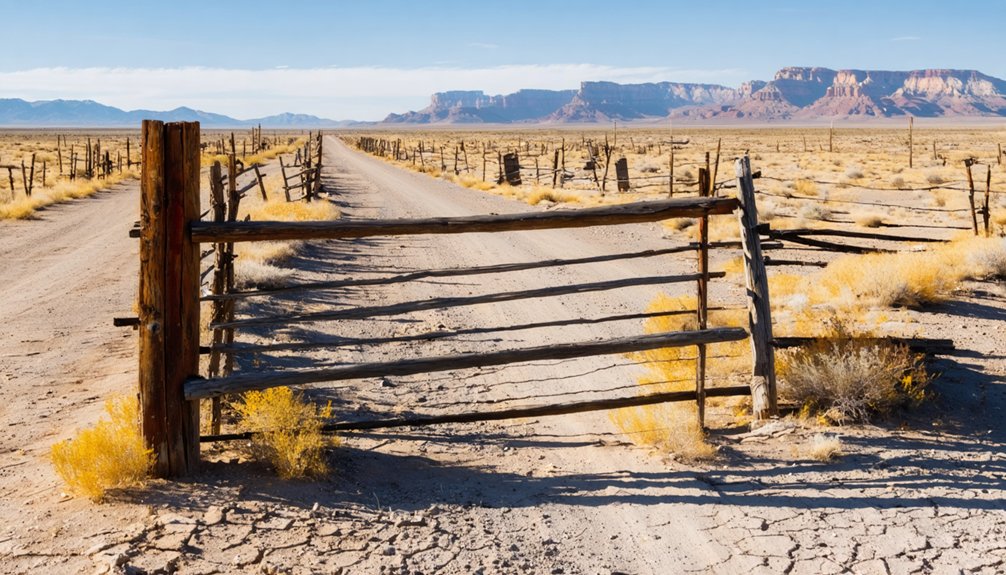
When you pull up to Kiz, the cemetery stands as your only structural landmark, but that singular remnant carries a quiet historical weight that resonates beyond crumbling walls or rusted machinery.
You’re standing where Kiziah Dimick’s agricultural dream took root, and that story alone sets Kiz apart from the coal mining camps dotting nearby Spring Canyon Road and Consumers Road.
If you’re already touring Carbon County ghost towns like Standardville or Peerless, adding Kiz to your route costs little extra effort since 2WD roads make it easily accessible, giving you meaningful historical contrast between farming and mining settlement legacies.
Cemetery As Sole Landmark
While a lone cemetery might seem like slim pickings for a road trip destination, Kiz delivers something that polished tourist attractions rarely can: raw, unfiltered history sitting quietly in an open valley.
That small graveyard carries genuine cultural significance, marking where roughly 20 families built lives before drought forced them out in 1930.
You won’t find interpretive signs or gift shops here. What you’ll find is rubble, open sky, and a burial ground that stands as the only surviving act of historical preservation on the site.
It’s a place where the silence does the talking.
If you value honest, unscripted exploration over curated experiences, that cemetery isn’t a disappointment. It’s the entire point.
Kiz rewards curious travelers who know how to read what’s no longer there.
Value Beyond Structures
The question answers itself once you’ve stood in Clark Valley with nothing but rubble, open terrain, and a small graveyard to orient you — Kiz isn’t selling a spectacle, it’s offering context. You’re standing where roughly 20 families built something real, then lost it to drought by 1930. That story doesn’t need standing walls to carry weight.
Historical preservation doesn’t always mean pristine buildings. Sometimes it means protecting the ground where ordinary people tried and failed. Kiz carries genuine cultural significance precisely because it resisted industrialization — no mining, no company towns, just families farming arid land until nature refused to cooperate.
If you travel for meaning rather than scenery, Kiz delivers. The emptiness itself becomes the exhibit, and you’re free to interpret it however history moves you.
Comparing Nearby Ghost Towns
Carbon County doesn’t make you choose — you can pair Kiz with a circuit of nearby ghost towns and let the contrast do the talking. Standardville, Rains, and Peerless each reflect distinct architectural styles shaped by coal mining’s industrial urban development.
Spring Canyon Road alone preserves remnants of an entire prosperous era, where company-built structures once defined daily life.
Kiz offers something different — no industrial bones, no mining infrastructure, just a quiet cemetery marking where farming families once planted roots. That contrast sharpens your understanding of why people came, stayed, and ultimately left this region.
If you’re already driving Carbon County‘s backroads, skipping Kiz makes little sense. Its silence speaks volumes that more intact sites simply can’t replicate.
How to Reach Kiz in Clark Valley Without a 4WD
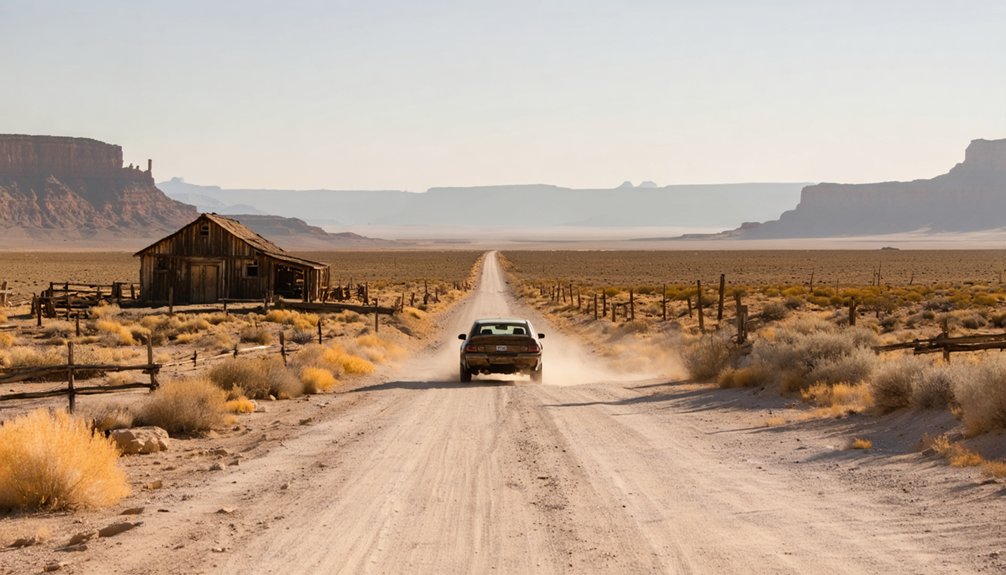
Reaching Kiz doesn’t require a rugged 4WD vehicle, making it one of the more accessible ghost town destinations in Carbon County, Utah. Standard 2WD vehicles handle the roads comfortably, so you’re free to pack up and head out without specialized equipment.
Kiz sits in the middle of Clark Valley, surrounded by open, arid terrain that stretches toward the horizon. Use grid coordinate #5 on regional ghost town maps to navigate directly to the site.
East Carbon, the nearest inhabited town, serves as a convenient staging point before you explore the area.
As one of Utah’s quieter tourist attractions, Kiz rewards visitors who value historical preservation and wide-open solitude.
Once you arrive, the small cemetery stands as your primary landmark marking the former townsite.
Best Time of Year to Visit Kiz, Utah
Kiz welcomes visitors year-round, so you won’t need to plan around seasonal closures or permit windows. Each season offers a distinct experience at this site of quiet cultural significance.
Spring and fall deliver mild temperatures, making it easier to explore the cemetery and scattered rubble while reflecting on the town’s agricultural history.
Spring and fall offer mild temperatures perfect for wandering Kiz’s cemetery and ruins at a thoughtful, unhurried pace.
Summer visits are absolutely doable, but pack water and prepare for dry desert heat.
Winter adds a stark, haunting atmosphere to the landscape, though you’ll want to check road conditions before heading out.
Regardless of when you arrive, the site’s historical preservation depends partly on respectful visitors who leave everything undisturbed.
Treat the graveyard and remaining debris as the irreplaceable remnants they are, and you’ll honor Kiziah Dimick’s legacy with every step you take.
What to Pack for a Kiz Ghost Town Visit: Water, Maps, and More
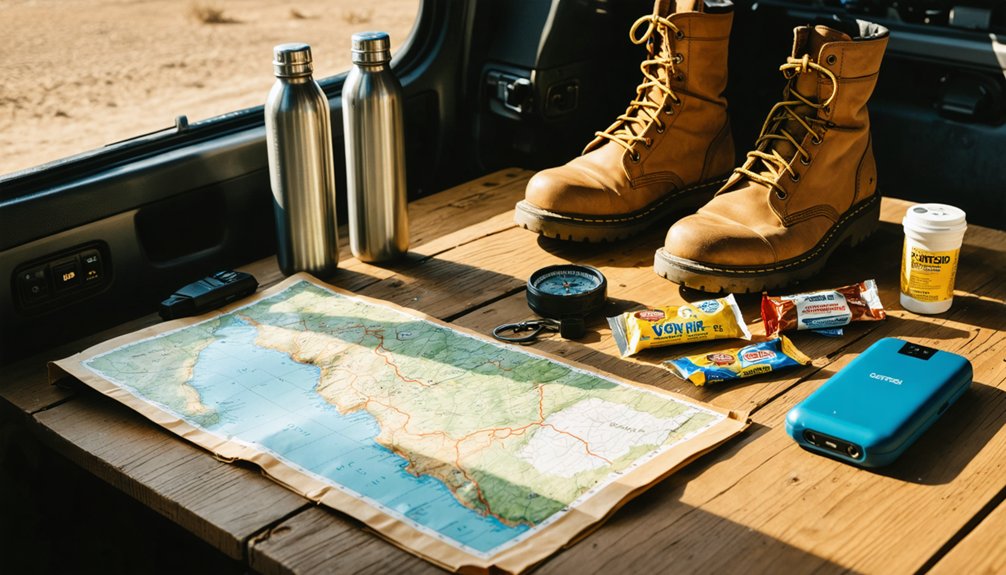
Since Kiz sits in the arid heart of Clark Valley with no services, buildings, or reliable shade, what you pack directly determines how comfortable and safe your visit will be. Bring plenty of water, sunscreen, and weather preparedness essentials like layers for shifting temperatures or unexpected snow in winter months.
Sturdy footwear helps you navigate rubble and uneven terrain around the former townsite.
Carry a printed regional map marked with grid coordinate #5, since cell service remains unreliable in this remote corner of Carbon County.
A camera lets you document the cemetery and scattered debris without disturbing historical artifacts or the graveyard’s integrity.
Pack snacks, a first aid kit, and a charged battery bank.
Respect what little remains, and you’ll leave with a genuinely rewarding experience.
Carbon County Ghost Towns to Pair With a Kiz Road Trip
Carbon County packs enough ghost town history to fill an entire road trip, and pairing Kiz with nearby sites makes the drive even more rewarding. Standardville, Rains, and Peerless each carry their own urban legends and industrial echoes from Carbon County‘s coal mining era.
Carbon County holds enough ghost town history to fill an entire road trip — and Kiz is just the beginning.
Spring Canyon Road alone connects several abandoned mining camps, letting you trace the region’s boom-and-bust story across a single route.
Consumers Road leads past remnants of camps like Sweet and National, where modern conservation efforts preserve fragile structural remains for future explorers.
Unlike these mining sites, Kiz offers an agricultural contrast that deepens your understanding of how differently communities formed across the same landscape.
Combining these stops gives you a richer, fuller picture of what eastern Utah’s forgotten towns looked like at their peak.
Frequently Asked Questions
Are There Any Guided Tours Available for Visiting Kiz Ghost Town?
Like a lone tumbleweed rolling freely, no guided tours exist for Kiz. You’ll explore independently, embracing historical preservation at your own pace. Bring your camera—photography tips suggest capturing the cemetery’s haunting beauty in golden hour light.
Is There a Fee or Permit Required to Visit the Kiz Site?
You don’t need a fee or permit to visit Kiz! Explore freely, respecting historical preservation of the cemetery. Capture stunning Photography tips: shoot the rubble at golden hour for dramatic, memorable shots of this hauntingly beautiful site.
Can Visitors Camp Overnight Near the Kiz Ghost Town Location?
The knowledge doesn’t confirm campground restrictions near Kiz, so you’ll want to research local regulations. Embrace the freedom of open terrain, but stay prepared for wildlife encounters while exploring this remote, arid Clark Valley destination overnight.
Are Pets Allowed When Visiting the Kiz Cemetery and Townsite?
The knowledge doesn’t clarify pet restrictions or animal accommodations at Kiz, but you’re free to bring your four-legged companions to this open, arid site — just make sure they’re leashed and respectful of the sacred cemetery grounds.
Is the Kiz Ghost Town Located on Public or Private Land?
The knowledge base doesn’t confirm whether Kiz sits on public or private land. You’ll want to verify land ownership before visiting to guarantee history preservation and full visitor accessibility, respecting boundaries while exploring this remarkable, abandoned agricultural ghost town freely.
References
- https://en.wikipedia.org/wiki/Kiz
- https://www.ghosttowns.com/states/ut/kiz.html
- https://en.wikipedia.org/wiki/List_of_ghost_towns_in_Utah
- https://www.legendsofamerica.com/carbon-county-utah-ghost-towns/
- https://kids.kiddle.co/List_of_ghost_towns_in_Utah
- https://www.familysearch.org/en/wiki/Utah_Ghost_Towns