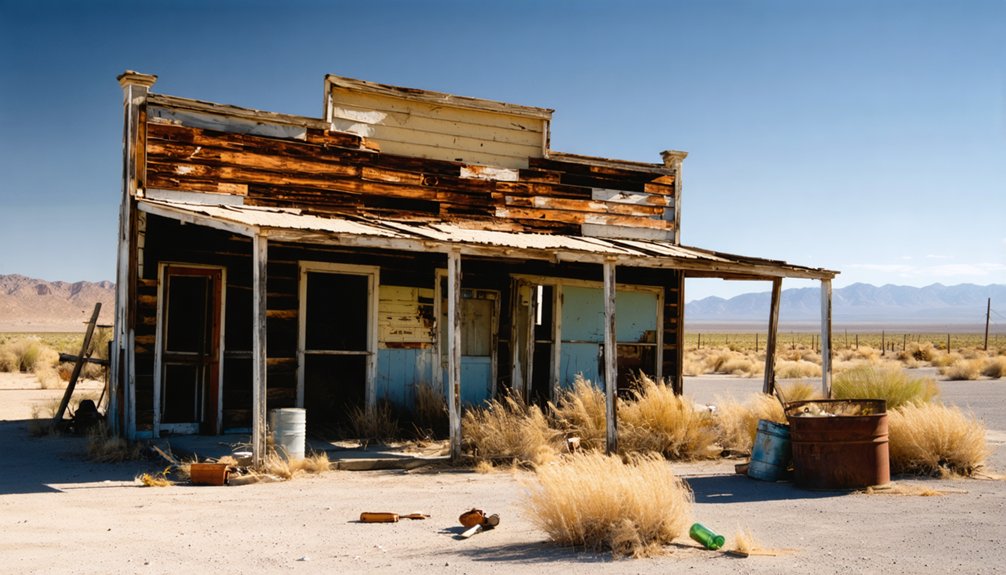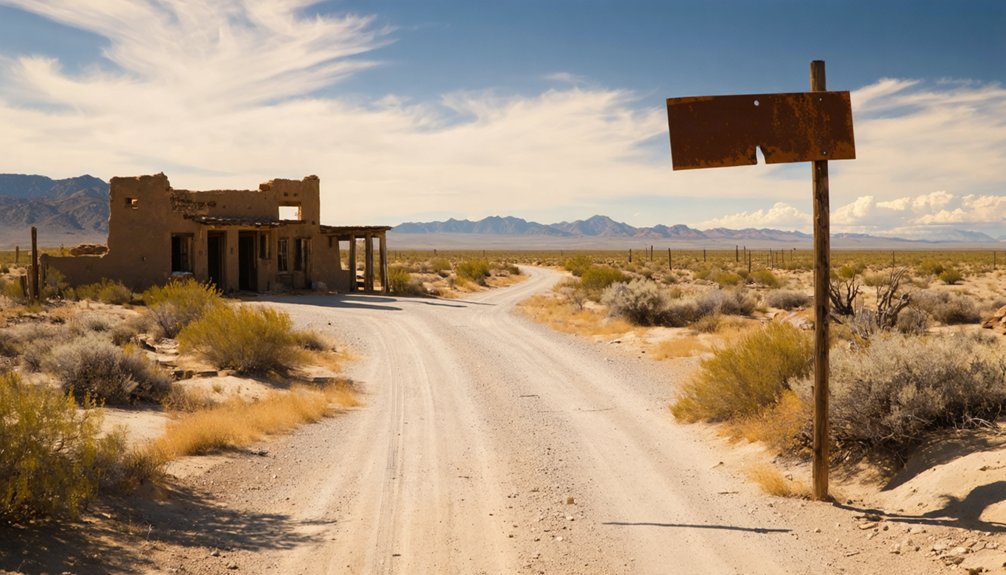
Planning a ghost town road trip to La Laguna, Arizona means exploring a unique underwater relic submerged beneath Mittry Lake in Yuma County. Active from 1860 to 1862, this former placer gold mining camp vanished almost overnight after the La Paz gold rush fizzled out. You won’t find crumbling ruins here—just open water concealing a forgotten world below. Visit between October and February for cooler temps and lower water levels, and keep exploring to uncover everything this haunting destination has to offer.
Key Takeaways
- La Laguna, a gold mining ghost town in Yuma County, Arizona, is now submerged beneath Mittry Lake with no visible ruins remaining.
- Visit between October and February for cooler temperatures, better lighting, and lower water levels that may expose submerged artifacts.
- Access the site via roads leading to the Mittry Lake area, which offers scenic views, birdlife, and wildlife.
- Extend your road trip by visiting nearby Castle Dome Landing and Castle Dome City for broader regional mining history.
- During low water periods, exposed edges of the submerged townsite may reveal rare glimpses of historical artifacts.
What Was La Laguna, Arizona?
Although it barely lasted two years, La Laguna packed a full boom-town story into its short life. Nestled in what’s now Yuma County, Arizona, this short-lived settlement thrived from 1860 to 1862 as both a placer gold mining camp and a Colorado River steamboat landing.
You’d have found miners refining their placer mining techniques along the riverbanks, merchants supplying their needs, and a ferry shuttling people across the water. While no historical architecture survives today for you to examine up close, the town once buzzed with the raw energy of gold-rush ambition.
Its decline came swiftly when the La Paz gold rush pulled attention elsewhere. Today, Mittry Lake swallows the entire townsite, making La Laguna one of Arizona’s most uniquely submerged ghost towns.
Why Did La Laguna Vanish After Just Two Years?
La Laguna’s collapse came fast, and a single event drove it: the La Paz gold rush. When richer placer deposits surfaced nearby, miners packed up and chased the next strike — exactly the Wild West pattern you’ll recognize across Arizona’s boomtown history.
Merchants followed the crowds, the ferry lost its purpose, and the steamboat landing fell quiet almost overnight.
When the miners left, merchants followed. The ferry sat idle. The landing went silent.
You’re looking at a two-year lifespan, 1860 to 1862, snuffed out not by failure but by opportunity elsewhere. That’s the brutal logic of a Gold Rush economy — loyalty meant nothing when richer ground called.
Later, Castle Dome Landing absorbed the remaining river traffic after gold appeared in the Castle Dome Mountains. La Laguna didn’t fade slowly. It simply got abandoned mid-stride.
Where Exactly Is La Laguna Today?
Where La Laguna once buzzed with miners, merchants, and ferry crossings, Mittry Lake now sits quietly in Yuma County, Arizona — swallowing every trace of the old steamboat landing beneath its surface. You won’t find crumbling walls or dusty streets here. Instead, you’ll find open water roughly 20 miles above Yuma, where the Colorado River’s past and present quietly collide.
Tourist accessibility is straightforward — you can reach the Mittry Lake area by road — but adjust your expectations before arriving. Historical preservation at this site exists only in records and ghost-town registries, not in visible ruins. Think of your visit as steering through a living map marker.
The real adventure lies in standing at the water’s edge, knowing an entire gold-rush community rests just below the surface.
What to Expect When You Visit Mittry Lake
Arriving at Mittry Lake, you’ll trade crumbling storefronts for open water, birdsong, and the quiet hum of a desert reservoir doing what ghost-town sites rarely do — actively hiding its history.
Beneath that calm surface sits what’s left of La Laguna, a two-year gold rush settlement that vanished long before the water arrived.
Don’t expect signage or ruins. Do expect lake wildlife — herons, egrets, and migratory birds that make Mittry a legitimate natural destination.
Fishing opportunities are real here, giving you a reason to linger even after you’ve absorbed the history.
Winter and fall offer the most comfortable conditions for exploring the shoreline.
Come curious, come prepared, and let the lake’s quiet indifference to its own buried past fuel your imagination.
When Is the Best Time to Visit La Laguna?
You’ll get the most out of your La Laguna road trip by planning your visit in fall or winter, when cooler temperatures make exploring the Mittry Lake area far more comfortable.
Summer heat in Yuma County can be brutal, turning an outdoor historical stop into an endurance test rather than an adventure.
Stick to the cooler months, and you’ll have a much better experience taking in the lake’s scenery and imagining the gold-rush activity that once thrived beneath its surface.
Best Seasons To Visit
Though La Laguna sits beneath the surface of Mittry Lake year-round, timing your visit still matters. Fall and winter offer the clearest skies, cooler temperatures, and calmer water conditions — ideal for absorbing the site’s layered history. You’ll find the lake environment more approachable when Arizona’s brutal summer heat retreats.
These cooler months also align with peak local wildlife activity around Mittry Lake. Migratory birds and native species move through the area, adding a natural dimension to your stop that summer simply can’t match.
Historical preservation efforts and interpretive resources tied to the region are also easier to explore when you’re not battling extreme heat. Plan your road trip between October and February, and you’ll experience La Laguna on its best terms.
Winter And Fall Benefits
Fall and winter strip away the excuses not to go. Cooler temperatures make the drive through Yuma County genuinely enjoyable rather than a survival exercise.
You’ll also find that lower water levels during these months can occasionally expose edges of the submerged townsite, giving you a rare chance to spot historical artifacts that summer’s higher water conceals completely.
The desert light in winter hits differently too — sharper, cleaner, and ideal for photography around Mittry Lake’s shoreline. You won’t battle brutal heat or blinding glare.
Instead, you’ll move freely, think clearly, and actually absorb the story of what’s beneath the water.
If you’re mapping out your ghost-town road trip, locking in a fall or winter departure isn’t a preference — it’s the smart call.
Avoid Summer Heat
Summer in Yuma County isn’t a season — it’s a warning. Triple-digit temperatures punish unprepared travelers and create serious preservation challenges for anything historical in the region. Skip summer entirely and protect yourself from dangerous conditions.
Here’s why avoiding summer matters for your La Laguna visit:
- Extreme heat exceeding 110°F makes outdoor exploration genuinely dangerous, not just uncomfortable.
- Water levels around Mittry Lake shift seasonally, affecting how accessible the submerged historical artifacts site becomes.
- Equipment damage from intense UV exposure can compromise cameras, maps, and navigation tools you’ll need.
You deserve a road trip that feels like freedom, not survival. Arriving during cooler months keeps your focus on the history rather than the thermometer. Plan smart, travel free.
Why Is La Laguna Worth the Drive If It’s Underwater?

Visiting a ghost town that’s completely underwater might sound like a punchline, but La Laguna delivers something most crumbling desert ruins can’t—a genuinely rare story wrapped inside a striking natural setting. You’re standing above hidden history that vanished in just two years, swallowed first by the La Paz gold rush and later by Mittry Lake itself.
That’s not a disappointment—that’s a story worth chasing. Underwater exploration isn’t the draw here; the draw is context. You’re tracing gold-rush logistics, river commerce, and boom-and-bust ambition across a landscape that’s quietly erased its own evidence.
Mittry Lake gives you beauty where chaos once existed. For travelers who crave destinations that demand imagination over signage, La Laguna rewards exactly that kind of curious, freedom-driven road trip.
How Does La Laguna Fit Into a Yuma County Ghost Town Road Trip?
Once you’ve absorbed La Laguna‘s story from the edge of Mittry Lake, you’re already positioned to build one of Yuma County’s most rewarding ghost-town loops. The region’s mining past and river transportation history connect several stops naturally.
Consider structuring your route around these three anchors:
- La Laguna – your submerged mining camp baseline
- Castle Dome Landing – where river transportation shifted after La Laguna declined
- Castle Dome City – a preserved site rich in historical artifacts from Arizona’s mining era
Each stop adds a distinct layer to the same boom-and-bust story. You’re not just visiting isolated ruins; you’re tracing a living migration of ambition across the desert.
Fall and winter give you the best conditions for all three locations, keeping your road trip practical and rewarding.
Frequently Asked Questions
Can You Boat or Kayak Directly Over the Submerged La Laguna Townsite?
You can boat or kayak directly over La Laguna’s submerged streets! Check local boating restrictions and secure any required kayaking permits before launching onto Mittry Lake — you’ll paddle above a sunken gold-rush ghost town below!
Are There Any Museums Near Yuma Displaying La Laguna Artifacts or History?
You’ll want to check the Yuma Quartermaster Depot State Historic Park, where historical preservation efforts highlight regional gold-rush heritage. While specific La Laguna archaeological discoveries remain scarce, the park’s exhibits connect you to Arizona’s untamed mining past.
Was La Laguna Ever Photographed or Mapped Before It Became Submerged?
No confirmed historical photographs or mapping history of La Laguna exist in available records before it submerged. You’re chasing a ghost that vanished fast, leaving Mittry Lake to swallow its secrets without a documented visual trace.
How Deep Is Mittry Lake Above the Original La Laguna Townsite?
The exact lake depth above La Laguna’s original townsite isn’t documented, but you’re peering into shifting water levels when you visit Mittry Lake — the current swallows history whole beneath its adventurous, freedom-calling surface.
Did Any La Laguna Residents Relocate to La Paz After the Gold Rush?
Like tumbleweeds chasing the wind, residents likely followed La Paz’s golden promise. Ghost town history shows you that gold rush aftermath typically scattered miners toward richer strikes, and La Paz’s boom made it the obvious next destination.
References
- https://www.ghosttowns.com/states/az/lalaguna.html
- https://en.wikipedia.org/wiki/List_of_ghost_towns_in_Arizona
- https://en.wikipedia.org/wiki/La_Laguna
- https://en.wikipedia.org/wiki/Category:Ghost_towns_in_Arizona
- https://www.ghosttowns.com/states/az/azalphabetical.html
- https://www.arizonan.com/ghost-towns/camp-laguna/
- https://azgw.org/pima/places.html
- https://www.apcrp.org/GHOST TOWNS.htm
- https://www.tripadvisor.com/Attractions-g28924-Activities-c47-t14-Arizona.html
- https://www.arizonahighways.com/article/arizona-ghost-towns