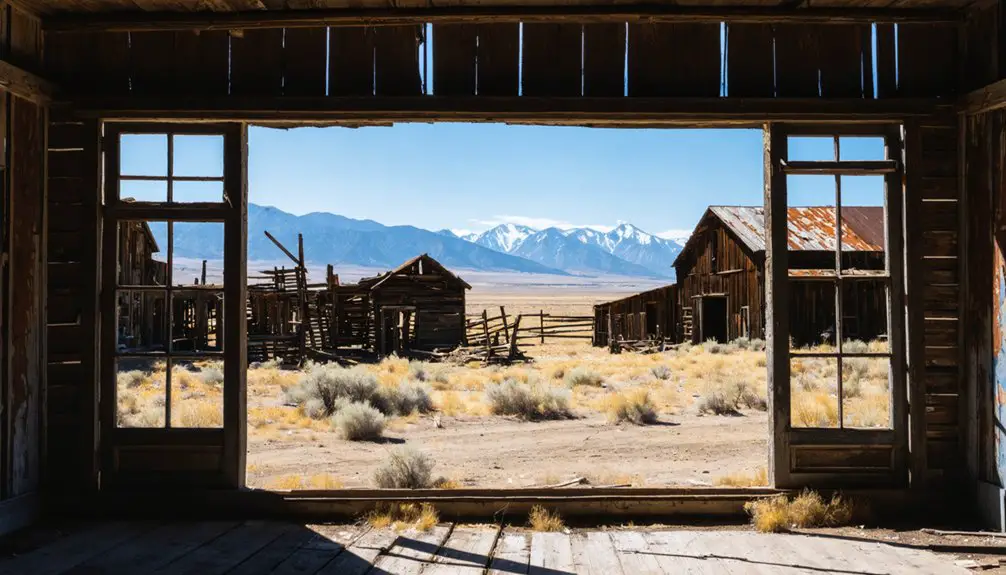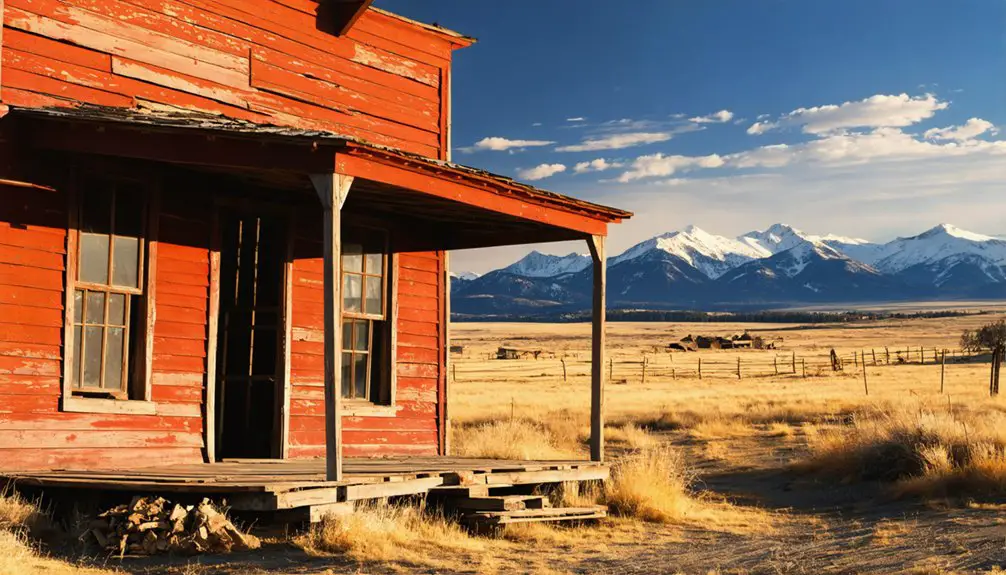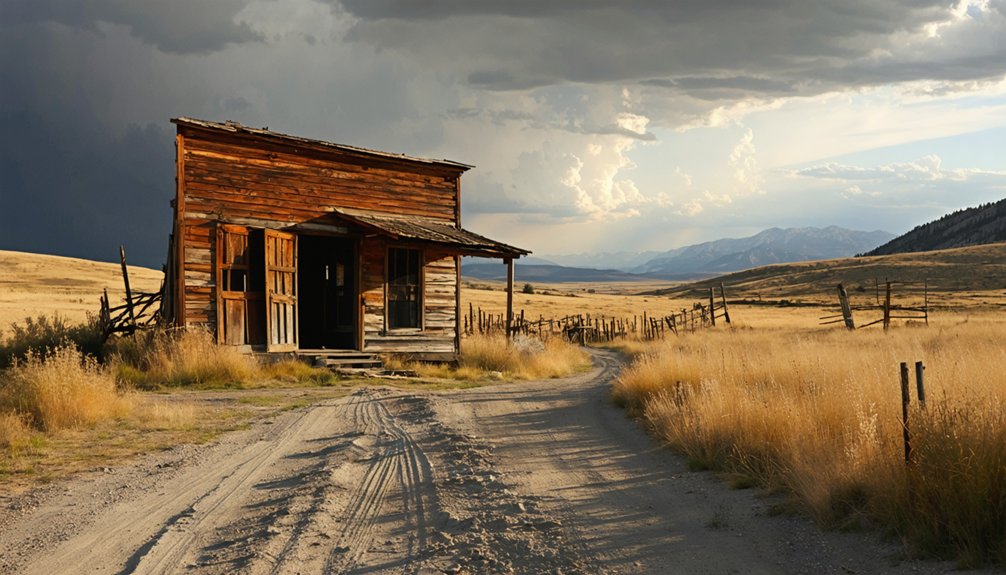
Planning a ghost town road trip to Laurin, Montana puts you right in the heart of Alder Gulch’s gold rush history. Fly into Bozeman, drive southwest about two hours, and you’ll arrive at this frontier supply hub along Highway 287. Keep your tank full, your camera ready for deer, antelope, and eagles, and make Virginia City your base. There’s far more to this wild, lawless corridor than you’d expect.
Key Takeaways
- Fly into Bozeman, drive southwest two hours through open ranchland, and head south on Highway 287 toward Laurin in Madison County.
- Laurin sits approximately 2 miles north of Alder along Highway 287, connecting easily to Virginia City and Nevada City for a scenic loop.
- Visit Hangman’s Tree, where vigilantes executed Plummer Gang members, and explore surviving building foundations and relics along the highway.
- Standard 2WD vehicles handle the route well; use Virginia City as a base and fuel up before reaching Laurin.
- Watch for deer, antelope, and eagles along open ranchland stretches, and keep a camera ready throughout the drive.
What Made Laurin, Montana a Gold Rush Boomtown?
When gold fever swept through Alder Gulch in 1863, Laurin rose quickly as one of the region’s key supply hubs. French trader Jean Baptiste Laurin established a trading post that became the town’s backbone, fueling both miners’ needs and the fur trade with Native Americans.
You’d find this stretch of southwestern Montana buzzing with activity as Alder Gulch produced over $100,000,000 in gold, drawing prospectors chasing mining legends from across the frontier. Laurin thrived by keeping those men supplied, fed, and equipped.
But raw wealth attracted raw danger. Frontier law was fragile, and the Plummer gang‘s violent presence shaped the region’s darker history. That tension between fortune and lawlessness defines Laurin’s story and makes it one of Montana’s most compelling road-trip destinations today.
Hangman’s Tree and the Lawless Side of Laurin
When you stop in Laurin, you can’t ignore the shadow cast by the Plummer Gang, a notorious outlaw crew whose violent reign terrorized the Alder Gulch corridor during the gold rush era.
Vigilantes eventually took justice into their own hands, hanging two of the gang’s members from what became known as Hangman’s Tree, a landmark that still marks Laurin’s lawless past.
You can visit the site today, where the history of frontier justice feels immediate and unsettling against the quiet Montana landscape.
Plummer Gang’s Violent Legacy
Few places in Montana carry as dark a history as Laurin, where the lawless violence of the gold-rush era left a permanent mark on the landscape. The Plummer gang terrorized the mining economy throughout Alder Gulch, robbing miners and disrupting the Native trade routes that kept frontier communities alive.
Henry Plummer led a criminal network that preyed on the wealth flowing through the region, leaving a trail of murder and theft across southwestern Montana. Vigilantes eventually took action, hanging two gang members from what’s now known as Hangman’s Tree, right here in Laurin.
When you stand near that site today, you’re connecting with a raw chapter of American frontier justice — where communities fought back against unchecked violence to reclaim their freedom and survival.
The Vigilante Justice Era
Hangman’s Tree stands as Laurin’s most haunting landmark, a physical reminder that frontier justice moved fast and left little room for doubt.
When the Plummer gang’s violence threatened the mining technology driving Alder Gulch’s gold economy, vigilantes decided courts weren’t an option. They acted swiftly, hanging two gang members from this very tree.
The execution sent a clear message across every camp, trading post, and Native American trade route in the region: lawlessness had a hard limit here.
Standing beneath Hangman’s Tree today, you feel the weight of that decision. The vigilante era wasn’t clean or comfortable, but it reflected a community protecting its livelihood and future.
That raw, unfiltered history is exactly what makes Laurin worth stopping for.
Visiting Hangman’s Tree Today
Standing beside Hangman’s Tree, you’re not looking at a polished museum exhibit or a roped-off historic marker—you’re standing at the actual site where vigilantes ended two lives to protect an entire community.
This raw, unfiltered piece of history sits in a town built on mining legends and Native trade, where order wasn’t guaranteed and justice moved fast when it finally arrived.
The tree itself doesn’t need signage to carry weight. You’ll feel it standing there, knowing what happened and why.
Laurin’s early settlers weren’t waiting for distant authorities—they handled threats directly and decisively.
That spirit of self-reliance shaped the entire Alder Gulch corridor. When you visit, bring that context with you.
It turns a roadside stop into something genuinely worth remembering.
Historic Sites Still Standing in Laurin Today
Beyond Hangman’s Tree, you’ll find scattered ruins and relics that quietly hold Laurin’s gold-rush story in place. The tree itself remains the town’s most powerful landmark, connecting you directly to the violent justice of the Plummer gang executions.
As you walk the area, the remaining fragments of old structures remind you that Laurin was once a thriving supply hub, not just a footnote in Montana’s mining past.
Hangman’s Tree Legacy
Of all the landmarks that have survived Laurin’s gold-rush era, none carries more weight than Hangman’s Tree — the site where two members of the notorious Plummer gang met their end at the hands of frontier vigilantes.
This singular landmark connects you directly to mining legends and the raw frontier justice that defined life along Alder Gulch. When law enforcement was weak and gold was everywhere, vigilantes took matters into their own hands, and this tree stood witness to that uncompromising reality.
Standing here, you’re not reading history from a distance — you’re standing inside it. It’s a sobering, powerful stop that captures exactly why Laurin isn’t just another forgotten settlement, but a place where the West’s most defining tensions played out in real time.
Ruins And Relics
While Hangman’s Tree draws the most dramatic attention, Laurin holds onto other physical remnants that pull you deeper into its gold-rush past. These scattered ruins and relics ground the mining legends in something tangible, letting you connect directly with frontier justice and boomtown life.
As you explore, watch for:
- Original building foundations from Laurin’s earliest trading-post era
- Weathered structures that survived decades of Montana’s harsh climate
- Historic relics tied to the supply economy serving Alder Gulch miners
- Roadside remnants visible along Montana Highway 287 without leaving your vehicle
- Contextual landmarks linking Laurin’s story to nearby Virginia City and Nevada City
Each surviving fragment reinforces why Laurin earns its place on any serious ghost-town itinerary through southwestern Montana.
The Ghost Towns Closest to Laurin Along Highway 287
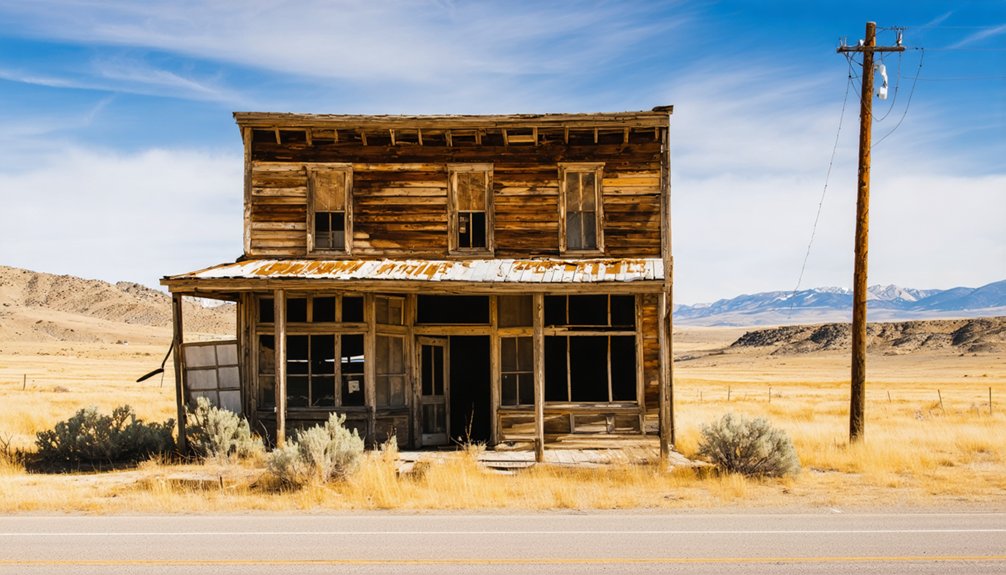
Laurin doesn’t stand alone along Highway 287 — it sits at the heart of one of Montana’s richest ghost-town corridors, with Virginia City and Nevada City just a short drive away.
Virginia City pulls you into mining legends that shaped the entire territory, with preserved storefronts and streets that still carry the weight of boom-era ambition.
Nevada City sits just a mile west, offering an open-air museum packed with frontier-era structures.
Both towns connect directly to the same stories of frontier justice and lawlessness you’ll encounter at Laurin’s Hangman’s Tree.
Together, these three stops create a natural road-trip loop through southwestern Montana’s gold-rush past.
You don’t need much time at each — just enough to let the history sink in before moving on.
How to Plan One Day Through the Alder Gulch Historic Corridor
One day is enough to move through the Alder Gulch corridor without rushing if you plan your stops in order. Start early and follow Highway 287 through a landscape shaped by mining history and Native American trade.
Hit these stops in sequence:
- Laurin – Visit Hangman’s Tree and soak in the gold-rush lawlessness
- Alder – A quick stop that adds context to the surrounding boom era
- Nevada City – Explore preserved structures and open-air exhibits
- Virginia City – Walk the most intact frontier streetscape in Montana
- Madison County backroads – Spot remaining relics between towns
Keep your drives short and your time at each stop intentional. You’ll finish the corridor before sundown with a full picture of how this valley once roared with gold-rush ambition.
How to Get to Laurin, Montana

Tucked along Montana Highway 287 in Madison County, Laurin sits about 2 miles north of Alder and connects easily to the broader Virginia City corridor. Standard 2WD vehicles handle the route without trouble, making this a straightforward addition to any southwestern Montana road trip.
Flying into Bozeman gives you the most flexibility, with the drive southwest taking roughly two hours through open ranchland where wildlife viewing opportunities appear frequently along the way. Deer, antelope, and eagles are common roadside companions.
Flying into Bozeman offers the most flexibility, with deer, antelope, and eagles accompanying your two-hour drive southwest.
From Virginia City, Laurin is only a short drive south on Highway 287, letting you link both stops efficiently. Alder itself offers a chance to grab local cuisine before exploring the historic stretch.
Keep your tank full and your camera ready before you roll into Laurin.
Frequently Asked Questions
Is There an Admission Fee to Visit Laurin or Hangman’s Tree?
You won’t pay an admission fee to explore Laurin or visit Hangman’s Tree. These historical landmarks are freely accessible, letting you soak in local legends and gold-rush history on your own terms.
Are Pets Allowed When Exploring Laurin’s Historic Outdoor Sites?
Over 65% of U.S. travelers explore with pets! Laurin’s open, unincorporated landscape welcomes pet-friendly policies naturally — you’ll find no formal restrictions. Follow smart outdoor exploration tips: keep your dog leashed near historic relics and Hangman’s Tree.
Is Laurin, Montana Safe to Visit as a Solo Traveler?
You’ll find Laurin safe to explore solo! Its historical significance draws respectful visitors, and local legends like Hangman’s Tree create an engaging, adventurous atmosphere. Stay aware of your surroundings, embrace the freedom, and enjoy this fascinating Montana gem.
Are There Any Accommodations or Campgrounds Near Laurin, Montana?
Nearby Nevada City and Virginia City offer varied lodging ventures! You’ll find campgrounds, cozy cabins, and local dining options along the route, plus scenic photo spots throughout Madison County’s breathtaking landscape — perfect for your free-spirited ghost town adventure.
Does Laurin Have Cell Service or Restroom Facilities for Visitors?
Laurin doesn’t guarantee reliable cell service availability or restroom facilities, so you’ll want to plan ahead. Fuel up, download offline maps, and use facilities in nearby Alder before exploring this rugged, off-the-beaten-path historic gem.
References
- https://www.legendsofamerica.com/laurin-montana/
- https://www.youtube.com/watch?v=ECtoiMCLyBc
- https://visitmt.com/listing/laurin-10369
- https://en.wikipedia.org/wiki/Laurin
- http://www.reenactmentsupplies.com/284/montana-ghost-towns/
- https://alexonthemap.com/ghost-towns-in-montana/
- https://www.ghosttowns.com/states/mt/laurin.html