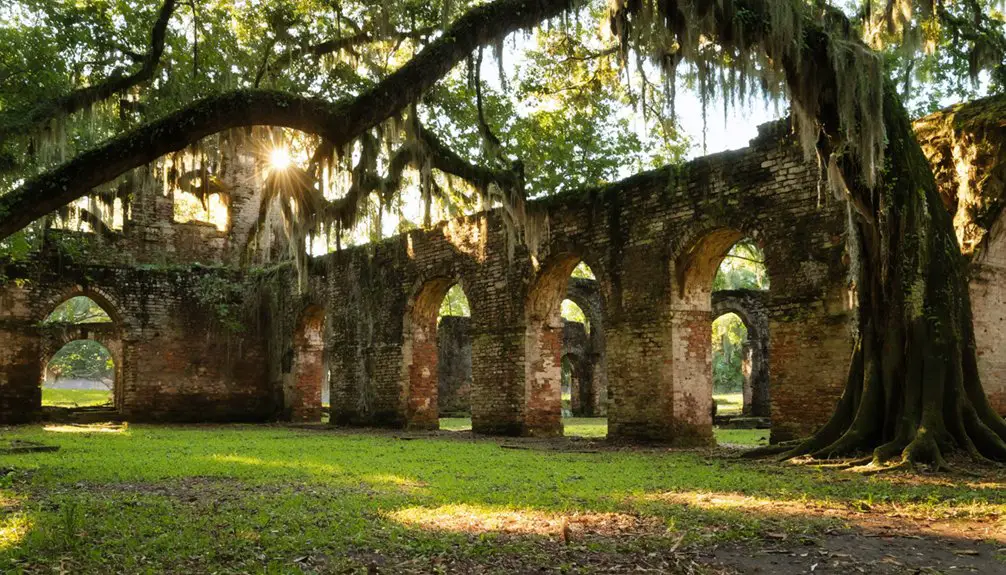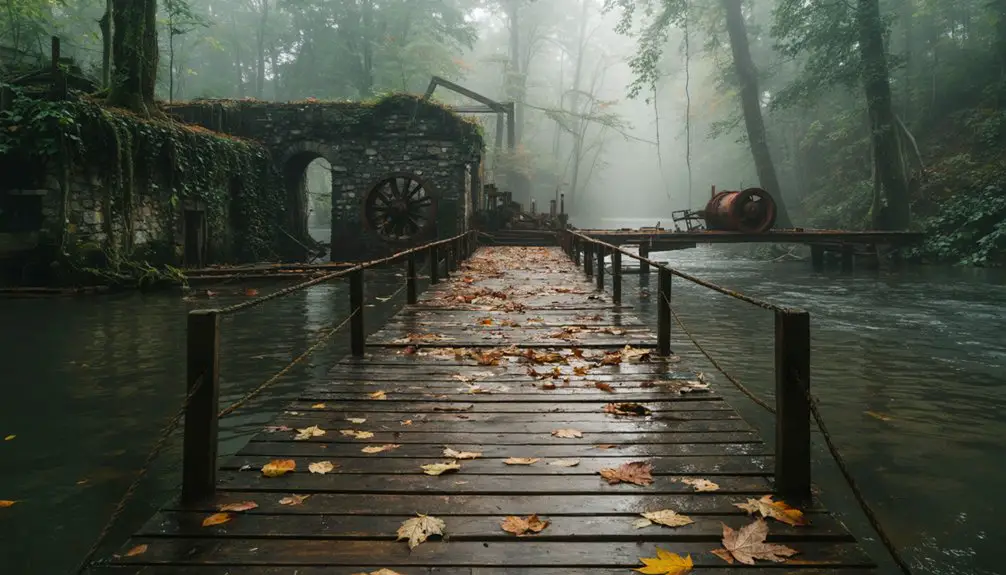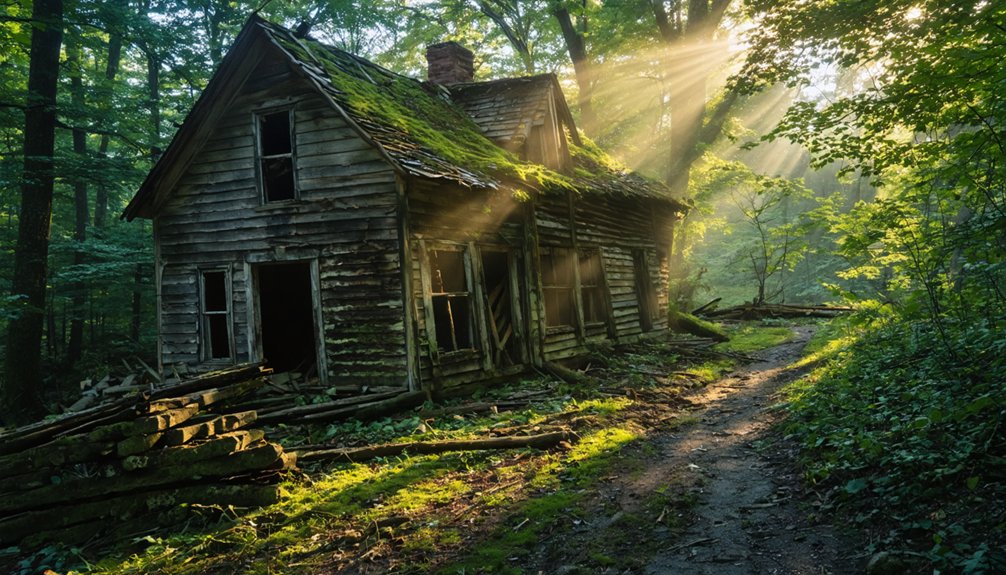
Lost Cove, North Carolina, sits deep in Yancey County within Pisgah National Forest, and you won’t reach it by road. You’ll hike roughly 2.5 miles through rugged Appalachian backcountry off Forest Service Road 278, steering steep terrain to find weathered cabins, a forgotten cemetery, and a rust-claimed Chevy swallowed by forest. This abandoned mountain community thrived until 1957, leaving behind remarkable remnants. Everything you need to plan your trip safely is just ahead.
Key Takeaways
- Lost Cove is located in Pisgah National Forest, Yancey County, NC, accessible only via a rugged 2.5-mile hike from Forest Service Road 278.
- The ghost town features weathered cabins, Tipton Chapel cemetery, and an abandoned Chevy reclaimed by forest, with origins dating to Civil War era.
- No permits are required for day hikes; dispersed camping is allowed following Leave No Trace principles and staying 100 feet from water and structures.
- Pack at least 2 liters of water, bear spray, sturdy boots, high-energy snacks, and a first aid kit for this demanding backcountry trek.
- Fall offers the best visit conditions with peak foliage and clearer sightlines, while spring provides wildflower blooms and manageable trail conditions.
Lost Cove, NC: One of Appalachia’s Most Remote Ghost Towns
Tucked deep in the mountains of Yancey County, North Carolina, Lost Cove is one of Appalachia’s most remote ghost towns — a forgotten settlement that once supported nearly 100 residents before the last family walked away in 1957. Sitting above the Nolichucky River inside Pisgah National Forest, this isolated cove spans roughly 350 acres of steep, heavily wooded terrain near the North Carolina–Tennessee border.
You won’t find it on a standard road map, and you certainly won’t reach it by car. Getting there demands a full-day hike through rugged backcountry.
What awaits are weathered cabins, crumbling foundations, and historical artifacts scattered across the forest floor. Local legends tied to Civil War settlers and notorious moonshiners make every step feel like a walk through living history.
The Rise and Fall of Lost Cove’s Mountain Community
Although the origins of Lost Cove remain somewhat murky, most accounts trace the settlement to Morgan Bailey, a Union soldier who likely established the first camp in the area during the Civil War era. Local legends also connect the name to confusion over whether the land belonged to North Carolina or Tennessee.
The origins of Lost Cove remain murky, but most trace it to Morgan Bailey, a Civil War-era Union soldier.
At its peak, the community thrived through:
- Farming and logging that kept roughly 100 residents self-sufficient
- Railroad access that fueled early 20th-century growth
- Moonshining, documented as far back as 1898
You’ll find historical artifacts scattered across the terrain, remnants of a community that once included 13–15 houses, two sawmills, and Tipton Chapel.
How to Reach Lost Cove on Foot
Getting to Lost Cove isn’t a matter of plugging an address into your GPS—there are no roads in, and that’s part of what makes this place feel genuinely undiscovered. You’ll need to hike in, and the most commonly used approach starts near an unlabeled trailhead off Forest Service Road 278.
Expect roughly 2.5 miles of steep, heavily wooded terrain each way, making this a full-day commitment.
Once you push through the elevation change and dense forest, you’ll find historic artifacts scattered across old homesteads, foundations, and cabins slowly being reclaimed by the mountain.
The cemetery and a rusted Chevy tied to local legends add atmosphere you won’t find anywhere else.
Wear sturdy boots, carry enough water, and go prepared to navigate terrain that rewards the self-sufficient traveler.
Lost Cove Trail: Distance, Elevation, and Terrain Conditions
Once you’re ready to hit the trail, expect a roughly 2.5-mile trek one way, with serious elevation changes that’ll test your legs on both ends of the hike.
The terrain runs steep and heavily wooded, with no maintained path to guide you through the dense Appalachian forest.
You should plan for a full-day commitment, as the combination of distance, elevation gain, and rugged conditions makes this far more demanding than a casual walk.
Trail Distance And Elevation
Expect these trail realities:
- Steep descent into the cove — elevation drops sharply, making the return climb genuinely taxing.
- Significant elevation change — you’ll feel it in your legs both going in and coming out.
- Full-day commitment — plan your schedule around a complete in-and-out hike with time to explore.
You’re not just walking a trail here — you’re earning access to one of the Carolinas’ most remote ghost towns.
Terrain And Trail Conditions
The trail to Lost Cove doesn’t ease you in — it tests you from the start with dense forest, uneven footing, and terrain that shifts between rocky descents and root-covered slopes. You’ll push through thick Appalachian woodland where overgrowth crowds the path and fallen timber occasionally blocks your way.
Wildlife encounters are real here. Black bears, snakes, and other mountain animals share this backcountry space, so stay alert and make noise as you move. Trail safety depends on your preparation — wear sturdy boots, carry trekking poles, and pack more water than you think you’ll need.
Stream crossings can become hazardous after rain, and the steep sections demand careful footing. There are no maintained markers guiding your steps, so come with a downloaded map and confidence in your navigation skills.
What Still Survives Inside Lost Cove Today
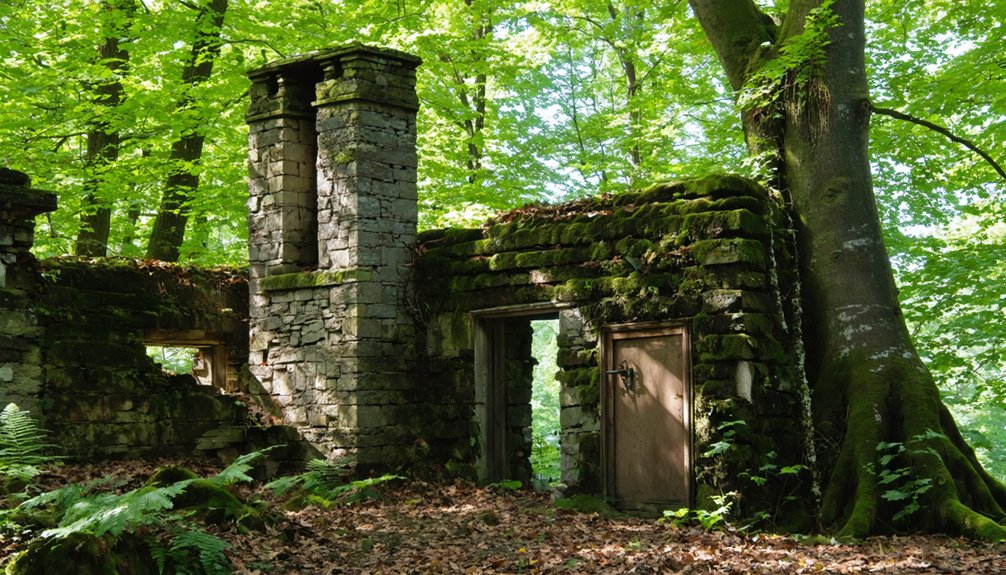
Although the 2007 fires swept through Lost Cove and claimed much of what remained, you’ll still find scattered remnants of the community hiding beneath decades of forest growth. Local legends and historic preservation efforts keep this forgotten place alive for those willing to seek it out.
Explore these three surviving features:
- Cabins and foundations — Weathered structures and stone bases mark where families once built independent lives.
- Tipton Chapel cemetery — Headstones remain standing among the trees, offering a quiet, sobering connection to the past.
- Swin Miller’s rusted Chevy — An abandoned vehicle slowly reclaimed by the forest, now one of Lost Cove’s most iconic landmarks.
Walk carefully through the overgrowth, and you’ll piece together a community that chose freedom over convenience.
Rules and Permits for Hiking in Pisgah National Forest
You don’t need a permit to hike into Lost Cove, since the site falls within Pisgah National Forest and remains open to the public year-round.
If you plan to camp overnight, follow Leave No Trace principles strictly — pack out everything you bring in and avoid disturbing the fragile structures still standing on the property.
Dispersed camping is allowed in Pisgah National Forest, but you’ll need to follow specific regulations around campfire use, water sources, and distance from trails before you set up for the night.
No Permit Required
Hiking into Lost Cove doesn’t require a permit, which makes planning your trip a little simpler. You can head into Pisgah National Forest without bureaucratic hoops, just preparation and respect for the land. Before you go, keep these three essentials in mind:
- Pack out everything you carry in — leave no trace rules apply throughout the forest.
- Stay on established trails to protect fragile foundations and remaining structures tied to local legends.
- Avoid removing artifacts — historical photographs document what’s still standing, and those remnants belong to the site.
You’re free to explore, but that freedom carries responsibility. The forest service manages this land to preserve access for everyone. Respect the space, and Lost Cove stays open for every hiker who follows after you.
Leave No Trace Rules
Leave No Trace principles aren’t optional suggestions in Pisgah National Forest — they’re the standard every visitor is expected to follow. Pack out everything you pack in, stay on established trails, and resist the urge to pocket artifacts from Lost Cove’s remaining structures. Those rusted remnants and crumbling foundations belong to the forest now, and removing them is both illegal and disrespectful to the site’s history.
Wildlife conservation depends on visitors keeping a respectful distance from animals and avoiding anything that disrupts natural behavior. Camp at least 200 feet from water sources, bury human waste properly, and leave plants undisturbed.
Following Leave No Trace practices guarantees that Lost Cove stays accessible for future hikers who deserve the same raw, unfiltered experience you came here to find.
Camping Regulations Apply
Knowing how to respect the land is only part of the equation — understanding the rules around camping in Pisgah National Forest keeps you legal and prepared. The forest allows dispersed camping, but boundaries and restrictions still apply near historical artifacts and culturally sensitive areas like Lost Cove.
Before you set up camp, keep these rules in mind:
- Camp at least 100 feet from water sources, trails, and any remaining structures.
- Permits aren’t currently required for dispersed camping, but regulations can change — check with the Appalachian Ranger District beforehand.
- Fires may be restricted seasonally, so verify current burn bans.
Local legends draw people in, but forest regulations protect what’s left. Stay informed, camp smart, and you’ll keep this freedom accessible for everyone who follows.
What to Pack for the Lost Cove Hike
Since Lost Cove has no roads leading in, you’ll carry everything you need on your back for what’s typically a full-day, 5-mile round-trip hike through steep, heavily wooded Appalachian terrain.
No roads reach Lost Cove — just five rugged miles of steep Appalachian wilderness carried entirely on your back.
Pack at least two liters of water, high-energy snacks, and a basic first aid kit.
Sturdy hiking boots are non-negotiable given the elevation changes and rough forest floor.
For wildlife encounters, bring bear spray and make noise on the trail. You’re moving through active Appalachian habitat.
Photography tips: pack a wide-angle lens for the dense forest canopy and a macro lens for the weathered cabin details.
Extra batteries matter since cold mountain air drains power fast.
A lightweight tripod helps in low light beneath the tree cover.
The Best Time of Year to Visit Lost Cove
Late spring through early fall gives you the widest window to hike into Lost Cove comfortably, but each season carries real trade-offs worth thinking through before you plan the drive out to Forest Service Road 278.
- Spring (April–May): Wildflowers bloom across the gorge, trail mud is manageable, and you’ll explore the ruins with fewer crowds competing for the experience.
- Summer (June–August): Dense canopy shades the steep descent, but humidity is brutal and overgrowth can obscure foundations tied to historic preservation efforts.
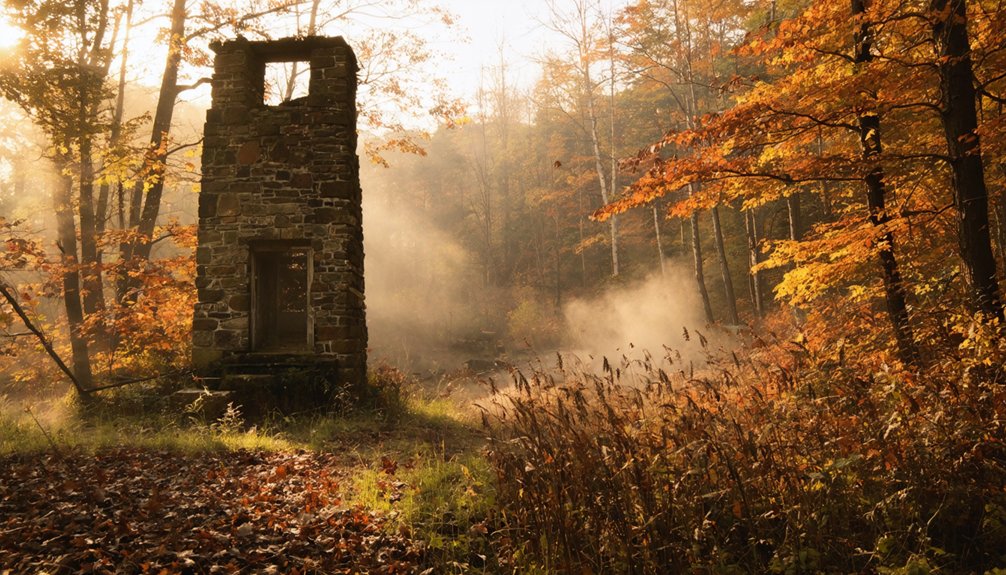
- Fall (September–October): Foliage peaks, visibility through the forest opens up, and the atmosphere perfectly suits absorbing local folklore around the cemetery and abandoned homesteads.
Winter access is risky given icy terrain, but the bare trees reveal structural remains you’d otherwise miss entirely.
Frequently Asked Questions
Can You Camp Overnight Inside Lost Cove’s Historic Site Boundaries?
Sure, just ignore camping regulations and historic preservation—said no responsible adventurer ever! You’ll want to check with Pisgah National Forest officials before you pitch your tent anywhere near Lost Cove’s protected boundaries.
Are There Cell Service or Emergency Contact Options Along the Trail?
Don’t count on cell coverage along Lost Cove’s remote trail — you’ll likely lose signal fast. Share emergency contacts with someone before you hike, so they know your plan if you don’t return on time.
Is Lost Cove Considered Haunted, and Are Ghost Tours Offered?
No official ghost tours exist at Lost Cove, but haunted legends naturally surround this eerie, abandoned mountain settlement. You’ll explore crumbling cabins and overgrown foundations solo, letting the isolation spark your own spine-tingling ghost town experience.
Are Pets Allowed on the Trail Leading Into Lost Cove?
The knowledge base doesn’t specify pet policies, but you’ll want to check Pisgah National Forest’s trail regulations before heading out. Generally, you can bring leashed dogs, so prioritize your pet’s safety on this rugged, steep terrain.
Has Lost Cove Ever Appeared in Films, Documentaries, or Television Shows?
What hidden gem goes unnoticed by Hollywood? Lost Cove’s historical significance hasn’t landed it on confirmed filming locations lists, but its raw, untamed beauty could easily captivate any documentary crew seeking authentic Appalachian stories.
References
- https://www.ourstate.com/lost-cove/
- https://en.wikipedia.org/wiki/Lost_Cove
- https://www.reddit.com/r/NCTrails/comments/1g4lbvv/anyone_heard_if_lost_cove_nctn_abandoned_border/
- https://www.facebook.com/groups/abandonedtennessee/posts/9116978621715259/
- https://www.youtube.com/watch?v=I_Xbfid_oP4
- https://appalachian.org/lost-cove-ghost-town-in-the-national-forest/
- https://www.youtube.com/watch?v=U2J_AZx-MTg
- https://www.facebook.com/groups/AppalachianAmericans/posts/10161098779203648/
- https://www.wral.com/news/state/6-eerie-ghost-towns-north-carolina-june-2026/
- https://appalachian.org/get-connected/explore-protected-lands/lost-cove/