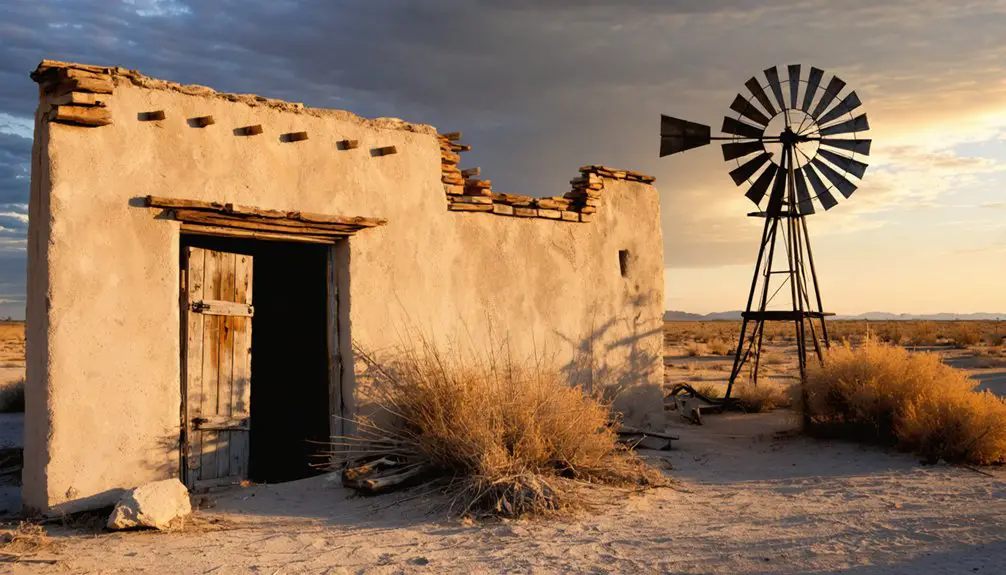
To road trip to Lodi, Texas, head to the southwest edge of Floresville near Farm Road 536 and Goliad Road, using GPS coordinates 29.14885540, -98.15834160. You’ll find a Texas Historical Commission marker from 1971 and crumbling ruins of a hacienda and church that predate Wilson County itself. Lodi served as the county’s first seat of government in 1867 before railways rewrote the map. There’s far more to this ghost town’s story than the ruins let on.
Key Takeaways
- Lodi, Texas sits at the southwest edge of Floresville near Farm Road 536 and Goliad Road, with GPS coordinates 29.14885540, -98.15834160.
- No marked turnoff exists, so finding the site requires deliberate navigation and a willingness to search.
- A Texas Historical Commission marker placed in 1971 identifies the site and provides essential historical context.
- Only crumbling ruins of the original hacienda and church remain, offering a raw glimpse into early Wilson County history.
- Pair the visit with Floresville’s courthouse square and nearby Wilson County history sites for a rewarding half-day trip.
Lodi, Texas: The Ghost Town That Started Wilson County
Before Floresville ever appeared on a map, Lodi was already writing Wilson County’s history. Its settlement origins stretch back before 1832, when Don Francisco Flores de Abrego established a hacienda here, complete with a home, church, and cemetery. That cluster of structures became the county’s first true community.
Lodi’s historical significance runs deep. It served as Wilson County’s original seat of government in 1867, briefly held that title twice, and supported a post office, school, and 154 enrolled students before decline set in after 1900.
By 1940, only ruins remained.
When you roll through this corner of Wilson County, you’re tracing Texas back to its Spanish-era roots. Lodi didn’t fade quietly — it simply got outrun by progress and proximity to Floresville.
How To Find the Lodi Ghost Town Site
Tucked at the southwest edge of modern Floresville, Lodi sits near Farm Road 536 and the old Goliad Road in Wilson County — coordinates 29.14885540, -98.15834160 if you’re steering by GPS. You won’t find a welcome sign or a marked turnoff, so treat the hunt as part of the adventure.
The site isn’t remote, but it rewards the traveler who slows down and looks deliberately. A Texas Historical Commission marker placed in 1971 anchors your search and signals where historic architecture once defined a thriving county seat.
Stand there long enough and local legends about Don Francisco Flores de Abrego’s hacienda start feeling less like folklore and more like memory embedded in the soil. Pair your stop with a short Floresville drive to give it full context.
What’s Left To See at Lodi Today

Once you’ve fixed your bearings at that 1971 marker, the honest question becomes: what exactly are you looking at? By 1940, only the preserved ruins of Don Francisco Flores de Abrego’s hacienda and church still stood, and time hasn’t been generous since.
You won’t find restored buildings or a walkable main street here. What you do find is something rawer — the outline of Wilson County’s earliest chapter, written in crumbling stone and stubborn soil.
That historical marker carries the real weight of the stop, anchoring a site where Spanish-era ranching, county-seat politics, and rural decline all converged. Treat it as a meditation point rather than a museum.
Read the marker, scan the landscape, and let the absence itself tell the story. Lodi earns its ghost-town status honestly.
Why Lodi Lost the County Seat: Twice
Lodi’s grip on political power was never secure, and the story of how it lost — and briefly reclaimed — the Wilson County seat reads like a compressed drama of frontier ambition.
Lodi first won county-seat status in 1867, only to surrender it to Sutherland Springs in March 1871. But Lodi fought back, reclaiming that designation just four months later in July 1871.
The victory didn’t hold. By 1873, Floresville had seized the title for good, driven by aggressive land development along the San Antonio and Aransas Pass Railway corridor. Rail access accelerated Floresville’s rise and guaranteed Lodi’s economic decline.
When commerce follows the tracks, political power follows commerce. You can still stand near where those decisions played out — the ground remembers what the maps no longer show.
Pair Lodi With These Floresville-Area Stops
Because Lodi sits at the edge of modern Floresville rather than deep in open country, you’re already positioned to connect several worthwhile stops into a single half-day drive through Wilson County history. Start at the 1971 Texas Historical Commission marker, where historical preservation efforts anchored Lodi’s story to the landscape.
Then push into Floresville itself, where the San Antonio and Aransas Pass Railway once redirected an entire county’s future. The courthouse square reflects the community heritage that ultimately pulled settlers away from Lodi’s hacienda ruins.
Wilson County’s earliest ranching roots, its shifting county seats, and its railroad ambitions all surface within a tight geographic radius. You don’t need a full day — just a focused route and enough curiosity to let the layered history hit you straight.
Frequently Asked Questions
Is There an Admission Fee to Visit the Lodi Ghost Town Site?
You’ll pay no admission fee to explore Lodi’s ghost town history. Simply drive out, breathe in the freedom of open Texas land, and soak up the ruins—visitor amenities here are invigoratingly nonexistent.
Can You Access the Lodi Site Year-Round in All Weather Conditions?
You can visit year-round, but weather considerations matter on rural roads near Farm Road 536. Seasonal access varies—heavy rains can challenge unpaved approaches, so check conditions before you chase Lodi’s haunting, centuries-old silence.
Is the Lodi Ghost Town Site on Public or Private Land?
Like a locked gate standing between you and forgotten history, private ownership shapes land accessibility here. The Lodi site isn’t confirmed public, so you’ll want to research current property boundaries before venturing onto the grounds.
Are There Any Guided Tours Available at the Lodi Historical Site?
No formal guided tour availability exists at Lodi, so you’ll explore its ghost town history on your own terms—a true freedom-seeker’s adventure. Pair your visit with Floresville’s local resources for historical context.
Is the Texas Historical Commission Marker at Lodi Accessible by Car?
Like a open road beckoning you forward, the Texas Historical Commission marker’s accessibility features welcome you by car. You’ll find parking facilities nearby, since Lodi sits at Floresville’s edge—making your historically-charged visit effortlessly reachable.
References
- https://www.texasescapes.com/SouthTexasTowns/Lodi-Texas.htm
- https://www.tshaonline.org/handbook/entries/lodi-tx-marion-county
- https://www.facebook.com/groups/2713517748825101/posts/3267106500132887/
- https://www.texasalmanac.com/places/lodi-0
- https://93qcountry.com/1706737/texas-ghost-towns-you-can-visit/
- https://en.wikipedia.org/wiki/List_of_ghost_towns_in_Texas
- https://www.tshaonline.org/handbook/entries/lodi-tx-wilson-county
- https://www.texasescapes.com/EastTexasTowns/Lodi-Texas.htm
- https://www.facebook.com/groups/433620486697981/posts/1544816238911728/