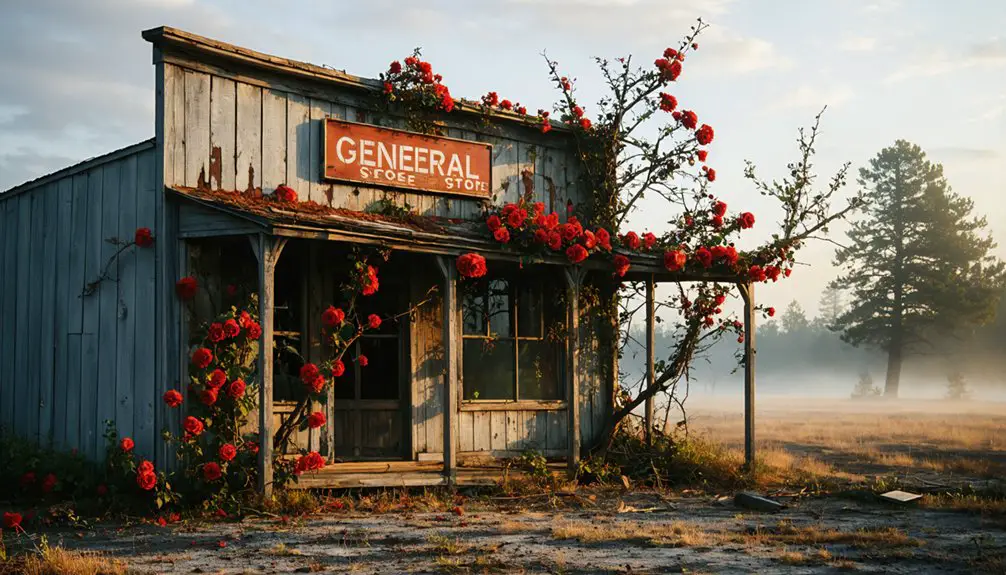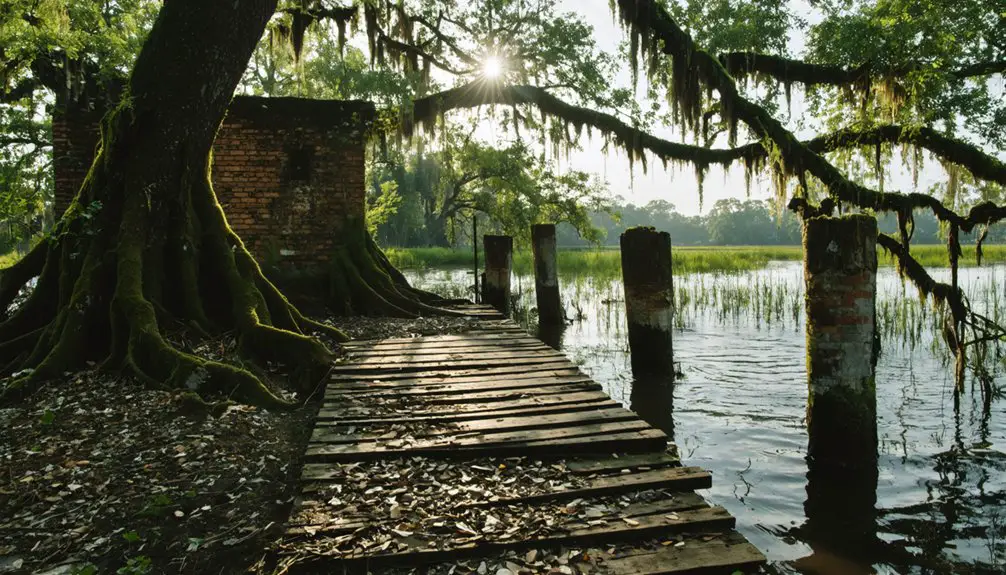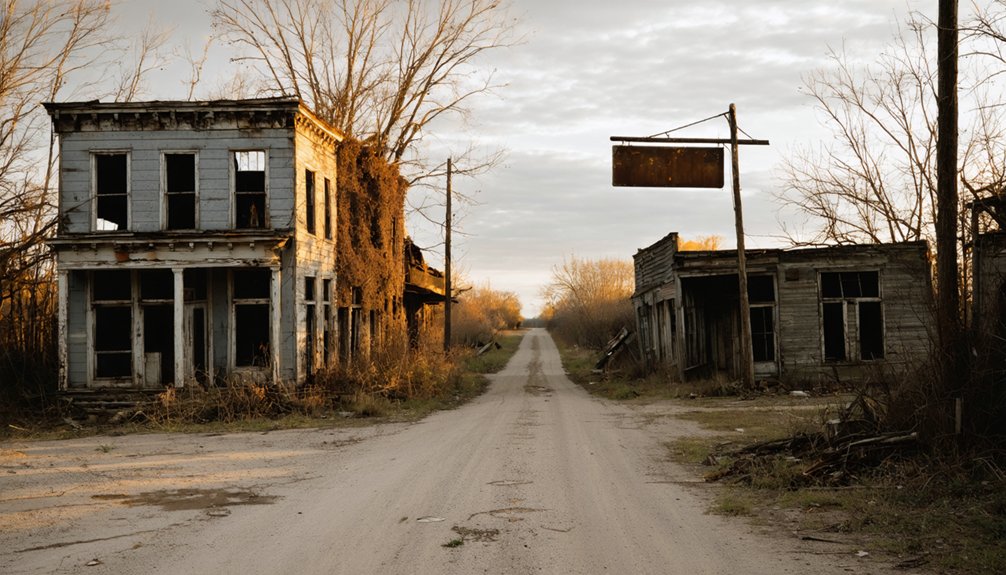
Planning a ghost town road trip to Marion, Maryland means heading deep into Somerset County’s quiet backroads, where crumbling storefronts and an abandoned train station tell the story of a once-thriving strawberry capital. You’ll drive past marshlands, cornfields, and forgotten history at every turn. The best time to visit is spring or fall, when the atmosphere feels most alive. Stick around, and you’ll uncover everything this fascinating slice of Maryland has to offer.
Key Takeaways
- Marion Station, once the “strawberry capital of the world,” declined after the 1950s collapse of its strawberry industry, leaving behind a near-ghost-town atmosphere.
- The best times to visit are May through early June or late September through October for ideal weather and scenery.
- Reach Marion via Route 13 South to Route 413, with the Bay Bridge or Chesapeake Bay Bridge-Tunnel as options from different directions.
- Nearby attractions include a bird sanctuary, East Creek, the Nanticoke River, and the East Coast’s largest organic vegetable farm.
- Extend your trip by visiting Crisfield’s waterfront, Smith Island by ferry, or the ghost town ruins of Daniels near Ellicott City.
What Makes Marion, Maryland a Ghost Town?
Although Marion, Maryland isn’t a ghost town in the traditional sense, it’s got all the hallmarks of one. Once hailed as the “strawberry capital of the world,” Marion thrived after the Eastern Shore Railroad arrived in 1866. Daily trains hauled fresh strawberries to major cities, fueling a bustling economy.
Marion, Maryland was once the strawberry capital of the world — then the trains stopped, and so did everything else.
Then the industry collapsed around the 1950s, the trains stopped, and Marion quietly faded.
Today, you’ll find a weathered train station, a run-down bar, a post office, and shuttered hardware and mechanic shops standing like relics of a busier era. A few hundred residents remain, keeping local legends alive and ghost stories circulating through the marshlands.
It’s not abandoned — it’s suspended, which honestly makes it far more fascinating to explore.
Marion’s Rise as the Strawberry Capital of the World
When the Eastern Shore Railroad arrived in 1866, it transformed Marion into the self-proclaimed strawberry capital of the world.
You can almost picture the daily trains hauling fresh strawberries from local farms to hungry cities across the country, fueling a booming economy that defined the town’s identity for decades.
Then, around the 1950s, the industry collapsed almost overnight, the trains stopped running, and Marion’s thriving agricultural empire quietly faded into history.
Railroad Sparks Strawberry Boom
How did a small Maryland community become the strawberry capital of the world? The answer lies in railroad history. When the Eastern Shore Railroad arrived in Marion in 1866, it fundamentally transformed the town’s agricultural economy overnight.
Suddenly, farmers could ship fresh strawberries directly to major cities, reaching markets that were previously impossible to access.
Every day, trains loaded with strawberries rolled out of Marion, supplying urban centers across the East Coast. This single transportation link turned a modest farming community into a thriving commercial hub.
Families built livelihoods around the harvest, and Marion’s identity became inseparable from its famous crop. The railroad didn’t just move fruit — it moved an entire community forward, giving residents economic independence and a reputation that extended far beyond Maryland’s borders.
Daily Trains Fuel Growth
Every morning, as the sun rose over Marion’s fields, trains pulled out of the station loaded with freshly harvested strawberries destined for major cities along the East Coast. You can almost picture the bustle — farmers rushing crates, conductors calling departures, the whole town humming with purpose.
Marion’s historical architecture, including its old train station, still echoes that golden era when daily rail service made this tiny community an agricultural powerhouse. Local legends tell of record harvests that kept multiple trains running back-to-back during peak season.
That freedom to ship produce quickly and efficiently transformed Marion into a thriving economic hub. The railroad didn’t just move strawberries — it moved entire livelihoods, shaping the town’s identity in ways you’ll still notice when you visit today.
Strawberry Industry’s Sudden Collapse
Though Marion once reigned as the undisputed strawberry capital of the world, that crown didn’t last. By the 1950s, the strawberry industry collapsed, and the daily trains that once carried freight and fueled Marion’s community dynamics simply stopped running.
Without the railroad’s economic pulse, businesses shuttered, and the town’s vibrant local event traditions faded into memory.
You can still feel that absence when you walk past the old train station today. What once buzzed with workers, crates, and commerce now stands quiet.
Corn and soybean fields replaced the strawberry patches, shifting the entire agricultural identity of the region.
The collapse wasn’t gradual — it hit fast, stripping Marion of its defining industry and setting it on the path toward the near-ghost-town status you’ll encounter on your visit.
How the Railroad Built: and Abandoned: Marion Station
When the Eastern Shore Railroad arrived in 1866, it didn’t just pass through Marion — it built it. The railroad transformed a quiet rural settlement into a thriving agricultural hub, connecting Marion’s strawberry farmers to lucrative city markets overnight.
The Eastern Shore Railroad didn’t just pass through Marion in 1866 — it built it entirely from scratch.
Railroad history here isn’t abstract; you can still see the old train station standing at the town’s center, a weathered monument to what once was.
Then the trains stopped coming.
As strawberry farming collapsed in the 1950s, the railroad abandoned Marion just as quickly as it had built it. Without freight demand, the tracks fell silent, and the town’s economic lifeline disappeared.
Town abandonment followed naturally — businesses shuttered, residents left, and Marion’s once-busy center grew quiet. Walking through today, you’re witnessing that silence firsthand.
What’s Left to See in Marion Today?
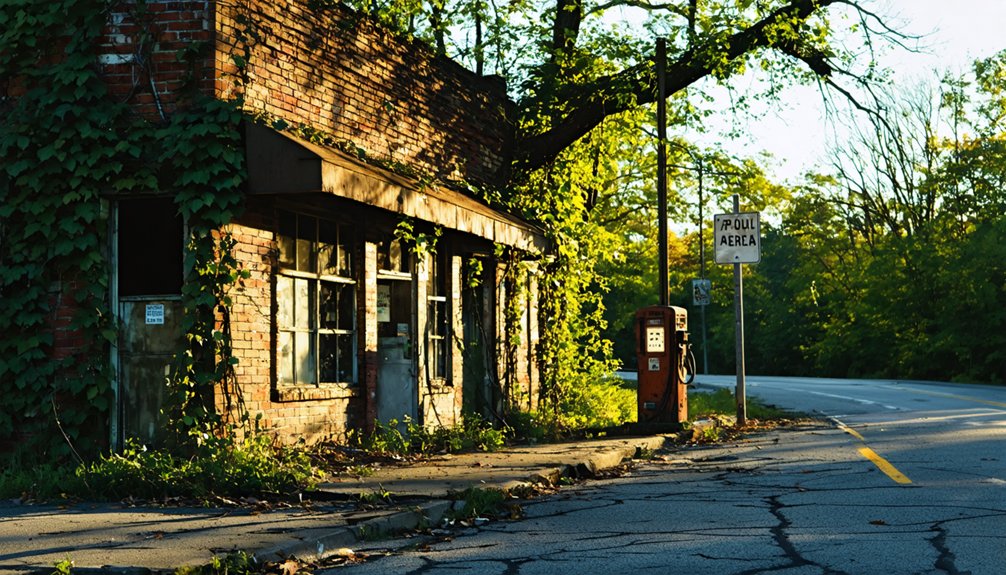
When you visit Marion today, you’ll find the old train station still standing at the town’s center, surrounded by the quiet remnants of a once-bustling economy.
You can explore a bird sanctuary showcasing local wildlife, then head to East Creek or the Nanticoke River for boating, fishing, and crabbing.
Before you leave, stop by the largest organic vegetable farm on the U.S. East Coast, stretching across the region’s vast marshlands and fields since 1983.
Historic Train Station Remains
What remains of Marion’s once-bustling railroad era isn’t much, but it tells a compelling story. The old train station still stands as one of the town’s most recognizable abandoned structures, quietly anchoring a downtown that time largely forgot.
When you walk past it, you’re stepping through layers of local legends — stories of daily strawberry shipments heading north to hungry city markets, of platform crowds and locomotive steam filling the air.
The station’s weathered exterior reflects decades of neglect following the industry’s 1950s collapse. You won’t find guided tours or polished interpretive signs here.
Instead, you’ll get raw, unfiltered history. Pair your visit with stops at the nearby post office and former hardware shops to piece together Marion’s fascinating, faded identity firsthand.
Bird Sanctuary And Waterways
Beyond the crumbling storefronts and silent rail lines, Marion still offers something surprisingly alive. The bird sanctuary draws wildlife enthusiasts who appreciate genuine nature without crowds. You’ll also find East Creek and the Nanticoke River nearby, offering access to the kind of waterways that define Eastern Shore living.
Pack your gear and explore:
- Bird sanctuary trails — spot migratory and native species amid marshlands that support active wildlife conservation efforts
- East Creek — boat, fish, and crab in waters that locals have worked for generations
- Nanticoke River — paddle through expansive marshes framed by corn and soybean fields
Marion isn’t frozen in time like its historic architecture suggests. Nature reclaimed what industry abandoned, and that tension between decay and life makes this stop genuinely worth your time.
Organic Farm And Fields
How does a town once defined by strawberry fields reinvent itself? In Marion, the answer grows from the soil itself. Since 1983, two sociologists from New Jersey have operated the largest organic vegetable farm on the U.S. East Coast right here.
It’s a striking contrast — thriving farmland surrounded by urban decay, where crumbling storefronts and abandoned mechanics shops tell a quieter story of economic collapse.
As you drive through, acres of corn and soybean fields stretch endlessly across the flat Eastern Shore landscape. The organic farm represents Marion’s quiet resilience, balancing agricultural reinvention with wildlife preservation across its surrounding marshlands.
You’ll feel the tension between what was lost and what’s still being cultivated — a living, breathing reminder that not everything here has faded away.
The Bird Sanctuary, Waterways, and Farms Worth Exploring Near Marion
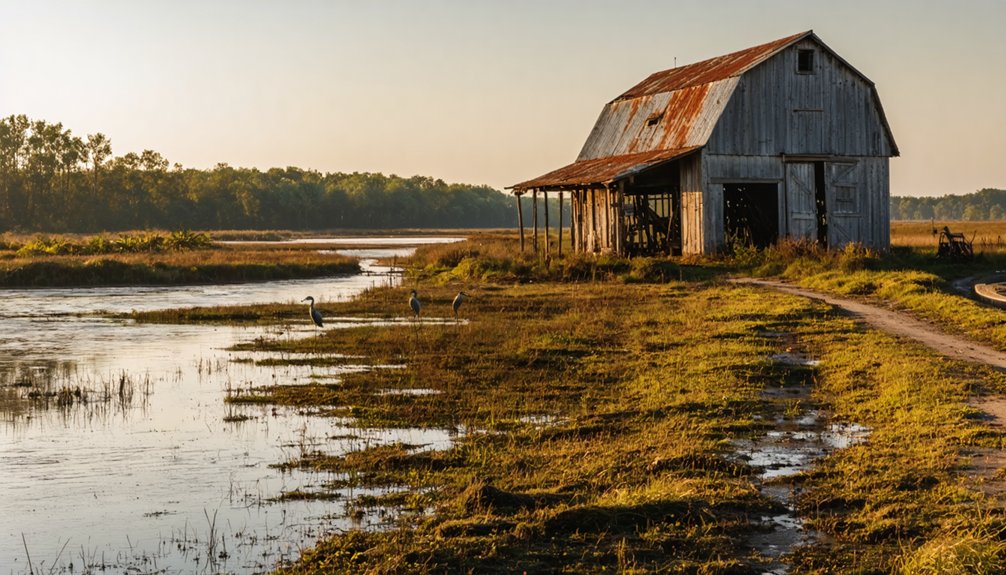
Marion’s natural surroundings give you plenty of reasons to linger well past the old train station. Wildlife conservation thrives here, and marshland exploration opens up a side of Maryland’s Eastern Shore that feels completely untouched.
Three experiences you shouldn’t skip:
- Bird Sanctuary – Grab your binoculars and lose yourself among native species thriving in protected habitat.
- East Creek and the Nanticoke River – Boat, fish, or crab on open water that still runs wild and free.
- Organic Vegetable Farm – Visit the largest organic farm on the East Coast, launched in 1983 by two New Jersey sociologists who traded academia for soil.
Each stop connects you to a landscape shaped by marshes, waterways, and fields stretching endlessly toward the horizon.
Where to Eat and Stop Near Marion Station
While Marion Station won’t overwhelm you with dining options, that scarcity is part of its charm. You’re traveling through a working rural community, not a tourist corridor, so pack a cooler with snacks and embrace the freedom that self-sufficiency brings on the road.
The small town center offers a run-down bar worth stepping into for a cold drink and authentic local flavor. For broader local dining options, nearby Crisfield and Princess Anne are short drives away and serve fresh Chesapeake seafood you won’t want to miss.
Between meals, take advantage of scenic rest stops along East Creek and the Nanticoke River, where you can stretch your legs, breathe marsh air, and watch herons glide overhead. These pauses often become the most memorable moments of the trip.
How to Get to Marion, Maryland From Any Direction
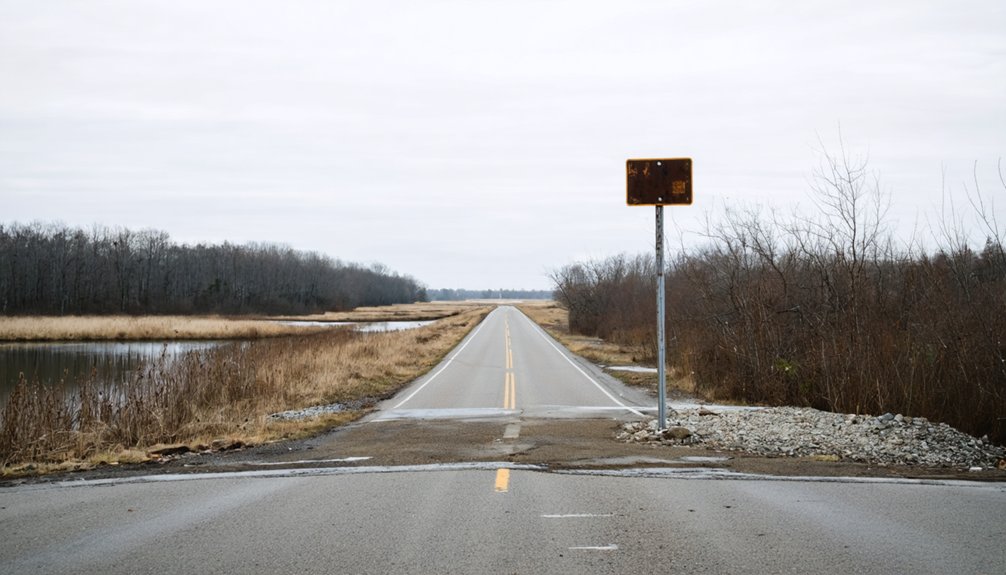
Getting to Marion Station is straightforward once you know which roads to take, and the drive itself is part of the experience. Rolling through Somerset County‘s marshlands and farmfields sets the mood for exploring a place steeped in local legends and historical preservation.
- From the north: Take Route 13 South to Route 413, then follow it directly into Marion.
- From the west: Cross the Bay Bridge to Route 13, then head south to Route 413.
- From Virginia: Cross the Chesapeake Bay Bridge-Tunnel onto Route 13 North, following signs toward Somerset County.
Each route drops you onto quiet two-lane roads flanked by cornfields and tidal wetlands. You’ll feel the shift immediately — civilization loosening its grip as Marion Station quietly comes into view.
The Best Time of Year to Visit Marion’s Ghost Town
Timing your visit makes a real difference when you’re exploring a place as atmospheric as Marion Station. Aim for May through early June or late September through October. Spring delivers mild temperatures and blooming marshlands, setting the perfect backdrop for absorbing local folklore passed down through generations of Eastern Shore residents.
Fall strips the landscape bare, revealing weathered structures with striking clarity.
Avoid summer if you can — humidity hits hard, and the crowds thin out the solitude you’re chasing. Winter brings rain with little snow, leaving muddy trails and limited visibility.
Preservation efforts have kept certain historic elements intact, so you’ll want ideal conditions to fully appreciate what remains. Visiting during shoulder seasons means you experience Marion on its own quiet, unhurried terms.
Extending Your Trip: Crisfield, Smith Island, and Daniels
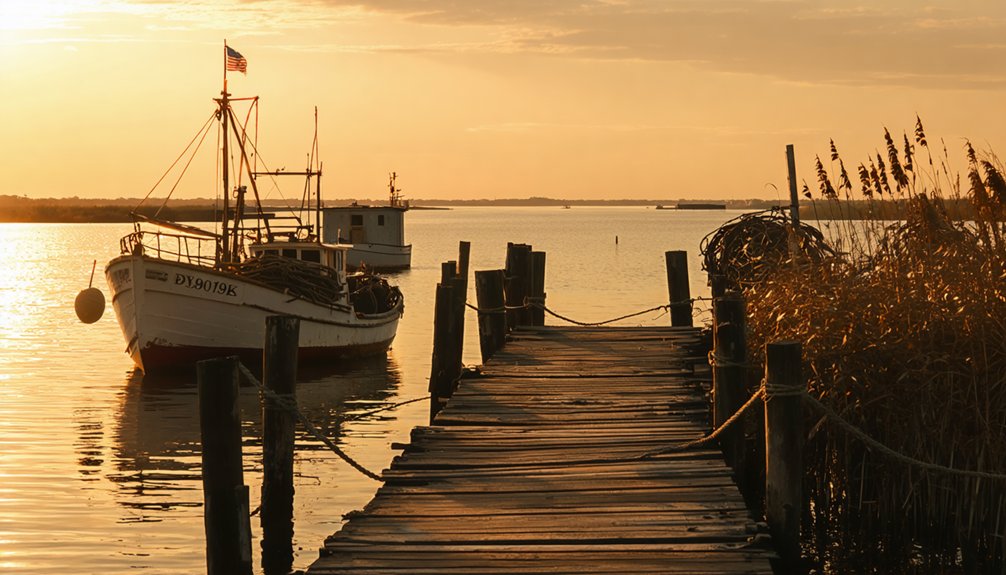
Marion Station makes a natural launchpad for deeper exploration into Somerset County’s most compelling corners. Historical preservation and tourism development have quietly shaped each nearby destination worth adding to your itinerary:
- Crisfield — Maryland’s southernmost city delivers working waterfront culture, fresh seafood, and authentic watermen heritage without the tourist gloss.
- Smith Island — Accessible only by ferry, this isolated community lets you experience a vanishing Chesapeake lifestyle that’s survived centuries of wind and tide.
- Daniels — Maryland’s most dramatic ghost town near Ellicott City offers ruined mill foundations, a white church, and overgrown remnants flattened by Hurricane Agnes in 1972.
Each stop rewards curious travelers who’d rather discover something real than follow a manufactured trail.
You’ll leave Somerset County with stories worth telling.
Frequently Asked Questions
Is Marion, Maryland Safe to Visit for Families With Young Children?
Like a hidden gem waiting to be discovered, Marion’s safe for your family! You’ll enjoy historical landmarks, birdwatching, and family-friendly activities like fishing on East Creek, making it a welcoming destination for young adventurers.
Are There Any Entrance Fees or Permits Required to Explore Marion Station?
You don’t need permits or entrance fees to explore Marion Station’s historical landmarks! Roam freely through its storied streets, soak in the scenery, and grab a bite at local dining spots without spending a dime on access.
Can Visitors Access Marion’s Historic Sites Year-Round Without Restrictions?
You can wander Marion’s sun-dappled historic sites year-round, though you’ll enjoy historical tours most from May to June or September to October, when local events and pleasant weather make your exploration truly unforgettable.
Are There Overnight Accommodations Available Near Marion, Maryland?
You’ll find nearby towns offering cozy stays with historic architecture and local dining to fuel your adventure. Princess Anne and Salisbury are your best bets for accommodations when exploring Marion’s fascinating landscapes freely.
Is Marion Station Accessible for Visitors With Mobility Limitations or Disabilities?
You’ll find Marion Station’s accessibility features are limited, as it’s a rural, historic area. Bring your own mobility assistance tools, since uneven terrain and older infrastructure may challenge visitors with disabilities.
References
- https://midatlanticdaytrips.com/2015/10/visiting-marylands-ghost-town-daniels/
- https://www.tripadvisor.com/Attraction_Review-g41131-d10035193-Reviews-Daniels_Ghost_Town-Ellicott_City_Maryland.html
- https://www.youtube.com/watch?v=sbFq0i5w0-c
- https://en.wikipedia.org/wiki/Marion_Station
- https://www.ghosttowns.com/states/md/marion.html