You’ll find Masten, Pennsylvania tucked inside Loyalsock State Forest, where a lumber town that once buzzed with industry now sits quietly beneath decades of overgrowth. Charles Sones built it fast in 1905, and by 1941 it was completely empty. Today, you can still spot the old smokestack, crumbling foundations, and ghost streets reclaimed by the forest. Lace up your boots, grab an offline map, and keep going — there’s far more to this forgotten place than first meets the eye.
Key Takeaways
- Masten is located in Lycoming County, Pennsylvania, within Loyalsock State Forest; take Route 87 north from Williamsport toward Hillsgrove to reach it.
- Cell service is limited, so bring offline maps, a topographic map, compass, bear spray, waterproof boots, and a first aid kit.
- The ghost town features a standing smokestack, crumbling foundations, and discernible old street patterns reclaimed by wilderness overgrowth.
- The Old Loggers Path spans 27.8 miles through Loyalsock State Forest, passing abandoned railroad grades and remnants of logging infrastructure.
- Best visiting times are fall for foliage, spring for visible foundations, and winter when snow highlights the standing ruins.
What Is Masten, Pennsylvania’s Ghost Town Story?
Once a thriving lumber mill company town, Masten, Pennsylvania, rose from the forests of Lycoming County in 1905 when lumberman Charles Sones built his first mill and established what would become a bustling community.
By 1917, he’d sold the operation to the Central Pennsylvania Lumber Company, which ran things until shutting down in 1930.
After that, the Civilian Conservation Corps moved in from 1933 to 1940, carving roads through local flora that hikers still use today.
The last family packed up and left in 1941, leaving Masten frozen in time.
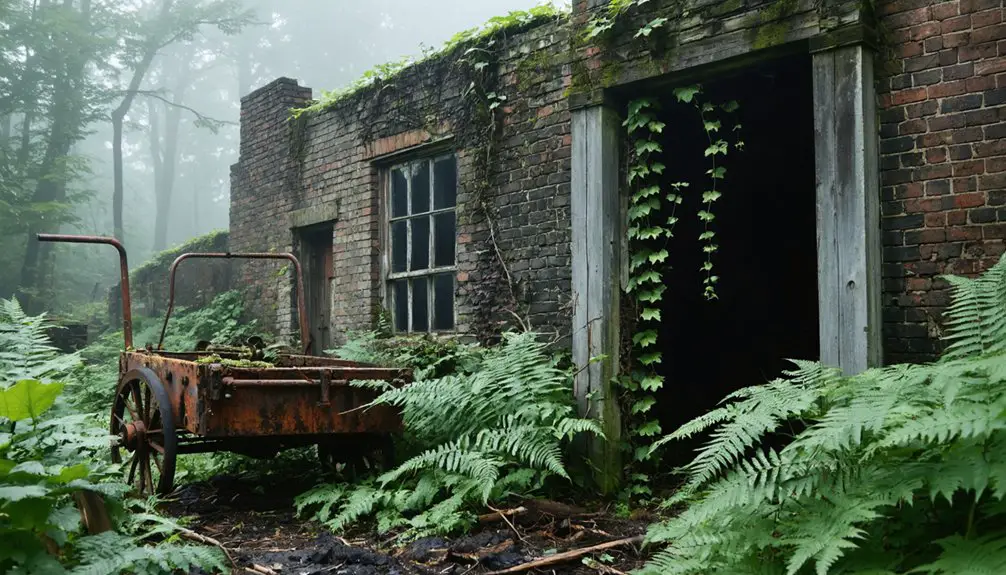
Now you can wander streets reclaimed by nature, spot wildlife sightings around crumbling foundations, and stand beside a lone smokestack still reaching skyward — a raw, unfiltered slice of Pennsylvania’s forgotten past waiting for you to explore.
How Logging Built and Then Abandoned Masten
When you walk through Masten today, you’re standing in a town that one man’s ambition built from scratch. Charles Sones erected the first mill here in 1906, and the operation grew quickly enough that he sold the whole enterprise to the Central Pennsylvania Lumber Company in 1917.
CPL kept the saws running for another thirteen years, but when they shut down in 1930, they didn’t just close a business — they emptied a town.
Sones Builds First Mill
Before Masten became the quiet, overgrown ghost town you can wander through today, it was a thriving lumber company town built almost entirely on the ambitions of one man. Charles Sones founded Masten in 1905 and built its first mill in 1906, fundamentally constructing an entire community from scratch. He didn’t just build a mill — he built a life for the people who’d follow.
Town reconstruction happened fast, with homes, streets, and industry rising quickly from the Pennsylvania wilderness. Walking through Masten now, you’re experiencing something rare — historical preservation in its most honest form. No restoration crews cleaned this place up.
What you see is exactly what time and nature left behind after Sones set everything in motion over a century ago.
CPL Shutdown Ends Town
Sones sold the mills to the Central Pennsylvania Lumber Company in 1917, and that handoff quietly sealed Masten’s fate. CPL kept the operation running for another thirteen years, but when they shut everything down in 1930, the town’s purpose vanished overnight.
Families didn’t linger long without work, and the population drained away fast. By 1941, the last family had packed up and left for good.
What remains carries real cultural significance — foundations, streets, a standing smokestack — all testaments to historical preservation efforts that let you walk through what once was a living, breathing community. You’re free to explore those traces on your own terms, connecting directly with a chapter of Pennsylvania history that the forest has slowly, quietly reclaimed around you.
Mill Smokestacks, Foundations, and Streets Still Visible in Masten
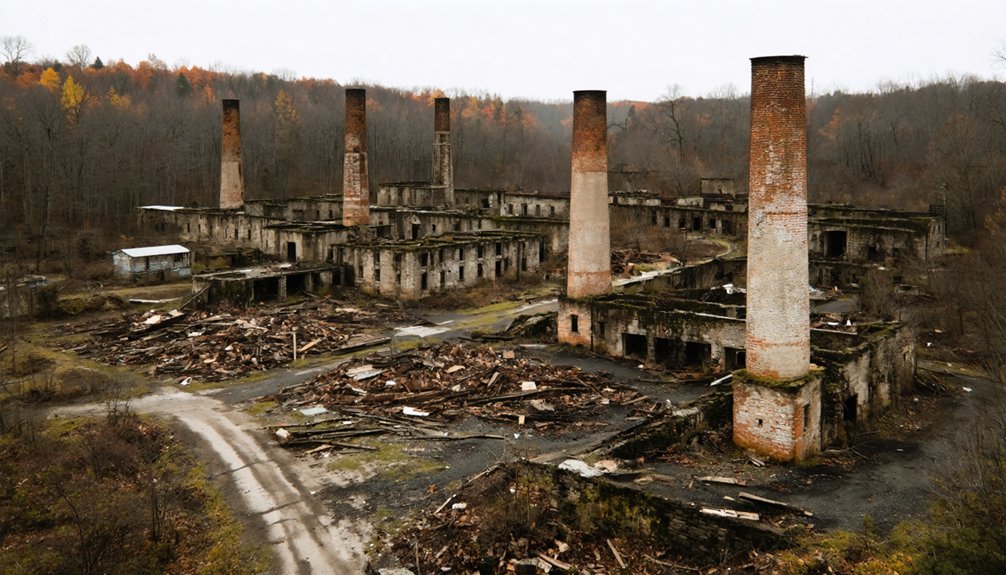
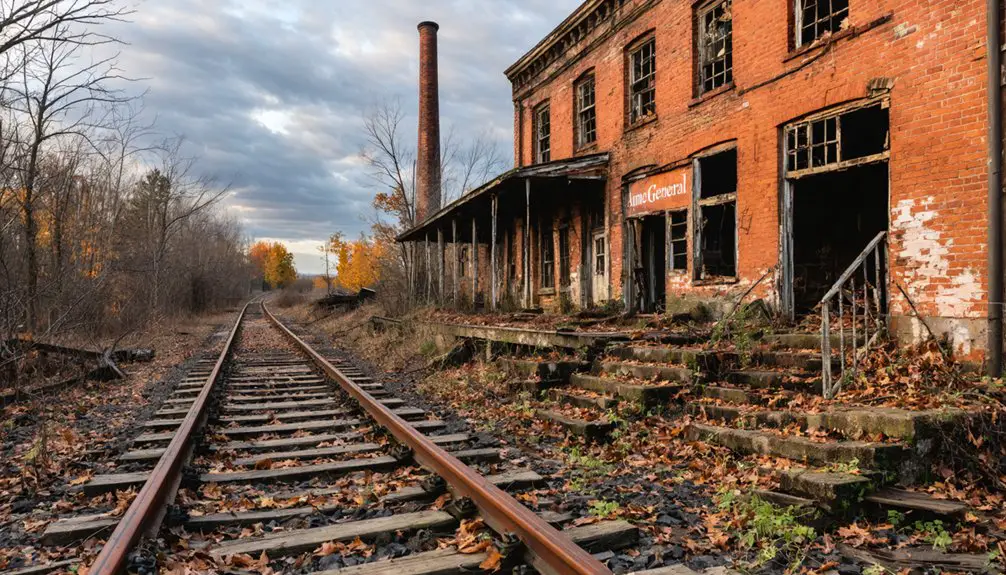
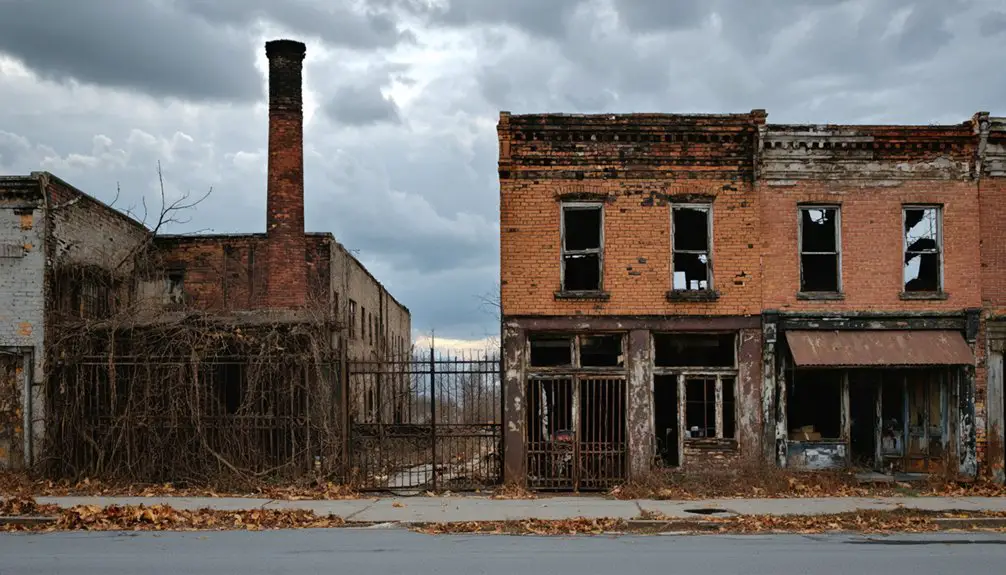
Although Masten’s residents packed up and left decades ago, the town hasn’t completely erased itself from the landscape. You’ll still find the tall lumber mill smokestack standing defiantly against the skyline — a striking piece of historic architecture that refuses to surrender to forest restoration.
Walk carefully, and you’ll trace the outlines of original building foundations pushing through the earth, silent blueprints of homes where families once lived full lives. The old street patterns remain discernible too, faint corridors cutting through the undergrowth that’ll give you a real sense of how the town once moved and breathed.
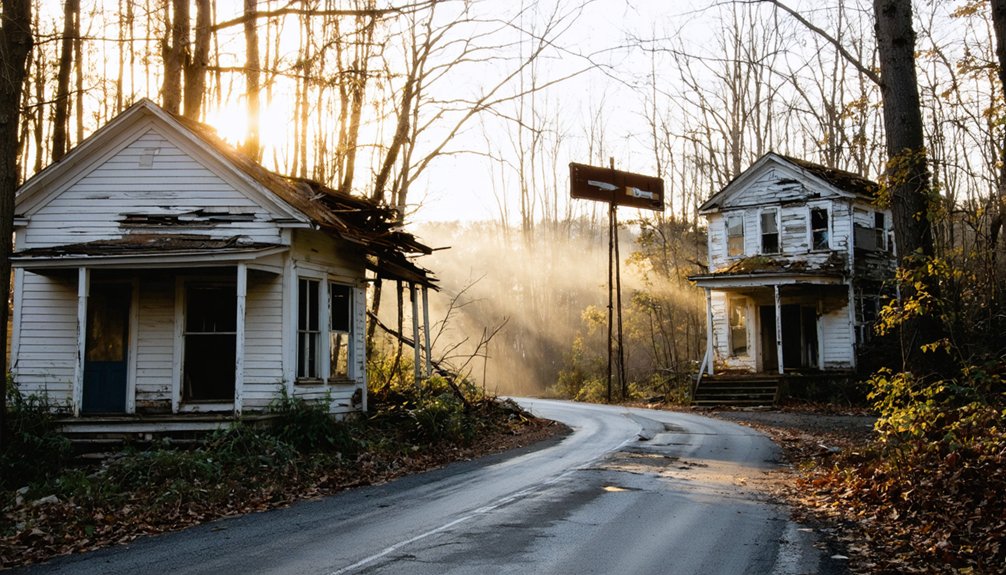
A handful of original homes even survive as hunting camps. Masten isn’t just ruins — it’s a readable landscape that rewards curious, independent explorers willing to look closely.
The Churches and Cemeteries That Survived Masten’s Abandonment
As you wander through Masten’s ruins, you’ll find that faith outlasted industry here — the Reformed Church still stands as a quiet proof to the community that once thrived.
Just outside the old Ordnance grounds, the Baptist Church didn’t just survive; it’s still an active, working congregation today.
And if you’re moved to explore the Presbyterian Church cemetery, you’ll discover headstones dating back to colonial times, making it one of the oldest burial grounds in all of Lycoming County.
Reformed Church Still Standing
While most of Masten crumbled back into the earth after the mills went quiet, a handful of religious structures refused to follow suit. The Reformed Church is one of them, and it’s still standing today, defying the same slow decay that swallowed the rest of town.
You’ll find its historical architecture surprisingly intact, a quiet reminder that some things outlast industry. Locals carry local legends about the congregation that once gathered here, families who worked the mills, raised children, and buried their neighbors nearby.
Walking around it feels less like sightseeing and more like stepping into someone else’s memory.
It won’t take long to explore, but the Reformed Church has a way of making you pause longer than you planned.
Baptist Church Still Active
Not every church in the area surrendered to abandonment. The Baptist Church, sitting just outside the Ordnance grounds, still holds active services today — a living testament to community resilience long after Masten’s mills went silent.
While the town crumbled around it, this congregation kept its doors open, preserving something real amid the ruins.
When you visit, keep these details in mind:
- The Baptist Church sits just outside the Ordnance grounds boundary
- It remains an active, functioning congregation today
- It represents historical preservation in an otherwise abandoned landscape
- Its survival contrasts sharply with Masten’s ghost town status
- You can visit respectfully while services aren’t in session
You’re standing where history didn’t completely die — and that’s worth appreciating on your road trip through Masten.
Colonial-Era Cemetery Headstones
The Presbyterian Church cemetery will stop you in your tracks — headstones here date back to colonial times, making it one of the oldest burial grounds in all of Lycoming County. You’re walking through layers of American history that predate the lumber era entirely, which makes this spot feel remarkably significant against Masten’s otherwise industrial story.
Historical preservation efforts have kept this cemetery accessible and legible, so you can actually read names and dates carved into stone centuries ago. Cemetery restoration work has maintained pathways between plots, letting you move freely without disturbing anything.
It’s humbling to stand here, knowing these graves outlasted the mill, the CCC camp, and every last resident. Bring your camera — these headstones deserve more than a quick glance.
The Old Loggers Path: Masten’s 27.8-Mile Hiking Trail
Stretching 27.8 miles through Loyalsock State Forest, the Old Loggers Path gives you a front-row seat to Masten’s industrial past reclaimed by nature. You’ll hike abandoned logging railroad grades, spotting vistas, rock formations, and scenic streams along the way. The CCC built these roads in the 1930s, and now they’re yours to explore freely.
Walk 27.8 miles through Loyalsock State Forest where logging history meets reclaimed wilderness on the Old Loggers Path.
- Watch for wildlife encounters with deer and black bears, especially at dawn and dusk
- Pack enough water since stream sources need filtering
- Follow trail safety basics: carry a map, tell someone your plans
- Start at Masten’s trailhead for the full loop experience
- Look for remnants of logging infrastructure hidden beneath decades of forest growth
Trail Difficulty, Access Points, and What to Expect on the Old Loggers Path
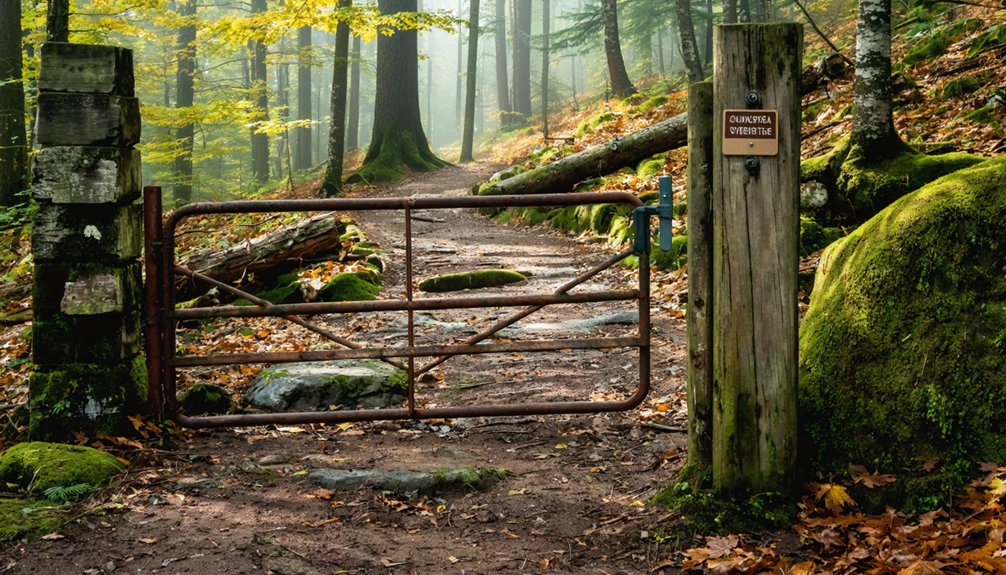
Hiking the Old Loggers Path isn’t a casual afternoon stroll — you’re committing to a 27.8-mile loop that demands solid preparation and a respect for remote terrain. You’ll navigate abandoned logging railroad grades, rocky ridgelines, and stream crossings through Loyalsock State Forest, where forest conservation efforts have allowed the wilderness to reclaim what industry once cleared.
Masten serves as your primary trailhead, and starting there connects you directly to the ghost town’s historical architecture — crumbling foundations, a standing smokestack, and traces of streets that once bustled with mill workers.
Expect rugged footing, significant elevation changes, and limited bailout options. Bring enough water, wear proper footwear, and plan for an overnight if you’re doing the full loop.
This trail rewards self-reliance and curiosity equally.
When to Visit Masten for the Best Trail and Ruins Experience
Timing your visit to Masten can make the difference between a rewarding experience and a frustrating one. Fall offers crisp air, stunning foliage, and ideal conditions for wildlife photography around the Old Loggers Path.
Timing your visit to Masten right transforms the experience—fall’s crisp air and stunning foliage make it especially rewarding.
Spring reveals foundations and old street traces before vegetation reclaims them. Avoid peak summer if you dislike bugs and crowds.
- Late September–October: Best foliage, cooler temps, fewer insects
- April–May: Ruins most visible before overgrowth returns
- Early morning visits: Perfect for wildlife photography and quiet exploration
- Winter: Snow dramatically frames the standing smokestack and foundations
- Local legends: Talk to longtime hunters using original homes as camps—they carry stories outsiders never find online
You’re free to roam here year-round, but smart timing rewards you richly.
How to Get to Masten, Pennsylvania
Once you’ve settled on when to make the journey, you’ll need to know how to actually find Masten — and that’s half the adventure right there. Masten sits in Lycoming County, Pennsylvania, tucked within Cascade and McNett Townships inside Loyalsock State Forest.
You’ll want to route through Williamsport, which makes a solid base with options for local cuisine before heading into the backcountry. From there, follow Route 87 north toward Hillsgrove, then navigate forest roads into the Loyalsock.
Cell service gets spotty, so download offline maps beforehand. The drive itself rewards you — winding roads offer genuine wildlife spotting opportunities, especially at dawn or dusk.
Once you arrive, Masten’s trailhead parking area marks your starting point for exploring everything this quietly haunting place still holds.
What to Pack for Masten’s Remote Trails and Ruins
Because Masten sits well beyond reliable cell service in the deep folds of Loyalsock State Forest, you’ll want to pack smarter than you’d for a casual day hike. Wildlife encounters are common here, and the crumbling ruins deserve more than a quick phone snapshot, so come prepared.
- Topographic map and compass — don’t trust your phone’s battery
- Bear spray and noise-makers for wildlife encounters along the 27.8-mile trail
- Extra camera batteries and a wide-angle lens for photography tips around the old smokestack and foundations
- Sturdy waterproof boots for stream crossings and uneven ruin terrain
- First aid kit, headlamp, and emergency whistle
Freedom tastes better when you’re self-sufficient, and Masten rewards visitors who arrive ready to explore on their own terms.
Frequently Asked Questions
Are There Any Guided Tours Available Specifically for Masten’s Ghost Town Ruins?
Like a treasure left unmarked on a map, guided tours aren’t formally available at Masten. You’ll uncover historical insights independently, roaming forgotten foundations and that iconic smokestack, letting the ghost town’s silent ruins tell their own story.
Is Camping Permitted Overnight Within the Masten Ghost Town Area?
The knowledge doesn’t confirm camping regulations or overnight restrictions for Masten specifically, but you’ll find Loyalsock State Forest surrounds the area, so you’d want to check Pennsylvania DCNR’s guidelines before pitching your tent there!
Can Visitors Legally Enter the Remaining Hunting Camp Structures in Masten?
“Look, don’t touch” — you can’t legally enter those private hunting camp structures. They’re privately owned, and historical preservation and wildlife conservation efforts mean you’ve gotta respect those boundaries and admire Masten’s surviving homes from a respectful distance.
Are Pets Allowed on the Old Loggers Path Trail Near Masten?
The knowledge doesn’t specify pet policies or animal restrictions for the Old Loggers Path, so you’ll want to check directly with Loyalsock State Forest before bringing your furry companion along for that wild, nostalgic adventure.
Is the Masten Site Accessible Year-Round or Seasonally Closed?
You can visit Masten year-round, letting you chase historical preservation details and wildlife photography opportunities whenever freedom calls! Each season reveals something unique — whether it’s snow-dusted ruins or summer’s lush forest reclaiming the old lumber town’s forgotten streets.
References
- https://en.wikipedia.org/wiki/Masten
- https://lumbermuseum.org/photographs-of-masten-pa-mills/
- https://kids.kiddle.co/Masten
- https://pabucketlist.com/the-rise-and-fall-of-centralia-pas-toxic-ghost-town/
- https://en.wikipedia.org/wiki/List_of_ghost_towns_in_Pennsylvania
- https://uncoveringpa.com/ghost-towns-in-pa
- https://www.familysearch.org/library/books/records/item/468845-ghost-lumber-towns-of-central-pennsylvania-laquin-masten-ricketts-grays-run?offset=2
- https://en.wikipedia.org/wiki/Old_Loggers_Path
- https://kids.kiddle.co/List_of_ghost_towns_in_Pennsylvania