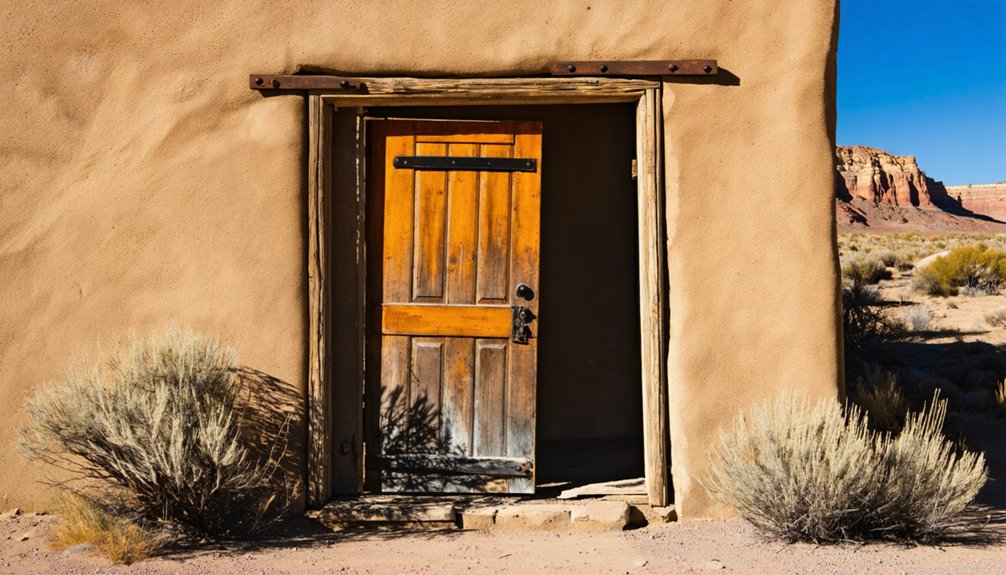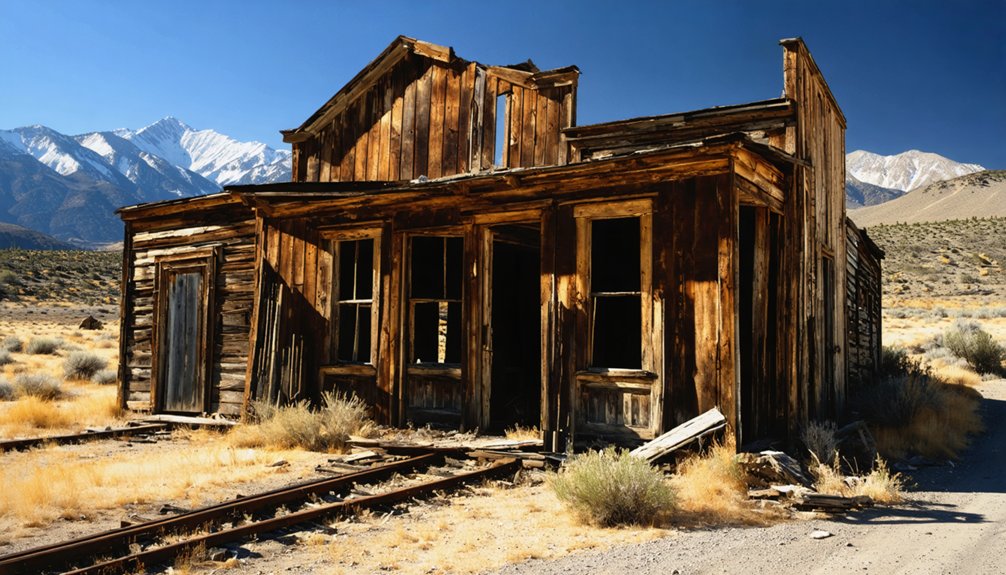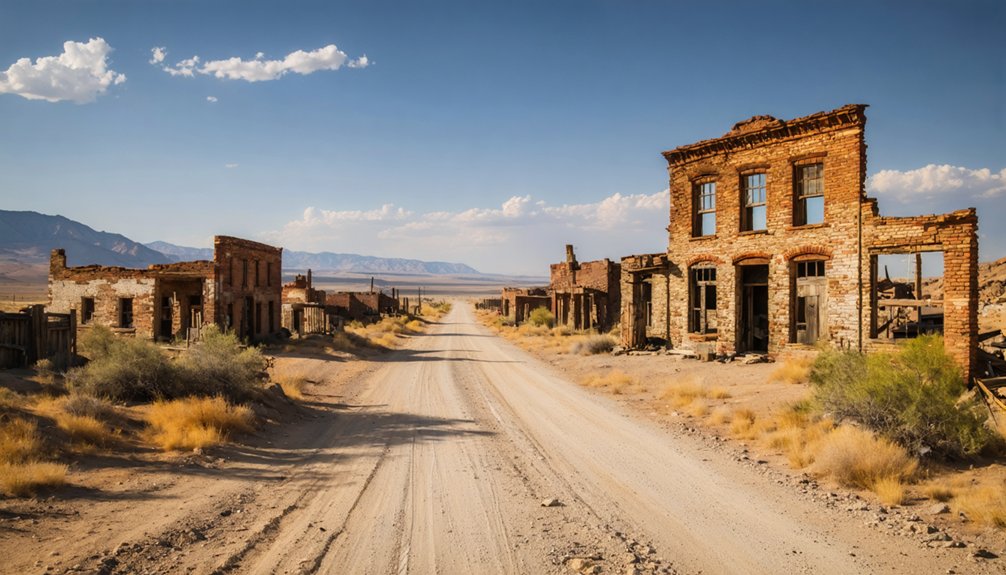
Planning a ghost town road trip to Newhouse, Utah means heading 20 miles west of Milford on UT-21, watching for mile marker 57, and turning onto a dusty 2-mile desert road. You’ll find roofless stucco walls, crumbling foundations, and a silence that tells the story of a silver-and-copper boomtown that peaked around 1904 and vanished by 1921. Come prepared with water, fuel, and curiosity — there’s far more to this forgotten corner of Beaver County than first meets the eye.
Key Takeaways
- Newhouse is located 20 miles west of Milford, Utah on UT-21; turn at mile marker 57 onto a 2-mile unpaved road.
- Visit in spring or fall for the best temperatures, as summer heat and winter mud can complicate access.
- Bring ample water, a full gas tank, and sun protection, as the site is remote with no nearby services.
- Explore ruins respectfully—fragile foundations and scattered artifacts must not be touched or removed to preserve the site.
- Combine your trip with nearby Frisco and Milford to experience Utah’s broader ghost town corridor fully.
What Is the Ghost Town of Newhouse, Utah?
Once a thriving model mining community in Beaver County, Utah, Newhouse sits on the eastern edge of the Wah Wah Valley — a remote desert stretch west of Milford and close to the better-known ghost town of Frisco.
Tied to the Cactus Mine on the western slopes of the San Francisco Mountains, the town grew from a rough camp into a planned company settlement complete with a hotel, opera house, hospital, and library. Samuel Newhouse shaped it into something rare for its era.
Today, you’ll find crumbling historical architecture — roofless block structures, bare foundations, scattered mining artifacts — all quietly reclaimed by the desert. It’s a place that rewards the curious traveler willing to leave the main road behind and sit with what remains.
The Rise and Fall of a Model Mining Town
When Samuel Newhouse purchased the Cactus Mine in 1900, he didn’t just buy a mine — he built a vision, transforming a dusty tent camp into a planned company town complete with a hospital, opera house, library, and over 70 stucco homes.
You can almost picture the life that once thrived here, where water piped five miles from Wah Wah Springs fed an irrigated park and electric lights pushed back the desert dark.
But the boom was brief — by 1910 the ore had thinned, the mill came down in 1914, and by 1921 even the last café had burned away, leaving little more than foundations and silence.
Samuel Newhouse’s Vision
In 1900, Samuel Newhouse rode into the Wah Wah Valley with a bold idea: a mining camp didn’t have to be rough, lawless, or forgotten. He purchased the Cactus Mine and built something different — a planned company town with real infrastructure.
You can almost picture it: stucco houses lining tidy streets, water piped five miles from Wah Wah Springs, electric lights humming at night, and an irrigated park softening the desert’s edge. No saloons, no gambling, no red-light district.
Newhouse believed workers deserved dignity. By 1904–1905, Tent Town had a new name to match its ambition. The cultural significance of that vision still echoes across the site today, making Newhouse a place worth your time and its historical preservation worth your respect.
Mining Boom and Growth
Newhouse’s idealism needed something to sustain it — and for a while, the Cactus Mine delivered. Silver and copper poured out of the western slopes of the San Francisco Mountains, fueling the town’s remarkable mining history and financing its ambitious town architecture.
By 1904–1905, Tent Town had transformed into Newhouse — a planned community of over 70 stucco company houses, a hospital, opera house, hotel, library, and an irrigated park fed by water piped five miles from Wah Wah Springs. Electric lights hummed. The Cactus Trading Company stocked shelves. The dancehall filled with voices.
But the ore didn’t last forever. By 1910, the mine began playing out. The mill came down in 1914, and the town quietly unraveled — leaving only silence where ambition once roared.
Decline and Abandonment
How quickly a model town can fall. The Cactus Mine played out around 1910, and Newhouse unraveled fast. The mill came down in 1914, taking jobs and purpose with it.
By 1921, only a single café remained standing — then it burned. Homes got hauled to Milford. The dancehall followed. Urban decay claimed whatever people left behind.
What you’ll find today are roofless block walls, crumbling foundations, and silence. It’s a stark reminder that even the most carefully planned communities can disappear within a generation.
Historic preservation efforts here are minimal, which means every visit carries responsibility. The site deteriorates with each disturbance. When you walk through Newhouse, you’re walking through something genuinely fragile — treat it accordingly.
Is Newhouse Worth the Drive?
Newhouse won’t greet you with a busy main street or a well-marked trailhead — it’ll meet you with roofless block walls, crumbling foundations, and the quiet weight of a town that once had a library, a hospital, and an opera house.
You’ll drive roughly 20 miles west of Milford on UT-21, turn off near mile marker 57, and follow a 2-mile stretch of desert road to reach what’s left.
It’s remote, it’s fragile, and if you come prepared with water and a full tank, it’s absolutely worth it.
Remote But Rewarding
Though it’s remote and sparse, Newhouse rewards the curious traveler willing to make the drive. You’ll walk ground where over 70 stucco company houses once stood, where families gathered at the opera house and children played in an irrigated park fed by water piped five miles from Wah Wah Springs.
Today, roofless block walls and scattered foundations are all that remain, silent markers of a planned town that simply ran out of ore.
Historical preservation here depends on visitors like you treading carefully and leaving everything undisturbed. Visitor safety matters too — bring extra water, top off your tank in Milford, and keep your phone charged.
The desert doesn’t forgive carelessness, but it generously offers solitude, history, and the rare freedom of standing somewhere most people never bother to find.
What Remains Today
What’s left of Newhouse won’t fill an afternoon, but it will fill your imagination. You’ll find roofless block structures rising from the desert floor, their walls still standing like quiet witnesses to a vanished community. Foundations stretch across the sage, tracing the footprint of houses, storefronts, and a life that once hummed with purpose.
Historical preservation here is fragile. Touch nothing, disturb nothing — what remains stays only because others before you showed restraint. Visitor safety matters too; crumbling walls are unpredictable, so keep your distance and stay aware.
This isn’t a museum. There are no signs, no guardrails, no guided tours. Just open desert, weathered stone, and the weight of 1910 pressing quietly against 2024. That contrast alone makes the drive worthwhile.
What’s Left to See at Newhouse Today?
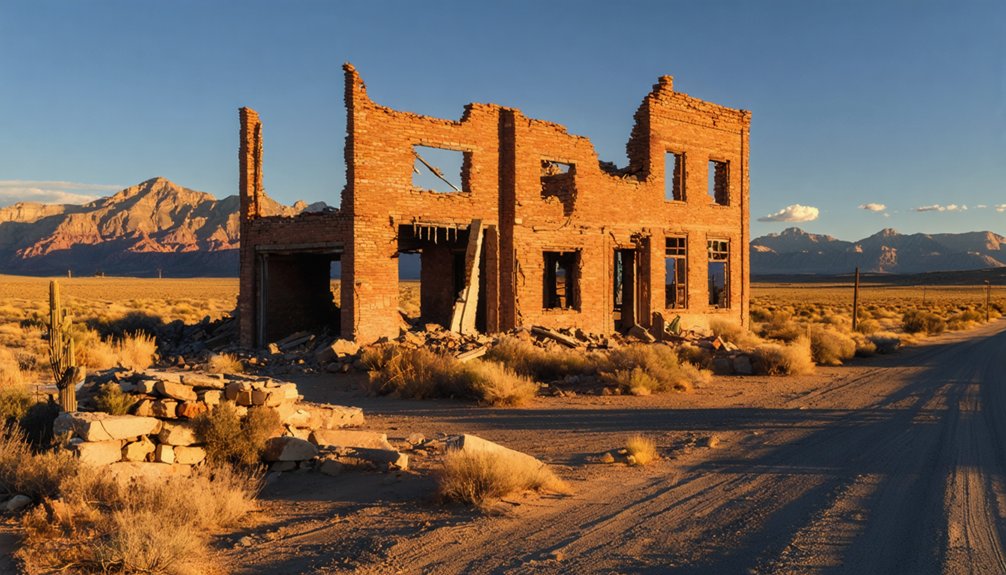
After more than a century of desert wind and neglect, very little of Newhouse’s once-ambitious townscape survives. What greets you now are roofless block structures, crumbling foundations, and scattered relics half-swallowed by sagebrush. Yet the silence carries weight — you’re standing where an opera house once echoed, where company houses lined irrigated streets, where ambition briefly outran the desert.
For photography tips, arrive during golden hour when low light carves shadows across the remaining walls, sharpening every crack and texture. Watch your footing near unstable foundations. Wildlife sightings add unexpected life to the scene — lizards dart across sun-warmed stone, and ravens circle overhead as if keeping watch. Tread carefully and disturb nothing. The site is fragile, and what remains deserves to stay exactly where history left it.
How to Visit Newhouse Responsibly
Visiting Newhouse means accepting a quiet responsibility — you’re a guest in a place that can’t repair itself. Historical preservation here isn’t someone else’s job. Every crumbling stucco wall holds a story that disappears the moment someone pulls a loose brick free.
Every wall still standing is a story still being told. Don’t be the one who ends it.
For visitor safety and respect, carry these three commitments in:
- Touch nothing — those roofless walls stood through a century of desert wind; don’t be the reason they don’t survive another.
- Bring your own water — the pipeline from Wah Wah Springs is long gone, and the desert doesn’t negotiate.
- Leave every stone, fragment, and relic exactly where you found it — someone else deserves to discover it whole.
Newhouse gave everything it had. Arrive prepared to give something back.
Getting to Newhouse From Milford: Directions From Highway 21
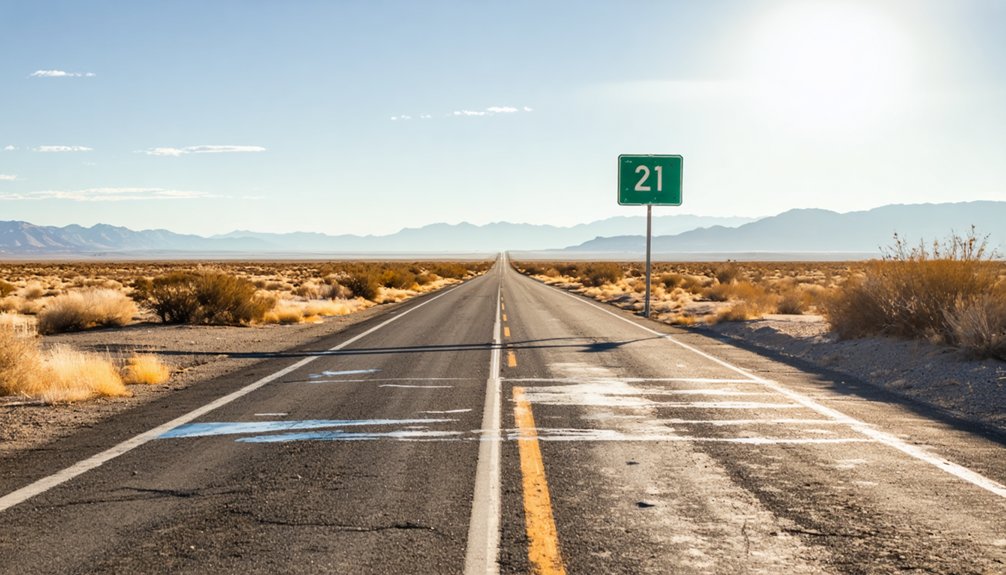
Once you’ve made that quiet commitment to Newhouse, the next step is getting there — and the drive itself sets the tone. Start in Milford and head west on UT-21. Watch for mile marker 57, roughly 19 to 20 miles out, then turn onto the unpaved road heading toward the site.
From there, it’s about 2.1 miles to what remains — roofless walls of historic architecture rising from cracked desert earth, foundations holding their ground like quiet testimony. Railroad remnants and scattered relics reward those paying attention.
Stay on the main road and don’t rush it. Bring extra water, keep your tank full, and carry a cell phone. Out here, preparation isn’t paranoia — it’s the price of real freedom.
Best Time of Year to Visit Newhouse
Spring and fall are your best windows for exploring Newhouse, when mild temperatures make the desert walk comfortable and the low-angle light flatters the crumbling stucco walls.
Summer heat in the Wah Wah Valley can turn brutal fast, so if you’re visiting between June and August, you’ll want an early-morning start and plenty of water.
Winter can bring snow and muddy road conditions that make the unpaved 2-mile stretch to the site impassable, so check conditions before you head out from Milford.
Ideal Visiting Seasons
Because Newhouse sits in the open desert of Beaver County, the season you choose shapes your entire experience. The silence out there’s sacred, and the right weather lets you honor it fully.
- Spring (April–May): Mild temperatures make walking the foundations comfortable. Soft light turns crumbling stucco walls golden — perfect for historical preservation photography.
- Fall (September–October): Crisp air sharpens your focus. The desert feels alive without punishing heat, giving you space to explore freely and safely.
Avoid midsummer: Brutal heat threatens visitor safety, drains your water supply fast, and strips the site of any romantic atmosphere you came searching for.
Choose wisely, and Newhouse rewards you with a raw, unfiltered connection to something long forgotten.
Avoiding Extreme Heat
Those shoulder seasons also reward your photography tips instincts — soft morning light carves dramatic shadows across the roofless foundations, revealing textures that harsh midday sun simply flattens.
Cooler temperatures also mean you’re moving thoughtfully, not rushing, which matters deeply for historical preservation. Slow visitors do less damage.
Winter Road Conditions
Winter transforms the Wah Wah Valley into something deceptively beautiful and genuinely unforgiving. Seasonal accessibility drops sharply once snow and ice settle across Highway 21 and the unpaved stretch leading to Newhouse‘s crumbling stucco walls. You’ll want to reconsider that spontaneous January drive.
Before you go in winter, remember:
- Mud closes the 2.1-mile access road — freezing and thawing cycles turn desert hardpack into tire-swallowing mire.
- No cell service means no rescue call — isolation that feels romantic in autumn turns dangerous when temperatures plunge overnight.
- Historical preservation depends on you staying on designated paths — frozen ground looks solid but conceals fragile foundations beneath.
Spring and fall offer you the freedom to explore Newhouse fully, without winter’s quiet, unforgiving consequences.
What to Pack for Your Newhouse Ghost Town Visit
Since Newhouse sits deep in the remote Wah Wah Valley with no services for miles, packing smart isn’t optional — it’s what stands between a memorable adventure and a dangerous predicament. Your packing essentials start with extra water, a full gas tank before leaving Milford, and a charged cell phone. The desert heat strips you dry faster than you’d expect.
For photography gear, bring a wide-angle lens to capture the roofless stucco walls against that vast Utah sky, and a macro lens for close-up texture shots of weathered foundations. Sturdy boots protect your ankles across uneven terrain. Pack sunscreen, a hat, and snacks.
You’re stepping into history’s silence — make sure you’re equipped to stay long enough to really feel it.
Ghost Towns Near Newhouse Worth the Detour
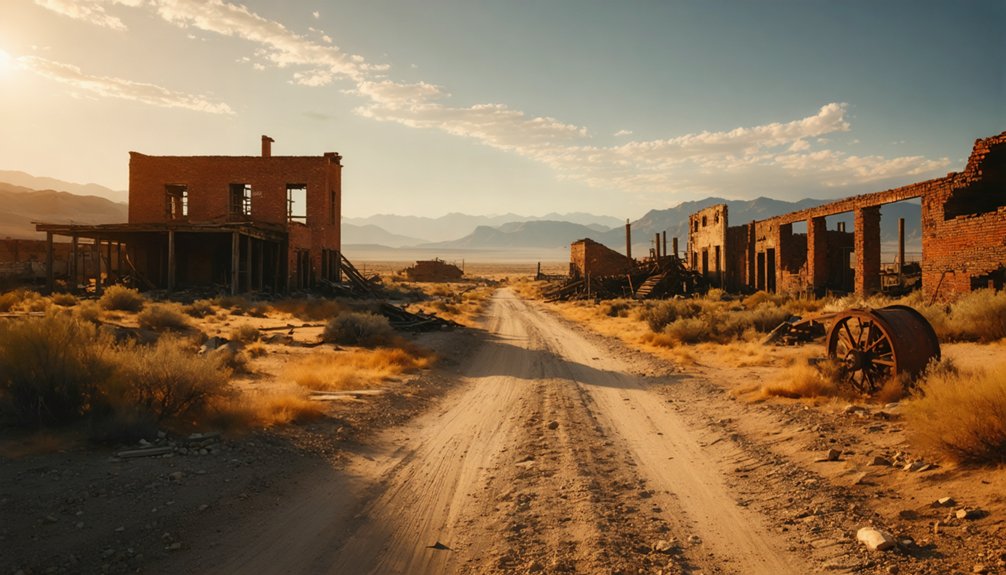
Once you’ve packed up your gear and pulled away from Newhouse’s roofless walls, the surrounding desert rewards you for staying on the road — because you’re already in some of Utah’s richest ghost town country.
Pack up, pull away — Newhouse is just the beginning of Utah’s ghost town country.
Three nearby stops deepen the story:
- Frisco — Just east of Newhouse, its beehive charcoal kilns stand as haunting monuments to mining history, eerily intact against the open sky.
- Milford — Your logical base camp holds Victorian-era town architecture that whispers of silver-boom ambition frozen in brick and mortar.
- Wah Wah Valley corridor — The drive itself becomes the destination, where abandoned foundations dot the sagebrush and remind you that freedom once meant chasing ore into the wilderness.
Stay curious. The desert keeps its secrets close but never entirely hidden.
How Newhouse Fits Into a Longer Utah Desert Road Trip
Newhouse doesn’t stand alone — it anchors a broader sweep of Utah’s high desert that rewards anyone willing to string ghost towns together like beads on a fraying rope.
Push further along UT-21 and you’ll reach Frisco, where the ruins feel older and lonelier. Between stops, the Wah Wah Valley opens wide around you — desert flora crowding the roadside with sage and rabbitbrush, local wildlife threading through the stillness if you’re patient enough to notice.
You’re not just visiting ruins; you’re tracing the arc of boom-and-bust ambition across one of Utah’s most forgotten corridors. Pack enough water for the full loop, keep your tank full in Milford, and let the landscape pull you deeper than you planned.
Frequently Asked Questions
Is There an Entrance Fee to Visit the Newhouse Ghost Town Site?
“The best things in life are free!” You’ll pay no entrance fee to explore Newhouse’s historical preservation site. Visitor amenities are minimal, so pack your spirit of adventure and wander freely among the weathered foundations.
Can You Camp Overnight Near the Newhouse Ghost Town Ruins?
No official camping regulations or overnight amenities exist at Newhouse’s crumbling walls. You’re free to sleep beneath Utah’s vast, star-salted sky nearby, but you’ll want extra water and a spirit hungry for solitude.
Is the Road to Newhouse Paved or Suitable for Regular Vehicles?
Like Steinbeck’s dusty migrants seeking promise, you’ll find road conditions turn unpaved near the site. Vehicle suitability matters here — your standard car can manage, but drive cautiously, embrace the wild, and stay on the main road.
Are Guided Tours of Newhouse or the Cactus Mine Available?
No guided tours await you at Newhouse—you’ll explore its mining history and historical preservation freely, wandering crumbling stucco walls and silent foundations on your own terms, breathing in the raw, untamed desert solitude of forgotten lives.
Is Metal Detecting or Artifact Collecting Permitted at the Newhouse Site?
Those rusted echoes belong to history — you shouldn’t disturb them. Metal detecting regulations and artifact collection rules prohibit removing relics from sites like Newhouse, so respect the silence, leave what you find, and let freedom mean protecting the past.
References
- https://en.wikipedia.org/wiki/Newhouse
- http://www.expeditionutah.com/forum/index.php?threads/ghost-town-newhouse.4727/
- http://desertsurvivor.blogspot.com/2012/08/in-search-of-newhouse.html
- https://www.facebook.com/groups/864060180303556/posts/7550154071694100/
- https://www.facebook.com/groups/utahgroup/posts/3583808071948879/
- https://www.youtube.com/watch?v=ZtmZoO3X8jQ
- https://www.youtube.com/watch?v=XBZN9_oaYi0
- https://www.utahoutdooractivities.com/newhouse.html