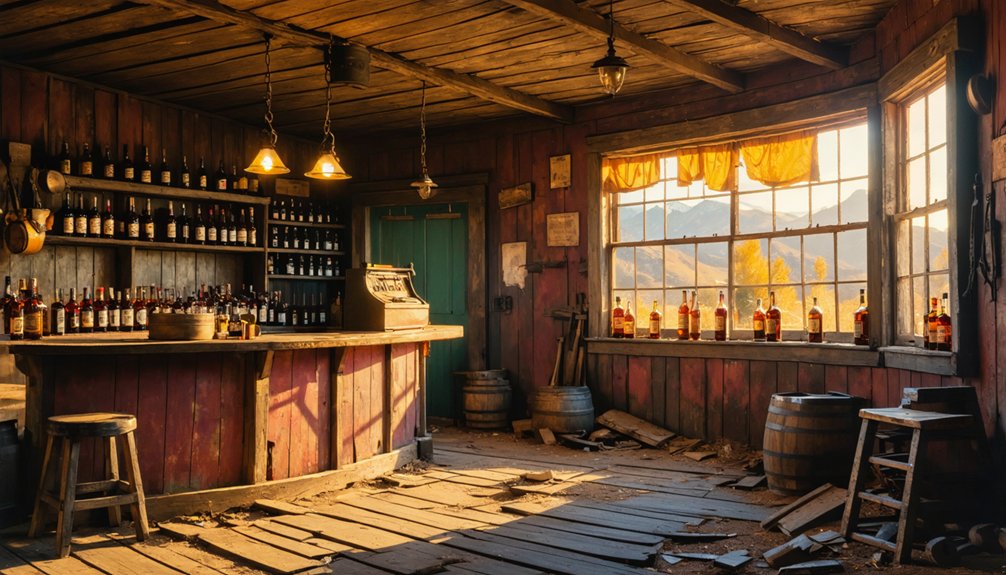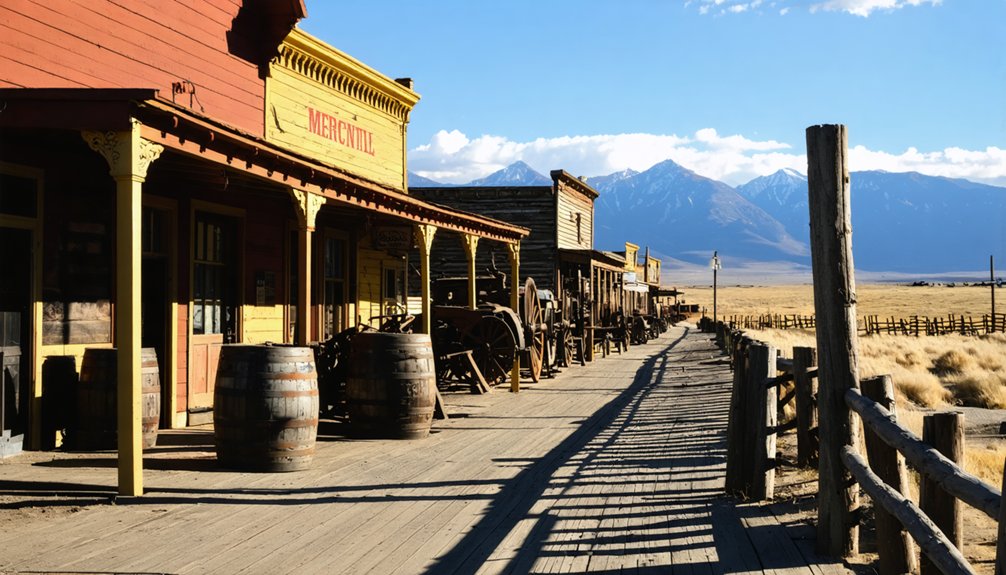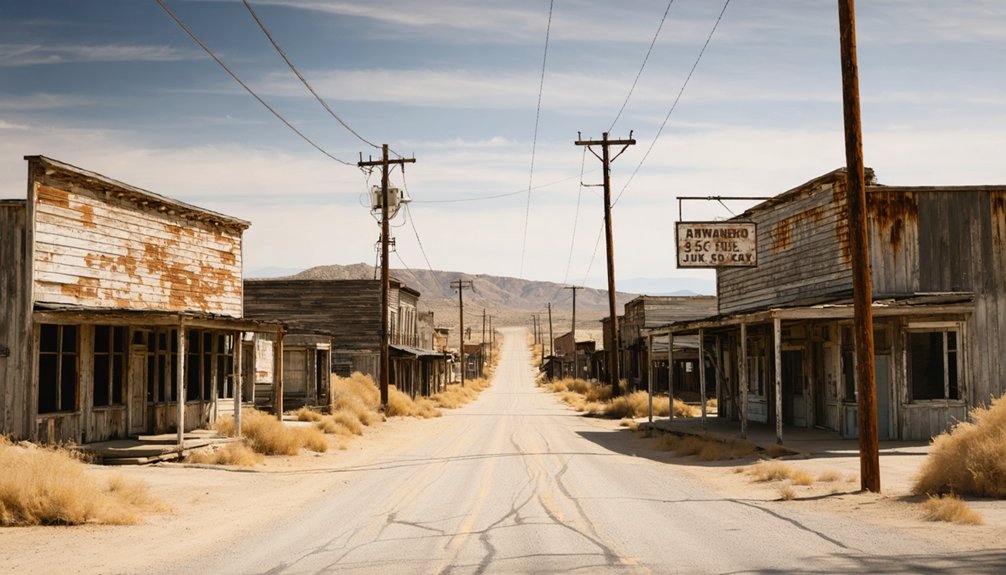
Planning a ghost town road trip to Newtown, California puts you about 8 miles southeast of Placerville, where scattered ruins, a crumbling stone building, and a weathered cemetery are all that remain of a once-thriving Gold Rush settlement that housed nearly 5,000 residents. Spring and fall offer the best conditions, and you’ll only need a couple of hours to explore the site. Stick around, and you’ll uncover everything you need to make this haunting road trip unforgettable.
Key Takeaways
- Newtown, California, is a Gold Rush ghost town located about 8 miles southeast of Placerville, accessible via Newtown Road and Fort Jim Road.
- Key attractions include a weathered cemetery and an old stone building, requiring only 1 to 2 hours to explore fully.
- Spring and fall offer the best visiting conditions; summer visits should begin early, and winter roads may become muddy.
- Pack sturdy footwear, water, a first aid kit, and a camera, while staying clear of unstable structures and unmarked boundaries.
- Combine Newtown with nearby ghost towns like Bodie and Calico to create a broader California Gold Rush road trip experience.
What Is Newtown, California’s Ghost Town?
Once a booming Gold Rush settlement in the Sierra foothills, Newtown, California now stands as little more than scattered ruins and faded memories southeast of Placerville.
Once a thriving Gold Rush town, Newtown, California now exists as little more than ruins and faded memories.
First settled in 1852, this forgotten community once swelled to thousands of residents, rivaling nearby Placerville during the height of the mining era.
Today, you’ll find an old stone building, a weathered cemetery, and quiet roads near Newtown Road and Fort Jim Road marking where a vibrant town once thrived.
Local legends hint at colorful beginnings, including Swiss settlers who called the village “Sunny Italy.”
While preservation efforts remain minimal, the site still rewards curious road trippers willing to step off the beaten path and connect with California’s raw, boom-and-bust heritage.
How Newtown Rose and Fell During the Gold Rush
Like many Sierra foothill settlements, Newtown didn’t grow slowly — it exploded. By the early 1850s, gold fever pulled thousands westward, and Newtown reportedly swelled to around 5,000 residents, briefly rivaling nearby Placerville. Swiss immigrants, Mormon travelers, and determined prospectors all carved out space here, each group adding layers of historical myths that still blur the town’s true origins today.
Then the gold thinned. Miners scattered, businesses closed, and Newtown quietly emptied.
What’s remarkable is how completely it vanished. Preservation challenges — combined with decades of neglect — erased most physical evidence of that frantic boom period. A stone building and a cemetery are nearly all that survived.
When you visit, you’re standing inside a story that almost disappeared entirely.
How to Get to Newtown From Placerville
Getting to Newtown is straightforward — the site sits roughly 8 miles southeast of Placerville, making it an easy detour if you’re already exploring El Dorado County‘s Gold Rush corridor. Head southeast from Placerville and watch for Newtown Road, which intersects with Fort Jim Road near what remains of the settlement.
Your best landmarks are the old stone building and cemetery — two quiet survivors of a community that once housed thousands during the height of California’s mining history. The roads are accessible, so you won’t need a specialized vehicle for this stop.
Ghost town preservation efforts here are minimal, meaning you’re experiencing the site raw and unfiltered. Keep your expectations honest, pack your curiosity, and give yourself an hour to absorb what little remains.
What You’ll Actually Find at the Newtown Ghost Town Site
When you arrive at Newtown, don’t expect a polished historic site with interpretive signs and guided tours — what’s left here is raw and spare. The abandoned structures and local legends are all you’ve got, and honestly, that’s part of the appeal.
Here’s what you’ll actually find:
- An old stone building — one of the few surviving remnants standing near Newtown Road and Fort Jim Road.
- A cemetery — weathered markers that quietly tell the story of who lived and died here during the Gold Rush.
- Open, undeveloped land — no fences, no crowds, just foothill terrain reclaiming its past.
Keep your visit short and exploratory. This spot rewards curiosity, not comfort.
When to Visit Newtown and How Long to Stay
Spring and fall offer the most comfortable conditions for exploring Newtown’s ruins, with mild temperatures and dry roads making the short hike to the stone building and cemetery far more enjoyable than summer’s Sierra foothill heat.
You won’t need more than an hour or two on-site, so plan Newtown as a quick stop within a longer Gold Rush road trip rather than a standalone destination.
Winter rain can turn unpaved sections of Newtown Road and Fort Jim Road into muddy obstacles, so check local road conditions before you head out.
Best Seasons To Visit
Spring and fall offer the most comfortable conditions for exploring Newtown’s scattered ruins, since the Sierra foothills can turn brutally hot in summer and occasionally icy in winter. Preservation challenges make the site harder to navigate after heavy rain or snow, so timing your visit matters.
Best seasons ranked:
- Spring (March–May) – Mild temperatures, wildflowers along the trails, and manageable road conditions near Newtown Road and Fort Jim Road.
- Fall (September–November) – Cooler air, golden foliage, and fewer crowds let you absorb the site’s historical myths without distraction.
- Early Summer (June) – Acceptable before peak heat hits, though you’ll want an early morning start.
Avoid July through August unless you’re prepared for intense heat that drains both energy and enthusiasm fast.
Ideal Trip Duration
Although Newtown rewards curiosity, it won’t hold you there for long—plan on spending one to two hours at the site itself, enough time to walk the ruins near Newtown Road and Fort Jim Road, photograph the old stone building, and pay your respects at the cemetery without rushing.
Build your broader road trip around two to three days, pairing Newtown with other El Dorado County mining remnants to fill the itinerary meaningfully.
Use driving time to dig into historical myths surrounding the town’s reported 5,000-person population and local legends about Mormon settlers and Swiss immigrants who once called it “Sunny Italy.” Those stories deserve unhurried conversation around a campfire, not a rushed highway stop.
A longer regional loop transforms a short site visit into a genuinely memorable Gold Rush adventure.
Weather And Road Conditions
Weather shapes your Newtown visit more than most ghost town guides admit. The Sierra foothills surrounding Placerville deliver sharp seasonal swings, and local weather directly impacts both your safety and your experience on-site.
Check these three conditions before leaving:
- Spring and fall offer the clearest skies and comfortable temperatures, making them your best windows for exploring ruins and the cemetery.
- Road conditions along Newtown Road and Fort Jim Road can deteriorate fast after winter storms, turning dirt sections muddy and impassable.
- Summer heat pushes temperatures high in the foothills, so early morning arrivals protect you from punishing midday sun.
Always verify local weather forecasts and check El Dorado County road reports before you roll out. Flexibility keeps your adventure moving forward.
Ghost Towns Near Newtown Worth Adding to Your Route
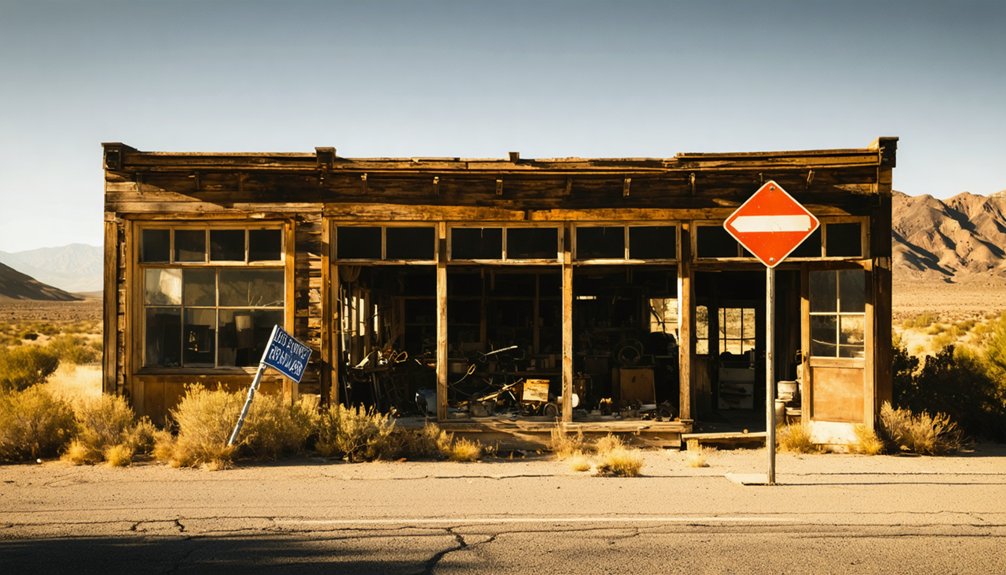
Once you’ve explored Newtown’s quiet ruins, the surrounding Sierra foothills open up a rewarding network of Gold Rush ghost towns worth weaving into your route. Bodie stands out as California’s most dramatically preserved mining settlement, where active preservation efforts keep its weathered structures frozen in time alongside compelling local legends of frontier violence and fortune.
Shasta State Historic Park offers another strong stop, with stabilized brick ruins and rich interpretive history.
If you’re pushing further south, Calico Ghost Town adds a desert contrast to the foothill experience.
Each site rewards curious travelers willing to wander off the main road. Combining these stops with Newtown creates a full Sierra foothills itinerary built around abandoned history, rugged scenery, and the unmistakable pull of California’s boom-and-bust past.
What to Bring and Watch For at Abandoned Sites
Packing well makes the difference between a rewarding ghost town visit and a frustrating one. Newtown’s rugged terrain and sparse remains demand preparation before you arrive.
Preparation separates a rewarding ghost town adventure from a forgettable one — Newtown demands respect before you even arrive.
- Sturdy footwear and water – Uneven ground surrounds the old stone building and cemetery, so solid boots and hydration keep you moving safely.
- Camera and notebook – Document what you find without disturbing historical artifacts that tell the story of this vanished Gold Rush community.
- Safety precautions checklist – Bring a first aid kit, tell someone your route, and stay out of structurally unstable ruins.
Watch for unmarked property boundaries and posted signs. Respect what little remains, because these fragments are irreplaceable. You’re not just visiting a ruin — you’re stepping into California’s buried past.
Frequently Asked Questions
Is Newtown Ghost Town Located in El Dorado or Mariposa County?
You’ll find conflicting sources place Newtown in both El Dorado and Mariposa County. As you chase its haunted legends and abandoned structures, most road trip references consistently point toward El Dorado County near Placerville.
Who Were the Very First Settlers to Arrive at Newtown?
Mormons made their mark as Newtown’s first pioneer settlers, boldly bound for Salt Lake before the Gold Rush gripped them. Swiss immigrants seeking sunny slopes soon followed, famously calling this freedom-filled foothill village “Sunny Italy.”
Did Newtown Ever Have a Functioning Post Office?
Yes, Newtown once had a functioning post office, proving its historical significance as a thriving community. Today, you’ll find only abandoned buildings whispering that storied past, fueling your adventurous spirit to uncover California’s forgotten Gold Rush heritage.
How High in Elevation Is the Newtown Ghost Town Site?
You’ll find Newtown’s abandoned structures sitting at roughly 1,821 feet above sea level. Trek up to these historical landmarks and breathe the crisp foothill air as you uncover Gold Rush secrets waiting among the ruins.
Could Newtown’s Population Really Have Reached 5,000 Residents?
You’d want to treat that 5,000 figure cautiously—historical population trends from Gold Rush boomtowns often exaggerated numbers. Modern ghost town tourism research suggests Newtown’s peak was likely much smaller, but its rapid rise and fall still fascinates adventurous explorers.
References
- https://en.wikipedia.org/wiki/List_of_ghost_towns_in_California
- https://kids.kiddle.co/Newtown
- https://www.dougstepsout.com/2013/01/08/community-profiles-newtown/
- https://www.visitcalifornia.com/road-trips/ghost-towns/
- https://en.wikipedia.org/wiki/Bodie
- https://www.legendsofamerica.com/goose-egg-mine-california/