You’re heading to a place the Gulf has nearly reclaimed—a narrow Louisiana ridge where 800 people vanished in a single October night back in 1893. Cheniere Caminada was a thriving fishing village that fed New Orleans with oysters and shrimp before a hurricane rewrote its story forever. Take Louisiana Highway 1 through Leeville, bring supplies, and plan ahead. The full history of what’s left—and what isn’t—runs deeper than you’d expect.
Key Takeaways
- Cheniere Caminada sits along Louisiana Highway 1 through Leeville, with no marked entrance, requiring prior research and route planning.
- Bring extra fuel, supplies, and check road conditions, as the coastal road system thins significantly beyond Grand Isle.
- Spring and fall offer the safest, most comfortable visiting conditions; avoid summer due to heat and hurricane season risks.
- Little remains physically on-site today, as coastal erosion has replaced most original land with open water and marshes.
- Nearby comparable sites include Isle Dernière, Leeville, and Buras, making a multi-stop coastal ghost town road trip possible.
What Was Cheniere Caminada Before It Disappeared?
Before it vanished from Louisiana’s coast, Cheniere Caminada was a thriving fishing village of roughly 1,500 people who’d built their lives on a narrow ridge of land jutting into the Gulf.
Before it disappeared, Cheniere Caminada was home to 1,500 people who built their lives on a sliver of Gulf coastline.
By 1893, the community had carved out a real economy, shipping oysters and shrimp directly to New Orleans markets. These weren’t seasonal drifters — they were rooted families who’d held that coastline for generations.
But coastal Louisiana doesn’t stay still. Environmental change reshaped the land beneath their feet, and economic decline eroded the foundation that kept the village viable.
What you’re visiting today isn’t a town that simply faded — it’s one that got swallowed by forces bigger than any single community could outlast. That history is exactly what makes this road trip worth taking.
The 1893 Hurricane That Destroyed Cheniere Caminada
On the night of October 1–2, 1893, a powerful Gulf hurricane made landfall and drove a massive storm surge directly over Cheniere Caminada’s low ridge. You’d be standing on ground that offered almost no elevation and no escape — the water came fast, and nearly 800 of the village’s 1,500 residents died before morning.
That single night didn’t just devastate the community; it broke it permanently, setting the abandonment in motion that earns Cheniere Caminada its place among Louisiana’s ghost towns today.
The Storm’s Deadly Arrival
October 1, 1893 started like any other fall day for the roughly 1,500 residents of Cheniere Caminada — fishermen mending nets, families moving between the simple wooden homes that lined the Louisiana ridge.
Then the Gulf rose. The storm pushed a massive surge across the low-lying coast, turning familiar ground into a death trap almost instantly. Flooding hazards that coastal residents accepted as seasonal risk became something far more savage.
The ridge offered no elevation, no escape. Coastal erosion had already quietly weakened the land beneath their feet for generations, leaving the village exposed. Waves swallowed homes whole. Families who’d worked these waters for generations drowned where they stood.
Lives Lost That Night
The numbers alone stop you cold. Of Cheniere Caminada’s 1,500 residents, roughly 700 died in a single night. You’re talking about nearly half a community erased before dawn. Entire family lines ended. Neighbors who’d worked the same oyster beds for generations were gone simultaneously.
The cultural impact reshaped coastal Louisiana permanently — fishing traditions, regional dialects, inherited knowledge of these waters all vanished with those lives. Survivors scattered, and the community never truly rebuilt its identity.
Environmental changes had already made the ridge vulnerable, but the storm finished what erosion started. When you visit today, that absence carries weight. The silence isn’t peaceful — it’s the silence of something that was forcibly taken, and understanding that distinction changes how you experience the place entirely.
A Village Forever Changed
When the 1893 hurricane made landfall along the Louisiana coast, Cheniere Caminada had no real defense against it. The storm erased more than homes and boats — it dismantled a living culture.
You’re looking at the collapse of a community that had shaped Gulf Coast identity through generations of fishing, trading, and feeding New Orleans with oysters and shrimp.
The environmental impact reshaped the ridge permanently, leaving the land vulnerable and the survivors scattered. Cultural preservation became nearly impossible when so few remained to carry traditions forward.
What had thrived as a working village of 1,500 people couldn’t rebuild itself on ground the Gulf had already claimed.
Cheniere Caminada didn’t just lose people that night. It lost the continuity that makes a place a home.
How a Fishing Village Fed New Orleans for Generations
Before the 1893 storm erased it, Cheniere Caminada kept New Orleans fed for generations through a steady trade in oysters and shrimp pulled straight from the Gulf. You can trace that economic lifeline back through centuries of coastal harvesting, when the village’s fishermen worked the same ridge of land their predecessors had claimed long before.
That seafood moved up the Louisiana coast and into city markets, making this small community an essential, if largely forgotten, supplier to one of America’s great culinary cities.
Oysters And Shrimp Trade
How did a small ridge of land along the Louisiana coast keep one of America’s great food cities fed for generations? The answer lived in the hands of Cheniere Caminada’s fishermen.
By 1893, roughly 1,500 people worked this narrow coastal strip, pulling oysters and shrimp from the Gulf and shipping them directly to New Orleans markets. Their labor drove a localized maritime commerce that punched well above its weight.
You’re looking at a seafood industry built without corporate infrastructure — just skilled hands, wooden boats, and deep knowledge of tidal rhythms.
New Orleans restaurants and households depended on what these fishermen harvested. That economic lifeline connected a tiny Gulf Coast village to a major American city, making Cheniere Caminada far more consequential than its modest size ever suggested.
Supplying New Orleans Markets
New Orleans didn’t feed itself. For generations, it depended on places like Cheniere Caminada, where fishermen hauled oysters and shrimp from Gulf waters and shipped them straight into the city’s kitchens and markets. That supply chain wasn’t just commerce — it was cultural preservation in action, a way of life passed down through families who knew these coastal waters intimately.
You’re looking at a village of roughly 1,500 people in 1893, quietly sustaining a major urban economy from a narrow ridge of Louisiana coastline. But environmental impact was always lurking.
The same geography that made the catch so abundant left the community dangerously exposed. When the storms came, they didn’t just disrupt the trade — they ended it entirely, erasing the source that New Orleans had long taken for granted.
Generations Of Coastal Harvesting
Generations of families built their lives around the same tidal rhythms, casting nets in the same Gulf waters their grandparents had worked before them. You can almost feel that continuity when you research this place — a community where cultural preservation wasn’t a policy but a daily practice passed through calloused hands and weathered pirogues.
They harvested oysters and shrimp from these Louisiana coastal waters long before refrigeration or highway infrastructure made distant markets accessible. Yet somehow, their catch reached New Orleans tables regularly, sustaining both a city’s appetite and a village’s identity.
That environmental impact cut both ways, though. The same Gulf that gave Cheniere Caminada its livelihood also shaped its vulnerability. Understanding that tension makes your visit — or your research into this ghost town — far more meaningful.
Where Cheniere Caminada Sits Along the Louisiana Coast
Tucked along the Louisiana Gulf Coast, Cheniere Caminada once occupied a narrow ridge of land that separated open water from the marshes stretching inland. That ridge gave the village its name — “cheniere” meaning oak grove in Cajun French — and defined everything about how its people lived and worked.
You’re looking at a stretch of coast southwest of Grand Isle, where the land has always been fragile and the water unforgiving. Coastal erosion has steadily reshaped this region, swallowing the edges of what was once solid ground.
What remains today is largely open water and wildlife habitat, a quiet but striking reminder of how dramatically this coastline can transform. If you’re planning a visit, understanding the geography first makes the history land that much harder.
What Remains at Cheniere Caminada Today
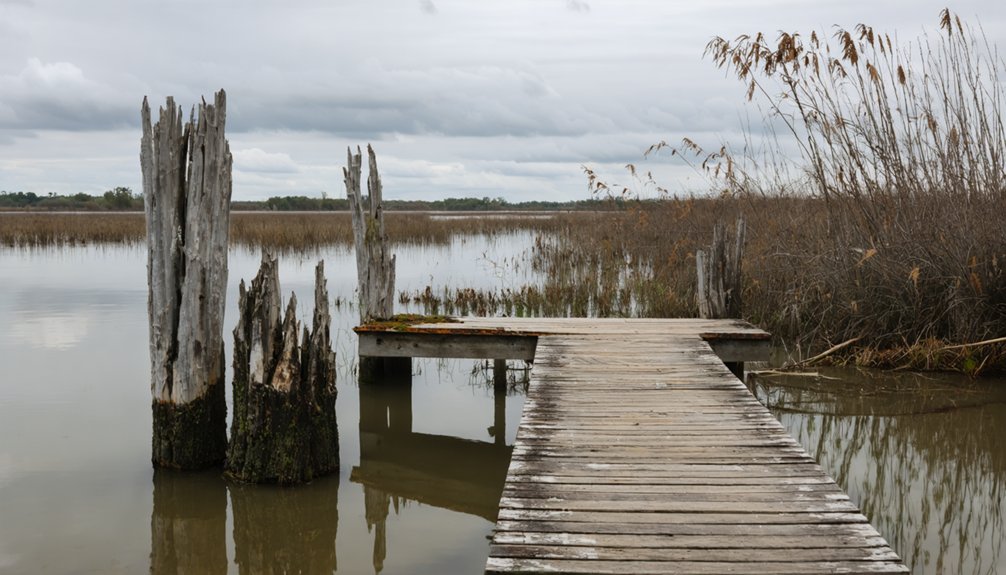
Standing on that narrow ridge today, you won’t find much to photograph beyond open water, marsh grass, and the low horizon that defines coastal Louisiana. The Gulf has swallowed most of what once stood here.
The Gulf has claimed what once stood here. What remains is open water, marsh grass, and silence.
Historical artifacts from the original fishing community are scarce and scattered, claimed by storms and decades of coastal erosion. What little survives exists more in archives and memory than on the land itself.
Preservation efforts have focused on documenting the village’s story rather than restoring any physical structure, which means your visit is less about seeing and more about standing where something real once existed. That absence carries its own weight.
You’re walking ground where 1,500 people once worked, fished, and built lives before the coast erased them entirely.
How to Reach the Cheniere Caminada Site
Getting to the Cheniere Caminada site means committing to the Louisiana coastal road system, which thins out considerably once you leave the more traveled routes near Grand Isle. Louisiana Highway 1 runs south through Leeville and carries you into the marsh-edged corridor where the old fishing village once stood.
You’ll feel the environmental impact of this coastline immediately — the land is low, the water is close, and the horizon reminds you why storms erased entire communities here. No marked entrance greets you, so treat this as a journey requiring research before you leave home.
Cultural preservation efforts have documented the area, and those records can guide your route planning. Check current road conditions, fuel up early, and carry everything you’ll need. The coast doesn’t accommodate careless travelers.
Other Abandoned Louisiana Coastal Towns Near Cheniere Caminada
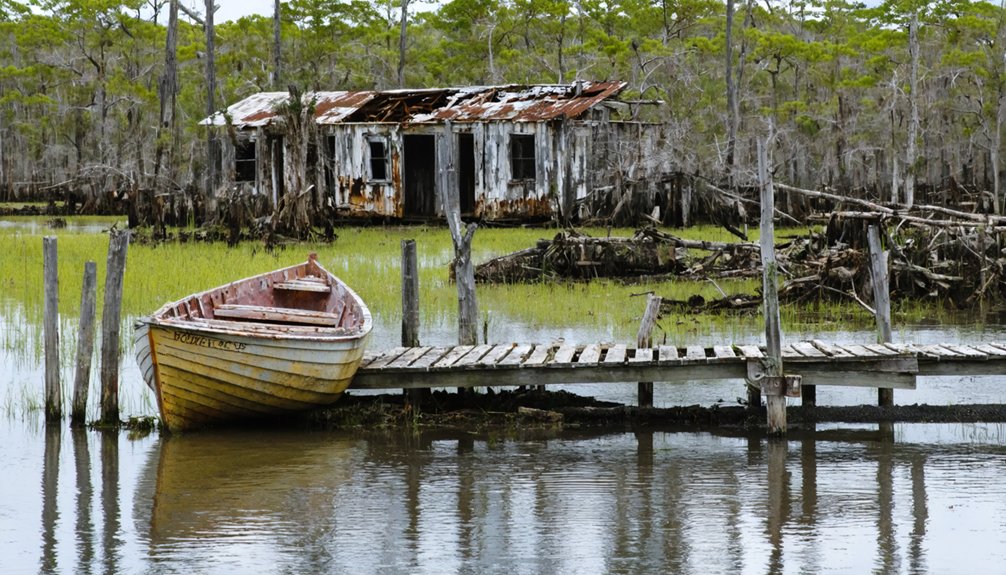
Cheniere Caminada wasn’t the only Louisiana coastal community swallowed by storm surge and slow geographic retreat. The coastline holds several forgotten settlements worth adding to your road trip route for deeper cultural preservation context:
- Isle Dernière – A thriving resort island before an 1856 hurricane erased it from Louisiana’s social map.
- Leeville – A fishing community steadily consumed by rising water and environmental impact from coastal erosion.
- Buras – A citrus-growing town devastated by Hurricane Katrina and never fully reclaimed.
- Lower Lafourche settlements – Small Cajun fishing camps abandoned as land subsidence accelerated throughout the 20th century.
Each stop deepens your understanding of how fragile Gulf Coast communities really were. You’re not just road-tripping through scenery — you’re moving through layers of lost Louisiana history.
The Best Season to Visit Louisiana’s Gulf Coast Ghost Towns
Timing your visit to Louisiana’s Gulf Coast ghost towns matters more than most road trips. Spring and fall offer the clearest windows — cooler temperatures, lower humidity, and calmer Gulf weather make coastal exploration far more manageable.
Summer brings brutal heat and peak hurricane season, which raises real environmental impact concerns for low-lying sites already shaped by storm history.
Winter stays mild but wet, occasionally limiting access to ridge-top remnants like Cheniere Caminada’s footprint.
Fall carries a particular weight here — October visits let you stand on that coast knowing the 1893 storm struck during the same season.
Cultural preservation efforts tied to these sites tend to gain visibility during Louisiana heritage months in spring, so that timing connects your road trip to living memory, not just ruins.
Why Cheniere Caminada Refuses to Leave Louisiana’s Memory
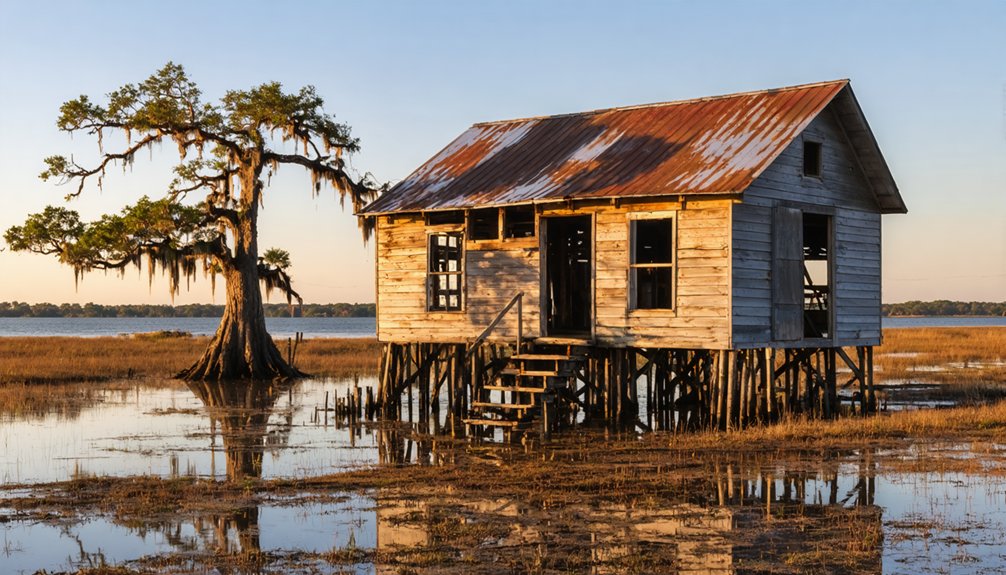
Once you’ve chosen your season and set your route along the Louisiana coast, the harder question tends to surface: why does a fishing village that held roughly 1,500 people in 1893 still pull at the state’s collective memory more than a century after its abandonment?
Cultural preservation keeps Cheniere Caminada alive because its story refuses simplification. Four reasons explain the hold it keeps:
- It fed New Orleans through real labor, not legend
- Its environmental impact reshaped how Louisiana understands coastal vulnerability
- Its abandonment remains a warning, not just a footnote
- Its ridge of land still exists, daring you to find it
You’re not chasing ruins here. You’re tracing a community that understood the Gulf long before anyone thought to protect it.
Frequently Asked Questions
Is There an Entrance Fee to Visit Cheniere Caminada Today?
No entrance fee or formal visitor regulations exist for Cheniere Caminada — you’re free to explore this haunted Louisiana coastal remnant. Verify current access conditions before you go, as this abandoned Gulf Coast fishing village offers no guaranteed facilities.
Are Guided Tours of Cheniere Caminada Available for Visitors?
No confirmed guided tour options exist for this site. You’ll explore its ghost town history on your own terms, chart your own course, and discover Louisiana’s lost fishing village freely through independent research and self-guided exploration.
Can Children Safely Visit the Cheniere Caminada Ghost Town Site?
You can bring children, but visitor supervision is your responsibility. Child safety depends on your awareness of uneven coastal terrain and limited facilities. Respect this forgotten Louisiana fishing village, and you’ll create a meaningful, historically-rich family memory.
Is Cheniere Caminada Recognized on Any Official Historic Registers?
The available knowledge doesn’t confirm official historic register status, but you’ll find Cheniere Caminada’s cultural significance and historic preservation value widely recognized through Louisiana ghost town scholarship, honoring this lost Gulf Coast fishing village’s powerful, enduring regional legacy.
Are There Nearby Hotels or Campgrounds Close to Cheniere Caminada?
You’ll find scattered lodging options nearby, like stars over the Gulf. Explore local dining options and nearby outdoor activities while you roam Louisiana’s wild coast freely, chasing Cheniere Caminada’s haunting, salt-kissed history on your own terms.
References
- https://www.youtube.com/watch?v=L6txGM3-mEI
- https://710keel.com/discover-70-ghost-towns-from-across-louisiana/